October 1, 2025

Cold Hands Effects on Shooting

Hello folks, we have been to the high desert in Northern Utah to do a bit of shooting today. So like all stories there is a good side and a bad side to this, first the good – we were shooting; now the bad – slow moving fingers and shaky hands.

While my fingers were thawing, this article came to mind. I am going to focus strictly on the local effects of cold on the hands in relation to shooting performance. I won’t get into hypothermia or frostbite; I have an idea swimming in my head for another article regarding hidden dangers (over dressing, cold weather dehydration, etc.) of cold weather where I will discuss those issues.

To “set the stage” of this subject we will quickly discuss the term “normal” in regards to hand/finger temperatures. We will call “normal” what people experience in everyday life under comfortable, often indoor conditions. With normal established, let’s look at “cold”, and just to keep it simple, the only terminology we will use is cold.

Cold Stress and Work in the Cold

Cold stress may be present in many different forms, affecting the whole-body heat balance as well as the local heat balance of extremities. Cooling of the whole body or in this case, parts of the body, results in discomfort, impaired sensory and neuro-muscular function and, ultimately, cold injury.

The most obvious and direct effect of cold stress for this subject is the immediate cooling of the skin. The type and magnitude of reaction are determined primarily by the type and severity of cooling. Local cold exposure may cause systemic arousal, what that means is that the increased stress level increases sympathetic nervous activity and, thereby, preparedness for action. When our bodies prepare for action and respond to the cold stimulus, our fight or flight nervous system function kicks in, and the adrenalin begins to dump. This function will work to fight the cold stimulus by giving the muscles stimulation to shiver AND cause the blood vessels in the extremities to begin to squeeze, which results in a reduction of blood flow to muscles and skin. This reduces fine motor skills and makes the “feel” for the trigger much less. That is not a welcome effect when trying to hit the target; great when trying to out run a bear or survive a blizzard, but we are not in those situations.

How do we fix this, the simple answer is to keep our hands warm or wear gloves. Prevention of cooling by means of donning cold-protective clothing, footwear, gloves and headgear interferes with the mobility and dexterity of the shooter. There is a “cost of protection” in the sense that movements and motions can become restricted and more exhausting.

Manual (hands) dexterity performance

Hand function is very susceptible to cold exposure. Due to their small mass and large surface area, hands and fingers lose heat while maintaining high tissue temperatures (86 to 95ºF).

Accordingly, such high temperatures can be maintained only with a high level of internal heat production, allowing for sustained high blood flow to the extremities. The most expedient way to tell if your hands are beginning to suffer from the cold exposure, and may result in decreased performance is to check for the “White Knuckle Grip.” If your hands look like you are holding the steering wheel of a truck on ice, headed down the hill, you will know the tissues are suffering from a lack of perfusion or blood bringing oxygen to the tissues, and hand grip, finger pull and support hand functions will be affected.

Hand and finger function is directly affected by the temperature of the skin (that is the only way to measure in the field). Fine, delicate and fast finger movements deteriorate when tissue temperature drops by only a few degrees. With more profound temperature drops in the tissues, gross hand functions will also be impaired, eventually, your hands will turn to “clubs” and the fine skill and gross skills will not be possible. You may get to a point where you cannot truly FEEL the gun in your hands.

Significant impairment in hand function is found at hand skin temperatures around 59ºF, and severe impairments occur at skin temperatures about 42 to 46ºF due to the blocking of the function of sensory and thermal skin receptors. The temperature of your fingertips may be more than ten degrees lower than on the back of your hand under certain exposure conditions.

In addition, the viscosity of tissues increases (meaning that instead of everything flowing like oil, it is now moving like sludge), resulting in higher internal friction during motion. With an increase of internal or muscular/tendon friction, smooth is not possible, and jerky motions will be the normal. Isometric (pulling) force output is reduced by 2% per ºF of lowered muscle temperature. Dynamic (general smooth movement) force output is reduced by 2 to 4% per ºF of lowered muscle temperature. In other words, cooling reduces the force output of muscles and has an even greater effect on dynamic contractions. This will have an effect of overall gun handling, and very dramatic effects on trigger pull, and proper grip functions.

Acclimatization

There is evidence for different types of acclimatization to long-term cold exposure. Manual (hand dexterity) performance is better maintained after repeated cold exposures of the hand, as we discussed later with the cold water bath and dry fire drills.

Improved hand and finger circulation allows for the maintenance of a higher tissue temperature and produces a stronger cold-induced vasodilatation. What this over the top science geek talk means is – warm up – flex the fingers, shake the hands, get them ready to operate the gun in cold temperatures. Due to the many complex factors that influence human heat balance, and the considerable individual variations, it is difficult to define critical temperatures for sustained work.

There is a simple way to test the effects of cold on your hands and performance, and train yourself to adapt to this environmental issue and improve your performance as much as possible. This simple and free or nearly free acclimatization method will make you less susceptible to cold hand issues. By exposure to cold water from the sink then maybe move to ice water in a bowl, etc., and dry fire drills, make sure to include shooting (dry fire) and gun manipulations, failure drills, etc.

These drills need to be practiced for all shooters, not just for the hand gunners, but hunters with long guns as well. Just to state the obvious – check then recheck that the gun is unloaded, and no ammo is in the room – OK, now we can move forward. Get ahold of a simple and inexpensive surface thermometer from the drug store, the type that just reads the skin temperature, then put your hands in the cold water, use the thermometer and take the skin temperature, run your dry fire drills. You can check your performance differences between warm and cold hands dry fire, use a stopwatch to test speed or function. Eventually, you will see if your acclimatization efforts are giving any value to your shooting and watch for improvement as you proactively train to beat the cold.

If precautions are followed, and a simple warm up can be performed your shooting should not suffer dramatically, it will a little, that is the way it is in cold weather shooting. If you find that you do a lot of cold weather shooting, and exact precision is needed. Try these simple steps to train your body to acclimate to that style of shooting. This combined with simple warm-ups, and you will be less affected and maybe even reach the “golden ring” of the only guy in the group that can shoot as well cold as everyone else does in the warm.

Good luck, and stay safe

96.8 – 90*F Optimal hand and finger dexterity Good Shooting
90 – 81*F Effects on finger dexterity, precision, and speed OK Shooting
81-68*F Impacted work with small details, reduced endurance Weak Shooting
68 – 59*F Impaired gross hand and finger work Poor Shooting
59 – 50*F Reduced gross muscle strength and coordination Very Poor Shooting
46 – 43*F Blocking sensory and thermal receptors of superficial skin Dangerous Shooting
<50*F Numbness, manual performance reduced to simple gripping, pushing, etc. Impossible Shooting
<32*F Freezing of tissues

Cold Hands Effects on Shooting Read More »
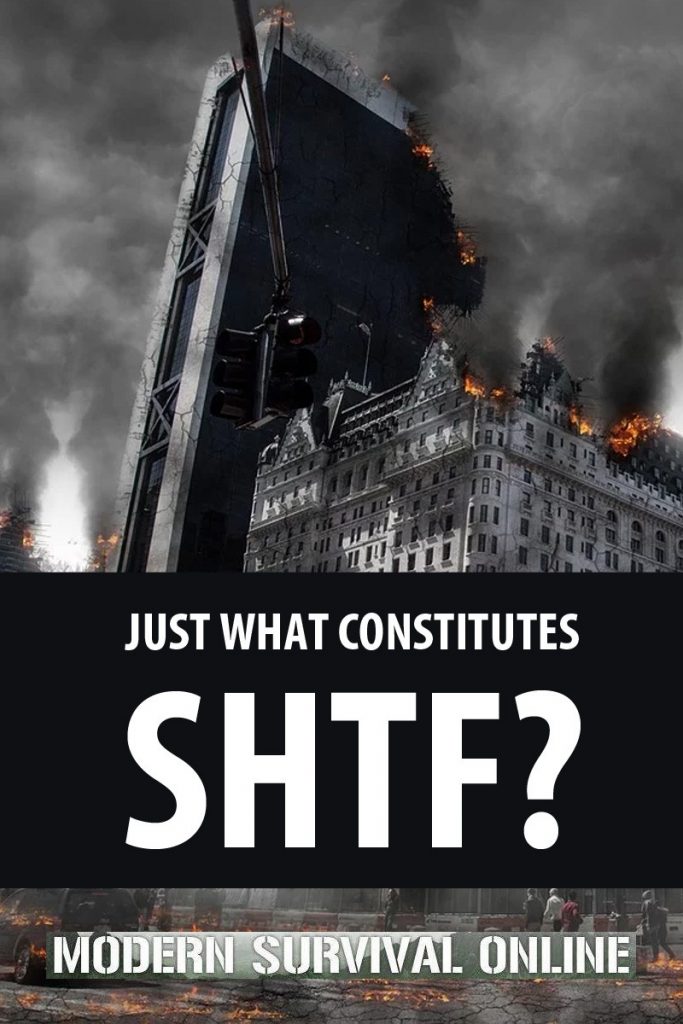
Just What Constitutes SHTF?

“SHTF” is a time-worn and borderline cliché prepper acronym we have all heard, seen and continue to hear and see daily in prepping circles. What will you do when the SHTF? Where will you go when the SHTF? Has the SHTF? It never ends.

Even so, it is an important concept. In case you have been sadly out of the loop for the past couple of decades, “SHTF” stands for Shit Hits The Fan, a vulgar euphemism for things going well and truly pear-shaped; FUBAR, sky is falling, hell on wheels, you name it.

A SHTF event is one where your daily survival necessities are no longer guaranteed, where the typical social order is suspended or heavily disrupted, where help in the form of emergency services is not available and where government intervention is either useless or part of the problem.

In this article, I’ll offer my thoughts on the matter.

Small Fans and Large Fans

Disaster is a matter of perspective, I suppose, and perception being what it is in this day and time with everything, every word, concept and interpretation rendered hideously malleable by the current cultural zeitgeist, it makes sense that event the concept of disasters would be subjected to the same.

A common car crash, however bad the effects on life, limb and property, is not a disaster and never will be unless the car crashed into a tanker full of nuclear waste and knocked it into a nearby river.

That has not stopped some people from treating car wrecks like “serious” SHTF events. And one could say they are if you treat SHTF as shorthand labeling for any event that requires you to employ emergency skills at any level.

How about the destructive crash of some larger conveyance? How about a train? I say that is not a SHTF event, either. How about a jetliner crash? I still say no, though the passengers aboard the doomed vessel hurtling toward terra firma would doubtlessly dispute my assertion. So what does qualify as a SHTF event in my eyes?

For me, it is a matter of scale, and not simply in property damage or lives lost, or the potential for either. A real, SHTF scenario will affect almost every facet of your day to day existence for some time going into the future.

How long that disruption lasts being of course dependent on the intensity of the event, its reach and any other of the thousands of potential variables that keep society knit together and recognizably functioning as such in 2019 America.

Severity Counts

As a ‘for instance,’ one could say that a powerful natural disaster would qualify as a SHTF event. Landfall of a severe and powerful hurricane could qualify as a SHTF event without question.

One need only look at the aftermaths of Hurricanes Katrina, Harvey and Andrew in the not too distant past to get a glimpse into the dystopian misery awaiting us. Natural disasters of many kinds, if severe enough, if they strike the right place at the right time, could do much the same.

But if one were to drive far enough outside the majorly affected area, one would probably see life as normal chugging on without a care in the world, save perhaps a rise in lumber and gas prices. I would not say an event has to have a truly regional or even national area of effect to qualify as a SHTF incident.

Disruption of Society

Anything you can walk away from and go get a burger after or go to get groceries after is certainly not a SHTF event. SHTF events by any measure should disrupt society almost entirely, or rather disrupt our day-to-day “normal.”

If you cannot turn a switch and expect electricity, cannot open a tap to get clean water and cannot expect waste in any form to be vacated from the premises, you are dealing with a SHTF event.

If you cannot reliably call on the cavalry in the form of EMS, police and fire responders, you are likely living in a SHTF scenario (or a major American city). If everyone has to seriously start relying on bartering and get deals done before returning home to meet a curfew, you are likely dealing with a true SHTF event. If you are fleeing rampant pillaging and looting, or a city on fire with no end in sight before it turns to ash, you are dealing with a SHTF event.

A major prolonged breakdown of any and especially multiples of the above facets of our societies should be considered herald enough for a true, blue SHTF instance.

A power outage lasting a half hour to an hour is not. A protest that turns violent and gets put down harshly is not. A freak fire that burns down a handful of buildings is not.

When the bad things we take for granted as taken care of start going unopposed unless you oppose them yourself, that is a SHTF situation.

Reach and Area of Effect

A SHTF event that affects a handful of people cannot be said to be a true SHTF event. You and three friends who get irretrievably lost in bear country while out joy hiking are in the shit now, for certain, but it is not a SHTF event, even when Yogi and Boo-Boo come sniffing around.

There will be people, authorities, friends, family, looking for you. Helicopters will be scrambled. Dog teams deployed. Rangers on four wheelers. The works.

An entire town a couple of hours away from a major metropolis that is left to rot and fend for themselves because what functioning government is left is triaging the situation and deploying all available resources to keep command and control facilities, government institutions and critical supplies and infrastructure solvent? Oh yeah, that would definitely qualify as a SHTF situation.

Essentially, the more people that have to say to themselves in chilling realization “No one is coming. I am on my own,” the more likely it is that you are facing a true SHTF scenario.

Paradigm Shifting Events

As awful as some things are, like city-wide riots and cataclysmic natural disasters, as much havoc as they spread, as much damage as they do and as many lives as they claim, they are not what I denote as paradigm shifting events, a sure symptom of a SHTF situation.

Flood waters will recede. Things will eventually dry out. Rubble will be swept away, bodies will be hauled off to be disposed of, power lines reconnected and life will eventually go back to normal.

So what do I mean by paradigm shift? When a paradigm shift occurs, things don’t go back to normal. It might mean a technological regression, a near-permanent loss of modern commodities, or living under the constant burden of some new threat or vulnerability.

A great example of a paradigm shifter is something like a typically imagined cataclysmic EMP that wipes out much of or the entire nation’s electronics and electrical grid.

Author R. William Forstchen imagined this precise scenario in stunning detail in his speculative fiction novel One Second After. Give it a read. You’ll get some inkling of just how irrevocably things will change in the aftermath of such an event.

So much of what we assume is “just the way things are” will vanish, permanently, with one stroke of fate. Something similar will happen in the wake of a nuclear exchange, major asteroid impact, or super volcano detonation.

As an example that most will understand, a paradigm shift would undoubtedly occur if zombies were to rise from their grave or aliens were to invade.

A paradigm shift is knowing, “Things will never be the same.” Whatever caused it is definitely a SHTF event.

Government Conflict

Any time a widespread, regimented crackdown is inflicted on citizens by their government that qualifies as a SHTF event unto itself. History furnishes ample examples of how badly and how quickly violence and loss of life and freedom happens when things finally boil over.

Even at the state level, it is all too easy for the government to start infringing on basic rights and liberties, imprisonment and executions being the hallmarks of tyranny.

Even for those outside of conflict zones, disruptions to travel, commerce and utilities can quickly turn a scuffle into a proper siege at the larger scale.

Checkpoints, inspections and constant stress will lead to flaring tempers, overreactions and the spilling of more blood and subsequently tighter restrictions. Your staples and essentials are now officially no longer guaranteed thanks to localized sanctions.

These things have a way of snowballing, especially in the histories of Western nations. We don’t generally do sustained, low-level, brushfire conflict, preferring instead to let things become intolerable before our animosity erupts in an orgy of violence that changes the course of history and the lives of the surviving populace forever after.

If the tree of liberty must be refreshed with blood, you can be certain of SHTF.

All Together

To me, a SHTF event is one that not only sends you scrambling to respond, but will put you and everyone else in your area, and probably your region, in prolonged mortal peril.

Your basic survival requirements, and I mean the necessities- clean air, shelter from the elements, clean water for drinking, food- will no longer be guaranteed unless you are clever enough and prepared enough to provide them.

The institutionalized trappings of a functional society will be strained past the breaking point or just cease to exist. The uneasy quasi-truce between the rabid dogs of society, criminals, and the rest of us will disappear, and the natural law will once again take precedence.

What is yours will only stay that way of you can keep it. Your next meal will only be ready if you provide it. Your continued existence will no longer be guaranteed by default barring a fluke. Survival, real moment-to-moment, day-to-day survival is the new normal. The Way Things Were is the simultaneous plea and eulogy on everyone’s lips.

Diseases that are rendered powerless by modern medicine will reassert themselves with fury. Death will harvest his grim crop in ways that were once laughable inconveniences. Infection from a scratch. A fever gone unchecked. Parasites. A rotten tooth.

Medieval ailments will once again spell nearly certain doom. There will be no competing pleasures to occupy your time. Every moment will mean another minute of life, earned, or a squandered opportunity in the face of the encroaching night.

When things have changed so utterly for the worse that your most fervent wish is full bellies and a warm, safer place to sleep next to your loved ones, that’s when you’ll know you the Shit has well and truly Hit the Fan.

Conclusion

The term SHTF should be reserved for major events that severely threaten lives and the fabric of society, not localized disasters and crises no matter how bad they are.

While events that mortally imperil you, even for days at a time, are scary and might be the penultimate test of your life, they are still likely not true SHTF situations.

Try not to water down the import of a term that should be reserved for properly cataclysmic situations by tossing it out every time a riot occurs or a tornado touches down.

what is shtf pinterest image

Just What Constitutes SHTF? Read More »

Europe Diagonal: Ireland E8

Peat laid out for drying

Back on the trail I had to learn how to deal with Irish forest! First of all there is little of it because most of the land is used for cattle grazing. If there is forest, it consists mostly of impenetrable plantations that are covered with blackberry bushes around the edges to make things even worse. Finding discreet stealth campsites turned every evening into a nightmare. The trail was also not as nice as before: I was walking on small roads most of the time passing through rolling hills and moors where peat is still cut. When I discovered a brand new bike path along the river Suir which was even a bit shorter than the E8 I did not hesitate and walked it thus arriving a bit earlier in Carrick-on-Suir where I took a nero day.

With Andrea and Mike

I did not need it as urgently as I had thought! The day before I had caught up to Andrea and Mike
who were taking a nero day in Fermoy. They had invited my into their B&B to charge up my phone. In order to be not as smelly as usual I had even “bathed” in the river Blackwater before meeting them. Unfortunately this river is not called Blackwater for nothing. I was probably dirtier after bathing than before … The owner of the B&B took pity on me and let me take a shower despite the fact that I was just visiting and not staying at his place. The three of us chatted so long that my empty powerbank was fully recharged by the time I left …

Along the river Barrow

A couple of days I had another fabulous encounter. After resupplying in Craighuenamanagh (the town is really called that way) I was walking along the river Barrow, a really idyllic place with loads of paddlers in the water and ramblers on the former tow path. I had just passed two young women and had stopped to drink some water when they came walking back to me. To my utter surprise one of them asked my now in accent free German: “Are you Christine Thürmer?” It turned out that she was a German working here, had read one of my books and knew about my trip from social media. This is a small world and I loved chatting with the two Germans! I did not meet any other hikers on this stretch but one evening an older couple who told me: “We have already seen you this morning in our village, then we passed you in our car and now we see you walking here in the forest! You are such a brave woman!” I did not mention that I was about to look for a stealth campsite in the aforementioned forest …. And for once I found a great site immediately as soon as the two had disappeared.

Europe Diagonal: Ireland E8 Read More »

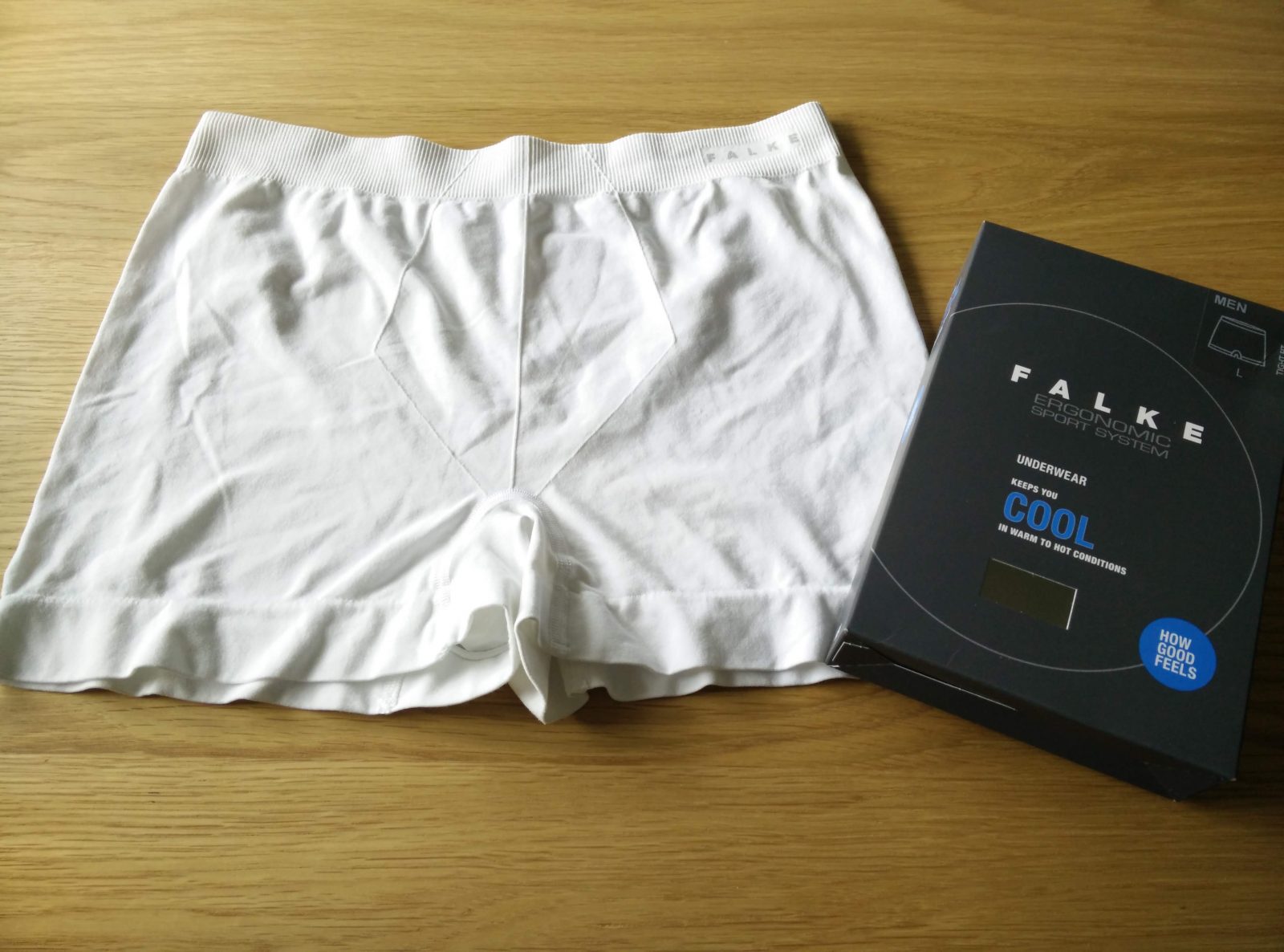
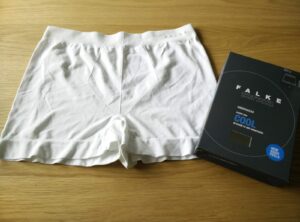
Falke Cool Boxers – First Hand Review

Falke Cool Boxers Review

Falke Cool Boxers Review

In the summer, we tested various activewear from the iconic German brand Falke. Most of the testing was done on different hiking trails and alpine ascents in the Dolomites where we spent our holidays. On my first hike in the Dolomites I wore the Falke Cool T-Shirt and I was very satisfied with its performance. Therefore, I couldn’t wait to test the Falke Cool boxers. The Falke Cool boxers are like the t-shirt part of the Falke Cool line, which means that they are designed for sports in warm to hot conditions.

Altogether I wore the Falke Cool boxers on four different hikes in the Dolomites. When we had returned from the holidays, I kept testing the boxers on short hikes here in Denmark as well as for running. Below is what I found out.

The Falke Cool Boxers are suitable for:

  • Hiking
  • Mountaineering
  • Backpacking
  • Running

Material

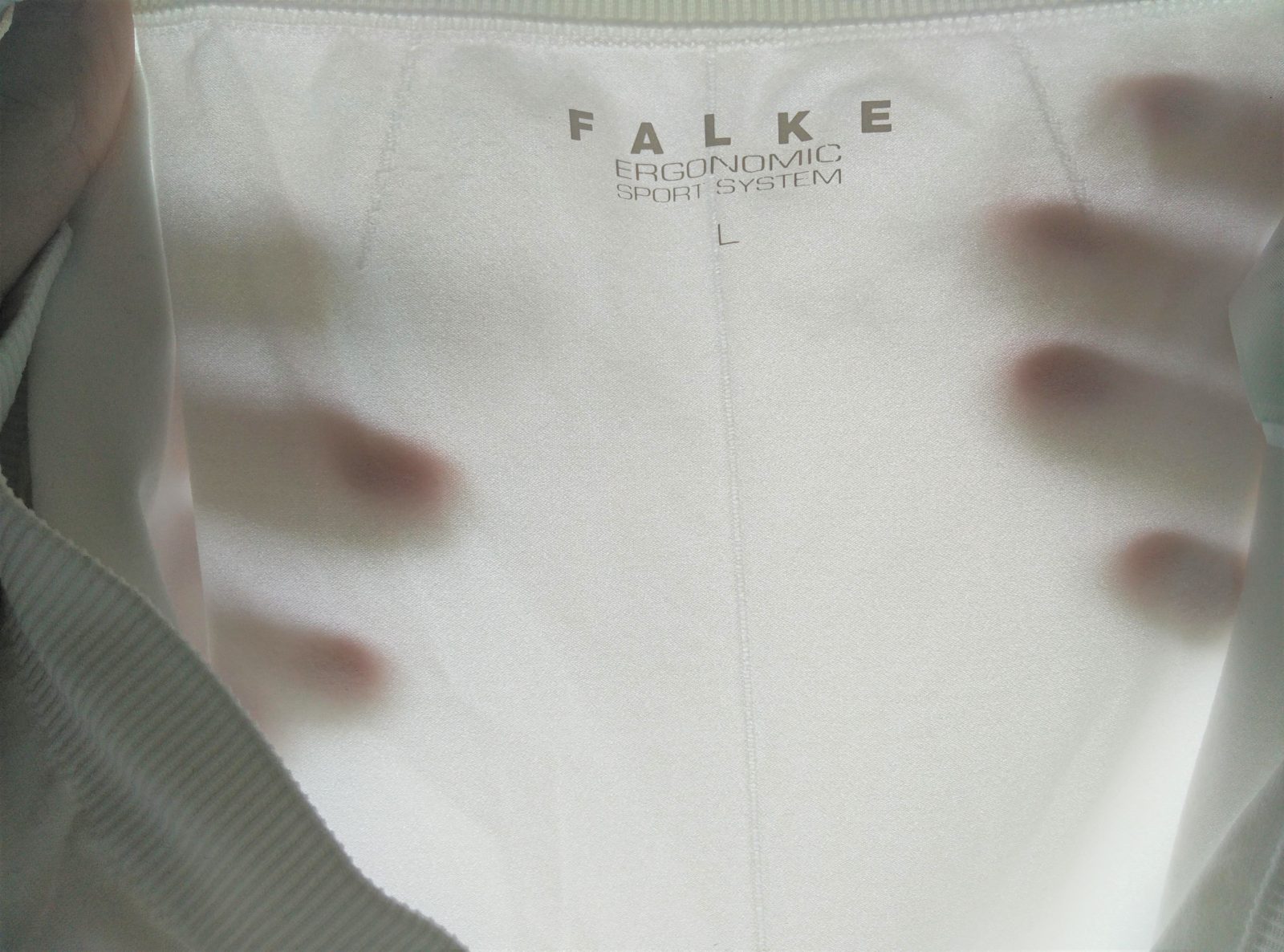
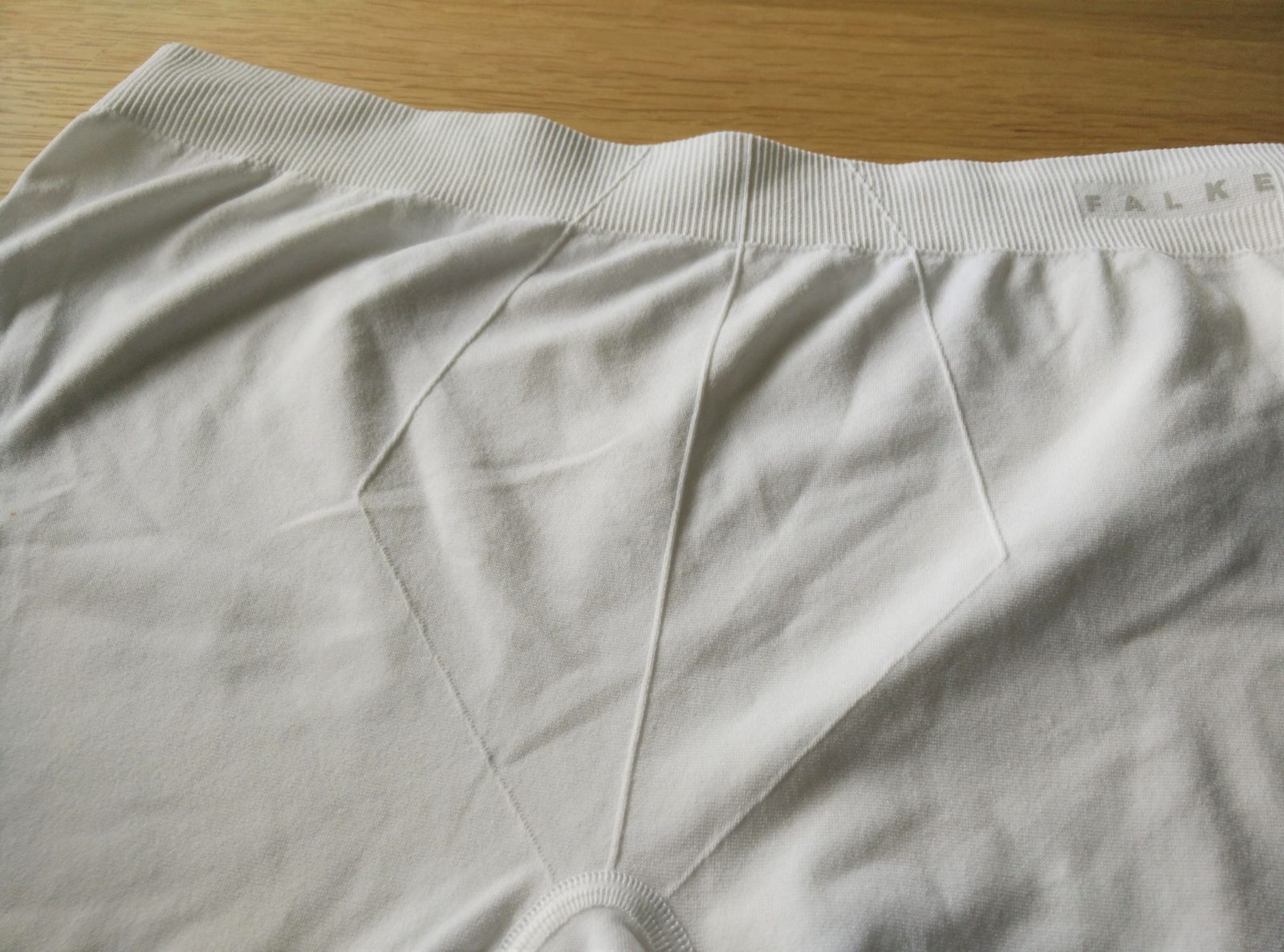
The Falke Cool boxers are made of a polyamide (nylon) fabric with a small content of elastane fibers (8%). When I unwrapped the boxers, I was surprised how soft and non-synthetic the fabric feels. I have several pairs of synthetic boxers from various brands at home, and the Falke Cool boxers are indeed the softest and most pleasant to the touch. Nevertheless, I did also notice that the fabric is relatively thick, at least for a garment that is designed for warm to hot conditions.

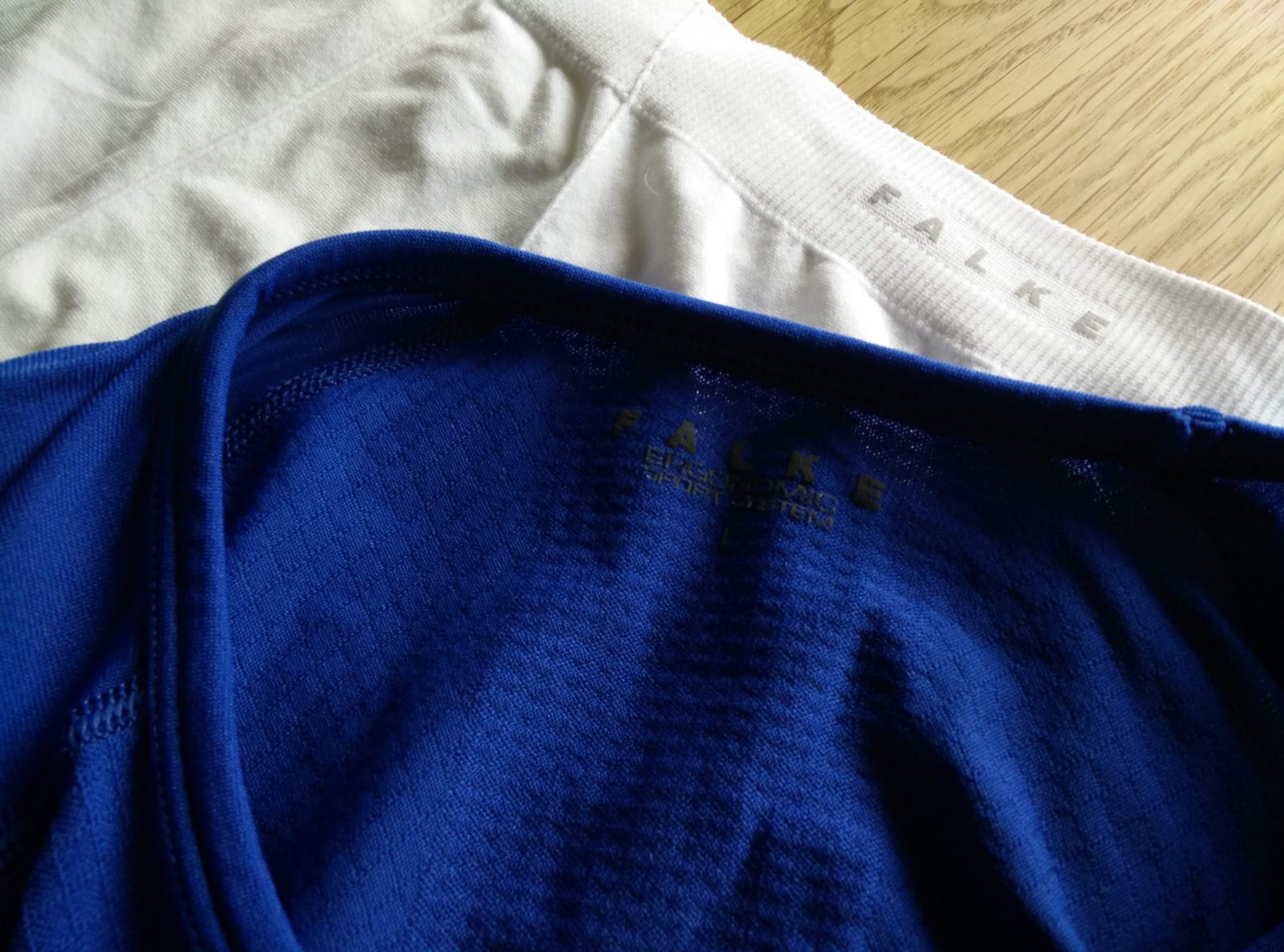
I expected that the boxers would be made of the exact same fabric as the Falke Cool t-shirt, but that’s not the case. The Falke Cool boxers are made of thicker and less porous fabric. Now, the advantage of the thicker fabric is better durability which is important when it comes to performance underwear. Whether you are running or hiking, the underwear is exposed to friction, especially between your inner thighs. Many of my performance boxers started tearing there within a year of use (particularly those made of pure Merino wool). I haven’t noticed any such issues with the Falke Cool boxers so far and thus I assume that the fabric is adequately robust. Nevertheless, if I notice anything, I will of course update this review.

When you are buying performance underwear, you typically want a breathable, moisture-wicking, quick-drying and odor-resistant garment. These were thus the qualities I focused on while testing the boxers on various trails and runs. I wore the boxers for the first time on the hike to the 2557 meters high Sass Ciapel (trail to be published soon) and I was impressed over the comfort. Nevertheless, when I started gaining altitude and the intensity increased, I did notice that they are slightly less breathable than my other synthetic underwear. The relatively thick fabric does indeed have impact on the breathability. However, it doesn’t seem that it has a big impact on the drying time. The boxers were always dry when I returned from hikes and I was therefore very satisfied with the drying time in general. I noticed that the boxers nicely disperse the moisture across the surface of the fabric and that’s probably also the reason why they dry so fast (moisture dries faster when dispersed). The boxers are also very moisture-wicking as they efficiently pull the moisture from your skin.

It’s no secret that synthetic garments become smelly fast unless they are treated with some kind of antimicrobial agent. In the product description on Falke’s website I haven’t found any information about antimicrobial treatments, but to my surprise the boxers didn’t become smelly even though I wore them on four hikes in a row without washing them in between. Now, antimicrobial treatments often wash out, but so far, the boxers have remained odor-resistant.

Comfort, fit, sizing and functionality

The Falke Cool boxers belong in the short leg boxer briefs (trunks) category. They have an inseam length of two inches (5 cm). I usually prefer longer boxers for sports because the legs of short boxers often ride up in my experience. Nevertheless, this was not an issue with the Falke Cool boxers.

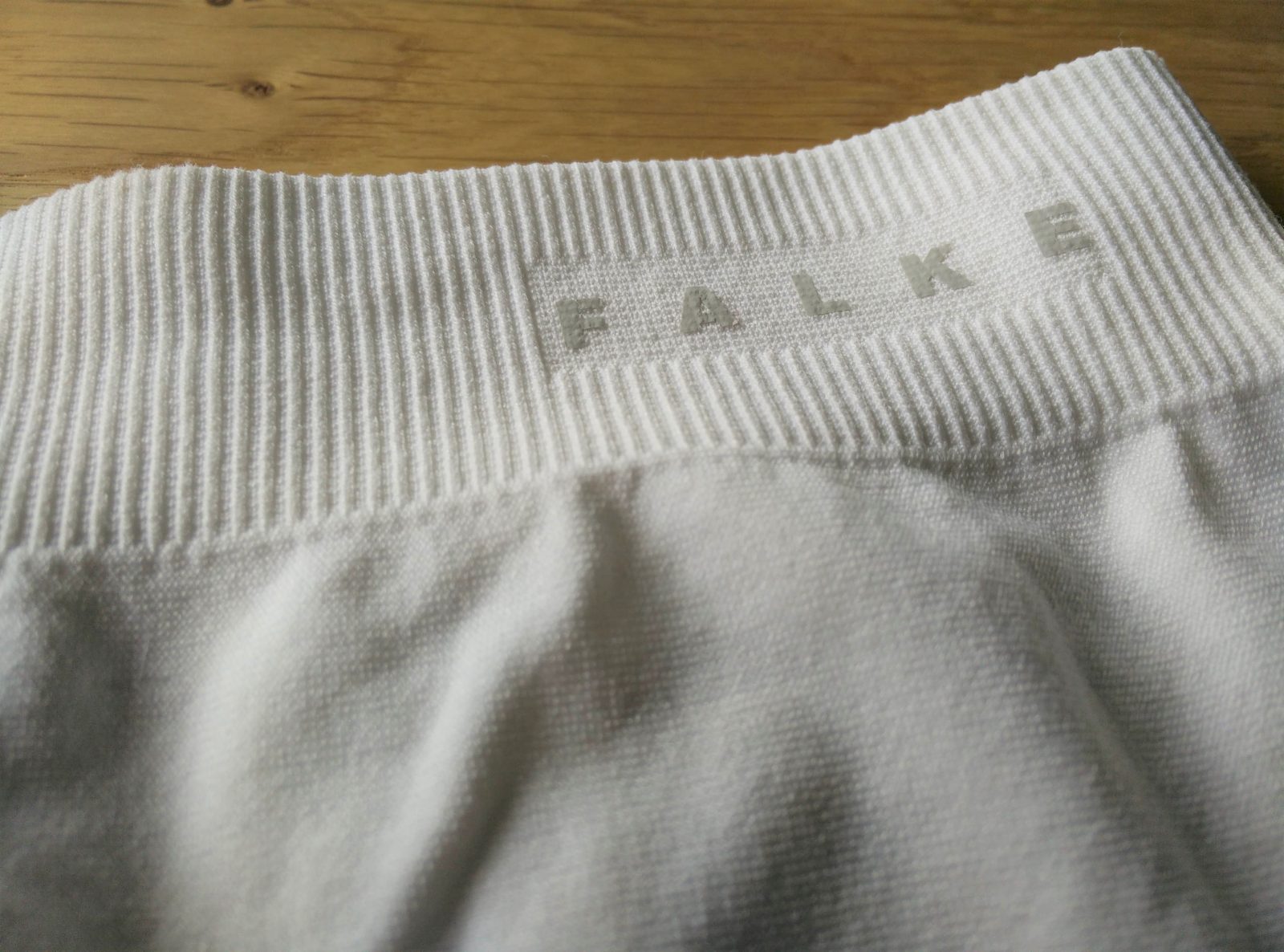
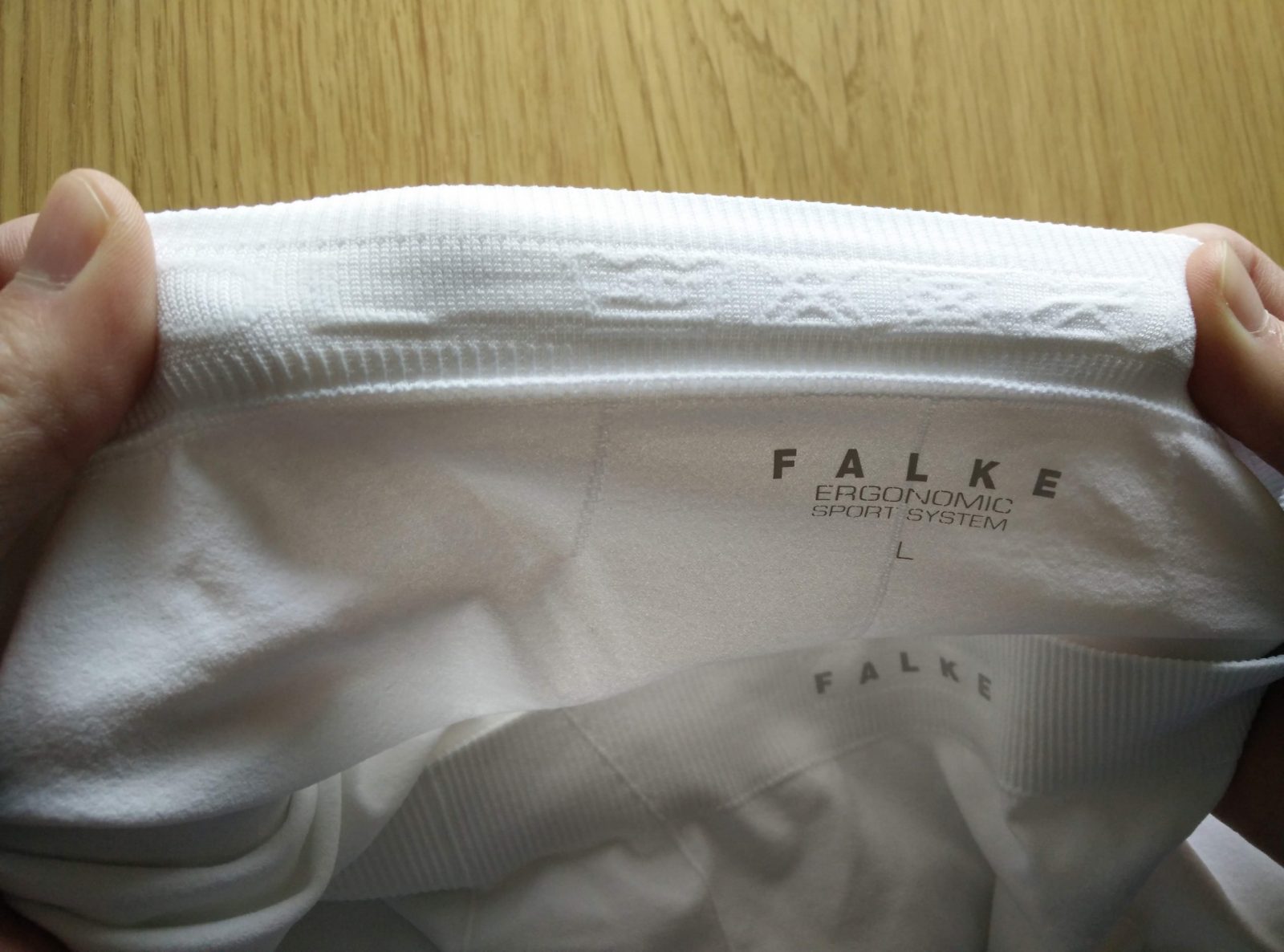
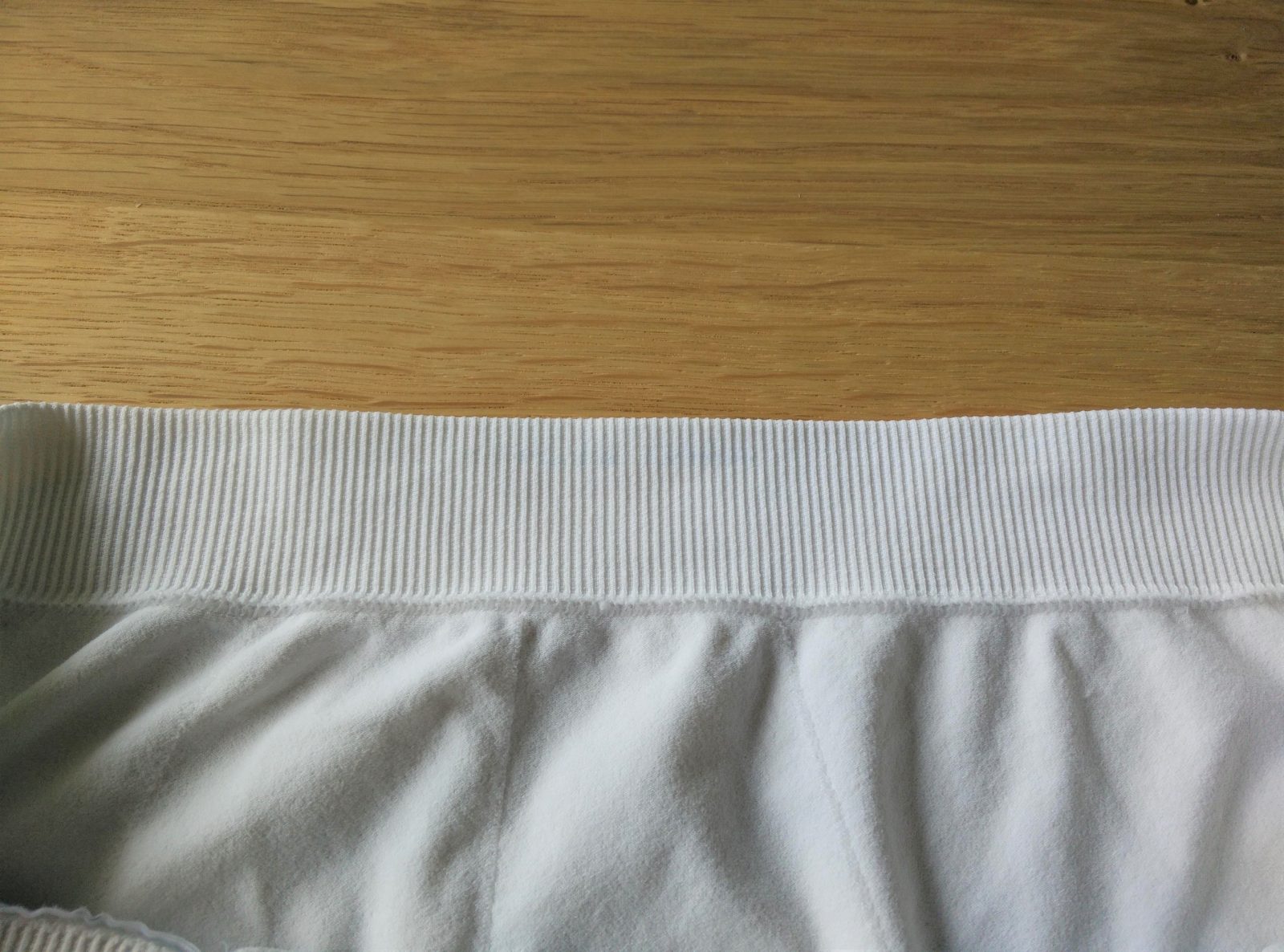
The boxers fit tightly to the body but because the material is super stretchy, I found them very comfortable nevertheless. While hiking and running they never restricted me in any way. I also haven’t encountered any chafing or rubbing. When I had a closer look at the boxers, I noticed some very neat details. The flatlock seams are incredibly thin – on the inside it’s actually hard to locate them. I would therefore be very surprised if they caused discomfort to anyone. The waist band is made of a stretchy double-layer fabric which is very soft to the touch and the stitching beneath the waistband is minimal for extra comfort. The logo on the waistband is printed not to cause chafing. The Falke boxers don’t have a fly, but I personally don’t think this a problem. To be honest, I find flies inconvenient and usually a weak link in the durability of underwear.

As for the sizing, I got the boxers in size L and they fit me perfectly. My waist circumference is 94 cm (37 in.).

Washing and drying

The boxers can be machine washed at 40 C without bleach or softeners. Like most other activewear they shouldn’t be tumble dried. As the underwear is odor-resistant it doesn’t have to be washed after every workout. Nevertheless, I recommend washing the garment regularly for hygienic reasons.

Verdict

The Falke Cool boxers are a good option for outdoorsy people and athletes. I’m very impressed over the softness of the fabric and neat details like super thin flatlock seams and comfy waistband. The boxers are also moisture-wicking, quick drying and odor-resistant. They fit me well and I’m very satisfied with the freedom of movement. The only thing that bothers me is that they are made of a relatively thick fabric, which somewhat reduces the breathability. However, there are always tradeoffs, and the Falke boxers indeed provide better durability due to the more robust fabric.

If you have any questions about this product, drop me a line in the comments below.

Falke Cool Boxers - Logo

Falke Cool Boxers – Logo

Falke Cool Boxers - The fabric

Falke Cool Boxers – The fabric

Falke Cool Boxers - The Falke Cool t-shirt is made of a thinner and more porous fabric

Falke Cool Boxers – The Falke Cool t-shirt is made of a thinner and more porous fabric

Falke Cool Boxers - The flatlock seams are barely detectable

Falke Cool Boxers – The flatlock seams are barely detectable

Falke Cool Boxers - Super thin flatlock seams

Falke Cool Boxers – Super thin flatlock seams

Falke Cool Boxers - Stretchy waistband

Falke Cool Boxers – Stretchy waistband

Falke Cool Boxers - Washing instructions on the waistband

Falke Cool Boxers – Washing instructions on the waistband

Falke Cool Boxers - Waistband is very comfortable and the stitching beneath the waistband is minimal for extra comfort

Falke Cool Boxers – Waistband is very comfortable and the stitching beneath the waistband is minimal for extra comfort

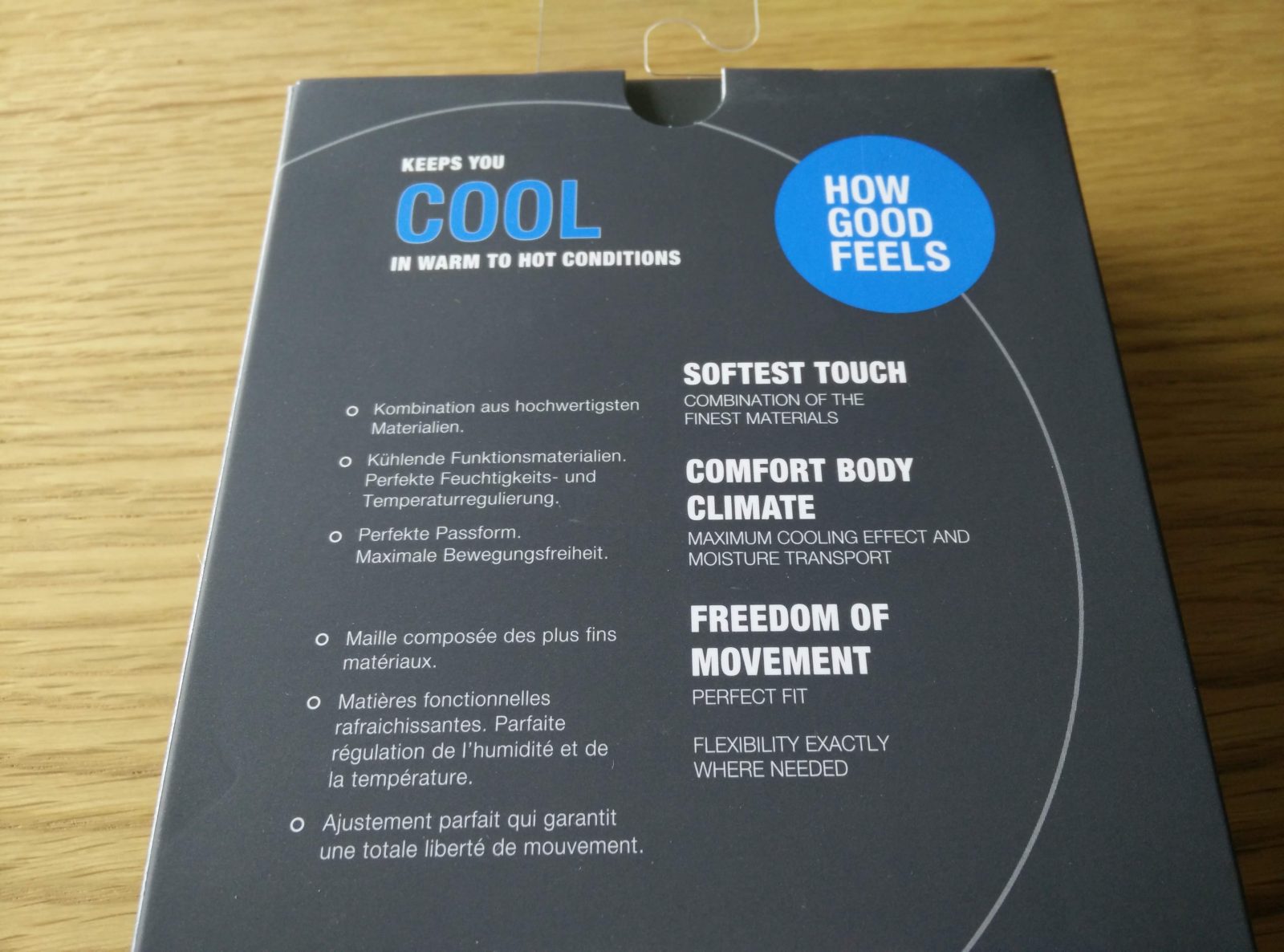
Falke Cool Boxers - Packaging

Falke Cool Boxers – Packaging

Rating

Design
Quality
Comfort
Functionality

About Rating

Pros:

  • Softness of the fabric
  • Moisture-wicking
  • Odor-resistant
  • Quick-drying
  • Great fit and very comfortable

Cons:

  • The fabric is relatively thick which decreases the breathability to some extent


Details

Tested by: Blaz

Review date: 2019-10-01

Product: Falke Cool Boxers

Final rating: 4.5 out of 5

{
“@context”: “http://schema.org”,
“@type”: “Product”,
“brand”: {
“@type”: “Organization”,
“name”: “”
},
“image”: “https://besthiking.net/wp-content/uploads/2019/10/Falke-Cool-Boxers-Review.jpg”,
“name”: “Falke Cool Boxers”,
“review”: {
“@context”: “http://schema.org”,
“@type”: “Review”,
“author”: {
“@type”: “Person”,
“name”: “Blaz”
},
“creator”: {
“@type”: “Person”,
“name”: “Blaz”
},
“publisher”: {
“@type”: “Organization”,
“name”: “Best Hiking”
},
“reviewRating”: {
“@type”: “Rating”,
“ratingValue”: “4.5”,
“bestRating”: 5,
“worstRating”: 0
},
“datePublished”: “2019-10-01”,
“name”: “Falke Cool Boxers – First Hand Review”,
“headline”: “Falke Cool Boxers – First Hand Review”,
“itemReviewed”: {
“@type”: “Thing”,
“name”: “Falke Cool Boxers”
}
}
}

How helpful was this post?

Click a star to rate it!

1 vote(s) so far. Average rating 5 out of 5.

Post Author

Post Author

Blaz

Outdoor enthusiast with experience in all types of hiking and mountaineering. Hiked in the Alps, Iceland and other countries. In love with via ferrata trails and snow-covered slopes. Check out my hikes.

You may also like…

The post Falke Cool Boxers – First Hand Review appeared first on Best Hiking.

Falke Cool Boxers – First Hand Review Read More »