Hello Pack. I hope you all are enjoying this new year and new decade so far. Preps have been a bit slow this week, at least outdoors, due to weather. But, that has given us more time to get some inventory lists finished up, to do some canning, and to continue working on our annual Preps To Do Chapter Book for 2020. I am pleased to say that keeping one of Pearl’s most recent kids was a wise choice.
After visiting San Diego in my youth I thought how wonderful it would be to live in a climate that had roughly one season. True San Diego does experience four seasons but not like where I live. The thought of a perpetual summer was enticing. More time to play in the warm weather and not having to wear a lot of different clothing or layers. Alas I never moved and as I got older I am very happy that I didn’t. True four seasons keeps it interesting. There is a joy that I get in each season and watching the cycle. With the cycle of seasons though comes a very important lesson in layering. With ever fluctuating temperatures and weather conditions one cannot just count on a single piece of clothing to shrug off what mother nature throws at you. One must understand how to layer their clothing. Of course this is beneficial in our daily lives but even more so when a survival situation occurs, because your clothing is your first shelter.
By Grimm, contributing author to SHTFblog and Survival Cache
In a modern day world where houses, apartments, condos i.e. shelters are everywhere, its hard to imagine a moment when you cant access one but it happens. People get locked out or lost. Vehicles break down or crash. Which that thought brings me to a great example of poor layering. I was driving home from work and it was December. I was wearing my work shirt, pants and a leather jacket. Easily enough to keep me warm in my heated car or inside my work which is heated. Needless to say I was rear ended and I had to stand outside on the side of the road while police came and tow trucks dragged my totaled car away. I was freezing. I did not layer properly. I had two layers tops and nothing to cover my head or hands. Now I always make sure I have decent layers no matter where I go and you should as well.
These layers, which usually amounts to three, help keep the body protected from the elements. Rain, snow and wind can chill the body down together or separately causing hypothermia. Wind and sun can rob the body of moisture causing hyperthermia. These layers shrug off the wind, rain or snow or shield the body from the suns UV rays. Now you might ask why usually three. Well just like how the weather changes frequently so does your physical activity. More physical activity means more heat and possible perspiration. So layers can be taken off to keep cool and limit sweat. Remember sweat is produced to cool the body down. That’s good but just like rain it will affect the insulating properties of your clothing. Having layers gives the person the ability to adapt to the weather changes as well as their activity.
Another point to consider, though one might have good layers on do not forget about your head, neck, hands and feet. I understand that wearing two pairs of socks is not always an option in our daily routine but a hat, scarf, and gloves can go a long way to help the body stay protected. I know if I merely had a wool hat and scarf when I was in my accident I could have been a bit warmer on that day. True I wasn’t in a survival situation that day but next time I might not be as lucky. Of course this blog only touches the tip of the iceberg when it comes to layering so check out the video for more helpful information on Layers to Live by.
Note – Bringing this around today because I know many of you are working on various aquaponic and hydroponic projects and starting plants indoors. Trust me 10 bucks for this timer is money well spent on any of that stuff. …Continue reading →
Buying a tent may seem simple at first glance. But, with so many options on the market, how do you choose one that’s not too big, not too expensive, but “just right?” That’s why I wrote this guide. Inside, you’ll learn everything you need to know about picking a tent. We’ll go over what factors to look for and how to compare tents side-by-side, so you can buy the one that’s perfect for you and your needs. Without further adieu, let’s get right into it.
Material
First, decide what type of material you want. How much rain do you anticipate during your camping trip? What will the temperature be like? (Hint: Plan on colder and wetter than Google says it will be). Most tents are made out of synthetic fabrics – nylon or polyester. Family tents are generally made out of polyester, while backpacking tents are usually nylon (to cut down weight). Another material used is canvas. Canvas was commonly used in the past since it was a breathable material available before polyesters were. While synthetic fabrics are cheaper and lighter, they have flaws. For instance, they’re weaker than canvas when it comes to insulation. This could pose a problem if you’re camping in harsh winter conditions.
Waterproofing
Your tent’s performance against water is crucial. Why? No one likes sleeping in the rain (duh). But, how can you tell how waterproof a tent is?
Thankfully, synthetic materials are rated based on how much water they let in. The rating is called “millimeters of hydrostatic head,” or “mm HH.” Without getting into the nitty-gritty, this metric measures how much pressure is needed for water to pierce the tent. Higher mm HH? Better water resistance. To achieve higher mm HH, manufacturers use better materials and thicker waterproofing spray. That’s cool, but how much waterproofing do you need?
Although mm HH is an accurate measurement, it’s not everything for water resistance. Some tents might have higher mm HH, but lower durability. That’s why it’s important to scan reviews before purchasing your tent. Generally, you want at least 1,000mm HH on the outside of your tent, and at least 5,000mm HH on the floor (to keep your butt dry).
Size
The next factor is what size tent you’ll need. It’s tempting to want the most enormous tent available to feel like “king of the castle,” but we’re trying to have fun here, not break the bank. Obviously, the easiest way to determine the ideal tent size is to consider how many people will be using it. If you’re a lone wolf, then something small and light should be a solid choice. But, if you have a group with you, the numbers can get tricky. My pro-tip is to never rely on manufacturer labeling, and here’s why.
Just because a tent’s called a “4-person tent”, that doesn’t mean it’ll be comfy for four people. It means there’s enough room for four average people to lie down like stick figures with their elbows touching. So, I recommend adding “two people” to the tent size when considering a tent. That’ll give you plenty of room to stretch your legs and store your bags.
In the example above, a four-person group should go for a six-person tent, so your whole family can sleep easy.
You should also consider how far away your campsite is from your parking spot since you’re going to have to lug the tent over there. If it’s just a few yards from your car, then a heftier tent shouldn’t be a problem. But, backpackers should get the smallest tent possible to keep their bags light.
Warranty
It might seem insignificant, you should pay close attention to the warranty when comparing tents. Some would argue that it’s a trivial detail since, if you pick a good tent, you’ll never need to use the warranty. I usually agree with that, but you never know when a raccoon will bite holes in your tent (it happens). That being said, I think the warranty’s length is a direct reflection of the manufacturer’s confidence in their products. If the warranty only lasts a few months, that’s a red flag in my book. It says that the very people who made the tent expect it to break down in under a year. In contrast, a warranty of one, two, or even three years shows that they’ve built it with longevity in mind. My favorite example of this is Patagonia. They offer an “Ironclad Guarantee” on all their products
Price
Of course, you should always think about the price of a tent before purchasing it. Buy a quality tent, but make sure you don’t go overboard. When you find a new passion, it’s easy to get carried away, loading up on gear. I know when I started fishing, I bought so many random lures and baits that my wife thought I was crazy.
There are countless deluxe tents out there with more bells and whistles than anyone can count. But, you should only buy gear that you can afford (without putting yourself in a pinch with upcoming bills). I’m not saying that you shouldn’t pay for quality. But, there’s a fine line between getting a high-performance tent and throwing cash at something because it looks pretty. Now, if you’re planning on backpacking for months on end, you should probably splurge on your tent. But, most family campers shouldn’t worry about getting a top-of-the-line tent. Camping decisions should be practical. So, if you empty your wallet for silly ego reasons, then you’ve defeated the purpose of the activity before even setting your tent up. Camping is supposed to remove stress, not increase it.
Features
There are some key features to look for in your tent. You likely won’t be able to get all of them in a single tent (without clearing out your bank account), so aim for as many as possible.
Aluminum Poles
Some tents come with fiberglass poles, but they are far more fragile than their aluminum brethren. They also tend to fragment into sharp needles when they break. So, look for aluminum poles whenever choosing a tent to maximize durability and safety.
Roof Vents
Whenever possible, pick a tent that has a roof vent. This will work wonders for air circulation and thus prevent any condensation problems that may otherwise arise. It will also keep you from feeling suffocated during hot weather.
Durable Zippers
The zippers of your tent will see the most use since you’ll always be opening and closing it during camping trips. All this heavy use can lead to wear and tear, so look for zippers that are heavy-duty to ensure a long lifespan. My favorite zipper brand is YKK. Look at the zipper tab to see who manufactured it.
Conclusion
As you can see, picking the right tent can actually be rather easy once you get the formula down. No one can tell you what the BEST tent is since it merely doesn’t exist. The ideal tent will vary from one person to the next, depending on their specific needs, so go find yours!
Mike Miller is the founder of Wilderness Times. After realizing he was spending way too much time in front of a laptop and not enough time in nature, he decided to do something about it. Nowadays you can find him outside, hiking, camping, and having all sorts of outdoor adventures.
Our food supply chain is vulnerable and experiencing food shortages is a very real possibility. Medical supplies and other necessities are vulnerable too. #urbansurvivalsite #urbansurvival #citysurvival #shtf #foodshortages
Today it’s time for the expert council show. To ask a question for a show like this, just send an email to me at jack at thesurvivalpodcast.com with “TSPC Expert” in the subject line. Today on The Survival Podcast, the …Continue reading →
I mean, let’s be honest, the AR market is chock full of every gun and caliber you could ever want.
It’s full of furniture, accessories, lowers, uppers, and everything from boomer cringe to post-modern artwork.
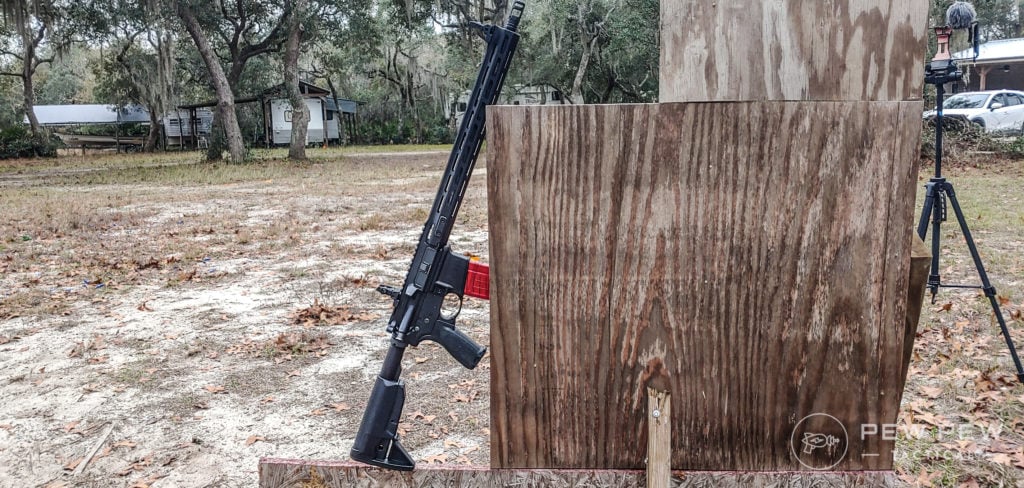
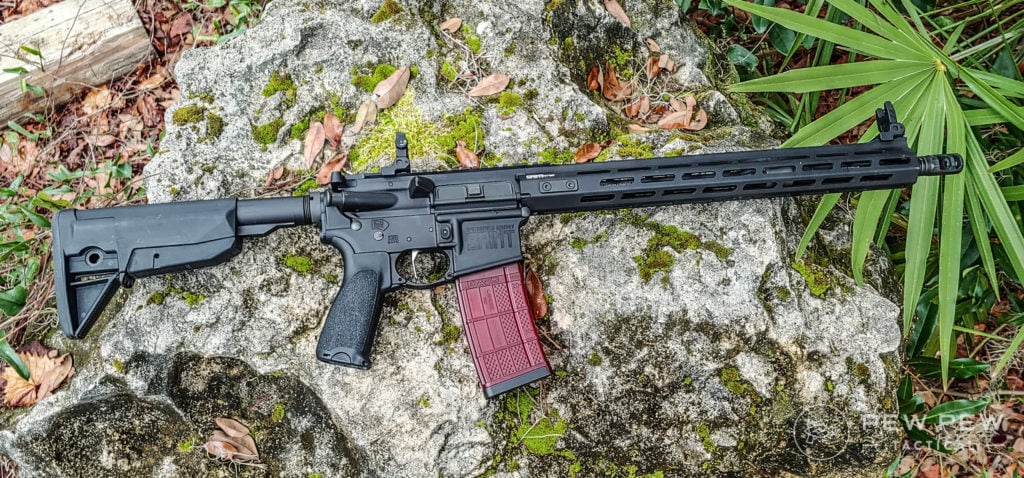
Springfield Saint Victor
While I wouldn’t change anything about this, I will say as a gun reviewer, and it makes it hard to review an AR model without some kind of hook.
The Springfield Saint Victor doesn’t have a crazy hook, what it does have is an impressive set of features, a lot of extras, and it comes in at a crazy reasonable price.
The hook here is that I think the Springfield Saint is that it’s the best sub-1K AR-15 on the market. The MSRP is 1,073 bucks, but when was the last time you paid MSRP for a gun?
Online they can be found for around 900 dollars. After shipping and transfer, that should still be under a grand.
var PPT_APS = PPT_APS || {};
PPT_APS[48365] = {
“id”: “48365”,
“title”: “Springfield Saint Victor”,
“img”: “https://www.pewpewtactical.com/wp-content/uploads/2020/01/Springfield-Saint-Victor-1024×324.jpg”,
“tag”: “”
};
Table of Contents
Loading…
Specs
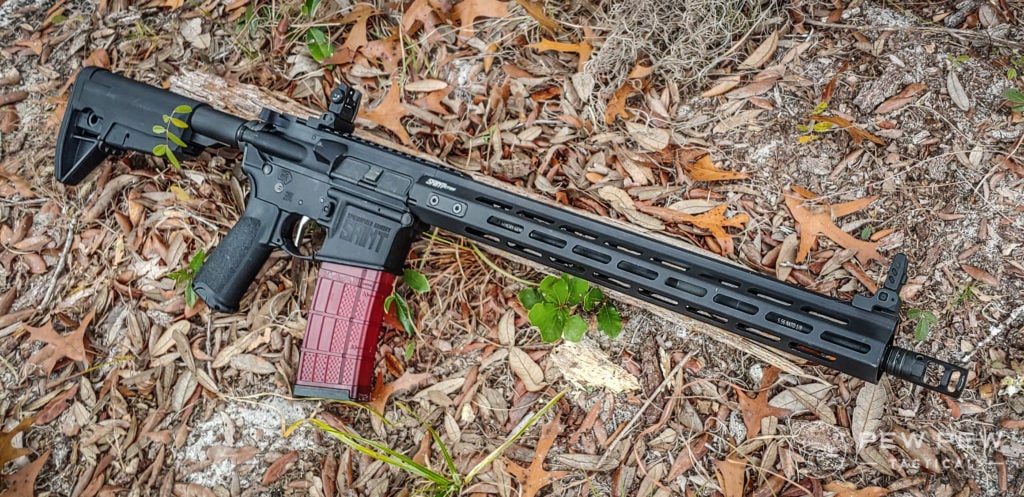
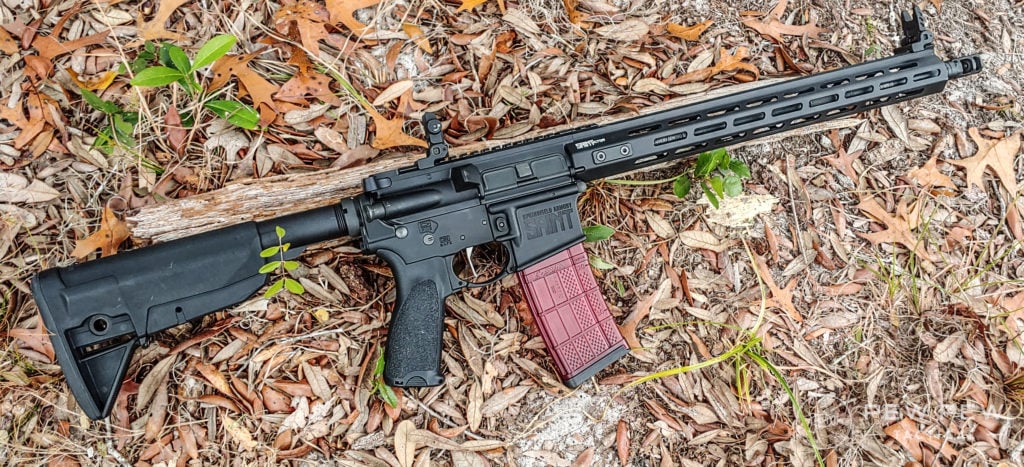
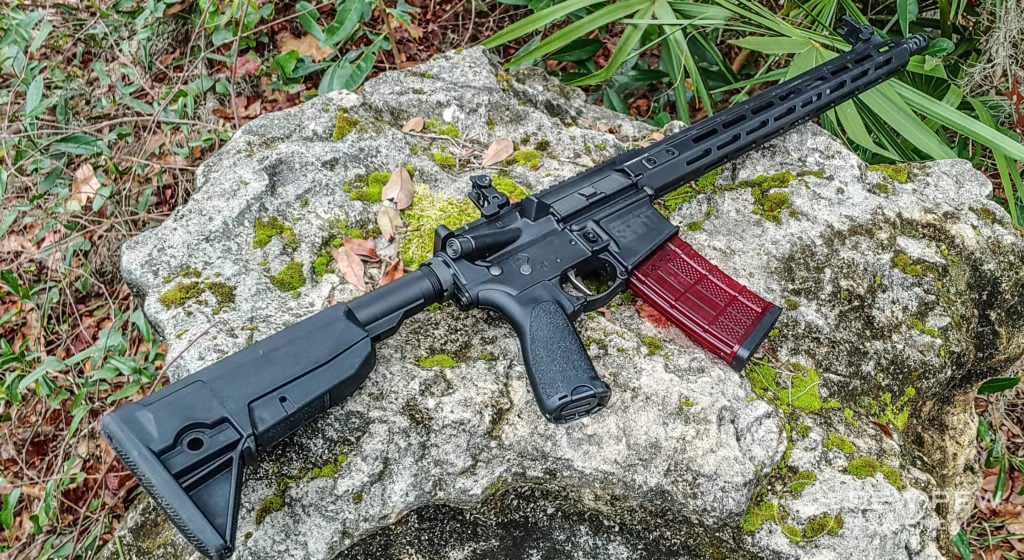
The Saint Victor is a standard AR carbine with a 16.1-inch barrel. It’s chambered for 5.56 and uses a standard AR loadout. You’ll find that this gun is very light–only 6 pounds and 9 ounces.
Springfield Saint Victor
The Victor’s barrel has a 1:8 inch twist, and the upper and lower are both made from 7075 T6 aluminum.
It is 35.5 inches with the stock fully extended, and 32.25 inches full collapsed.
Springfield gave it a type III hard coat anodized finish and M4 feed ramps.
Brilliance in the Basics
Brilliance in the basics is a term I heard a lot in my USMC time.
It’s merely stressing being proficient in the basics because that’s the most important thing to be good at.
I like to apply this idea to AR-15s.
See? We even found the quote on an inspirational background.
An AR-15 like Brownell’s retro series is cool, but if they don’t work, what’s the point? If it doesn’t hold together, what are you going to do with a big paperweight?
The Springfield Saint Victor is an excellent example of brilliance in the basics.
From the outside, things start lining up quickly. Springfield staked both the gas key and castle nut. The handguard is appropriately aligned and installed. It’s not moving a hair in any direction.
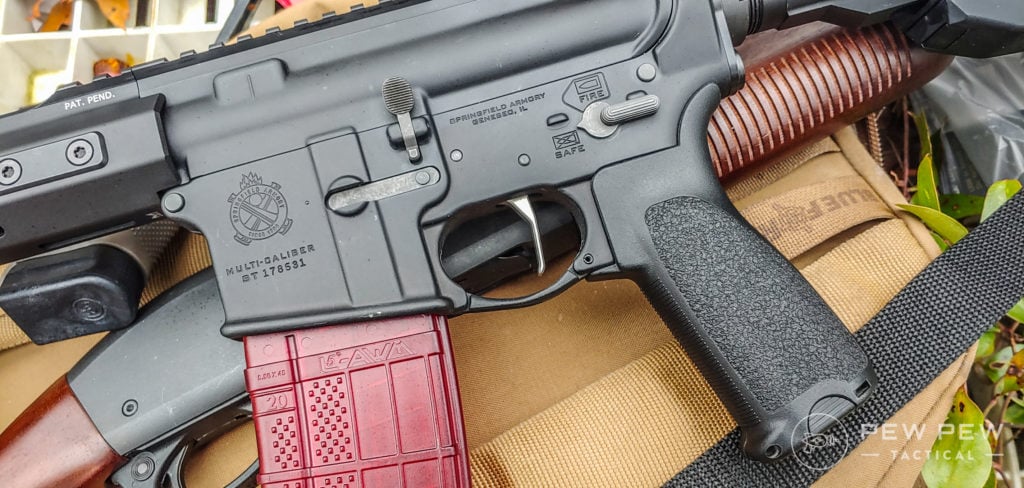
The safety selector
The finish is evenly applied, and the stock and pistol grip are aligned and locked onto the gun. Springfield pinned the gas block rather than hold it on with set screws.
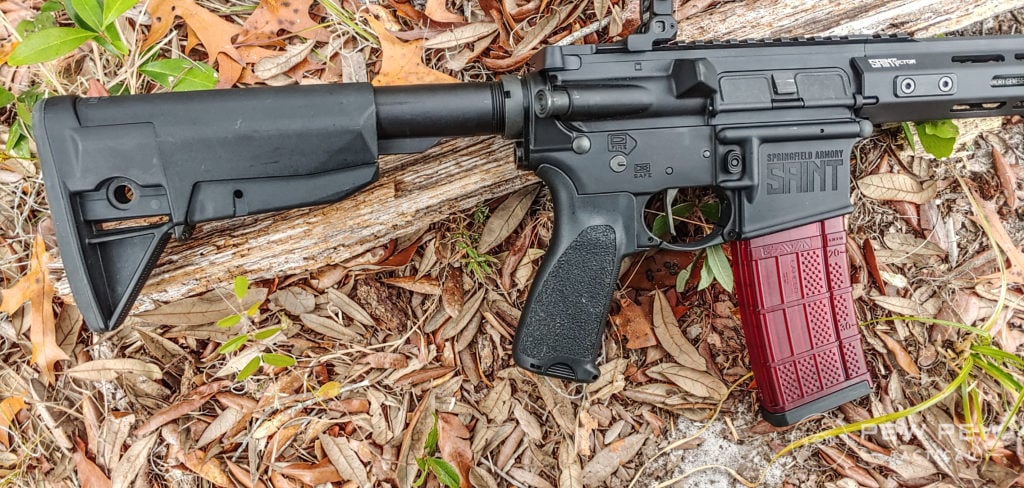
Furniture wise the gun doesn’t slap on a standard M4 stock or pistol grip. Instead, Springfield tacks on Bravo Company gear that includes the Gunfighter stock and pistol grip.
I love this stock. I typically stick to a Bravo stock from B5 systems, but the Gunfighter is winning me over.
BCM Gunfighter Stock–look how beautiful it is!
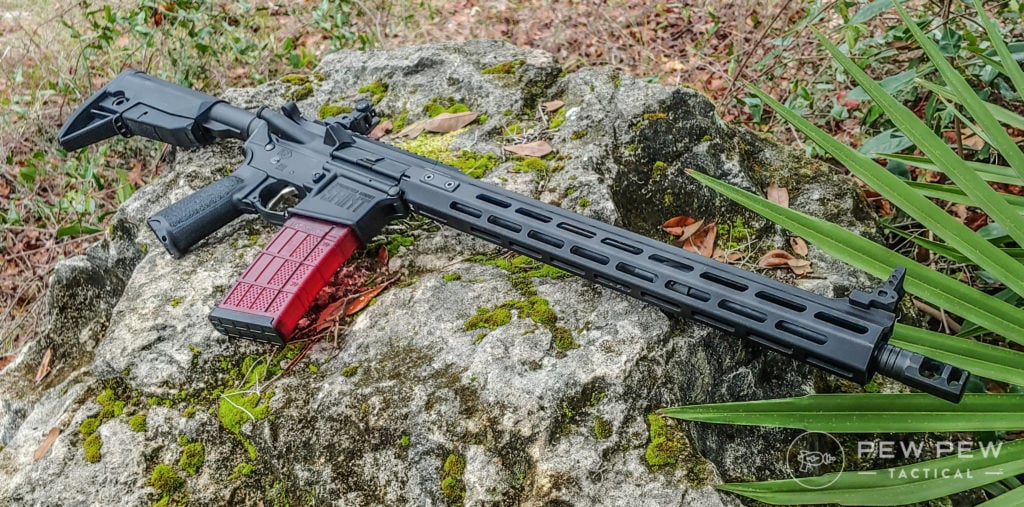
The handguard is 15 inches long and made from M-LOK, and it lacks a full length i12 o’clock rail. You get a small rail section for a front sight. This rail design makes it quite light but limits rail space.
If you are looking to run a night vision clip-on or another optic extension, this isn’t the gun for you.
Do you know what the Saint Victor does out of the box that other guns don’t?
Included sights.
Holy crap, is it hard to tack on some sights to my 1,400 dollar MPX?
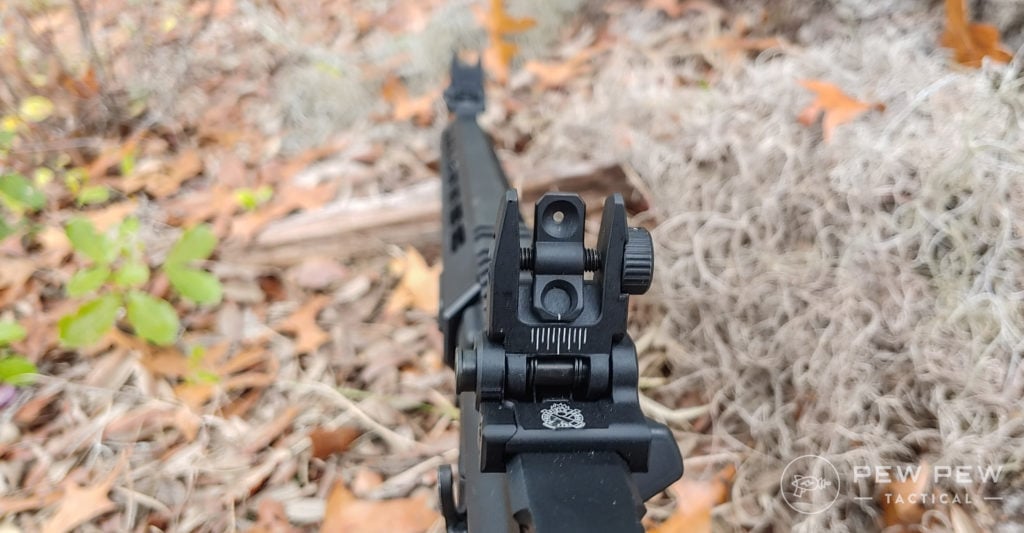
Look at them! They’re beautiful! Well, maybe not that, but at least they come with the gun.
The sights are simple but very useable. It has both a fine and wide aperture for easy target engagement at iron sight ranges.
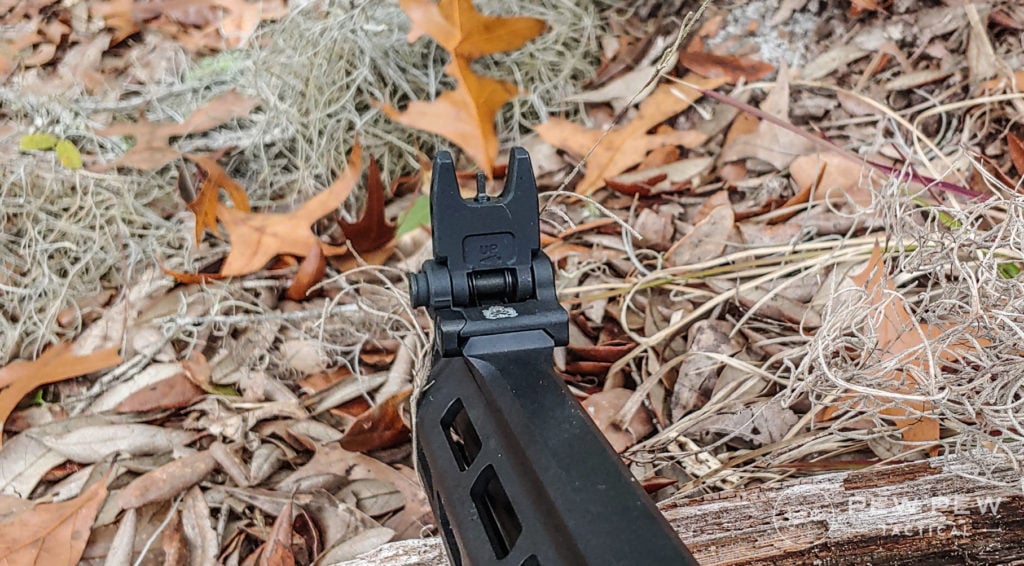
The Saint Victor comes with metal front and rear flip-up iron sights. These low profile sights mean your gun is ready to go out of the box. It comes with a PMAG as well as a nice little carrying case for the gun.
Front sight
It’s a great package, and Springfield did an excellent job of ensuring it’s a complete package out of the box. I can’t state how much I appreciate being able to take the fun out of the box and start shooting it without having to buy anything else.
The Saint Victor also has a standard M16 bolt carrier group that is HPT and MPI tested. What I particularly liked is that the BCG is made from a more robust 9310 steel instead of your usual Carpenter 158.
The Extras
I’ve mentioned that the gun is great out of the box. I
t’s well put together and lacks a lot of features that would classify the firearm in the budget category. The Springfield Saint Victor goes beyond that and gives you tons of extra features.
Springfield Saint Victor in the wild
As I mentioned, the stock and pistol grip are BCM made Gunfighter models.
The Gunfighter pistol grip has a sharp downward angle that is more comfortable than the A2 nubby grip. It allows you to pull the gun rearward and into your shoulder.
The grip also has a small storage compartment for the little goods you can store, like small parts, tools, and skittles.
Just the basics, y’know?
Gunfighter stocks have a feature I consider very important–it’s beard friendly.
I didn’t grow this hipster beard for guns to pull on it. The Gunfighter stock carefully avoids that.
I guess it also offers you a solid cheek weld, easy adjustment, multiple sling points, and a robust wiggle free design. That’s all-important too, I guess. It is an excellent stock, and its plenty comfortable.
Ain’t she pretty?
In front of the stock is a staked receiver end plate with a QD mount, which is a nice little touch.
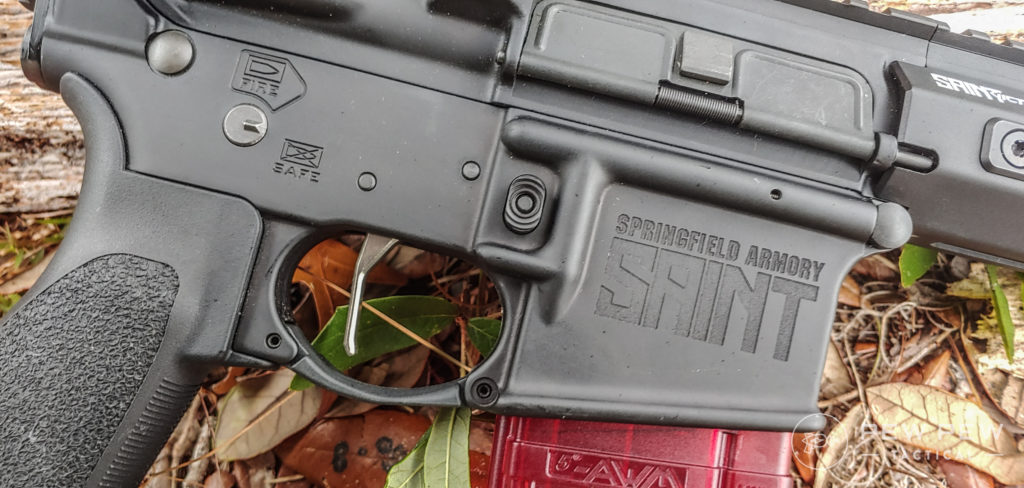
The trigger is a nice flat-faced design inside of an enlarged trigger guard for use with gloved hands. The trigger isn’t matched grade drop-in good, but it’s very nice for a stock trigger. I like the flat-faced design and feel it gives me more control over the trigger.
I’m not sure if it makes a real difference, but flat-faced triggers are more comfortable to me. The trigger components have a NiB coating that makes everything a little smoother. This single-stage trigger is heads and tails above a mil-spec style trigger.
The trigger
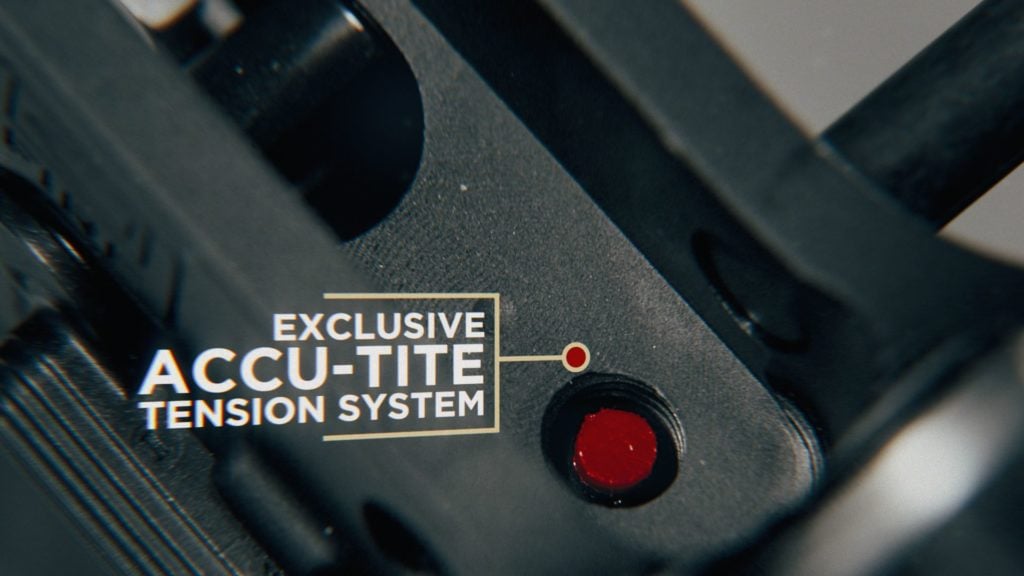
The lower is outfitted with Springfield’s Accu-Tite system. This takes the form of a user-adjustable screw located in the lower. It’s adjustable by the end-user and allows you to tighten the connection between the upper and the lower receiver.
The Accu-Tite eliminates that sloppy fit between an upper and lower. If you’ve ever chosen an upper by company A and a lower by company B, you may have experienced this slop. You can adjust the screw to tighten it more, but this will make it harder to disassemble.
Springfield’s Accu-tite tension system (via Springfield)
The good news is mine came from the factory nice and tight, and I can still take the upper off the lower easily enough.
The M-LOK handguard comes all the way to the end of the barrel, and the muzzle device is the only thing sticking out.
The handguard does allow for that Costa style C-Clamp grip if you like that sort of thing. M-LOK slots run up and down the rail makes it easy to attach accessories wherever you want them.
It comes fitted with a muzzle brake that reduces recoil.
The muzzle brake has two slots, one larger than the other, and this shoots the gas sideways. It does a fantastic job of reducing recoil and also making your gun very loud.
Really loud.
Way louder than an AR should be.
The muzzle device is efficient, though, and the gun barely moves. It feels like an AR with a 20-inch barrel. Super smooth, low recoiling with minimal muzzle rise.
Hitting the Range
AR-15s are typically all pretty much the same when it comes to handling. Recoil, handling, and even triggers all fall within a very standard design and look.
I will say the Saint Victor isn’t exempt from those descriptors.
The Saint Victor simply does it in a smoother manner. It does have less recoil than most ARs, and the brake does its job. The trigger is more fluid and lighter than MIL-SPEC ARs, and the stock and grip contribute to improving the already awesome AR 15 ergonomics.
Springfield Saint Victor
The real difference between the Saint Victor and most ARs is how lightweight it is. This low weight makes it easier to hold up for more extended periods, and quicker to get on target from a low ready or when transitioning from target to target.
Once you factor in the lighter single-stage trigger and recoil reducing muzzle brake, the gun is naturally a fast shooter. If the firearm is barely moving, why not pump 3 or 4 rounds into a target? It’s plenty easy to do. The Saint Victor is perfect for action shooting and excels in this role.
From a practical shooting perspective, this is an excellent defensive rifle. The trigger is just right for a duty or defensive style rifle, while the handguard allows for plenty of modularity, and a light would be a must-have for a home defense rifle.
Springfield Saint Victor
The term “driving the gun” fits this weapon well. The lightweight design makes it easy to transition between targets, and the lack of recoil makes sure you can do so without much difficulty.
Running simple drills like a failure to stop or box drill is simple, and when you move into the more complicated Viking Tactics, 1-5 drill the rifle still excels.
How About Accuracy?
While a lot of focus on the modern rifle is all about sexy close quarters shooting, a rifle is made for more than that. A good gun and a good rifleman should be able to take an AR out to 500 yards and hit a man-sized target.
The Saint Victor excels in close quarters use, and in my experience, it has no problems reaching out beyond 300 yards. That’s the max range I’ve taken the gun out too, and with iron sights, I scored plenty of good torso shots on a standard silhouette target.
With an optic, I could be even more precise. The Saint Victor is a solid rifle and performs as it should in various roles. Springfield made a formidable weapon with the Saint Victor.
Upgrades
The safety, magazine release, and charging handle are all standard AR-15 accessories.
They also represent the few things I’d change on the gun. The rifle doesn’t need any upgrades but could be improved just a bit.
The charging handle could be larger, mainly when used with optics, so a Radian Raptor would be my first upgrade.
I’m not picky about magazine releases, but a more significant release is always easier to engage. The Magpul model is super big, cheap, and I trust Magpul. After that, I wouldn’t change a thing.
I’ve fired more accurate AR-15s, but those guns were built from the ground up to be precision guns. I’ve also fired a lot of less accurate ones. For under a grand, this is a lovely and accurate rifle that will perform accurately up close and at extended ranges.
Ergonomics 4/5
The AR-15 is already a very ergonomic weapon, and the Saint is no different. The stock, pistol grip, trigger, and rail system make it a comfortable and easy to use gun. I have no major complaints, but with a few more upgrades, it can snag five stars.
Reliability 5/5
I’ve had this gun for months, and it’s been my primary training AR. I’ve used just about every type of round you can imagine without failure, including Tula and Monarch ammo. It eats it all.
Customizability 5/5
It’s an AR-15, and you can attach a cup holder for God’s sake.
Bang For Your Buck 5/5
The Victor is the best sub 1,000 dollar AR on the market. It packs a ton of features into an affordable package, and I can get behind that.
Overall 4.5/5
Conclusion
The Springfield Saint Victor is an accurate, reliable, and easy shooting AR-15. It’s well built, and the gun is super light and packed with features. I would have no issues recommending it to anyone and my current favorite AR under $1000.
var PPT_APS = PPT_APS || {};
PPT_APS[48365] = {
“id”: “48365”,
“title”: “Springfield Saint Victor”,
“img”: “https://www.pewpewtactical.com/wp-content/uploads/2020/01/Springfield-Saint-Victor-1024×324.jpg”,
“tag”: “”
};
Have you given the Saint Victor a try, or do you want to? What do you think about it? Let us know in the comments below! While you’re here, why not dream about how you’d upgrade it with our Best AR-15 Upgrades list!
A gun battle has errupted in Pensacola, Fl. Pensacola is the home to Pensacola NAS which experienced an active shooter back in December. One car has crashed at McDonalds. Officers and K-9 are in the area on foot looking for two suspects who ran from the crash scene. If you live in this area, lock […]
Washington — In response to a petition for rulemaking, the Federal Railroad Administration is delaying by 16 months the implementation dates of its Training, Qualification, and Oversight for Safety-Related Railroad Employees regulation.
According to a leaked memo obtained by Breitbart, authorities are on high alert for a group of five terrorists who they suspect are en route to the United States via our porous open border with Mexico. […]


 Mike Miller is the founder of