October 1, 2025

The 5 Best Places to Strike in a Knife Fight

Using a knife on another human being is a brutal business, on attack or defense. It isn’t like using a gun, with its brute mechanical efficiency: align sights, pull trigger, bang, hole is punched in target.

While some gunfights happen at bad breath distance, and they sure are fights, they still lack the primal viciousness of knife fighting. But just like guns, a civilian using a knife for self defense must know where best to strike in order to ensure effectiveness.

The only place knife fights look like tidy duels is in the movies, not on the street, not for real. Believe me now when I say that your knife fight will look nothing like what you’re imagining.

But even so, you must direct your cuts and thrusts to the right areas of your opponent’s body to even begin to guarantee you’ll have a good outcome. it might be hard for some of us to imagine, but driving a knife into someone’s belly or cutting their chest may not be the showstopper you think.

Chances are the people we will have to fight using lethal force will be much better acquainted with violence than we are. That means we must use our knives to mechanically and mentally dismantle them, piece by piece, reducing or even eliminating their ability to fight. In this article, I’ll tell you about five targets you should direct your blade at if you need to use it in a fight.

Considering the Typical Knife Attack

I made mention of a knife fight in the title of this article, but chances are what you’ll be facing is a knife attack, meaning one person in the fight using a knife on defense or offense. Even among already rare civilian self-defense encounters that require lethal force, a knife on knife fight is exceedingly rare.

We are talking moonshot rare, here, so if for whatever reason you find yourself in an actual knife fight with an attacker you have probably done absolutely everything wrong that day since the time you opened your eyes in bed that morning.

If you have not had the opportunity to see what an actual knife attack looks like, Mosey on over to YouTube or some other video hosting site and look them up.

Active Self Protection’s channel has a great archive of such videos. I warn you now, a lot of them are extremely hard to watch and very grisly. But self-defense is a grisly proposition, and even more grisly when you use a knife. Steel yourself and march on.

Common Elements of Knife Attacks

If you have watched a few of these videos, you’ll probably notice a few common threads.

First and foremost, you don’t see any highfalutin fancy maneuvers like you do in the movies or in martial arts dojos across the country. That’s because, frankly, that stuff just does not work well enough, reliably enough to bet our lives on.

The second thing you’ll probably notice is how fast and brutal knife attacks are: from a ready, or “chambered”, position the knife is extended, cuts or stabs are made, and the knife comes back ready to attack again. This happens over and over again with alarmingly high frequency.

Skilled knife fighters do not leave their knives extended thereby putting their weapon arms at risk of injury. An injury to your weapon wielding arm will severely degrade your ability to keep fighting.

On offense, the less “time on target” you present the better. These rapid-fire slashes or thrusts continue until the attacker manages to grab a hold of or latch onto the victim, essentially immobilizing them, meaning they cannot get away from the knife.

You’ll notice most fights follow on to another predictable outcome: once attached to the target the knife wielder commences a series of rapid-fire thrusts, either low line or high line on the target.

This is what’s colloquially known as a “sewing machine” style attack and can pile up fatal wounds extremely quickly and is very difficult to defend against.

this is not necessarily how we’re going to employ our own techniques but this is what you will be up against should you find yourself in a knife on knife fight.

Taking What You Can Get

Your short-term goal using a knife for self-defense is to start piling up substantial wounds on the bad guy as quickly as possible with as little risk incurred by yourself as possible. Sounds like a conspicuously nebulous goal, eh?

Think of it this way: say your attacker’s armed with a club, perhaps a heavy pipe, and he has it in his hand and chambered, meaning he has it pulled back ready to swing or raised over his head in order to bring it crashing down on yours.

If one of my targets is his weapon hand and lower arm (and it is, by the way) that means I should just go all in and try to get blows on that hand and arm regardless, right?

No! A clumsy attempt to pile in and strike his weapon arm will likely just see you get bashed in the head. You have to move too deeply into his space to attempt a cut or stab with your short knife and the risk versus reward ratio is just not worth it.

In this instance, you should take the first and best available targets, meaning ones you can reach easily and quickly get back on defense in a safer posture.

This will make more sense in just a moment when we get to the list of viable targets, but in this case it could be his front leg, an outstretched support hand looking to grab you or even a lightning-quick and vicious cut to the face or neck.

Which one should you go after? The answer is, as always, “It depends.” Reader, it is excruciatingly difficult to relate this in a usable, practical way via text.

Learning how to fight with a knife require substantial hands-on practice and tons of near full-power sparring. In an actual fight, you have to make choices in milliseconds. They are actually much closer to instinct than thought once you have trained enough.

Here, on the safety of the internet, within the confines of this article, I can explain at leisure what move you should pick and why to enact the “perfect” defense. It won’t work that way on the street.

He’ll be moving fast and furious, and so will you if you want to survive. In short, you’ll need to take what you can get regarding targets on your attacker.

If I can’t get his weapon hand or arm, I’ll settle for a cut to his face. If he is protecting his face, I’ll go for his groin. If he’s bladed away from me too far or leaning in too deeply for me to reach his groin easily, I’ll go for major muscle groups in the upper leg.

When he drops down to protect his leg I’ll go for his neck. And on and on the cycle continues until I have reduced the threat entirely. Note the distinction here: I’m not merely cutting or stabbing wherever I can reach- I’m constantly trying to get work in on the most valuable target that I can reach with minimal risk.

Keep that in mind as you read the following list. That’s enough preamble, let’s get to it!

The 5 Best Places to Strike in a Knife Fight

This list is presented in general order of effectiveness, though the effectiveness of knife cuts or thrusts to these locations will always vary person to person, and you should keep in mind that a “lesser” target, struck well, could be the one that handily stops the fight for the bad guy and opens up your opportunity to escape. In the end, as a civilian, that is all you are after.

Remember! Take the best target you can get!

1. The Neck

No one should need any introduction about just how vital the neck is as an anatomical location on the body. Housing the windpipe, a quartet of major veins and arteries, and the spine as well as supporting the head (the body’s command center) the importance of the neck cannot be overstated.

Most people have a visceral reaction to even imagining their neck sliced or their throat cut wide open. This is with good reason: we are primally conditioned to protect our necks from harm at all cost.

It is unfortunate that the neck is also an extremely vulnerable target, being very soft, thinly shielded by muscle or bone, and flexible. One good cut or solid thrust of the neck is likely to inflict show-stopping damage, and if that does not immediately deter the attacker he is likely to become incapacitated in very short order due to blood loss or difficulty breathing.

This assumes of course that the pain or shock of a severe wound being inflicted on their neck does not cause him to mentally or emotionally check out of the fight.

Even comparatively minor wounds to the neck have a disproportionate mental impact, as they will bleed like a nightmare horror show. Furthermore many people’s hands go immediately to the site of a neck injury in an autonomous reflex. We’ll take it.

Whichever happens first, both can provide ample opportunity for you to disengage and get out of the fight. But be warned: even with a solid blow you cannot assume it will be immediately fight-ending.

You must continue and put up a strong defense until you know for certain that you can disengage safely. If he hasn’t turned to move away from you or fallen to the ground burbling you must keep fighting. Nothing else will do!

2. The Face

Compared to the neck, the face may seem like a poor choice of target. Sure, it contains many important structures for the continuation of life but the only big-ticket targets are the eyes.

That is exactly what we should aim for. the most minor injury to an eye is exorbitantly distracting and definitely debilitating. Most people go half blind with a speck of dust or dirt in their eye.

Imagine how bad a scratch or actual cut can and will be, to say nothing of total destruction rendered by ramming a knife into someone’s eye socket.

The pain from such an injury is beyond breathtaking and may very well see the attacker collapse in transcendent agony. That is definitely your cue to exit.

But the eye is a small target, and is much harder to hit considering it is installed on its own larger moving target, the head itself, and heavily armored to boot being surrounded by the hard, bony orbit of the eye socket and is directly damageable only from the frontal facing.

If that sounds like a tough shot to make, it is, especially considering that most people are disproportionately protective of their faces. The good news for us is we don’t have to score a direct hit to the eye to help ourselves win the fight.

Any serious injury to the face is mentally jarring and very painful. You can imagine the shock of the average bad guy believing he has you right where he wants you only to feel a sharp pain before half of his vision goes red with his own blood, and right after he feels half of his face start to peel off. That is the terrible power of a surprise cut to the face.

Even if you are dealing with a very tough hombre, getting blood in your eye is no joke. Reducing an attacker’s vision is always good for you, and will help make the rest of the fight go in your favor assuming they press on.

There’s also the chance of mechanically reducing an attacker’s vision by cutting muscles in the face and scalp that help hold the eyes open. Also do not underestimate how fast swelling from an injury can begin to degrade vision.

Humans are so dependent on our sight that losing it or having to make do with impaired vision in something as stressful as a lethal force fight may very well convince your attacker the discretion is the better part of valor.

3. Hand / Lower Arm

No matter how wild and crazy he looks your attacker will never kill you with a mean glare alone. One way or the other he’s going to have to use his hands: beating you, strangling you, or using them to grip a weapon he will use against you.

Attacking the attacker’s hands and lower arm will degrade or even eliminate his ability to use them effectively. This in turn will go a long way towards keeping you safe in the fight.

Yes, yes, I guess technically he could headbutt you, kick you or stomp you to death but most folks combative capability is reduced significantly when they cannot use one or both arms or hands, especially if they are using a weapon.

In traditional Filipino martial arts, this is known as “defanging the snake”: an attack on the attacker’s hand or weapon arm with the intention of getting them to drop their weapon, specifically another knife.

But for our purposes it could be anything they’re holding or even an empty hand, as an empty hand can be used in an attempt to grab you, or disarm you. Armed or not, targeting the bad guy’s hand and lower arms is a great move.

Luckily for us it is also a pretty easy target most times. While the dominant hand, which is usually the one clutching a weapon, is often bladed away from us and held near the torso the opposite hand and arm is usually up in a ready position and much easier to attack.

While you should be cautious about chasing a “red herring” that may open you up to damage a quick, conservative attack can be delivered with little risk to yourself and if successful will definitely put the bad guy on the back foot.

Any significant damage to a hand will have good effect, specifically making it difficult or impossible to hang on to something and inflicting terrible pain.

The hand is disproportionately chock-full of small, delicate bones, tendons and sweet, succulent nerve endings which are extraordinarily sensitive to pain.

Also don’t discount just how slippery blood is; a small slice that otherwise has little effect except inflicting pain will have the secondary effect of literally greasing the attacker’s palm with blood which will make it harder for him to hang on to you or hold on to a tool.

Any wounds we can deliver to the lower arm will similarly make use of the hand difficult. Severing the muscles of the forearm will make it difficult or impossible to open or close the hand depending on which muscle groups are destroyed.

The forearm is an easier target to hit compared to the hand and especially vulnerable if an attacker reaches out to grab you or strike. If you are beginning the fight with the attacker latched onto you you can hardly do better than a powerful and lacerating cut to the forearm.

One quick note with regards to targeting the lower arm: The underside, or chunky part of the forearm is not nearly as well protected by the two long bones within compared to the upper side. If you are able, always target this larger, more vulnerable mass of muscles.

4. Below the Beltline: Groin and Pelvic Girdle

I don’t know about you, but the thought of being cut anywhere makes me wince. What makes me feel queasy is the idea of being cut near my groin. Man or woman, as humans we are predisposed to protect our reproductive organs.

One needs no more evidence of this when they consider the preponderance of the nerve endings in that area which are exquisitely sensitive to pain of all kinds.

Nearly all men in particular know the sickening, crumpling agony that accompanies taking a hard shot to the private anatomy down there. Leave it to your imagination, but don’t wonder too hard, about how much worse it will be suffering a wound as grievous as a cut or thrust from a knife.

Visceral terror aside, there are very practical reasons to target the groin, or as I like to call it the below-the-belt area. In the groin and pelvic girdle region, you’ll find bundles of major arteries, blood vessels and major muscle groups responsible for macro motor control of the legs.

Striking any of them will produce either phenomenal blood loss or a drastic reduction in mobility which may enable escape and will further hamper your attacker’s ability to hurt you.

If you can get the guy on the ground permanently or semi-permanently, you’ve gone a long way towards winning the fight.

One good show-stopping technique you might try is a thrust into the high groin area before dropping your weight and using it to make a power cut towards the tailbone.

This is phenomenally destructive and will get you a two-for-one of major blood vessel damage and the severing of important muscle groups.

One thing you should keep in mind, however: in a typical fighting stance the groin and pelvic region will be better protected than you might think by the bad guy’s posture

This means you’ll need to move in closer in order to strike it. Don’t commit unless you think you can score a good hit without over exposing yourself.

5. Thigh

Compared to the other targets on our list, the thigh is a pretty easy one and also densely muscled. Severing any or most of these muscles will severely degrade mobility and structural support provided by the accompanying leg.

The band of muscles directly above the knee at the bottom of the thigh on the front are particularly vulnerable to damage and are a low-risk, high-reward target.

The thighs are a particularly good area to target because of ease of access, generally poor defense compared to torso and head locations and its importance for general mobility.

One good, solid slash or thrust may be all that is needed to enable your escape. It is very difficult to give chase with a major knife wound to your thigh, after all!

Aside from those easily damaged major muscle groups, way down deep in the core of the thigh, next to the femur bone, is the femoral artery.

If severed or severely lacerated, the femoral artery can dump enough blood quickly enough to immobilize most people from loss of blood pressure and volume in about 30 seconds.

Some people go down a lot quicker than that. For a knife, this is going to be a tough target compared to a gun but it is entirely possible to reach if you commit to a major strike.

There’s no good reason to not strike the thigh if you are locked in close combat with someone and you have a knife, but especially for civilians this is a great target.

If the bad guys are armed with a close combat weapon, and not a gun, immobilizing him may be just as good as incapacitating him. So long as his weapon has limited range, if you cannot reach you and contact you with it he cannot harm you.

In essence, that’s a win. If you’re able to fillet the attackers thigh so he can scarcely move and then get away from him, you win. That’s it. You can let emergency services and the police clean up the mess and deal with him; you just need to get away. A thigh shot can make that possible.

Honorable Mentions

There are some anatomical targets on the human body that are definitely worth getting after with a knife, but did not make the Big 5 list for one reason or another.

Not because they aren’t effective, and not because they are inaccessible but because they may entail more risk or be statistically harder to significantly damage compared to the targets above.

The Chest / Upper Thorax

This is priority target number one when using a gun as bullets are hardly hampered by the rib cage and sternum. Unfortunately, knives might be.

Probably not as much as you are thinking, so long as your blade lacks excessive hooks, saw teeth, recurves, serrations and other protuberances which are likely to snag on the withdrawal, but it is still common enough but it is still common enough you probably don’t want to risk it.

To be sure, any damage to the heart or lungs is going to cause major problems for an attacker. Concerning the lungs in particular though it may not cause effect as quickly as we would like.

Also anything short of catastrophic damage to the heart may not reduce its efficacy enough to keep the bad guy from killing us in the meantime. Also keep in mind the thorax is typically protected my clothing.

Now, clothing may not seem like much protection against a sharp knife, and in the grand scheme of things isn’t, but layers of clothing and heavy materials like leather or denim jackets and woven nylon shells can provide a surprising amount of deterrence even to a sharpened knife.

At the same time, they drastically increase the risk of snagging the blade.

When you consider clothing atop the large muscles of the chest and beneath the muscles the substantial amount of bone armor protecting these most vital organs the chest is not my favorite target if I’m using a knife.

Yes, wounds to the chest will more commonly produce a truly fatal end, but we should not be preoccupied by that: as civilian defenders we are concerned only with escape and we’ll use only the minimum amount of necessary force to ensure that.

Belly

I don’t doubt that some of you yay-hoos have fantasized about using your tactical knives to literally disembowel some scumbag attacker right there in the street with just one devastating stroke.

It can happen, but you are far more likely to score a thrust into an attacker’s belly than a deeply penetrating slash. A stab to the gut is absolutely no joke and certainly can be life-threatening, but statistically they also show little effect compared to other targets struck on our list.

Even a solid stab from a knife may be interpreted as nothing more than a punch to the gut when adrenalized. It seems counterintuitive, but the intestines are simply less sensitive to pain and trauma at the instant than other organs and targets.

Furthermore, the intestines are only necessary for life in the long-term, not in the short-term. You could disappear someone’s intestines out of them with a magic spell and they would go right on living for a time.

You would have surely killed them, but you would not have stopped them right then and there, and that’s why attacks to the belly are non-starters.

Aside from its considerably reduced effectiveness the abdomen is also likely to be better protected by clothing as with the chest. Consider those two things together and you should only go for a belly shot if you have literally no other option.

Conclusion

If you must ever rely on your knife to defend yourself from a lethal threat you still need to do more than just wildly swing and stab at your attacker to disable him.

Knowing where to strike, and why, is crucial to surviving the kind of close-quarters mayhem you’ll be dealing with in a street fight. Read over this guide, understand what you need to achieve with your knife, and then pick your targets accordingly.
knife fight places to strike pinterest

The 5 Best Places to Strike in a Knife Fight Read More »

Arco Innovation Award finalists to gather for demonstration day

The final five start-ups of the Arco Innovation Award have been selected and announced. It’s now time to look ahead to the demonstration day – one of the final elements of the judgement process.

The post Arco Innovation Award finalists to gather for demonstration day appeared first on SHP – Health and Safety News, Legislation, PPE, CPD and Resources.

Arco Innovation Award finalists to gather for demonstration day Read More »

Security Information Overload: From Panic to Apathy & the Remedy

Security Information Overload: From Panic to Apathy & the Remedy

Security overload leads to apathy. How often do you hear a car alarm go off and roll your eyes hoping the owner would disable the blasted thing before the incoming headache comes a knocking? The primary objection I have to such systems is they work too well. Every week I hear an alarm being triggered […]

This is just the start of the post Security Information Overload: From Panic to Apathy & the Remedy. Continue reading and be sure to let us know what you think in the comments!


Security Information Overload: From Panic to Apathy & the Remedy, written by Thomas Xavier, was created exclusively for readers of the survival blog More Than Just Surviving.

Security Information Overload: From Panic to Apathy & the Remedy Read More »

Preparedness Notes for Sunday — January 19, 2020

January 19th is the birthday of General Robert E. Lee. — This is also is the birthday of the late Carla Emery (born 1939, died October 11, 2005). She is well known in self-sufficiency circles as the author of The Encyclopedia of Country Living. (This book was re-released in a 40th Anniversary edition.) — SurvivalBlog Writing Contest Today we present another entry for Round 86 of the SurvivalBlog non-fiction writing contest. The more than $12,000 worth of prizes for this round include: First Prize: A $3,000 gift certificate towards a Sol-Ark Solar Generator from veteran-owned Portable Solar LLC. The only …

The post Preparedness Notes for Sunday — January 19, 2020 appeared first on SurvivalBlog.com.

Preparedness Notes for Sunday — January 19, 2020 Read More »

Lane Closures Continue on Smokies Roads for Tree Removal Work

Great Smoky Mountains National Park officials remind visitors that single-lane and area closures will continue to affect several park roads through Friday, March 27 for tree removal work. Closures are necessary to ensure the safety of motorists and tree-removal crews along the park’s narrow roadways during the work.

Single-lane closures will be implemented on the Spur through January 24. Wears Cove Gap Road will be fully closed from January 29 through January 30. Single-lane closures will be implemented for short durations on Newfound Gap Road, Cherokee Orchard Road, Gatlinburg Bypass, Little River Road, Foothills Parkway West, and Lakeview Drive as well as the developed areas in Deep Creek, Cades Cove, Elkmont, and Smokemont through March 27. All tree removal work involving single-lane closures will occur from 6:00 a.m. on Mondays to noon on Fridays throughout the work period, excluding federal holidays. The work schedule is subject to change due to weather or other unplanned delays.

For more information about temporary road closures, please visit the park website at www.nps.gov/grsm or follow SmokiesRoadsNPS on Twitter.

Jeff
HikingintheSmokys.com
RockyMountainHikingTrails.com
HikinginGlacier.com
TetonHikingTrails.com

Ramble On: A History of Hiking
Exploring Grand Teton National Park

Lane Closures Continue on Smokies Roads for Tree Removal Work Read More »

The Top 10 Best Survival Dogs to Defend You

It is no secret that plenty of preppers own dogs, and their dogs may actually factor into their survival plans beyond more than just a companion. It is a sure bet that plenty of people will depend on their faithful canine friend to physically protect them or keep watch for intruders or threats lurking nearby.

There’s a big difference between a family dog and a proper guard dog, or protection dog.

If you want the dog to be a true survival and self-defense asset, there are few prerequisites. First, the dog has to be up to the challenge. It has to have the temperament, the build, strength, speed and most importantly the intelligence to serve as a genuine guard dog.

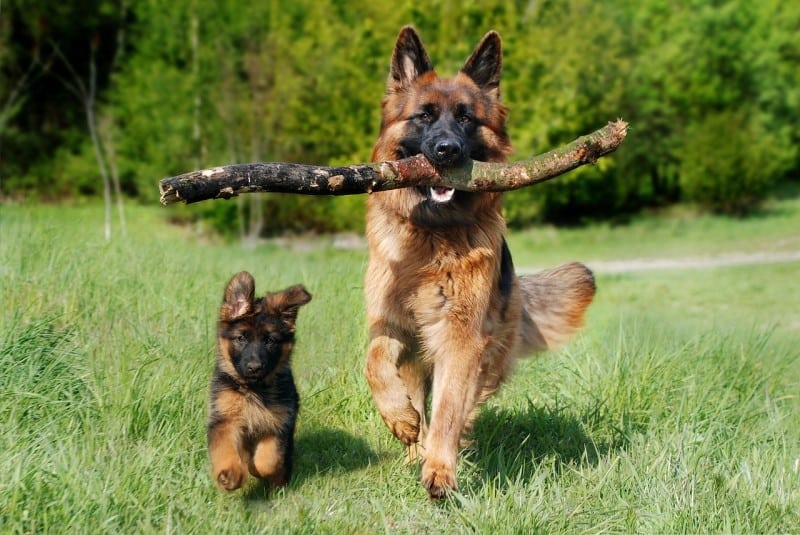
german shepherd

A strong sense of loyalty to you and your family is paramount. The dog must be obedient, but also trust its senses when it comes to strangers.

Certainly not every breed is up to the task and more importantly some breeds are far more suited for this demanding work than others. In this article, we’ll talk a little bit about those demands and offer 10 great breeds that can make great protection dogs for you when you’re in a survival situation.

All Dogs Go to Heaven, but Not All Dogs Are Good Protection Dogs

The idea of using a dog for protection work is certainly nothing new. Even as far back as the dim days of prehistory mankind has been using our domesticated canine pals to shore up his own weaknesses.

The senses of even the laziest, most aloof dog are far superior to humankind’s own, and dogs have always been used for guarding livestock, guarding the perimeter and as early warning systems.

With a strong enough bond, and some training dogs quickly learned who is part of the “pack” and who was not, taking the initiative to protect family members from threats posed by strangers and wolves while letting those who were “in” come and go as they please.

A dog’s superior senses, focus and autonomy are valuable assets on the defense, and that has not changed in millennia.

But the earliest days of man and mutts bonding are long since behind us. generation upon generation of selective breeding practices, especially choosing for even temperament and lack of aggression, have seen the vast majority of domestic dog breeds achieve a state of geniality and passivity that are a shocking contrast to the wolves and wild dogs of old.

This is undeniably a good thing for a companion dog. But, if you think your furry friend will put the clamps on someone that’s threatening to hurt you and your family all on his own initiative, you may be in for a rude awakening.

In all the self-defense cases I ever viewed over the years where dogs were involved I’ve noticed a trend. Most of the time the family dog, no matter what breed it is, does not intervene on their owner’s behalf.

They may bark and make plenty of noise but rarely will they attack the attacker with any sort of meaningful effect. More than a few of them try to get out of the way for their own sake. As it turns out, you can condition the wolf right out of a dog.

The Right Stuff

Even so, some breeds are still a little closer to wolves than others, and breeds that have carried on the lineage of their ancestors for herding, hunting, and guarding show fight far more often than their companion dog counterparts.

If you are serious about using your dog as a self-defense system you need the right breed. Almost any dog can make a good watchdog or alarm system but when it is time to go hands-on, or rather teeth-on; you want a dog bred for tenacity, resistance to pain, strength, agility and intelligence.

It follows that some breeds have these traits in greater abundance than others. any intelligent dog can make a halfway decent close protection dog with the right training.

Considering how expensive that training is and what an investment you’ll be making in your dog as part of your self-defense system you’d be a fool to start with anything except an ideal guard dog candidate.

I’ll furnish you with a list of 10 excellent breeds for protection just below.

You Must Take Training Seriously

No matter how good you think you are with dogs, and no matter what kind of breed you are getting you must factor in the cost of professional protection training along with the dog itself.

Protection training is not obedience training, although obedience is part of the program. Protection training is not agility training, though feats of agility are a big part of the curriculum. No, protection training is something else entirely.

Once you put a dog through protection training, or proper guard training, it is no longer a family pet though it is still a member of the family. You’ll never quite be able to treat that dog the same again.

Chances are you won’t be able to bring people quite as freely in and out of your home with Buster lollygagging around to and fro enjoying the festivities as you used to with dogs past.

The way you address the dog and interact with visitors suddenly takes on an entirely new gravitas. Your dog will be looking for behavioral cues both from family members and from unknown human contacts to inform his decisions.

A misstep or misinterpretation of an otherwise innocent action could lead to tragedy and not just a little peck on the foot or hand. Dogs trained for protection duty at the minimum bite and hold in an effort to bring someone down and immobilize them.

More serious training, or just a more aggressive dog, could see a protection trained dog bite and tear, or use a corn-on-the-cob technique on an offender’s limb, inflicting grievous puncture wounds and lacerating damage. A dog on the attack is not called a “fur missile” for nothing.

Owning any dog is a commitment, owning a protection trained dog is a commitment far beyond even that. You have to be committed to the training, the lifestyle changes and the proper care and handling of your dog once you cross the threshold.

Anything else is negligence on a massive scale. Neglecting proper procedure, care and handling of a protection trained dog could see you, your family or an innocent grievously injured.

Take it seriously.

The Top 10 Survival Dogs for Protection

1. German Shepherd

german shepherd

Most of you probably already knew that the famous ‘GSD’ was going to be number one on this list. Steady and calm when not on the clock but razor focused and confident when working, German Shepherds have long been the police k-9 of choice for decades. It is those same attributes that make them such great police dogs that can make them a great guard dog for you.

German Shepherds are extremely affectionate and generally a good, dependable members of the family even with children making him a standout choice for family-oriented protection dog. However, these dogs do have strong prey drives and may not get along well with other pets especially small ones.

They extremely athletic and need lots of exercise and play, or else they can become anxious and destructive, or even aggressive. Their intellect and work drive comes at a price: they will need plenty of training and objective-oriented work routines to be happy and stable. With proper socialization, German Shepherds are gentle, fun family dogs.

Regarding their health and care, German Shepherds are notorious shedders with their coarse, medium length coat that has a thick undercoat. Be prepared to brush regularly if you don’t want the entirety of your house and all your belongings coated in GSD fur.

Modern breeds of German Shepherd are notorious for hip and elbow dysplasia, gastric dilatation volvulus and degenerative myelopathy. they typically weigh anywhere from 60 to 100 pounds and have an average life expectancy of 7 to 10 years.

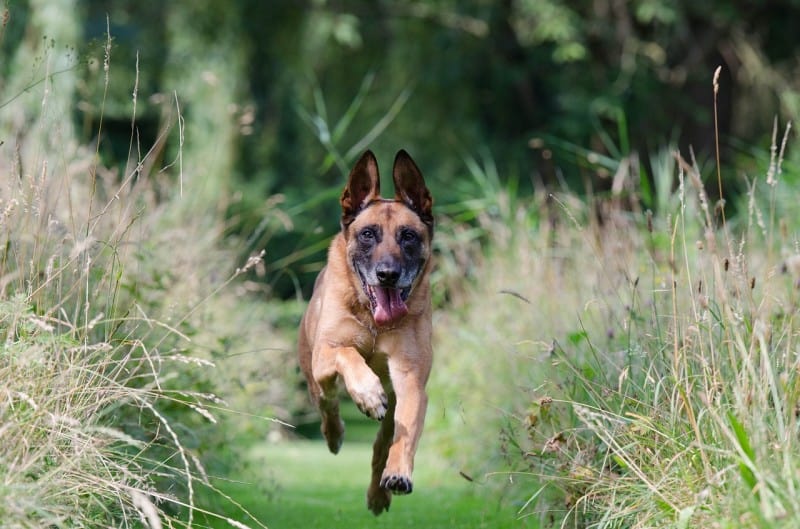
2. Belgian Malinois

Belgian Malinois

Diligent worker with a singular focus and extraordinarily athletic, the Belgian Malinois is an up-and-coming K9dog of choice in United States, but has long been the police and military dog of choice in Europe and parts of northern Asia, including Russia.

They can be very trying companions, owing to their immense exercise and activity needs but can make a fine for a friend for a very active person: it cannot be understated how much exercise these dog need.

Sometimes mistaken for smaller German Shepherds, in comparison, the Malinois has a leaner, more streamlined and sometimes described as more “athletic” build.

Possessed of incredible agility and great strength to match their superb intellect, Malinois will become very anxious if not given ample exercise and activity. of note, the Malinois may or may not be a great guard dog candidate for family with small children.

They must be trained to tolerate small animals and smaller kids since their prey drive is sharp and they trend towards hyperactivity and intensity even after training.

The herding instinct in particular often results in nips being handed out regularly. don’t even consider adding another pet to the household once you already have a Malinois.

The Belgian Malinois is generally easy to care for but they do shed seasonally although they require less brushing than their cousin the German Shepherd.

As a rule, they are slightly smaller than a German Shepherd with a longer lifespan of 14 to 16 years and weigh anywhere from 50 to 80 lb. common health conditions include hip and elbow dysplasia and progressive retinal atrophy.

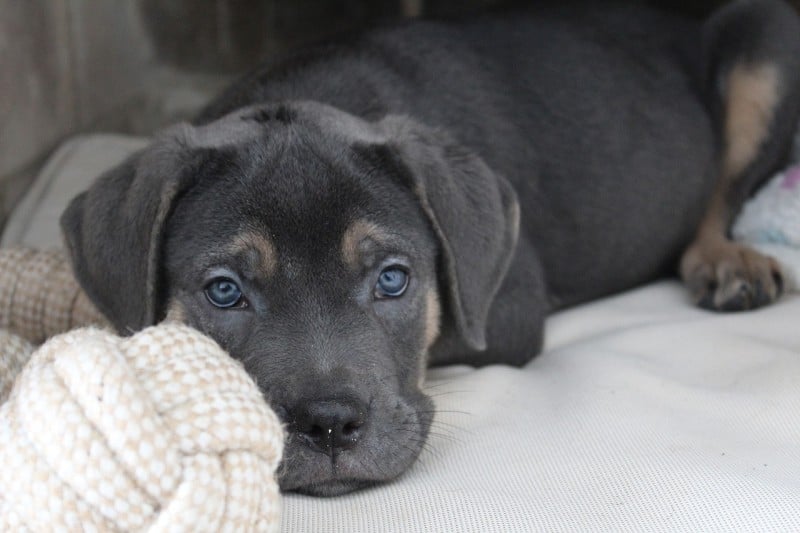
3. Cane Corso

Cane Corso

Large, powerful and imperial, these Italian members of the mastiff family are descended from war dog stock. historically used as guard dogs for hunting even very large game and the cause of war, the heavy, stocky build and deep bassy bark of the Cane Corso belies a surprising amount of athleticism and excellent intelligence.

For natural tendency towards guarding and patrolling perimeters makes them a challenging dog for a beginner, but if you have the will to take your place as its master Cane Corsos are loyal, surprisingly affectionate and extremely effective guard dogs. supremely confident in all situations, Cane Corsos are muscularly powerful, fearless and extremely vigilant.

Going anywhere from 80 to 120 lbs and standing about 28 in. at the shoulder, these dogs are downright intimidating. Cane Corsos regularly display a natural aversion towards strangers and sharp territoriality, meaning they must be trained extensively and well-socialized in order to exist peacefully in society.

These dogs have a powerful will; if you give them any slack when it comes to bad behavior like leash pulling, jumping and rowdiness you will pay the piper down the line. give them an inch, they’ll take a mile.

Make sure you give these big boys plenty of exercise and lots to work on, or else they’ll come up with their own work, typically in the form of destructive behavior like hole-digging and rampant chewing.

Like all selectively purebred dogs, Cane Corsos do have their share of genetic health problems. Hip dysplasia and ectropion are common, but other than that they are a surprisingly robust, easy-to-care-for dog that needs minimal brushing and only occasional bathing. make sure you keep their nails trimmed short enough to support their activity level.

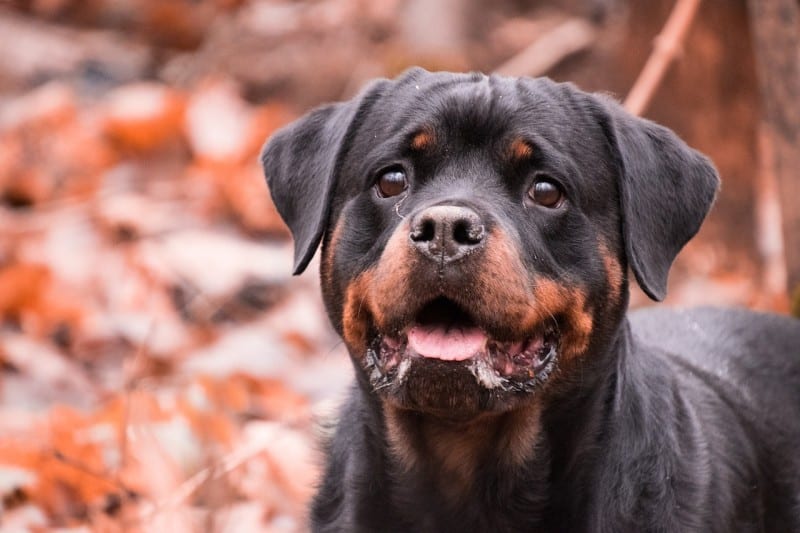
4. Rottweiler

Rottweiler

Rottweilers endured a similar reputation that Pit Bulls do today back in the 1980s, being thought of as an inherently dangerous and aggressive dog.

The reality is that the Rottweiler is often study in contrasts: going from lolling, affectionate snugglebug with familiars and family to standoffish and aloof with strangers, Rottweilers are stocky, powerful working dogs that are notoriously hesitant with strangers and extremely protective of their families.

Rottweilers are quick to standoff with those they perceive as threats and never hesitate to alert an interloper that their actions are not welcome. A properly trained Rottweiler makes an excellent guard dog and great family dog.

famously confident and hardworking, Rottweilers are descended from mastiff stock that stretches as far back as ancient Rome. Rotties, as they are popular called, can also be very gentle despite the reputation for power and work-seeking.

As long as you get in early with training and socialization you will have absolutely no problems with your Rottweiler.

Around the home, they are extraordinarily competent guard dogs but their herding instincts remain strong, however, and this can occasionally lead to a little friction as they try to prevent children and smaller members of the family from leaving rooms or the home itself.

Rottweilers are definitely large dogs, weighing anywhere from 80 to 130 lb and standing 27in. high at the shoulder, they have an average life span of 8 to 10 years.

They commonly suffer from osteochondrosis, entropion, and cranial cruciate ligament injuries, but are about part for the course health-wise compared to similar working breeds in their weight class. Their dense coats require a fair bit of upkeep and regular brushing so plan accordingly.

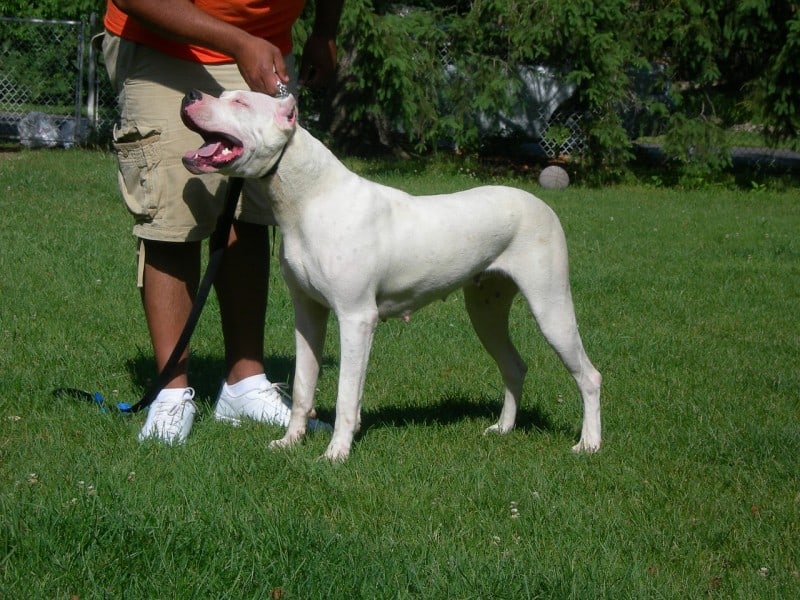
5. Dogo Argentino

dogo argentino

The original doggo, the Dogo Argentino is another large and powerful natural hunter and alert guardian with a beautiful snow white coat to compliment its imperious demeanor.

In contrast to its formidable peers, the Dogo Argentino is a friendly, almost cheerful breed who makes for a warm companion. but this people-pleasing demeanor does not even hint at its lineage.

The Dogo Argentino was originally bred to hunt wild pigs and other large game, and for that activity fearlessness, resistance to pain and extreme stamina was a necessity.

The Dogo Argentino of today has inherited the high energy of its ancestors and requires a considerable amount of exercise for such a large dog.

Dogo Argentinos are not ideal for multi-pet households or human masters with flimsy backbones. they fairly commonly show aggression towards other dogs and have a high prey drive, as befits their hunting dog lineage.

You can expect your Dogo to readily give chase to any smaller animals that get into the yard or come into the house. however affable they are, you can expect your Dogo Argentino to also need regular reinforcement and consistent training. early socialization in puppyhood is a must if you want to be sure of getting a well-behaved adult dog.

It isn’t all work with the Dogo Argentino, though; once he expends his energies he’ll be more than content to take it easy and be lazy around the house, a sharp contrast to other working dogs.

Weighing anywhere from 80 to 100 pounds and standing around 27 inches tall at the shoulder, the Dogo Argentino is comparable in build size to Rottweilers and most mastiffs. being relatively recently developed from a variety of other dog stock; the Dogo Argentino is largely free of health problems save deafness.

Their life span is however somewhat variable averaging anywhere from 9 to 15 years. but there is yet more good news: the Dogo Argentino is a very low maintenance dog. they shed little and are regarded as a low-odor breed.

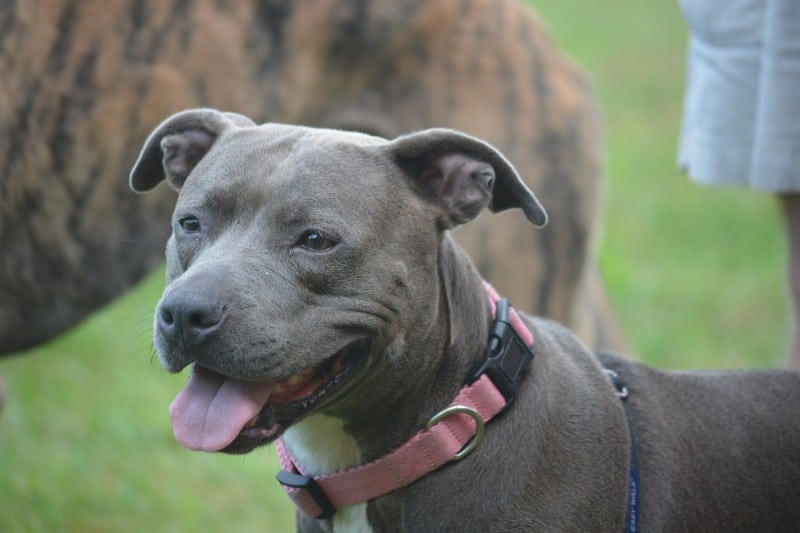
6. Pit Bull

Pit Bull

The infamous Pit Bull, also known as the Pit Bull Terrier, or American Pit Bull Terrier is a compact, dense and powerfully muscled dog renowned for its tenacity, seeming invulnerability to pain and relentless determination in a fight.

Their history as bull-baiting dogs and fighting dogs has given them an aura of infamy and fear, but the breed today is also eager to please, family-centric and highly intelligent. coupled with their well-developed physical characteristics, the Pit Bull can make a fine guard dog.

These dogs vary in size and musculature, but trend towards a very dense and powerfully muscled body weighing around 60lb. They’re very sturdy, human-friendly, athletic and courageous.

Their tenacity especially needs no introduction. While very human friendly, they may not do well with other dogs, especially dogs they do not know. You will always be best served get a Pit Bull as a puppy and immediately implement proper training as soon as they are able to attend.

A strong-willed, calm, steady owner is a necessity for a Pit Bull to thrive. May be stubborn, if you allowed them to indulge their will and not follow your own; you might wind up with a spoiled dog who’s telling you what’s what.

Pit Bulls are another highly refined dog breed that has inherited its health problems. hip dysplasia, hypothyroidism and canine atopic dermatitis are all common ailments that Pit Bulls suffer from. another breed of highly variable life span, they can live anywhere from 8 to 15 years.

Their short coats usually have a sharp and attractive appearance, but they do shed quite a bit and require regular brushing and other grooming care. keep a vacuum cleaner handy.

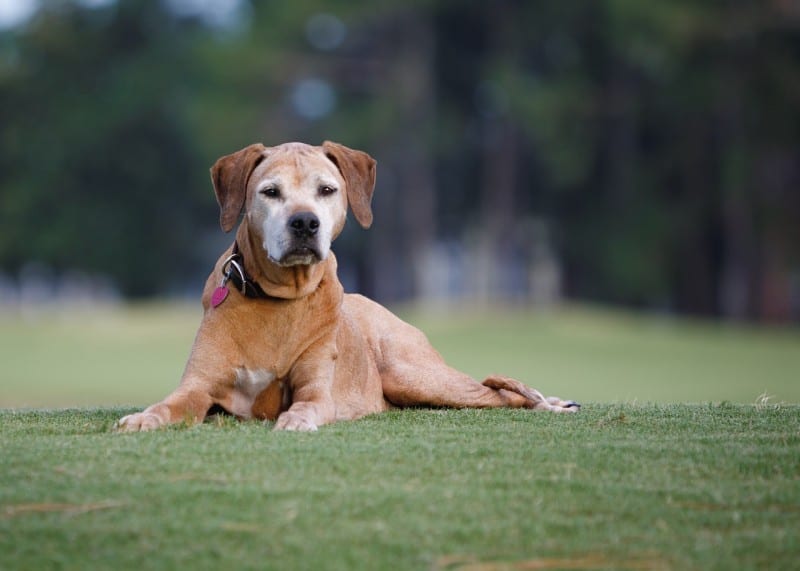
7. Rhodesian Ridgeback

Rhodesian Ridgeback

these tall, noble and athletic dogs were originally bred by European settlers in Africa back in the 1500s. Crossbred with local wild dogs, the Rhodesian Ridgeback gained its name from the stripe of hair that grows in the opposite direction from the rest of its fur along the length of its spine.

These dogs were originally raised for hunting and their intellect and powerful build soon gained them work as guard dogs and watch dogs.

These hounds were formerly known as the African Lion Hound, since they were once used to corner and hold lines at bay until hunters could arrive to dispatch them.

With tenacity and determination enough to corner a lion, you know these dogs have the chops to protect you and your family!

Ridgebacks are known for their intense loyalty and equally intense focus, particularly on whatever has piqued their interest by sight, scent or sound. specialized training with an emphasis on attentiveness and obedience is a must with Ridgebacks since they are heavily inclined to follow their own interests.

Aside from those quirks, these dogs are highly athletic and need plenty of physical and mental exercise. at the bare minimum 30 minutes to an hour a day of stimulation will keep your Ridgeback happy and healthy.

In keeping with their hunting stock lineage, these dogs are apt to chase anything that moves. they may not do well with small children and certainly won’t do well with small animals, domestic or wild.

A pound of prevention is worth a pound of cure with a Ridgeback, and involving him and some structured activity that exercises his interests can prevent behavioral problems.

traditional Ridgebacks weigh anywhere from 70 to 85 pounds and stands about 26 inches tall at the shoulder. their glorious, unique coats shed very little and require little grooming care, aside from an occasional bath and nail trim.

They do have some health problems they are known for, specifically dermoid sinus, elbow dysplasia and hip dysplasia.

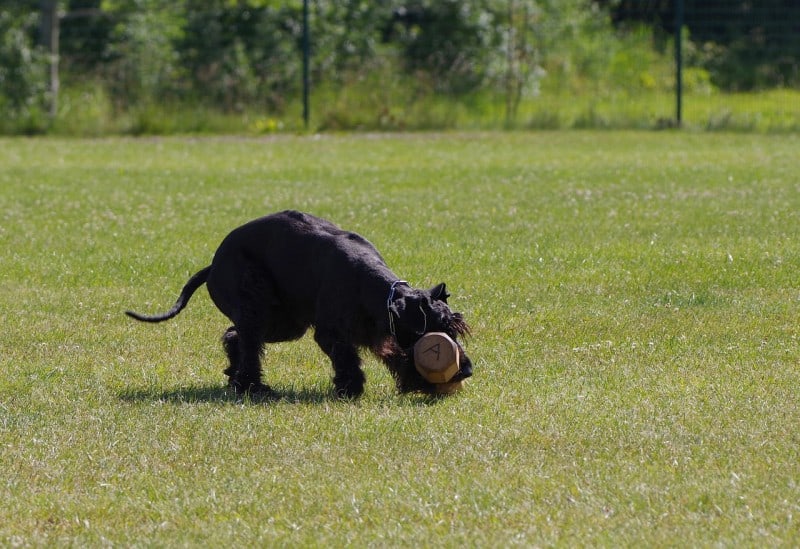
8. Giant Schnauzer

Giant Schnauzer

majestic, commanding and imposing best describes the Giant Schnauzer. this jumbo-sized version of the smaller, traditional schnauzer is a working dog with an air authority. standing over two and a half feet tall at the at the shoulder and with the largest specimens weighing nearly 100 lbs.

The Giant Schnauzer is definitely a large breed. these dogs are intelligent, confident and quick learners meaning they’ll take well to any skill-building you can provide for them.

But on the other hand they need intense socialization due to their natural aloofness. these dogs were first developed as livestock guards and small game hunters meaning everything “under the hood” is entirely adequate for protection work.

While they may seem an odd choice for a protection dog, these dogs were used throughout Europe by police and military as guard and attack dogs. today, they’re principally bred as companion dogs but their working class heritage, intelligence and stamina make them fine protection dogs, especially ones that don’t scream “attack dog”.

The principal shortcoming is their willfulness, which they display readily even with the family they love the most. Giant Schnauzers require plenty of exercise and thought-provoking activities; obstacle course training, or consistent hiking over uneven ground will prove physically and mentally fulfilling enough to pacify these dogs.

Giant Schnauzers do great with people, even children, though their herding instincts and large size may prove a liability with smaller children. Giant Schnauzers do not, though, do too well with other dogs, being fairly territorial.

This breed has a coarse, stringy double coat that needs regular grooming and brushing, and you’ll be constantly teasing and trimming the mustache around their snout to maintain their distinctive look.

Unfortunately, the Giant Schnauzer has inherited a goodly selection of genetic disorders and diseases, including a propensity for skin allergies, hip and elbow dysplasia, hypothyroidism, Von Willebrand disease and osteochondritis dissecans.

9. Akita

akita

kites are best described as stoic, alert and naturally suspicious to strangers. these noble dogs were originally bred for hunting and guardian duties and that means we’ll need just a little bit of training and encouragement to see them apply their instincts in the service of protecting you and your family.

Their gorgeous, fluffy coats hide a dog that is powerfully built, with thick, heavy bones and dense musculature. These Japanese giants are very strong-willed and normally quiet which lends them an air of aloofness.

While they can be affectionate in their own way, these dogs do best in the hands of an experienced, equally strong-willed owner who can master them and does not need a ton of physical affection.

standing around 28 inches tall at the shoulder and weighing at least 100 pounds, kites are one of the heaviest and most powerful dogs on earth. equally stubborn and imposing, kites need serious disciplinary training and must prove to respond to you at all times in order to make useful protectors and companions. their distinctive, bear-like head is an obvious tipoff to their extraordinary power.

These dogs were bred to be guards and hunters first, and this translates into extreme standoffishness with strangers and unwillingness to tolerate any trespassing animals in their territory. kites are somewhat notoriously bad with other same-sex dogs.

Compared to the other dogs on this list, kites are not particularly high energy but still need plenty of exercise. you would do well to not take them to the dog park unless they are properly socialized.

Also take care with them around your kids as their prey drive is strong, and unless they grew up with them you need to keep a close eye on them with small children around.

Kites are fairly healthy dogs that have inherited a few specialty health problems of their own. the ever-present hip dysplasia is one of them, as is hypothyroidism, but the more serious problem is their susceptibility to gastric dilatation volvulus, a medical emergency that results from their stomach literally twisting itself in a knot, typically after eating or drinking too much too fast.

They also sometimes suffer from sebaceous adenitis which is a type of autoimmune system condition leading to the death of their sebaceous glands. this results in a patchy loss of fur on their head and back. while mostly cosmetic, it is something to be aware of.

10. Tibetan Mastiff

Tibetan Mastiff

The massive, ancient and intimidating Tibetan Mastiff is perhaps the progenitor of all mastiffs and its origins in ancient and rumor-shrouded Tibet are almost completely unknown. a Tibetan Mastiff may weigh upwards of 150 lb, meaning an astonishing amount of muscle on a dog for a would-be intruder to be confronted with.

These dogs are extremely imposing, and as can be best told were always bred for the protective qualities. this makes them watchful, aloof and intimidating as a rule. while they may be warm with family they’re always on guard, constantly looking for threats and following their instincts.

These dogs are perhaps far closer to their wilder cousins than most other domesticated breeds, and they do not respond well to traditional obedience training.

Extremely intelligent and equally quick learners they will respect and respond to commands from their owner if they trust the owner’s judgment, but that is where their obedience ends.

These dogs as a rule never feel the need to demonstrate what they know how to do and somewhat famously will perform with perfect manners in training classes only to seemingly forget it all as soon as they get home on their turf.

While extremely powerful, these dogs only have modest stamina and do not waste energy, meaning they will often be content to lounge around and conserve their strength.

While they seemingly take to guard duty naturally with very little training or incentive and this can make them attractive for our purposes, it must be emphasized that Tibetan Mastiffs will always follow their instincts.

You must never, ever trust one these dogs off the leash. if they don’t want to come back, there’s nothing you can do to entice them. they’re not driven by food as a rule and otherwise there’s almost nothing you can do to lure them back to you.

This breed’s large and fluffy, coarse coat is highly attractive and shockingly low maintenance; it does not really shed, although once a year they exhibit a behavior known as “blowing” where their dense undercoat comes out all at once. you must be prepared for this or you will have a dreadful mess to clean up.

As with all purebred dogs, Tibetan Mastiffs have their fair share of inherited health problems. the all-too-common elbow and hip dysplasia are present as is a susceptibility to hypothyroidism and eye issues like entropion and ectropion. Sporadic reports of seizures have been reported in this breed but are not thought to be prevalent.

Conclusion

Choosing a protection dog to help you through a survival situation is logical though a substantial investment in time, energy, expense and lifestyle changes.

But if you’re willing to do what it takes you will have an asset that can hardly be replicated: a canine guardian with extraordinary senses, indomitable will and, literally, a mind of its own.

Read over the considerations presented in this article and the list of dogs that are suitable for protection work and you will be sure to get off on the right foot, or rather paw, on your quest to finding the perfect guard dog.

survival dogs pinterest

The Top 10 Best Survival Dogs to Defend You Read More »

DHS issues Terror Advisory warning of possible Iranian terror attacks inside the U.S.

DHS issues Terror Advisory warning of possible Iranian terror attacks inside the U.S.

Homeland Security Secretary Chad Wolf issued the new National Terrorism Advisory System bulletin which details the potential Iranian terror threat. […]

This Article DHS issues Terror Advisory warning of possible Iranian terror attacks inside the U.S. is an original article from OFFGRID Survival If it is appearing on any other site but OFFGRID Survival, that site does not have our permission to use our copyrighted content!

DHS issues Terror Advisory warning of possible Iranian terror attacks inside the U.S. Read More »