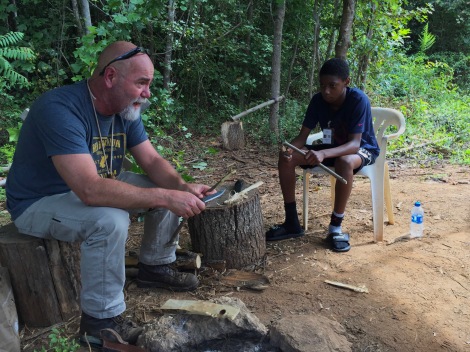
Brett

Seasons Beatings: Over 1,000 Urban Teens Riot/Fight in New York Mall

Seasons Beatings: Over 1,000 Urban Teens Riot/Fight in New York Mall

In yet the latest pre-planned riot spread via social media, over 1,000 teens stormed Queens Center mall causing chaos and attacking other shoppers. […]

This Article Seasons Beatings: Over 1,000 Urban Teens Riot/Fight in New York Mall is an original article from OFFGRID Survival If it is appearing on any other site but OFFGRID Survival, that site does not have our permission to use our copyrighted content!

Seasons Beatings: Over 1,000 Urban Teens Riot/Fight in New York Mall Read More »

How To Make Your Ammunition Last For Decades

Let’s start out with a simple fact: Contrary to what you may have heard, ammunition does have a shelf life and will go bad eventually. Here’s another simple fact: Ammo is not cheap and adds up quickly, especially when you purchase ammunition in bulk. If you want to protect your investment, you’ll want to extend […]

The post How To Make Your Ammunition Last For Decades appeared first on Urban Survival Site.

How To Make Your Ammunition Last For Decades Read More »

Hiking For Beginners: Four Tips For Your First Adventure

A Guest Blog Post by MIKE MILLER

So, you want to go hiking…

But, you’ve never hiked before. Maybe you’re
nervous, lost, or confused about how to get started.

Don’t worry. We’ve all been there, and no one
is born a hiking expert. We all have to develop our skills from scratch.

In this article, I’ll give you some pointers on how to get started hiking. These tips will create the bedrock of your hiking experience.

Always hike with a partner.

Don’t Go At It Alone

Although solo hiking is an excellent way to
clear your mind and get some alone time, the truth is that most beginners should
find a hiking buddy.

The reason why? Safety. You never know what
will happen when you’re out in the wild. You might get bit by a snake, you
might sprain your ankle, or you might get lost.

These situations are tough by themselves, and
they’re even harder when you’re alone in the middle of nowhere with no cell
service.

That’s why you should hike with a partner or a group. Your comrades will be there for you to make sure you finish the hike in the same condition you started it in.

On top of that, a hiking buddy can provide motivation when you get tired. They’ll also give you fun banter and hearty conservation, which is always a plus in my book.

Plan ahead and choose your perfect hiking trail.

Choose The Right Trail

Now that you’ve got your hiking squad
selected, it’s time to decide where you’re going to hike.

This is probably the most critical puzzle
you’ll face when preparing for your hike. You don’t want to  get stuck on a trail that’s too hard, and you
don’t want to get bored by a flat, uninspiring trail.

The best trail for beginners is a “Goldilocks”
trail – not too hard, not too easy, but just right.

What distance, difficulty, and elevation this
equates to is difficult to define. Everybody has different levels of experience
and fitness, so there’s no “one size fits all answer.”

For a beginner, I recommend you start with a
hike that’s longer than 2 miles but less than 5 miles. This length will give
you a challenge, but won’t risk you getting caught in the forest.

If you’re struggling to decide, err on the side of caution and start with a shorter trail. The good news about small trails is that you can do them twice! There’s nothing wrong with picking a 2-mile trail and doing multiple laps. This is a simple way to tailor the length to your skill level.

How To Find The Right Hiking Route

You know what to look for in a trail, but
where do you find the right path? There are a million places to find hiking
trails, but I figured I’d mention some of my favorite resources.

Browse these sites, and I’m sure you’ll be able to find the perfect trail for your next adventure.

Take precautions ahead of time so you don’t wind up lost on your hike.

Don’t Get Lost

Once you’ve chosen the right trail, make sure
you’re prepared to navigate it.

There are a handful of apps out there that
allow you to download hiking maps to your phone. But, your phone battery might
die, or you might be stuck without cell service. That’s why it’s essential to
bring a map.

There are two options for getting a hiking
map. You can either buy one in advance from an outdoors store or pick up one at
the trailhead.

Most American parks have free maps available
when you enter the park. Make sure you pick one of these up and familiarize
yourself with the trails.

Another old-school tip for staying on the path – bring a compass. You can get a quality compass for a few dollars. With that small investment, you’ll now always be able to find your way. A compass and a park map will go a long way!

It’s important to have proper gear for the hike you choose.

Bring The Right Gear

At this point, you’ve got your hiking partner
and trail picked out. Now it’s time for everyone’s (least) favorite activity –
packing.

Contrary to popular belief, packing for hiking
is not that difficult. For day hikes, the most necessary items to bring are:

  • Water – bring more than you think
  • Snacks – non-perishable,
    high-calorie foods like nuts, granola, or beef jerky
  • Sun protection – hat, long
    sleeves, and sunscreen

Regarding clothes, don’t feel like you need to
go overboard. For short hikes, a pair of sneakers and some gym clothes will be
acceptable. Just make sure you’re ready for the sun (with long sleeves) or cold
(with warm layers).

Also, consider elevation gain might change the
weather. Higher altitude increases the odds of precipitation and frigid cold. A
sweater and rain-jacket are crucial for high-height hikes.

On top of that, consider the following
emergency precautions in case things go south. These aren’t entirely necessary,
but if you have them, they’re definitely worthwhile to bring:

  • Compass
  • Map
  • First-aid kit
  • Matches/lighter
  • Emergency Shelter

Once you’ve got all your gear lined up, throw it all in a high-quality daypack. A comfortable backpack that fits a lot of stuff is an affordable way to make sure your back doesn’t ache after hours of hiking. My favorite is the Osprey Daylite Plus.

Putting It All Together

Whew, that’s a lot of tips. I hope they’ve
been helpful.

If you take away one thing from this article,
remember that: “it’s a marathon, not a sprint.”

Everyone feels great when you start hiking, and you don’t want to burn all your fuel in the first hour. There’s nothing worse than being tired and hungry stuck in the middle of a long hike. Be patient, be prepared, and above all – enjoy yourself!

If you liked this article, make sure you check out my in-depth guide on hiking for beginners.

Mike Miller is the editor-in-chief of WildernessTimes.com – a site designed to make the outdoors, fun, easy, and accessible. After getting tired of wasting away in front of a computer screen, Mike decided to make hiking and camping his life’s passion.

Hiking For Beginners: Four Tips For Your First Adventure Read More »

Hike Mt Islip From Crystal Lake

Hike Mt Islip From Crystal Lake

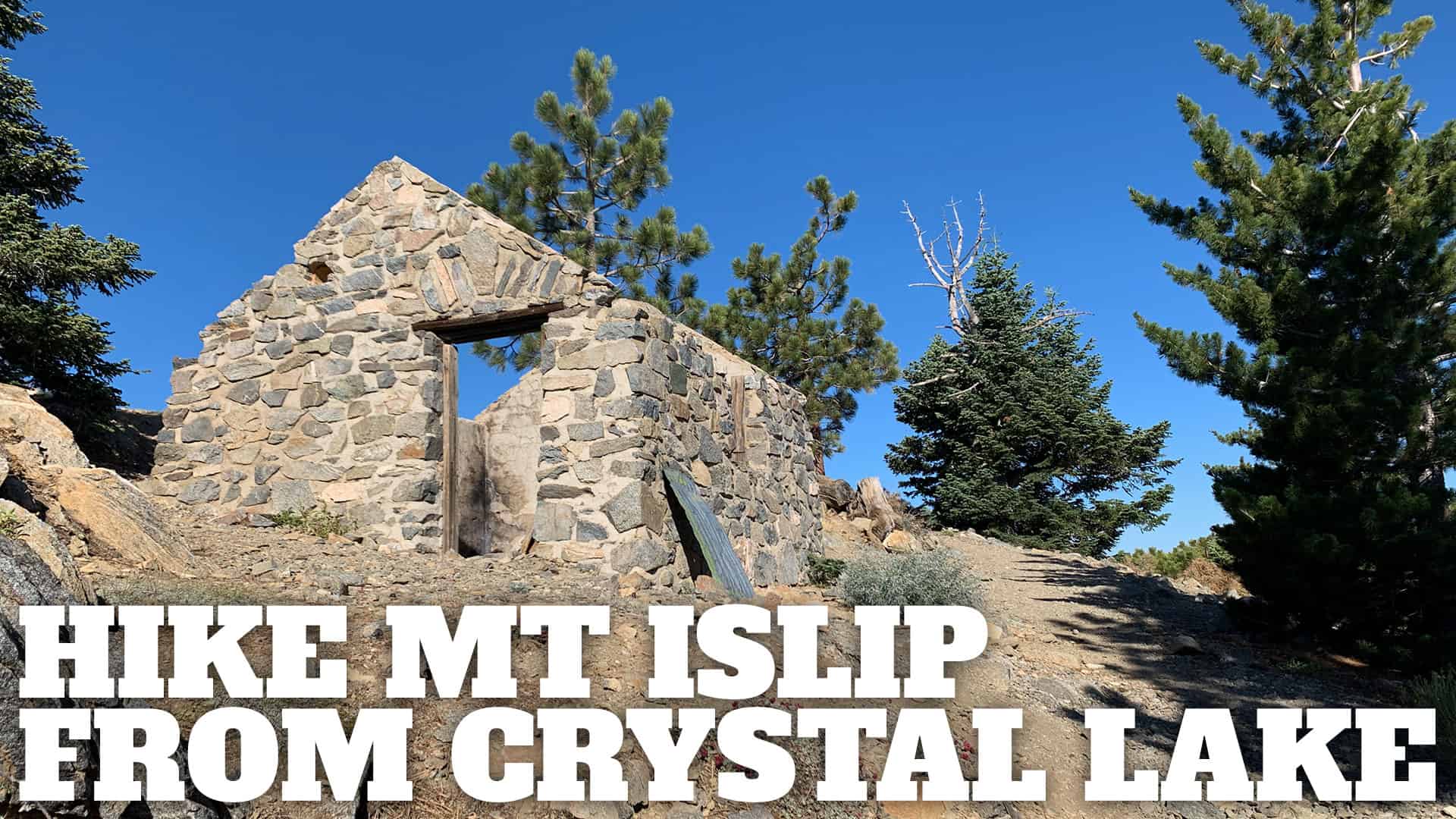
Tucked into Angeles National Forest away from the crowds, this loop hike to Mt Islip from Crystal Lake offers a little bit of everything in a very doable package. Starting at one of the only natural lakes in Angeles National Forest, Crystal Lake, the hike follows well-marked trails, offers spectacular views, and summits Mt Islip at 8,250 ft. After soaking in the sweeping views from Catalina to the Mojave, you have a long, gradual downhill cruise back to the Crystal Lake Recreation Area.

The post Hike Mt Islip From Crystal Lake appeared first on HikingGuy.com.

Hike Mt Islip From Crystal Lake Read More »

How Danner Boots Screwed the Laws of Physics

by Todd Walker

How Danner Boots Screwed the Laws of Physics - TheSurvivalSherpa.com

A boot full of blood. Tenons and bones severed. A tourniquet to stop arterial bleeding.

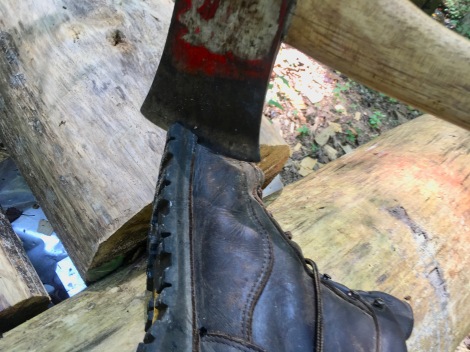
After watching the video footage of the ax striking my foot, all of the above should have happened but didn’t. I kept working on the log cabin. In fact, a whole month passed before a coworker noticed and asked how I sliced my boot.

“Huh?”

“Your boot. How’d you cut it?”

How Danner Boots Screwed the Laws of Physics - TheSurvivalSherpa.com

Inspection at school.

How Danner Boots Screwed the Laws of Physics - TheSurvivalSherpa.com

I really had no idea. I would have remembered almost lopping my foot off. No recollection of me bent down like a toddler filling his diaper, mouth gaping in terror, in search of blood. I racked my memory.

An axman should remember and learn from close calls. I dug into old video footage and found the ax-boot encounter.

In all my years of swinging axes, I’ve never been bit seriously. Blood has dripped from minor nicks while handling an ax or in the sharpening process. But never in full swing.

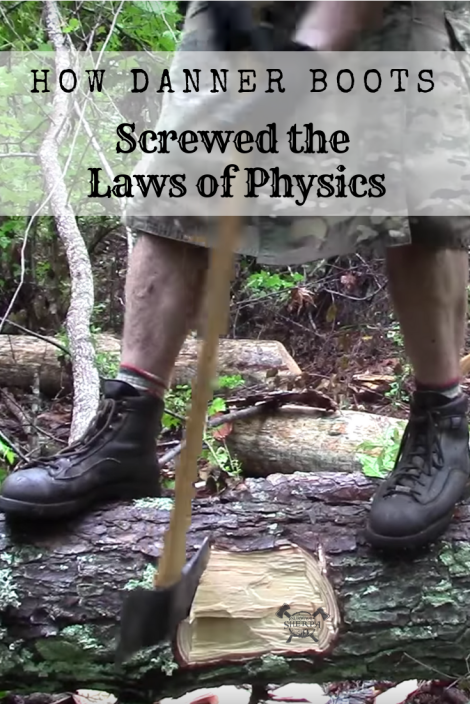
At the 1:22 mark in the video below, you’ll see how I violated the Frontal Zone Rule by dangling my foot over the log like bait over the rail of a deep-sea fishing boat.

Did Danner Defy Physics? 

Newton’s Third Law of Motion states that for every action, there is an equal and opposite reaction. Forces occur in pairs. Each force is of equal strength but in opposite direction. Even though the two forces are equal, this does not mean that they will cancel each other and stop movement.

Nothing defies the physical laws of nature except comic book superheroes. My Explorer boots reached Superman status after stopping a speeding ax.

Dan, a buddy of mine, said I should bronze the boots and place them on my mantle as a family heirloom. He has a good point. Even with the ax gash, I still wear them to school everyday to teach traditional outdoor skills. On weekends building my log cabin, they remain watertight and too comfortable not to wear.

How Danner Boots Screwed the Laws of Physics - TheSurvivalSherpa.com

Boots still on the ground in our outdoor classroom.

American Made Craftsmanship

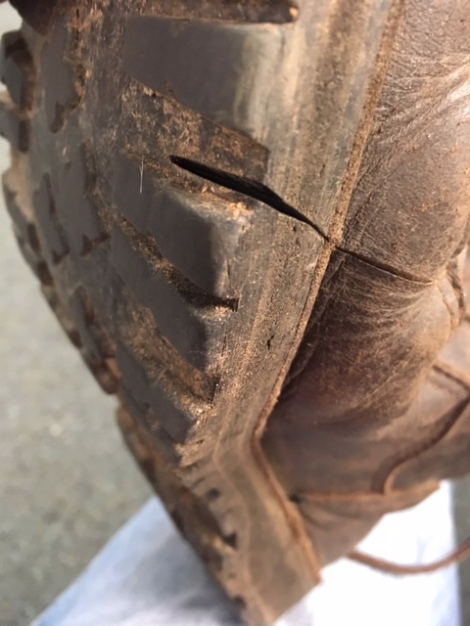
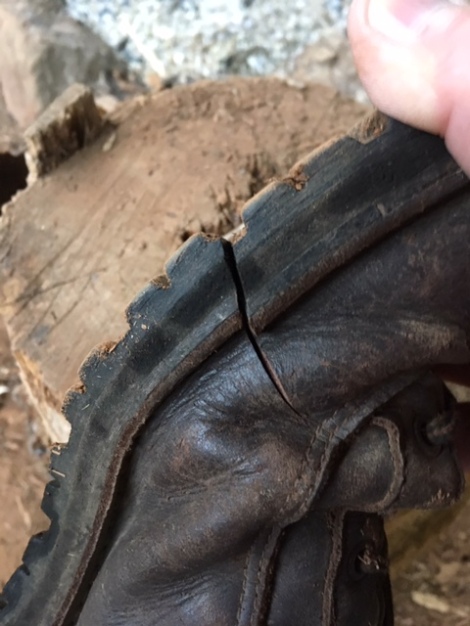
I keep my working axes honed and shaving-sharp. The ax strike separated the inside edge of my boot sole, surgically splitting one stitch, and slicing the leather upper. I really expected the adjacent stitching to begin to fail. Two and a half months of daily wear since the ax-ident and not a stitch has unravelled. These Superman boots are built to last. Thanks to Danner’s superior, Made in America craftsmanship, my foot is not a nub!

How Danner Boots Screwed the Laws of Physics - TheSurvivalSherpa.com

Thank you, Danner!

Buy Once, Cry Once

“Price is what you pay and value is what you get.”

~ Warren Buffet

Buying high quality boots is like old-fashioned window shopping. The item catches your eye. You really want it. Then you see the price tag. There’s no way you can pay that price. But you still go out of your way to walk past that window daily to get another look and dream of owning the thing.

Your desire hasn’t changed, you’re just not willing to pay the price.

Price is painful once but value lasts long-term. You see, I wanted a pair of high-quality, American-made boots, that could be resoled after many years of tramping in the woods. Even after the ax sliced my boot, not one tear rolled down my face. My foot is worth more than the price of these fine boots! I’m a lifetime customer now. If Danner can’t re-craft the sliced leather upper, I’ll continue to wear them as a sober reminder while swinging axes.

Fit, Finish, Break-In

Opening the box and holding these brand new boots made me smile. The seams were double-stitched with precision. One feature I like about these Explorers is the minimum amount of seams in the boot. This can only reduce the chances of leakage or snags when tramping through rough terrain and bogs. Even the laces are made of quality material.

The Vibram sole grips wet and dry soil like a mama hugging her son returning from war. The wide rubber sole adds stability and amazing traction. I typically trim pine bark off the top of logs where I’ll place my feet when under bucking with my double bit ax. This step is not needed since I bought the Explorers. The aggressive treads hold my feet in place securely on the bark. The only surface I’ve found they don’t grip is freshly peeled inner pine bark (see above blooper video). A man would need hobnail boots to stand on this slick stuff!

How Danner Boots Screwed the Laws of Physics - TheSurvivalSherpa.com

Nature’s slippy slide

I kept an old pair of boots in my truck the first week I wore my Explorers. Never needed to use the spares. No hot spots on my heels or other suspected pressure points I would normally feel from snug fitting leather boots. I played around with the lacing to fine tune the fit over that first week. The full-grain leather upper began mating to my feet like the soft breath of wool socks on a winter day. These rugged boots love my feet and punish rocks and roots – even axes.

If you want a boot that can handle the rigors of building an off-grid log cabin, rugged backwoods adventures, and still look good at the office, pay the price and get yourself a pair of Explorers. If you want lightweight, synthetic, Vegan friendly, foreign-made footwear, look elsewhere. Danner Explorer full-grain leather boots are handcrafted from top to bottom in Portland, Oregon (Made in USA).

One of my grandsons will receive my Superman boots when I’m gone with the story of how they saved my foot that hot July day in Georgia.

Keep Doing the Stuff of Self-Reliance,

~ Todd

P.S. – You can also keep up with the Stuff we’re Doing on TwitterPinterestYouTubeInstagram, and Facebook… and over at our Doing the Stuff Network.

P.P.S – If you find value in our blog, Dirt Road Girl and I would appreciate your vote on Top Prepper Sites! You can vote daily by clicking here or on the image below. Check out all the other value-adding sites while you’re there…

Thanks for Sharing the Stuff!

Copyright © by Survival Sherpa: Content on this site (unless the work of a third-party) may be shared freely in digital form, in part or whole, for non-commercial use with a link back to this site crediting the author. All links in articles must remain intact as originally posted in order to be republished. If you are interested a third-party article, please contact the author directly for republishing information.

How Danner Boots Screwed the Laws of Physics Read More »

What I Did To Prep This Week – Week 70: November 10th 2019 – November 16th 2019

Hello Pack. Winter has arrived on our survival homestead folks, or at least it feels like it. Only in Ohio could you go from wearing sleeveless clothing to cracking ice in a poultry waterer in such a rapid amount of time. One day this past week we had 60 degree weather, the next day we had temperatures below freezing. In this state, you better be prepared for multiple season wardrobe changes in…

Source

What I Did To Prep This Week – Week 70: November 10th 2019 – November 16th 2019 Read More »

Shot’s Fired Episode 35: Boog or No Boog That is the Question

You can also check out ALL our Podcasts on ALL your Favorite Channels. google play Libsyn IHeartRadio Soundcloud Sig Glockncoltg aka TJ Kirgin and co-host FDE aka Fat Dark Earth and Sylis to discuss the alleged Red Flag Law “Standoff” in New York and what really happened. Join the Tactical shit group on the Sheepdog […]

The post Shot’s Fired Episode 35: Boog or No Boog That is the Question appeared first on Tactical Sh*t.

Shot’s Fired Episode 35: Boog or No Boog That is the Question Read More »

How You Can Prevent (and Treat!) Venomous Snake Bites

If there’s one thing that is guaranteed to send shivers down the spine of even the most experienced trekker, it’s the sight of a venomous snake.

Every year in North America, there are a reported 8,000 bites by venomous snakes – and the figures unreported bites are thought to be much higher. This might sound like a startlingly large number, however, the truth is that very few of these bites result in death. In fact, it is estimated that there just five fatalities per year. To put things into perspective, you are nine times more likely to be killed by lightning than a snake.

That said, it doesn’t mean you should become complacent around snakes, as they are still very capable of delivering a damaging bite. Although death is unlikely, being bitten by a venomous snake can result in breathing difficulty, blurred vision, and potentially even temporary paralysis.

In this guide, we’re going to cover everything you need to know while wandering through snake country. We’ll go through effective preventative measures, snake identification, and what you should do in the unlikely event of a bite.

Identifying Snakes and Myth Busting

First things first, let’s tackle the many myths that are abound when it comes to snakes. Whether it’s because someone is quoting an antiquated piece of advice they found in a magazine from the 1970s or are unscrupulously trying to sell you a useless snakebite kit, there are plenty of untruths floating around online.

Slit-Shaped Eyes = Venom?

One of the most commonly known identifiers of a venomous snake is the shape of its eyes. Many people believe that a venomous snake has slit-shaped eyes. That’s not necessarily true.

A 2010 study found that there is absolutely no correlation between the presence of venom and pupil shape. In fact, it was found that pupil shape might be determined by its predatory/foraging behavior.

Do Snake Bite Kits Work? (TLDR: NO!)

This is a particular bugbear for serious trekkers and snake enthusiasts alike. When it comes to venom treatment, snakebite kits are probably one of the biggest scams out there. These kits simply don’t work. Not only that, they’re potentially extremely dangerous.

 Let’s have a look at one of the more popular kits out there: the Sawyer Extractor Pump. Full of 5-star reviews and first-rate sales copy, a medical study from 2004 concluded that the pump removes virtually no venom.

 These kits will, for example, work for less serious bites. Think bees or wasps, but not snakes. In fact, using these kits can actually increase local tissue damage by concentrating the venom. Not only that, you’re also going to significantly increase the chance of an infection developing.

Identifying Snakes

One of the most important things you can do when it comes to avoiding a bite is learning how to identify a venomous snake and taking a moment to learn some of its most common behaviors.

There are four main species of venomous snake in North America, each with their own unique markings. Additionally, each species comes with its specific behaviors and having an awareness of this can help you when you’re preparing an outing.

Coral Snake

The coral snake is one of the most identifiable of the deadly snakes, so long as you can correctly remember the following saying: ‘red and yellow, kill a fellow; red and black, friend of Jack’. The saying refers to the colored banding on the snake. If the red and yellow bands are together, then you know you’ve got a venomous snake on your hands.

The coral snake tends to be found in forested areas, hiding under leaves or underground. Knowing this will make you aware when walking on or near piles of leaves. It generally displays reclusive behavior i.e. it will retreat unless provoked. In other words, if you stay out of its way, a bite is highly unlikely.

Rattlesnake

This is the most widely known species of venomous snake and is primarily identified by the rattle on the end of its tail, which can be both seen and heard. Furthermore, rattlesnakes tend to have thick, heavy bodies and a diamond-shaped head.

Although their warning sign is a rattle, it is important to remember that baby rattlesnakes may not have developed the rattle yet (but are just as venomous!). Additionally, it is possible that an adult snake loses its rattle, meaning you should learn more identifying features than just the tail.

In case where the rattle seems to be missing, it’s probably easier to do the identification process the other way around: in other words, if it looks like a rattlesnake but the tail is pointed, then you know it’s probably a harmless snake that has similar features.

Cottonmouth

This is North America’s only semi-aquatic venomous snake, which can usually be found in damp environments, like swamps or in and around water. During the day, the cottonmouth can be found basking on rocks to heat up its body temperature.

The key identifying feature of a cottonmouth is the dark cross bands with light brown shading. That said, it can be hard to spot this in older ones because the coloring becomes incredibly dark.

Copperhead

This snake is known for its predatory ambush attack, typically hiding under rocks or leaves until its prey walks by. They’re thought to be the most likely to bite humans out of all the venomous snakes, although their venom isn’t very potent.

Rather than always displaying reclusive behavior, copperheads are known to sit still when they encounter a human, unless it can easily retreat. They are generally the most defensive of venomous snakes, striking the moment they feel threatened.

As the name suggests, this snake has chestnut-brown cross bands shaped like an hourglass or dumbbell, on top of slightly lighter colored skin. The banding is usually wider on the sides and narrower on top.

How to Prevent a Bite from Occurring

Being able to identify a venomous snake and knowing its usual habitat are just the first steps in being able to prevent a bite. We also want to mention that this article is in no way designed to instill an irrational fear of encountering a venomous snake. Rather, with a simple understanding and better awareness, you’ll be able to keep some tactics in the back of your mind while out on the trail and this will put you in a much better position.

You don’t need to write down and memorize but digest the following few pointers and be sure to practice them while out and about:

  • Always check under logs, rocks, and leaf piles – bites commonly occur without the victim even knowing the snake was there
  • Stick to the beaten path – snakes generally stay off tracks
  • Avoid long grass when possible – this is the perfect hiding place for them
  • Consider snake proof clothing, like boots, chaps, and gaiters – most bites occur on the lower legs or feet
  • If you spot a snake, give it a wide berth and don’t bother it – snakes only bite if they feel threatened
  • Don’t attempt to move or prod the snake, even if it looks dead – snakes do a good job of appearing still and even a dead snake’s head can bite

What You Should Do if Bitten by a Venomous Snakes

First of all, don’t believe everything you read. There is so much misinformation out there on the best practices and there are even conflicting medical journals.

Being bitten by a venomous snake is serious business, even if it’s unlikely you’ll die from it. The venom from a snake can begin to destroy skin and muscle tissue and it isn’t unknown for a bite to result in limb amputation.

Stay Calm

If you find yourself bitten by a venomous snake, your first responses will likely be that of shock and pain. It is important, however, that you remain calm and think logically through the next few steps. Panic can elevate your heart rate, speeding the process of venom spread.

Call 9-1-1

You should call the emergency services as soon as you can and never attempt to treat the bite without professional medical help. If you can, you should inform the emergency services as to what type of snake it was as this can help them in deciding which type of antivenin treatment to use. If you can’t figure out the species of snake, you can take a photo of it so long as it is absolutely safe to do so.

Don’t Try to Catch the Snake!

Snakes often strike twice; the first bite acting as a warning (and thus often don’t have much of any venom present). This is one of the reasons you should avoid a second bite as best you can. You should leave the snake alone and don’t attempt to catch it or kill it.

Keep the Wound at Heart Level

You should keep the wound still and at heart level, making sure not to take any painkillers or attempt to suck the venom. Although ingesting venom isn’t necessarily harmful, it can pose problems if you have cuts in your mouth and will be of no help in actually removing any venom.

Avoid Snake Bite Kits

Additionally, and as we’ve already mentioned, you shouldn’t use suction kits. These have been proven to be ineffective in removing any substantial amount of venom, if any, and can cause more harm than good.

Remove Tight Clothing and Jewelry

Finally, you should remove any particularly tight clothing and restrictive jewelry as this can contribute to greater swelling. Do this as soon as you’ve been bitten – don’t wait for symptoms to appear, as it may then be too late to easily remove your jewelry.

From the Editor: Here’s a fantastic infographic that summarizes the article:

How You Can Prevent (and Treat!) Venomous Snake Bites Read More »