
Brett

Will Climate Change Attract More People to Prepping?

Climate change is all over the news. Let’s take a look at what this might mean for preppers and the prepping market as a whole, but first…

Is Climate Change Real?

Climate change is a political subject, and in today’s political climate, that means it’s a polarizing subject. Those on the right say it isn’t happening. Those on the left say the sky is falling. There isn’t much common ground.

By Rangerman, contributing author to SHTFblog and Survival Cache

Farmer examining corn plants in field during a drough

Self-identifying as the political middle, I generally try to avoid political subjects these days. Those on the left call me conservative while those on the right call me liberal. Where I stand really depends on the issue, however. As for climate change, I believe the science. It’s real. It’s happening.

That puts me in a precarious position. I write to preppers, and preppers are an overwhelming conservative audience. It’s not uncommon, if I write something about climate change, to hear people call me names, tell me I’ve been duped, and just stop following me altogether. But one thing you quickly learn after throwing yourself out there online, is that you can’t please everyone. People will call you names no matter the position you take. You need thick skin.

I have seen the conversation change over time, however. Fewer people are outright denying that climate change is happening. People are transitioning from “it’s not real” to “it’s real, but it’s not man-made.” Alternatively, they are going from “it’s not real” to “it’s happened before, and there’s nothing we can do about it.”

But this post isn’t about whether climate change is real or not. I’m not going to cite the evidence that climate change is real, or that humans are the major cause of global warming. This post assumes that climate change is happening.

Climate Change will Draw More People to Prepping
I’ve been in the prepping business long enough to see the ebbs and flows of the market. I was on the early side of it, when “prepper” was still associated with the fringe “survivalist” folks – loners in the woods sitting on stockpiles of guns and ammo. Since then, “prepper” has become a household term with prepping becoming far more mainstream than it has ever been to the point freeze dried food can be purchased in everyday places like Costco. Reasonable people are preppers. In fact, once you look at the many reasons to prepare, “reason” follows that you must prep!

The same as 9/11, the government’s poor response to Katrina, and the Great Recession, global warming will draw another wave of people to prepping. It may be the biggest draw ever. This may be a different crowd than your typical recession prepper, civil unrest prepper, etc., but the climate change prepper will grow in numbers. You can see this already through events like climate change preparedness forums. These preppers will be younger, as today’s youth will face more of the consequences of global warming.

Climate Change Preppers Will Prep in Both Similar and Different Ways

Similar Ways of Prepping for Climate Change

What will prepping for climate change look like? In many ways, not that much different from prepping for anything else. A big part of prepping is preparing for natural disasters. Natural disasters and climate change go hand-in-hand. According to NASA, some of the effects of climate change on the United States will be:

  • Rising Temperatures – This will not be uniform across the country or over time.
  • Frost-free Growing Seasons Will Lengthen – Food-wise, this could be seen as a good thing, but read on.
  • More Droughts and Heat Waves – Just when you think the growing season will extend, heat waves and droughts will stress food security.
  • Hurricanes Will Become Stronger and More Intense – Storm intensity and rainfall from hurricanes will increase will require greater preparation for hurricanes.
  • Sea Levels Will Rise – Expect greater storm surges and higher tides. Don’t forget that warming oceans also impacts fishing.

Also read: Killer Climate
As preppers, we should already be aware of the necessary basics for prepping. If you’re new to prepping, you can start by reading FEMA’s Are You Ready? book… but many preppers have pretty strong feelings about FEMA and their Katrina response. Still, the book covers the basics. If you’re following sites like SHTFblog and SurvivalCache, however, you’re already ahead of the game.

The basics, of course, include everything from having an emergency plan, having food and water stored, making a bug out bag, to the more mundane subjects of having financial protection for your house, apartment, etc. These are not new ideas for most preppers, but in what ways will climate change require new means of prepping?

Different Ways of Prepping for Climate Change

The same as prepping for a recession requires different methods than prepping for civil unrest, prepping for climate change will require different methods as well. While climate change will require preparing for more hurricanes in certain areas, there are longer-term issues that will need to be addressed. Here are a few:

  • Environmental Migration – There are already indications that climate change is driving mass migration around the globe. While the United States may not face the type of migration problems that people in Bangladesh, Africa, Central America, and Australia might face, the people in these places will have to go somewhere when drought and famine strike. Their migration will cause political and economic challenges around the globe. How can you prepare for that as an individual? I don’t know.
  • Food Shortages – Erratic weather will wreak havoc on agriculture. Farmers will experience drought, then abnormally heavy rainfall, then drought, then hail, etc. Food prices will swing up and down. The household impact will be felt at the grocery store checkout.
    • Gardening – Preparing for this could, and should, include growing more food at home. That could mean anything from an herb garden off your deck to a full-size family survival garden. Gardening, and doing it well, requires knowledge and experience. You can’t just go and plant a garden expecting results. Good soil often takes years to produce. Knowing how to prevent pests and crop disease also takes experience. That’s not even covering seed saving.
    • Preserving Food – If you’re growing your own food, you will eventually graduate to producing food that will take you through winter. That means not only growing more but preserving it. Buy a copy of the USDA Complete Guide to Home Canning and learn how to can. Maybe you will build a root cellar and/or dry storage.
    • Stocking Up – Remember that what hits farms will also hit you, so your garden could be subject to the same erratic weather. Stocking up on non-perishables is a basic tenet of prepping. For climate change, you will want to do more of that. Take advantage of sales. Stock a pantry and rotate stock. When there are shortages and prices are high, you can use the stock you already have.
  • Finances – Having your financial house in order makes sense on every level, and it also applies here. Energy may cost more. Homeowner’s insurance may cost more. Food may cost more. And, depending on where you live, you may also be face with…
  • Moving – Some people are already experiencing the urge to flee (think people in California who are under a near-constant threat of wildfires). People living along the coast may also be finding an urge to move inland. More and more people will be wondering where to escape climate change in the United States. Real estate prices will decline in some places, rise in others. If you are not wedded to a particular area, or your kids/grandkids are wondering where to live, getting ahead of the population move may be wise.

Why Climate Change Preppers Should be Welcomed
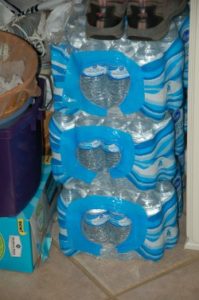
h2o survival storageWhether you believe climate change is happening or not, whether you think it’s man-made or not, climate change preppers should be welcomed into the prepping community. Even if they don’t align with the typical prepper’s political beliefs, the more people that are prepared the better – regardless of their reasons!

Think of this practically, even if you have distaste for those with dramatically different political beliefs. If your neighbor is prepared, and your neighbor’s neighbor, that means greater security for you WTSHTF. Every prepared person means one less hungry person looking for what you might have. How can that be a bad thing?

And remember! When the apocalypse hits, when disease is rampant, politics will all get tossed aside when people band together for mutual survival. That bleeding-heart liberal down the street might be covering second watch when the neighborhood defenses go up against the hordes of zombies.


Will Climate Change Attract More People to Prepping? Read More »

Security Information Overload: From Panic to Apathy & the Remedy

Security Information Overload: From Panic to Apathy & the Remedy

Security overload leads to apathy. How often do you hear a car alarm go off and roll your eyes hoping the owner would disable the blasted thing before the incoming headache comes a knocking? The primary objection I have to such systems is they work too well. Every week I hear an alarm being triggered […]

This is just the start of the post Security Information Overload: From Panic to Apathy & the Remedy. Continue reading and be sure to let us know what you think in the comments!


Security Information Overload: From Panic to Apathy & the Remedy, written by Thomas Xavier, was created exclusively for readers of the survival blog More Than Just Surviving.

Security Information Overload: From Panic to Apathy & the Remedy Read More »

8 Tips for Surviving Biological Warfare

Although biological weapons of all types are outlawed under the Geneva Convention, the threat of a biological attack has remained a very real threat ever since mustard gas was first deployed in the trenches of WWI. In fact, a threat assessment provided by Congress in 2018 said, “Biological and chemical materials and technologies — almost […]

The post 8 Tips for Surviving Biological Warfare appeared first on Urban Survival Site.

8 Tips for Surviving Biological Warfare Read More »

Virginia Bill Outlaws Firearm Training! Want To Start The BlG lGLOO!? Because This is How You Start It!

Virginia Bill SB64 States that a person is guilty of a Felony if that person Teaches or demonstrates to any other person the use, application, or making of any firearm, explosive, or incendiary device, or technique capable of causing injury or death to persons. This doesn’t just apply to firearms, but your martial arts as […]

The post Virginia Bill Outlaws Firearm Training! Want To Start The BlG lGLOO!? Because This is How You Start It! appeared first on Tactical Sh*t.

Virginia Bill Outlaws Firearm Training! Want To Start The BlG lGLOO!? Because This is How You Start It! Read More »

Making Decisions Under Stress: The OODA Loop

This is a Guest Blog Post by Adam A. Lawrence

We
all know that if it can go wrong, it will go wrong. How would you make
effective decisions when your emergency plan falls apart around you?

Remember this acronym: OODA.

Massive wave from a storm surge overtaking a boat dock.

What is OODA?

OODA stands for Observe-Orient-Decide-Act.
The concept of the OODA Loop was created by United States Air Force Colonel
John Boyd. It is a decision making tool used to make effective decisions based
on the current circumstances of a given situation. The first step is to Observe
your surroundings and take into account the conditions around you. The second
step is to Orient yourself within these circumstances and understand how
they are or can affect you. The thirds step is to Determine the best course
of action to improve your current situation. Finally, the last step is to Act
on your current analysis. This process repeats until the crisis has passed.

            Like most tools that we have at our disposals, the benefits of the OODA Loop are best determined when put into action. So let us examine some real world examples of how I have applied it during emergencies.

Superstorm Sandy

In late October of 2012,
Superstorm Sandy slammed into the East Coast of the United States, killing 285
people and causing $68.7 billion in damages. I was living and working in the
path of the storm. Though I did not experience property damage due to the storm,
my home was without power for 13 days. I had filled my gas tank prior to
landfall, but after a week of commuting and navigating detours and traffic, I needed
gas. When I went out to fill up, I saw lines at the gas stations over a mile
long and witnessed fistfights as restrictions were put in place, and stations
were selling out.

            I had to decide what to do. Observe – I saw the long lines and fights at the stations at
every local gas stations. Orient
– I had a quarter tank left, and all local stations were plagued by these problems.
My state has very strict self-defense laws, and I didn’t have anything to get
myself out of a violent situation, if it occurred. Determine – I had family who lived about 30 miles south, in
an area that had not been as damaged. With my level of gasoline and the hazards
of waiting in line in my current area, I decided that my best course of action
was to drive south. Act – I
drove south, found a gas station with a line that was only ¼ mile long and
filled up.

In anticipation of an impending natural disaster, gas stations will be overrun with people eager to fuel up and drive great distances to safety.

Winter Storms

            In 2017, I moved closer to family members. Since then,
there have been many winter storms and sub-zero temperature dips. During these,
family members have lost power and my old furnace stopped working. No power and
no heat can be dangerous in mild weather, let alone during extreme conditions.

            Observe – My family and I would monitor weather forecasts and expected conditions. Orient – My home is the only home that has a wood burning fireplace. Additionally, we have a stock of firewood. Determine – We decided that as homes lost power and heat, everyone would come to me. The fireplace would be unaffected by a power loss. Act – Family members would pack overnight bags to have ready if they had to move out.

A warm fire never fails–even when the power goes out.

Severe Windstorm

In July, my town
experienced a severe windstorm. I was on the road at the time, and could feel
my vehicle shaking against the gusts. Hanging traffic lights were held
horizontal as the sustained winds tore by. When I arrived home, I found a large
portion of one of our two chestnut trees had ripped free and had narrowly
missed my home. Though this is a small-scale emergency, I applied the OODA
Loop.

            Observe – I looked at the damage that the tree had caused. Luckily, it had missed the incoming power line. Additionally, the winds were still blowing strong. Orient – I quickly realized I had parked under the second chestnut tree. Tree branches were blowing close to the power lines and power lost could occur at any minute. Determine – I needed to move my vehicle, get inside to avoid falling and flying debris and preemptively retrieve my blackout kit. Act – I moved my vehicle to an area free of trees and went inside to avoid debris and retrieved my blackout kit.

Fallen tree

Most emergencies that we
experience in our lives are not widespread. The ones close to home are the ones
we need to deal with the most. There are benefits in preparing for the worst
however, and the tools to help prepare for large-scale disasters should be able
to be applied to our everyday crises as well. The OODA Loop is just like any
tool. We should know how to use it, we should practice it and it should be able
to be applied to most situations. There is also the benefit that knowledge
weighs nothing and knowing how to make decisions effectively can be the
difference between surviving and thriving.

Adam A. Lawrence is an author, web content writer in the fields of emergency management and emergency preparedness and private sector security and safety professional with over 10 years of experience. Visit his Facebook page at https://www.facebook.com/adamalawrencewriter/ for more information.

The post Making Decisions Under Stress: The OODA Loop appeared first on WillowHavenOutdoor Survival Skills.

Making Decisions Under Stress: The OODA Loop Read More »

Gear Review: Epic Water Filters Nano Pitcher and Nalgene OG

We should all take a moment to appreciate that here in the US, most of us have access to clean drinking water. Not everyone is so fortunate. When I was growing up, we didn’t have city water. Occasionally the well would go dry, and we’d have to gather up some quarters and haul water from the water tower. Even when the well was dry, we could still get water easily. The upside of that was whenever there was a boil advisory, or zebra mussels invaded the water tower, it didn’t affect us.

By J. Bridger, contributing author to SHTFblog and Survival Cache

My hometown has great drinking water, and frequently places in the top 5 for tap water worldwide.  I bet you didn’t know there were world championships for tap water taste, did you? I am spoiled when it comes to drinking water. So, when Epic Water Filters sent me their new Nano Water Filter Pitcher ($59.95) and a 32 oz. Nalgene OG Filtration System ($34.95 with Nalgene bottle included!), I was really pumped. The tap water here in Las Vegas sucks. I don’t like buying plastic bottles, so I’m stuck drinking water that tastes like someone collected runoff from Bigfoot’s butt crack.

The Nano pitcher has a 3.5L capacity, and water trickles through its filter in 5-10 minutes. According to Epic Water Filters, it filters out all kinds of things – some I’d never even considered. Microorganisms don’t stand a chance. It removes 99.999% (Sometimes you get another 9 tacked onto the end of that, or “log 6” removal) of: Pseudomonas, Giardia, Cryptosporidium, E. coli, and Klebsiella. (See the full report of all contaminants the Nano removes here) If you haven’t heard of the 1993 Milwaukee Cryptosporidium outbreak, you should read about it. Over 400,000 people developed gastroenteritis-like symptoms due to drinking water contamination. The point is, bad water can and will happen in modern times. The Epic Water Filters Nano Pitcher also removes heavy metals, fluoride (not sure if that’s good or bad, depends who you ask I suppose), nearly 50 pesticides, herbicides, nearly 100 organic compounds, and pharmaceuticals. One interesting thing to note is the filter removes testosterone and progesterone. There are a lot of studies out there about exogenous hormones, and how they affect infants and children. Infants have very sensitive androgen receptors, and excess hormones can cause them to grow excess breast tissue (males too!). Children in the US are experiencing puberty earlier, and they think hormones in the environment could be why. Sounds like hippy shit, I know, but there’s a lot of compelling data out there (Check out “The sensitivity of the child to sex steroids: possible impact of exogenous estrogens” (by the University Department of Growth and Reproduction, Rigshospitalet, Copenhagen, Denmark). Bottom line is, this filter removes tons of things you don’t want in your water.  

Despite my hometown’s top tier tap water, its infrastructure is aging, and water line breaks are common. When the summer months come around, you can bet there will be issues. Often, there are boil advisories. Most of the time this is nothing more than a nuisance, but you never know. If there is a boil advisory, sometimes you may not know before you’ve guzzled your morning liter. If you’re sipping clean water from the Epic Water Filters Nano pitcher, you don’t have to worry. Filling this is much more convenient and efficient than boiling water and waiting for it to cool. Obviously, this won’t provide good water if it isn’t flowing, like when a 20” raw water main broke in 2014, and brought the entire county to a halt:  When this happened, restaurants closed, businesses lost money, gas stations jacked up the price of bottled water, and even the local hospital wasn’t able to provide water for their cooling system. Luckily there were no structure fires or grass fires, or the county could’ve had a huge problem. You should keep this in mind and have plans in place should you need to source water from somewhere other than your tap and purify it. This might be a swimming pool, rainwater collection system, or nearby reservoir. This was a stark reminder that the amenities we enjoy are artificial and fragile. No one was bringing bottled water to my door, but that was fine with me. We had a well. 

Also read: Survival Gear Review: Epic Water Filters The Answer Nalgene Filter

How does the water taste through the Epic Nano pitcher? A hell of a lot better than it did before it went through. It makes off putting Las Vegas water taste fresh and clean. One of my favorite features is the filter indicator. It shows you how much life is left in the filter (based on a 90-day estimate. It filters 150 gallons). One filter lasts two people 3-4 months. The last pitcher filter I had didn’t have this. You knew the filter needed to be changed when the water developed an acidic taste, almost like someone had put lemon juice in it. There is a flip top on the lid you can open with your thumb, so you don’t have to remove the entire lid. It’s a small detail, but one I appreciate. Taking into account how often boil advisories occurred back home, the lackluster drinking water here (mostly due to my refined palate, I’ll admit),  and my own paranoia, this pitcher is a home run. I’ll be purchasing a replacement filter when the time comes. You can even set it up to receive filters automatically. If that isn’t enough, it comes with a lifetime warranty and is made in the USA. Epic!

Portable Filtration, OG Style!

Epic Water Filters also makes a wide mouth Nalgene OG filtration bottle. These bottles hold 1 liter (about 32 ounces) and are nearly indestructible. The filter cartridges come in two flavors: the black-colored Urban (75-gallon life, comes standard with the Nalgene OG) and optional orange Outdoor (100-gallon life, also $27.95). Like the pitcher, the Epic Nalgene OG carries a lifetime warranty and is made in the USA.

I took the Epic Water Filters Nalgene OG with the orange Outdoor filter on a day hike in the Spring Mountains. Right away, its strengths were obvious. The flip-up mouthpiece in the OG’s lid doesn’t leak, but I’d still store it in your pack right side up. Because my hike was along a running stream, I didn’t have to carry any water. Water is the heaviest thing in my pack, so that was a huge plus. Whenever I got thirsty, I just scooped up some water, drank as much as I wanted, and dumped the rest. It was convenient and made the hike much more enjoyable. It takes some effort to get water out of the straw, but it’s not terrible. If a spring is shallow, it can be difficult to fill your bladder or bottle. You should consider this and pack a collapsible cup or something similar so you can scoop or suck water from the source to treat.

In my opinion, the best thing about the Epic Nalgene OG filter is how convenient it is. No boiling, no waiting, no chemical taste. Just scoop and go. It really shines when you are near a water source, like a stream or lake. If watering holes were a little more scarce, you would want to consider something with a higher capacity you could fill and transfer over to this bottle (though Epic Water Filters makes the Nalgene OG Grande with the larger 48 oz. bottle if you need more capacity) Don’t underestimate how much water you may need if you are working hard, or if it’s hot outside. I recently completed a 19-mile trail with about 6,000’ of elevation change. Elevation varied between 7,400’ and 10,400’. It wasn’t hot, but it was dry; I drank six liters of water between 7am and 7pm. There was only one spring and thank goodness it was flowing.

Listen! The Survival Cache Podcast – EDC

If you have a bugout location, you should study the route for water sources. If you live in a rural area and work away from home, you should study your route home. If water sources are abundant, this would be a great option for your bag or vehicle. Too many people are guilty of throwing a LifeStraw in their bug out bag and considering it an adequate treatment strategy. You need a way to carry water, and at least one back up treatment method. Pairing this bottle with a bladder and some tablets or drops would set you up well in the water department. If you EDC a backpack or messenger style bag and regularly carry a water bottle, you could use this bottle and stow the filter away for “just in case” scenarios. You could have clean water wherever you are, at a very tiny weight expense.

 The biggest drawback is lack of gravity flow. If you want to use filtered water to cook or wash, this won’t work. If you could squeeze water out of this bottle into a bladder or cooking pot, it would be perfect. Despite that, this filter and bottle combo has a place in my pack. The convenience and simplicity of the Epic Water Filters Nalgene OG filter make it a home run for any EDC, bug out bag, or hiking kit. 


Gear Review: Epic Water Filters Nano Pitcher and Nalgene OG Read More »