Brett

How to Prepare if You’re All Alone

Prepping can be difficult enough when you have your family, or at least a few survival companions to help you. If you are alone, truly alone, it can be extraordinarily difficult, not to mention very risky. The challenges you’ll face as a solo prepper will be enormous in all but the most basic of survival situations.

There is a popular myth in prepping lore, if you want to call it that, and it is that of the lone, rugged individualist, the classic mountain main archetype that informs us one can really, truly be completely self-sufficient if you are strong enough, skilled enough, good enough.

It is a popular and fine story, but in reality, the overwhelming majority of lone individuals facing truly austere conditions and hard times, cut off, alone, isolated, died terribly in short order from lack or from mishap that affected their ability to get work done.

It is today, thanks to technology and centuries of distilled know-how, possible to survive if you are going it alone, but it will be tough. You’ll need to prepare to the utmost, plan with redundancy and survivability in mind and have more than a little luck.

In this article we’ll give you some hard-hitting advice on how to make that happen.

The Challenges of Prepping Solo

No matter how ill-advised it is, you might not have any choice when it comes time to survive alone in a hostile and potentially deadly situation. Maybe all your friends and relations are either dead or far away.

Maybe you live or work in remote areas, or perhaps you flat just don’t prefer the company of people and don’t maintain many close connections. Whatever the reason, you will be surviving on your wits and wiles alone, with no safety net, no backup, no companions.

In a serious crisis, that spells trouble with a capital ‘T’. You see, humans are social organisms. We survive and thrive not on the merits and strengths of any lone individual, no matter how exceptionally talented, how skilled and how formidable.

There are no demigods on earth, no superheroes that get to break the rules. You cannot cheat the mountain and its inviolable laws, though a few vanishingly rare have managed to put off paying the bill for a time, or in the rarest of circumstances.

It is society, as a concept, that allows man to push back the dark wilderness around the circle of firelight. Humans working together carve out civilization from untamed land.

Humans working together complete literally monumental tasks in timeframes that would be frankly the work of lifetimes for an individual. Humans working together detect, respond to and dismantle threats that would easily dispatch a lone person.

Without a group, or at the very least a partner to back you up, you’ll have no one to watch over you when you sleep. No one to help you carry when the load gets heavy.

No one to keep an out when danger looms close. You’ll have no one to help tend to your wounds and the work that will not wait in spite of it. You won’t have those eyes in the back of your head, or the extra set of ears to listen for the cue. You will not have more than one lonely brain to set against the task at hand.

In short, you’ll be completely on your own, completely responsible for your outcome. You had better hope you measure up: no mistakes. We’ll look at the skills and disciplines you must attain and refine if you hope to accomplish this in the next section.

You are your First and Only ‘First Responder’

As a solo prepper, you and you alone have to be your “team”. You are the guide, the woodsman, the doctor, the shooter, the driver, the tech, the horticulturalist, the hunter and the engineer.

You may not have to be all of those things, depending on how things shake out for you, where you live, the event itself and so on, but if you should need one of those people on your SHTF excursion, guess what- you better be him!

In everyday, normal, peaceful life it is the specialists who get the accolades. You find that one thing you rock at, and refine it to a level of utter mastery.

In emergencies of all kinds, especially ones where sustained, long term chaos reigns and the societal paradigm is completely upended if it remains intact at all, it is the opposite: generalists, those who are adaptable across a wide variety of potential challenges and circumstances who will survive, even thrive.

Think of it this way, in everyday life, should you run up against a problem you yourself cannot surmount, you have a sort of ‘pause’ button most of the time.

You can phone a friend, call an expert or take to the internet in search of answers (ahem). You can pay a professional to sort the problem out.

You can, oftentimes, ignore it, defer resolution, with no major ill effects thanks to the cushion provided by society, that cushion being a thousand other options for carrying on with life.

The opposite again will be true in a real SHTF crisis. Let’s say you are hungry. You should eat. Or should you? How much food is left? It does not just come off a shelf or out of a drive-through window anymore.

Should you stretch your calorie budget? Where will you look for or procure food from when your supply runs out? If you don’t provide, you don’t eat! It sounds obvious, but the totality of it is terrifying and humbling.

We can go through similar examples for everything from drinking water to hygiene to shelter to self-defense. There is no calling the cops, no hopping into a warm shower, no getting a drink from a clean, reliable source.

In the next section I’ll layout what should be your foundational preps if you are planning to be, or fearing you’ll become, a lone prepper.

The Mind War

Even if you are alone as a prepper, you won’t be alone alone. You’ll have yourself for company!

What?! Has Tim lost his last marble down the storm drain of quackery?

Not quite, reader, at least not yet. What I mean by that seemingly absurd statement is that you will be dealing with your own best friend and worst critic: the voice inside your head.

Lest you laugh that statement off as sissy frou-frou talk, you must know that mental and emotional stability is critical for surviving both short and long term crises.

Stress takes a toll on even the most stalwart person, and where the mind goes so goes the body. There have been plenty of tales throughout history of survivors being found after the smoke cleared, dead, surrounded by plenty of supplies and untouched by the disaster.

They lost hope, and saw taking their life as the only way out. Some very literally lie down and just die from despair. It is not the stuff of movies, I assure you.

Stress will degrade your performance insidiously: fear, doubt, anxiety, resentment, worry, every last one a virus of the mind that will corrode your judgment and sap your strength and will alike.

While you cannot be truly free of any of them (unless you are a robot) you can manage them! And you must to have any hope of enduring the days, weeks, months or years of hardship, danger and solitude that will be your new normal.

To a degree, your mental and emotional equilibrium is partially determined by your genetics. Some folks are more wired for neuroticism (worry and associated emotional states) and others are more geared toward believing in a positive outcome.

Nonetheless, don’t let yourself off the hook for your tendencies. Discipline, always discipline, is the answer. If your mind controls your thoughts, and your thoughts control your words and your words, even to yourself, start to dictate your actions then what controls your mind? You do.

Positive self-talk and mastery is a skill, it is a habit, and it is one you must master to improve your chances of survival.

Start by not letting yourself off the hook in everyday life. If you start to get stressed out and begin a snivel-me-timbers session, have discipline!

Clamp it off, take some deep breaths, and start problem solving. Institute a strict no complaints rule for yourself. Any acknowledgement of a problem must have a solution hot on its heels. That is one easy way to begin the task of mentally hardening yourself for the trials to come.

Do that for two weeks straight, diligently, and you’ll be surprised at how much calmer and more insulated from stress you are.

Consider a Dog or a Cat

You might not have to go totally alone after all. If you live in a remote area, or even if you are an urbanite and planning to bug out, a dog or cat can be a valuable addition to your prepping arsenal, not to diminish our faithful and noble furry friends! Far from it, domesticated animals have long been valued by humanity as working assets long before “mere” companionship.

A dog or cat can serve as an early warning system, both having sensory organs far more potent than the comparatively dull sense of humans. Dogs especially take to barking as warning with little or no provocation, and can often sense a threat in other people before it appears.

Cats, while not quite as suitable for warning of the approach of others considering their nature, can be trained to alert as well, as are phenomenally adept at keeping small pests like rodents and bugs at bay.

And just as importantly, a dog or cat can serve as a proper companion, something to help you live for another day, a reason to keep striving. Frankly they can help keep you sane.

Choosing to do so is not without risks of its own though. Both need food and care, and both will become stressed in the same types of situations that will stress you out.

Potential harm or injury to your faithful friend can increase your own stress load, and you’ll ethically need to become passingly alright at veterinary care I order to provide for their injuries and wellbeing as you provide for your own.

Additional logistical burdens aside, a dog or cat can be an excellent “wingman” to your preps.

You Might Not Be Alone Now…

But you could be. This is a threat for aging and senior preppers. Time mandates that all things pass away, and that includes connections with people you already have, related or otherwise.

People die or fall into failing mental states. Some people move or are moved away for long term care and end of life options. Assuming you don’t want to consider an end-of-society event the end of the line for yourself, you should plan now on how you’ll overcome being marooned socially.

This is far from easy, but this guide can get you started. The single best thing you can do is to rage, rage, rage against the dying of the light: keep in shape, eat right, maintain strength and skill and you’ll have as good a chance as most. It is shocking how much you can hold on to if you decide to wear out rather than rust out.

No matter how faithful, how sincere or how loyal your people are, life gets a vote in whether they are able to help you or not. Don’t become complacent! In the end, every man and woman will face the darkness alone.

You might have to persevere alone long before that fateful day arrives. Make sure you are up to it as long as you can.

At Least Logistics Will Be a Cinch

A major part of prepping is laying in all the goods and consumable supplies you’ll need to survive whatever comes your way. This is often abbreviated with the tongue in cheek jingle of “Beans, Bullets and Bandages,” which, while humorous, is a pretty good mnemonic for reminding yourself to focus on the essentials- food/water, self-defense and medical.

You’ll have one silver lining at least as a solo prepper: only one mouth to feed, body to heat and life to save. You will have an easy time sorting out how much food, water, toilet paper and whatever else you stash no matter what your survival plan is so long as you know what you need in your environment.

Holding down the fort and bugging in? You will be constrained only by your finances and the room to store it. Grabbing your BOB and hitting the road? All you need to know is how much you can carry for you and you alone until you need resupply.

You’ll spend less, too, prepping only for yourself. Any parent knows how expensive things get with kids when you need to buy and supply multiples of everything, no imagine caring and supplying for multiple adults, especially high-dollar gear!

You Must be a Proper MacGyver

It’s an old cliché, but a valid one. You’ll need to be reasonably astute at all kinds of tasks and be functionally competent in many skills to stand a chance when the sky starts falling.

In a single day, you might need to escape your hometown on foot carrying a heavy pack, fend off rampaging rioters or looters, establish an overland heading to a safe place, make camp in the middle of the wilderness, survive a cold and wet night outdoors and splint a sprained ankle before hotwiring a car and later rigging up a primitive antenna.

Even the simplest of disasters can put you in danger and your skills to a severe test. If there is a major industrial accident, fire and chemical spill in your hometown, can you seal off your house, quickly, to keep potentially dangerous fumes out? If you need to hightail it out anyway, do you know how to use a gas mask? Do you know how to make a gas mask?

If you get hurt- shot, stabbed, poisoned, sick- do you know how to render self-aid and care? You won’t be able to dial a doctor or hop on Web M.D. If you need to hole up somewhere temporarily, do you know how to setup your little camp so you can rest easy, hidden from passersby and with noisemaker traps ready to alert to sneaks in the night?

Do you know how to purify water from a questionable source? Do you know how to procure food with no equipment, not even fire?

You’ll need to become passably competent in all those things to survive as a solo prepper. It is not just throwing on a backpack full of goodies and heading to the woods with beef jerky in hand at the first sign of trouble.

The good news is it is a far sight easier to become “pretty good” at something instead of mastering it, and we have tons and tons of articles to help you get started.

You Must be Able to Do the Work of Many

As I mentioned above, you will be surviving without any of the boons provided by a group, or even one partner. This will not lessen the entries on your survival agenda however, and one of the most taxing things you may have to undertake alone is seriously heavy lifting, awkward carries and other such tasks that nominally require multiple people to accomplish efficiently and safely.

If you are clever, however, you can make use of simple machines and improvised mechanical contrivances to aid you. Some of the oldest force multipliers on earth are literal, well, force multipliers! Taking the form of wedges, wheels, levers and pulleys, one person can double, triple or even geometrically increase the force they exert.

The best part about these systems is they are easy to improvise wherever you go from found objects and even natural materials. You will need to learn and practice with all of them, and any massive weight under the control of one person is a dangerous thing, but if your alternative is to make do, go without or go around, you can choose none of the above and get it done.

By way of a few “for instances” you can use pulley’s to life massive loads for building, clearing debris or moving supplies. Pipes can serve as rollers, allowing you to move such massive loads as shipping crates, concrete barricades, and more.

Wedges can split even the hardest materials if you are diligent. The usefulness of levers need no introduction and a crowbar is often included as an “auto-take” for many urban survival BOBs.

You Must Plan as if You are on the Moon

I am not talking about fantasy prepping here: no zombie apocalypse or alien invasion stuff, it stays on the Silver Screen where it belongs. No, what

I am referring to is the notion that you will operating in a Zero-Margin-for-Error mode; if you screw up, get hurt, get lost or just plain cannot hack it, no one will be there to catch you.

There will be no rescue mission. No one to bail you out, unless you are blessed enough to be happened upon by a Good Samaritan. It is alright to hope for such a thing but, however vital hope is to emotional and spiritual wellbeing, it is never, ever a strategy.

And you do need a strategy. What you’ll need to do as a solo prepper is detail everything, assess every phase of your plan and labor over the specifics in such a way as to minimize the risks to the greatest degree possible. This means you’ll be making tradeoffs more than a group might.

Have a movement phase in your bug-out plan where you’ll encounter potential chokepoints and road blockages, either man-made or natural?

A convoy of vehicles with a group could potentially clear them in a timely fashion. You might be better off to go around the long way. That means more fuel. That means more time.

A lone prepper also cannot carry quite as much as efficiently as a group can, where consumables of all kinds- fuel, ammo, water, food- are spread out more or less evenly across all members of the party to be used by anyone if needed.

You’ll have you’re the whole of your stores, literally, on your back. If you are facing long and arduous movement, you won’t be able to cross load your gear to the other members if you are injured or just exhausted. You’ll have to ditch or suffer on.

This means longer journeys will only be feasible if you move by vehicle that affords you some cargo capacity or you pre-emplace and maintain hidden prepper caches.

This is what it means to be a solo prepper if you intend to survive.

Conflict Avoidance and Escape will Be Crucial

Way too many preppers, in their heart of hearts, have a notion that they’ll stand up to and kick the asses of those who would prey on the weak, ailing and shocked during a crisis.

History has time and time again shown us that the worst elements of society (and the worst traits of humanity) percolate to the surface and make their presences known during major, long-term crises.

While it is imperative that you make ready to fight them, with fists and feet and with weapons, you must place even more emphasis on avoiding trouble at all possible.

Fighting, even plain old fisticuffs without weapons, simply has far too great a chance of critically injuring you in the fracas. Multiply that risk times a thousand if weapons come out.

A badly jammed finger or worse a broken hand will badly hamper your ability to do all kinds of things, from building a fire to rummaging around in your pack.

Oh, and you can bet weapons will be out in abundance. A gunshot wound requires proper medical care to stabilize the patient and treat it long term.

It is after all a devastating puncture, one that carries with it an immense risk of infection aside from the obviously deadly effects of blood loss and organ damage.

Even a scratch hit from a bullet, or a shallow cut or stick from a knife can be deadly far after the fight when doctors and their precious pills are long gone.

Conflict avoidance for preppers is knowing how to remain unseen, not get targeted by attackers, deescalating verbal showdowns and, if you have to fight, extricating yourself before it turns really nasty.

Consider the Nomadic Lifestyle

Maintaining a fixed location as a solo prepper is one thing; protecting a solo location is another. A bad turn of luck can see your idyllic retreat rendered uninhabitable or too dangerous to stay at.

What are you to do? Test Fate? That’s an option. Or, if you have planned and prepared accordingly, pulling up your tent pegs, so to speak, is another.

You can live the life of a nomad prepper on your own two feet, but the concept really shines when you have some form of conveyance. A vehicle like an SUV, truck or even something as large as an RV or camper potentially can provide you with power, mobility, cargo capacity, speed and a degree of shelter.

Heck, you could rely on a dirt bike, even a bicycle if you travel really light. Even a horse would be better than nothing if you have the skills!

None of these are without drawbacks, though. The most obvious is their need for fuel. But considering your plan is to live out of one, not so much drive it around all the time, your fuel supply will go much farther than being a dedicated vehicle for cross-country use.

The ability to roll away with your shelter, in the case of a larger vehicle is a great boon and massive labor saver for a solo prepper.

Aside from the obvious logistical requirements, there are a few second order effects to consider as well. Any motorized vehicle will make a considerable amount of noise and attract attention.

In the case of automobiles and RV’s, they’ll be conspicuous and difficult to hide. You should invest in learning some camouflage techniques if you want to go that route. Military manuals on that topic are freely available and easy to understand.

If you choose to go with a dirt bike or cross-country motorcycle you’ll have the advantage of maneuverability and you can at least push them if they break down or run out of gas.

They are also easy to hide, though their cargo space is limited to a couple of saddle bags, small items lashed to the seat or fenders and perhaps a sidecar.

Bicycles are even more limited on cargo, and muscle powered, but they can be carried and are nearly silent. Horses are mostly quiet, maneuverable and can carry a fair bit of cargo, but are large draft animals and as such require care and significant feeding.

You’ll have to account for both before you ever dream of trying to survive relying on one, to say nothing of learning how to ride and manage such a powerful animal.

In the end you will still not be free from the concerns of prepping solo: you’ll need to know where you are going, how to get there and how to survive when you get there.

Each of the modes of transport above has advantages and disadvantages, but their major boon- saving you tons of labor and a fair amount of risk in travel- means they are something that solo prepper should consider carefully before deciding to bug-in or head out on foot.

Conclusion

Solo prepping is not heroic, cool or anything else but risky, risky business, and should only be undertaken if you find yourself overtaken by events, or your lifeway dictates it is the only option available to you.

You’ll need to emphasize developing and planning certain facets of your SHTF plan compared to preppers making ready in a group, but if you work diligently and stay sharp, it is possible to face a crisis and come through it unscathed all alone.
prepping alone pin

How to Prepare if You’re All Alone Read More »
What to Do in Winter in Lake Louise

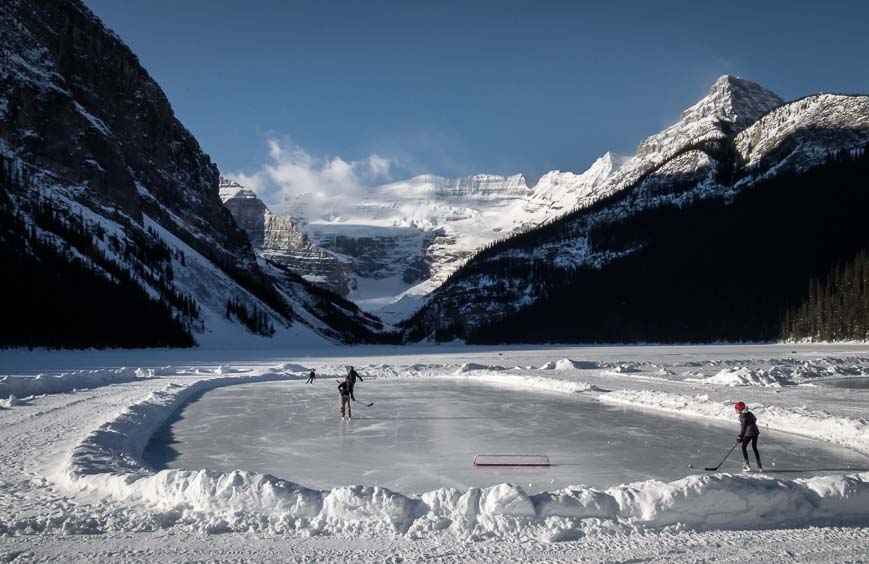
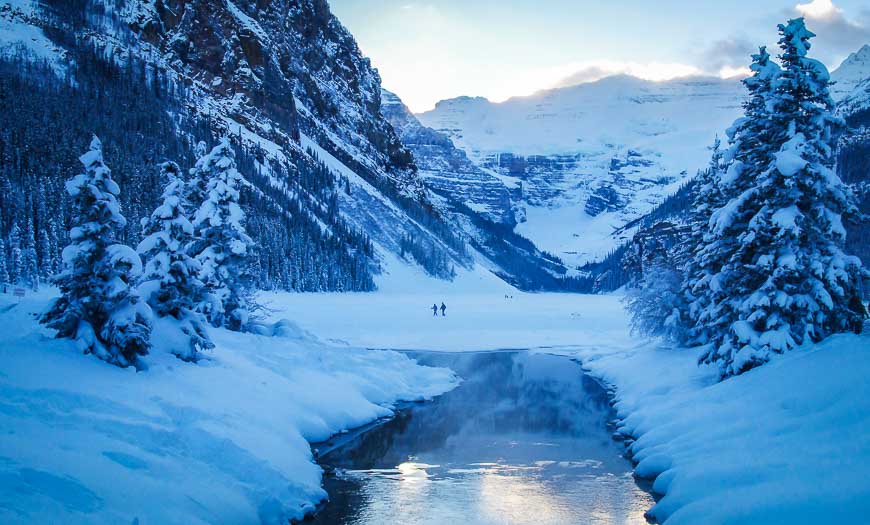
Winter in Lake Louise may be cold but it sure is pretty. There’s loads to do for skiers and non-skiers alike. A frozen lake with the most beautiful skating rink in the world set against a backdrop of truly stunning mountain scenery may be the first thing people think of when they think winter in Lake Louise.

But within 25 – 30 minutes of Lake Louise Village there are an incredible number of outstanding outdoor activities to keep you entertained. In the evening you can count on many a fine dining experience. – and some of the accommodation is world-class too.

Beautiful Lake Louise in winter

Beautiful Lake Louise in winter

Here are 9 things I’d recommend doing in winter in Lake Louise

1. Skate or play shinny on the world’s prettiest outdoor skating rink

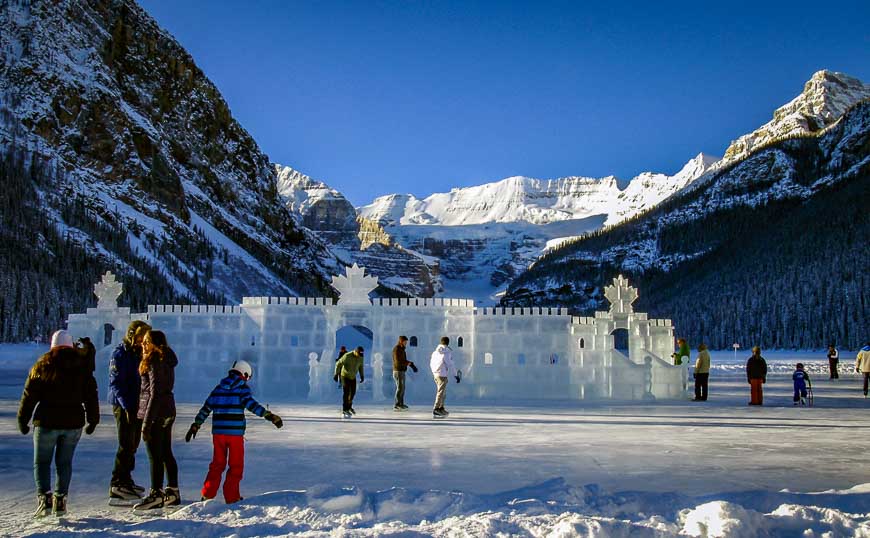
Every winter Lake Louise is transformed into a skating rink. Enjoy public skating with an entry through the ice castle or bring your hockey stick for a game of shinny in a separate area.

Lake Louise is lit until midnight but in theory you could skate around the clock. It’s free to skate.

Skate rentals are available at Fairmont Chateau Lake Louise at a cost for adults of $20 for 2 hours or $30 all day. It’s half that for kids. Hockey sticks can be rented for $5. (All prices are 2019 – 2020).

Playing shinny on Lake Louise

Playing shinny on Lake Louise

Skate around the ice castle at Lake Louise

Skate around the ice castle at Lake Louise

2. Catch world-class ice carvers in action at Lake Louise in January

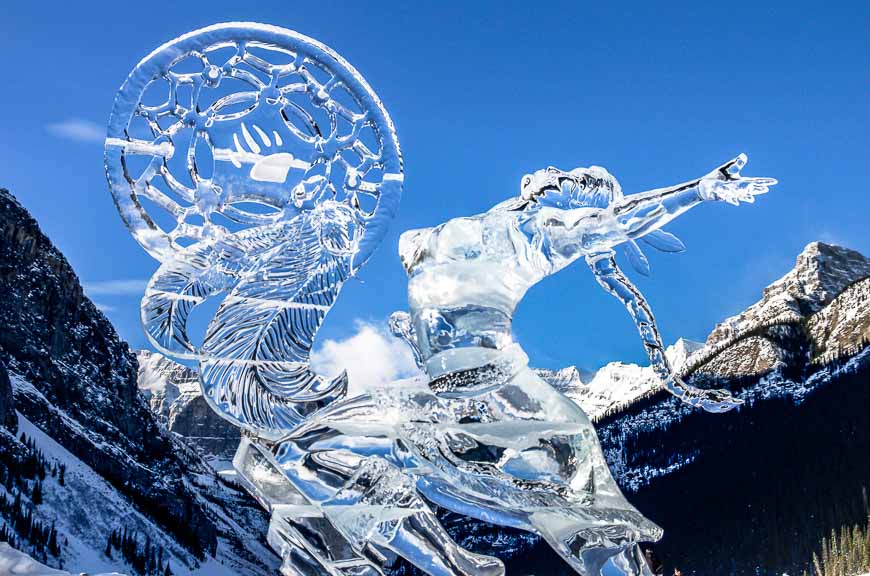
Every January for 12 days world-class ice carvers congregate at Lake Louise. They’ll transform a block of ice into a work of art under your watchful eye.

Wonder through a winter wonderland in front of the Fairmont Chateau Lake Louise, checking out the ice bars, ice carvings and of course the ice castle down on Lake Louise itself. Catch an ice carving demo; look on at what one carver can do in one hour with one block of ice.

At peak periods – which are Saturdays and Sundays from 10 AM to 5:30 PM you must now have tickets. If you stay at one of a handful of hotels in the nearby area you get free access. For more information visit Ice Magic Lake Louise.

One of the ice sculptures at Lake Louise from a few years ago

Stunning ice sculpture at Lake Louise

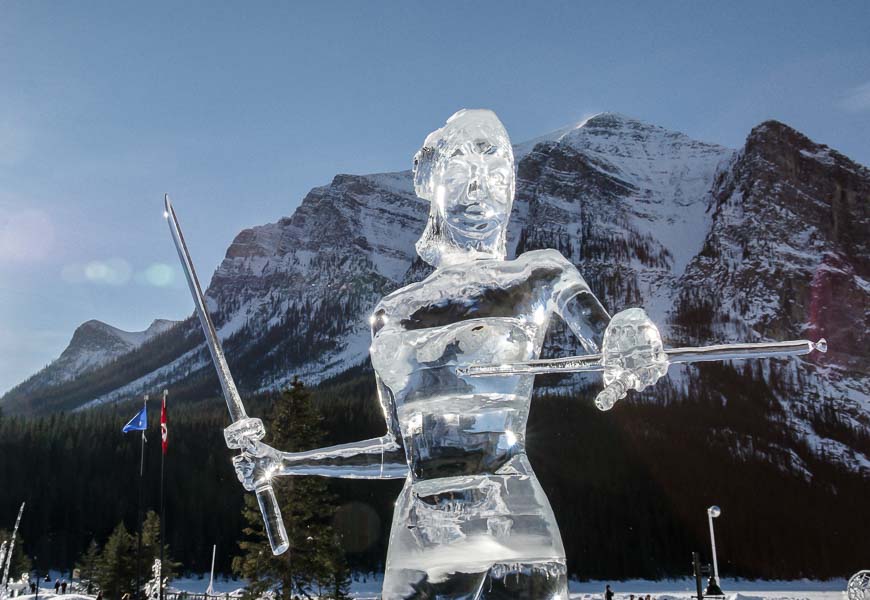
Strong women seems to be a theme

Strong women seems to be a theme

3. Snowshoe to the Ink Pots – 25 minutes from Lake Louise

If you can walk, then you can snowshoe and what better place to do it than in Banff National Park. The trail to the Ink Pots is a great one. Its 12 kilometres return with just 220 metres of elevation gain.

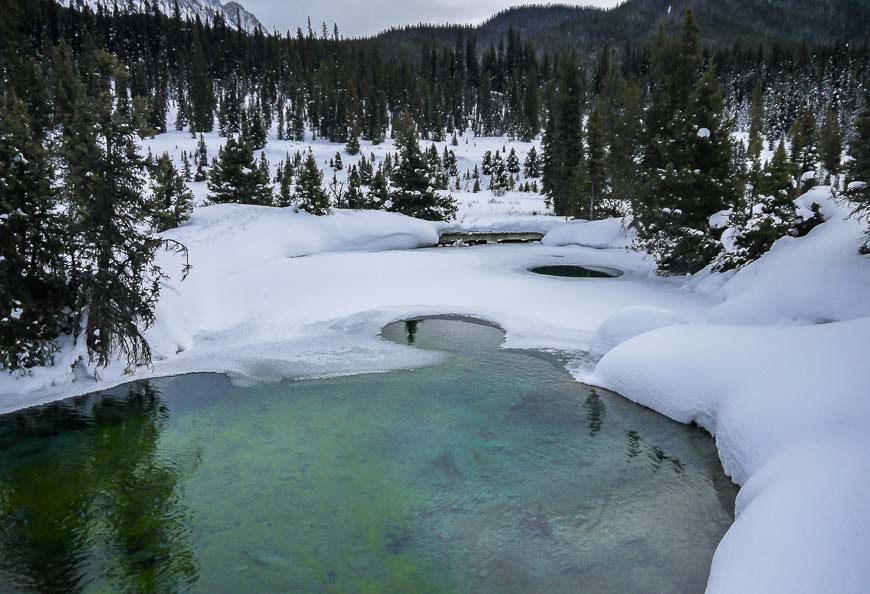
The higher you go, the prettier it gets with the pièce de résistance the Ink Pots themselves. They are brilliant-coloured mineral hot springs located on the route to Mystic Pass. The trailhead is a few kilometres east of Castle Junction, close to the Johnston Canyon Trailhead. 

Snowshoe to the Ink Pots in Banff National Park

Snowshoe to the Ink Pots

4. Do the Johnston Canyon Ice Walk – 25 minutes from Lake Louise

The Johnston Canyon Ice Walk is a popular, family friendly winter outing, accessed via a 30 minute drive from Lake Louise or Banff.  Slip-slide your way, preferably with icers attached to your shoes or boots, 2.7 kilometres to the frozen waterfall.

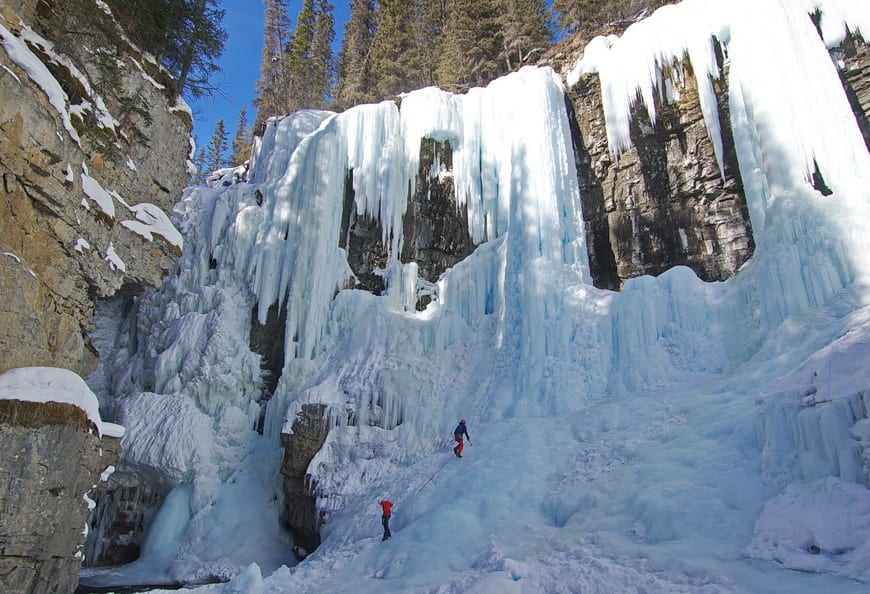
Some days the trail is like a skating rink. Hold on to the railings like your life depends on it. On other days the trail is simply snow-packed and not the least bit icy. Make sure you go to the end of the trail (which is more work) so you can see the ice-climbers in action on the frozen waterfalls.

Catching the ice climbers in action in Johnston Canyon

Catching the ice climbers in action in Johnston Canyon

5. Go downhill skiing at Lake Louise Ski Resort

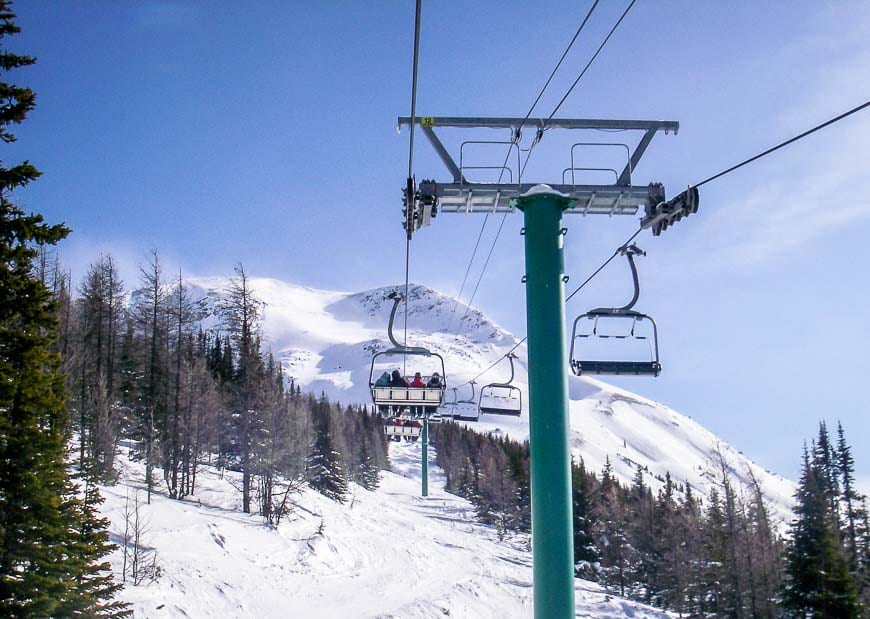
Love downhill skiing? Head to beautiful Lake Louise Ski Resort – voted Canada’s Best Ski Resort in 2018. It’s one of the biggest ski resorts in North America boasting 4,200 acres of skiable terrain. It’s also one of the prettiest resorts I’ve ever skied at. Families love it as there are beginner, intermediate and expert runs from everyone of the chairlifts.

In total there are ten lifts including a gondola, 145 marked runs plus back bowls, some remote. The resort is also the home of one of the top three terrain parks in the world (2018), a tube park and a top-notch beginner’s area.

With one of the longest ski seasons in North America (mid-November to May) you have plenty of time to discover not only the fabulous skiing and snowboarding but some of the special activities. Do a night tour under a full moon and finish with hot chocolate. 

Beautiful wilderness scenery at Lake Louise Ski Resort

Beautiful wilderness scenery at Lake Louise Ski Resort

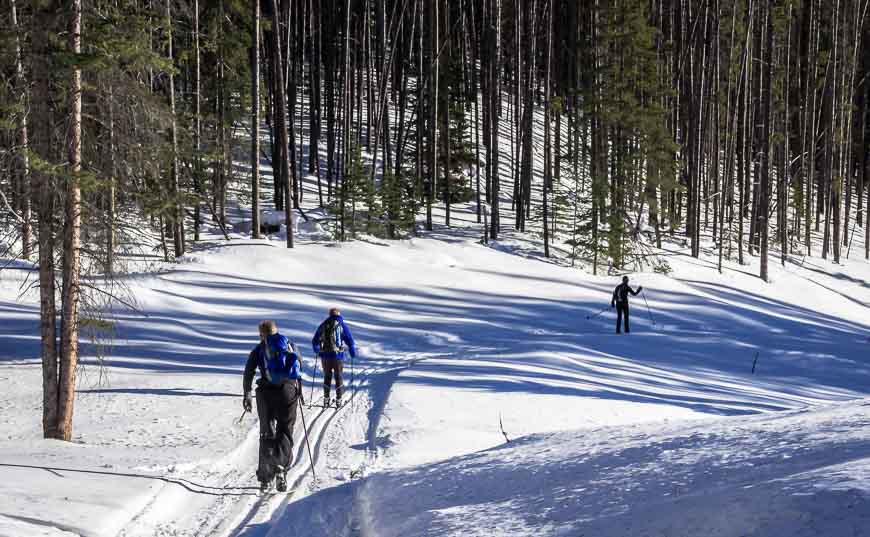
6. Cross-country ski on one of the beautiful trails near Lake Louise

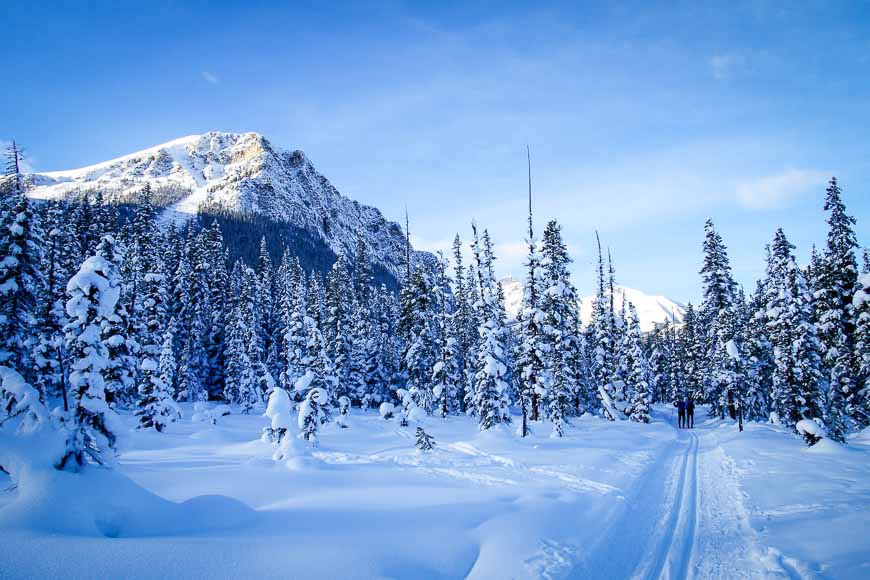
You can look forward to some exceptional cross-country skiing at Lake Louise – and in the immediate area. One of my favourite trails – the Fairview Trail takes off right from the main parking lot at Lake Louise. It hooks up with the Tramline Trail. You can ski it all the way into Lake Louise Village.

Read: Lake Louise Skiing: The Fairview & Tramline Trails 

Cross-country skiing on the Fairview Trail - a perfect way to spend winter in Lake Louise

Cross-country skiing on the Fairview Trail

The Pipestone Trail just a minute’s drive past the turnoff to the Lake Louise Ski Resort is very beautiful and the snow is usually amazing. You can choose from loops of varying lengths and make a day of it.

Pipestone cross-country skiing near Lake Louise

Pipestone cross-country skiing near Lake Louise

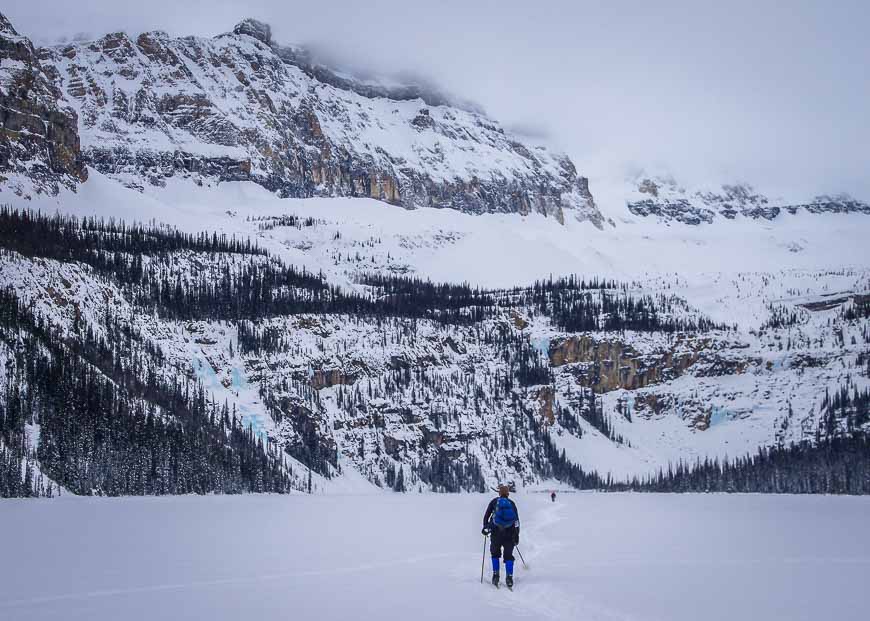
7. Cross-country ski to Boom Lake near the Alberta – British Columbia border – 20 minute drive

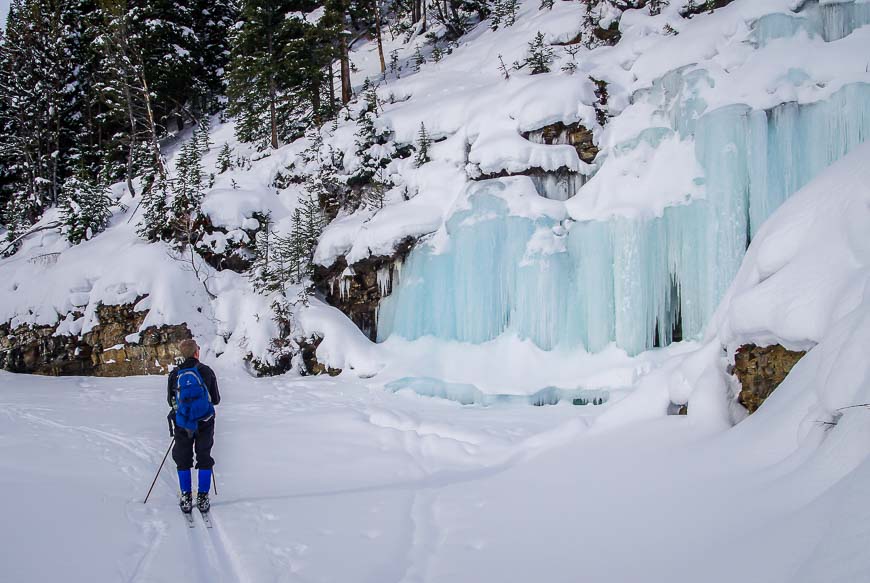
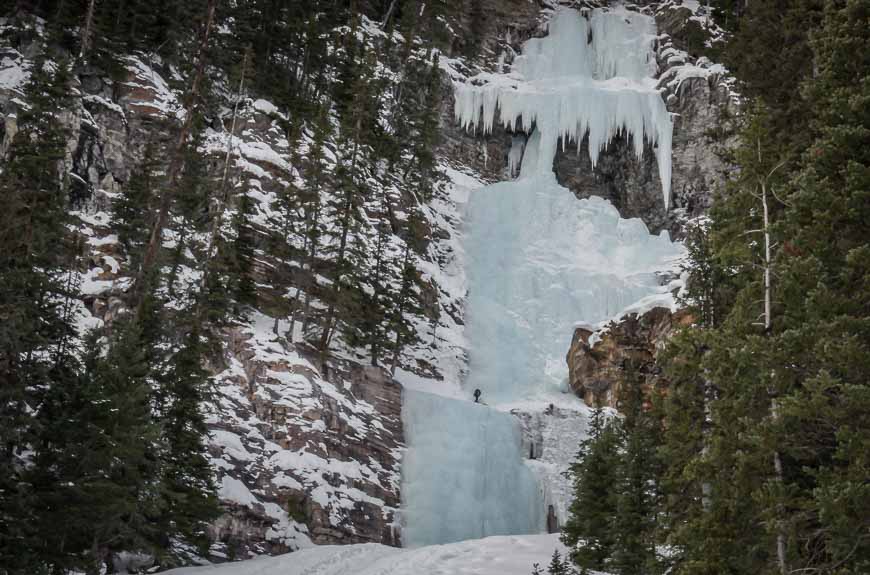
For something that’s only a short drive away from Lake Louise I’d recommend the easy five kilometre ski into Boom Lake. With an elevation gain of only 180 metres (590 feet), you’ll barely break a sweat. Be sure to continue down the north side of the lake to reach the pretty icefalls.

And of course you should use common sense and avoid the lake itself until you know the ice is thick.

Read: Cross Country Skiing to Boom Lake, Banff National Park

Cross-country skiing to Boom Lake

Cross-country skiing to Boom Lake

Massive frozen waterfalls can be seen along Boom Lake

Massive frozen waterfalls can be seen along the lake

8. Go doglsedding

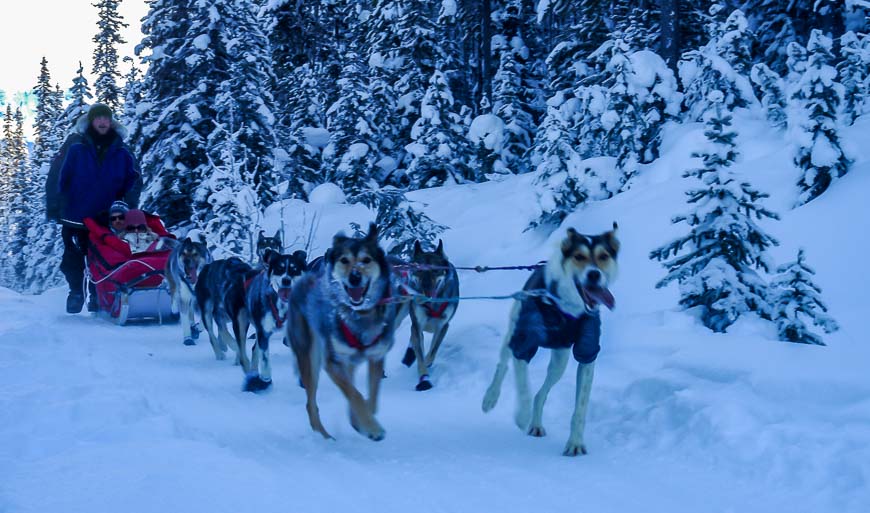
There is one company that runs dogsledding tours in Lake Louise – Kingmik Dogsled Tours. The most popular tour takes you on the Great Divide Trail towards the Kicking Horse Pass at the Continental Divide.

Enjoy snuggling up with your special somebody over the 16 kilometre, 90 minute length. And trust me with all the blankets you’ll be plenty warm.

Dogsledding on the Great Divide Trail

Dogsledding on the Great Divide Trail

9. Walk or snowshoe 

There are a couple of trails that take off right beside Lake Louise.

The Lake Louise Shoreline Trail is flat and easy. It follows the north shore to where the melt-water from the Victoria Glacier enters the lake. Some days in the winter you can see ice climbers on the frozen falls.

You can see ice climbers in action at Lake Louise

You can see ice climbers in action at Lake Louise

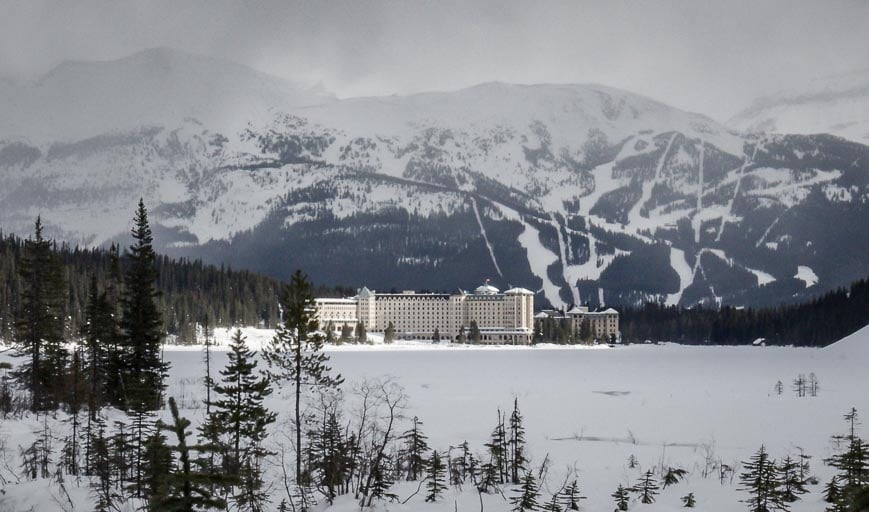
View from the far end of Lake Louise

View from the far end of Lake Louise

Mirror Lake and Lake Agnes

Another hike or snowshoe is the one to Mirror Lake and potentially to Lake Agnes. It’s 2.6 kilometres to Mirror Lake via a well-maintained trail though the forest. From Mirror Lake you continue on good trails to reach the Lake Agnes Teahouse via a climb up a steep, slippery set of stairs in the winter. It’s 3.6 kilometres one way with an elevation gain of 400 m.

IMPORTANT – After Mirror Lake there is a section of trail that crosses avalanche terrain. Banff National Park calls it Challenging Class 2 terrain for avalanche exposure and requires appropriate training and equipment. Continue from Mirror Lake only if you’re prepared with a shovel, transceiver and the know-how.

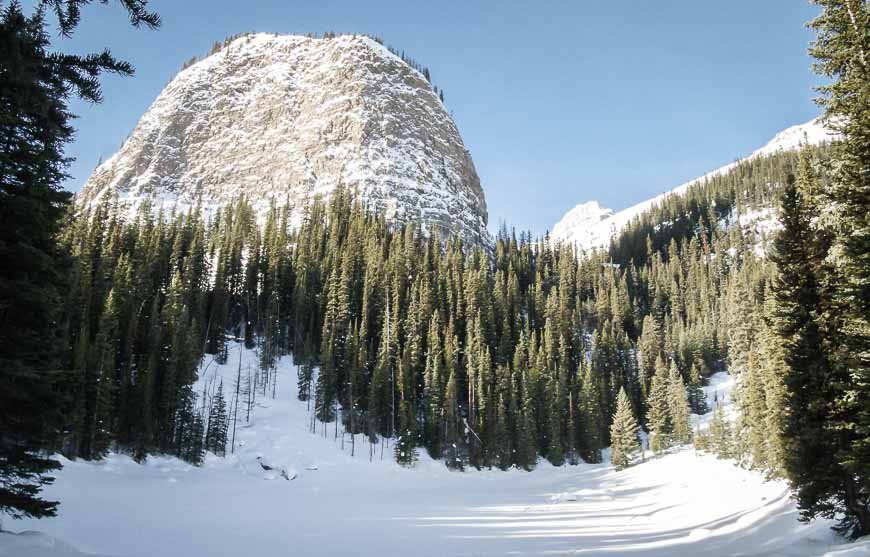
Frozen Mirror Lake with the Beehive in the back

Frozen Mirror Lake with the Beehive in the back

Where to stay in and near Lake Louise

This post includes some affiliate links. If you make a qualifying purchase through one of these links, I may receive a small percentage of the sale at no extra cost to you. Thank you for your support.

For a splurge stay at the lake at the Fairmont Chateau Lake Louise or in the village at the Post Hotel & Spa.

For good value stay at the Lake Louise Hostel.

Deer Lodge is very close to the actual lake and the renovated rooms are excellent. They also have a popular outdoor hot tub.

The Mountaineer Lodge is a stone’s throw from the village – and offers comfortable rooms.

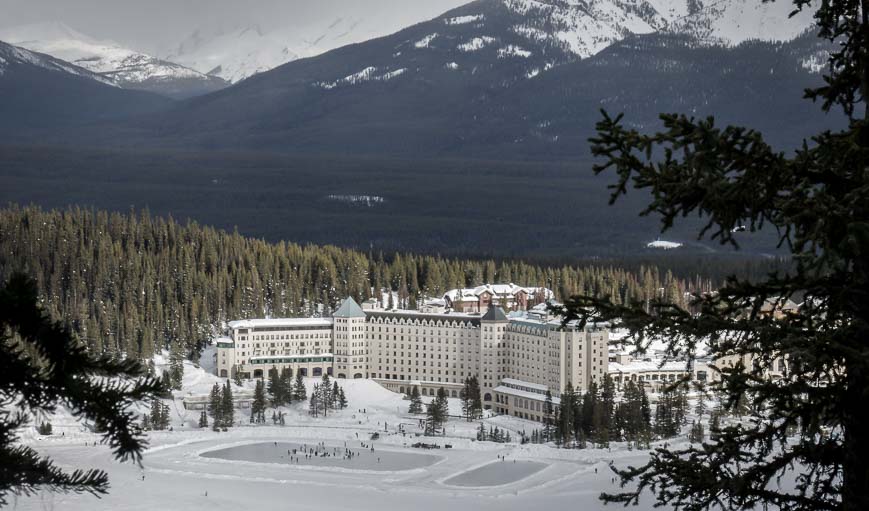
Fairmont Chateau Lake Louise

Fairmont Chateau Lake Louise from the lookout a short distance up Fairview Mountain

Click on the photo to bookmark to your Pinterest boards.

What to do in winter in Lake Louise


The post What to Do in Winter in Lake Louise appeared first on Hike Bike Travel.

What to Do in Winter in Lake Louise Read More »

The OFFGRID Holiday Prepper Gift Guide

The OFFGRID Holiday Prepper Gift Guide

While we usually warn our readers to stay away from malls and to be extra prepared this time of year, it is a great time to score some deals to either restock your supplies or […]

This Article The OFFGRID Holiday Prepper Gift Guide is an original article from OFFGRID Survival If it is appearing on any other site but OFFGRID Survival, that site does not have our permission to use our copyrighted content!

The OFFGRID Holiday Prepper Gift Guide Read More »

Weathering the Storm Together, Chapter 9: A Helping Hand

You can see all of the chapters (in descending order) here. After Steve and Ned finished testing the solar generator switch without any issues, they rounded up Jeff and Sammy to go over gun safety tips and do some target practice. Ned instructed Jeff on loading and using the handgun while Steve introduced Sammy to safety, cleaning, and use of the rifle. After about an hour, Jess called them all in…

Source

Weathering the Storm Together, Chapter 9: A Helping Hand Read More »

Survival Gear Review: Leatherback Gear TACTICAL ONE Bulletproof Backpack

I needed to find the best tactical bag I could use as a carry-on for airlines. People say I travel a lot, but I think that depends on one’s perspective. I might travel periodically for work, but that is usually limited to a trip to Las Vegas for a SHOT Show or to tour the Las Vegas underground home, which pales in comparison to the corporate businessman or woman flying from meeting here to meeting there. It’s more common to find me travelling for vacation and adventure than for work; and compared to the average American, who doesn’t take the vacation time they deserve, I probably do travel more for vacations.

By Derrick, owner of Prepper Press

Regardless, I travel enough that I have become particular about how I travel. I am mindful of what I should pack, how to pack it, and what to pack it all in. I have had to watch the weight of my carry-on bags. I have also flown on smaller Cessna planes that limit what you can bring. I have also had my luggage delayed enough times that I try to avoid checked bags whenever possible.

Being a prepper also forces me to see travel, and thus luggage, through prepper eyes. Compound that with the fact my wife and I trend toward the more adventurous side of travel. That means we always skip the all-inclusive resorts in favor of finding our own way, which at times, has led us to… shall we say “questionable” areas in places like Belize and Mexico. We have generally found the American stereotypes of these places (and of the people) to differ wildly from the reality there. Still, the same as you might travel to parts Chicago, D.C., or Detroit and suddenly be struck with “I probably shouldn’t be here,” the same has happened to us more than once in foreign countries.

So, being a prepper with a bag fetish (don’t judge) and an interest in travel, I set out to find the best tactical carry-on bag for flying. I had five criteria in mind:

It must be a backpack. Carrying a bag by hand from terminal to terminal, from airport to shuttle, and while out adventuring, gets very old very fast. I want to wear that weight on my back.

It must fit within airline dimensions for carry-on bags. This may seem obvious, but it rules out many backpacks that might otherwise fit the bill. I wanted a bag that will fit just within the dimensions so that space can be maximized. Not smaller, and not bigger. “It won’t fit,” are three words you don’t want to hear as you attempt to board the plane.
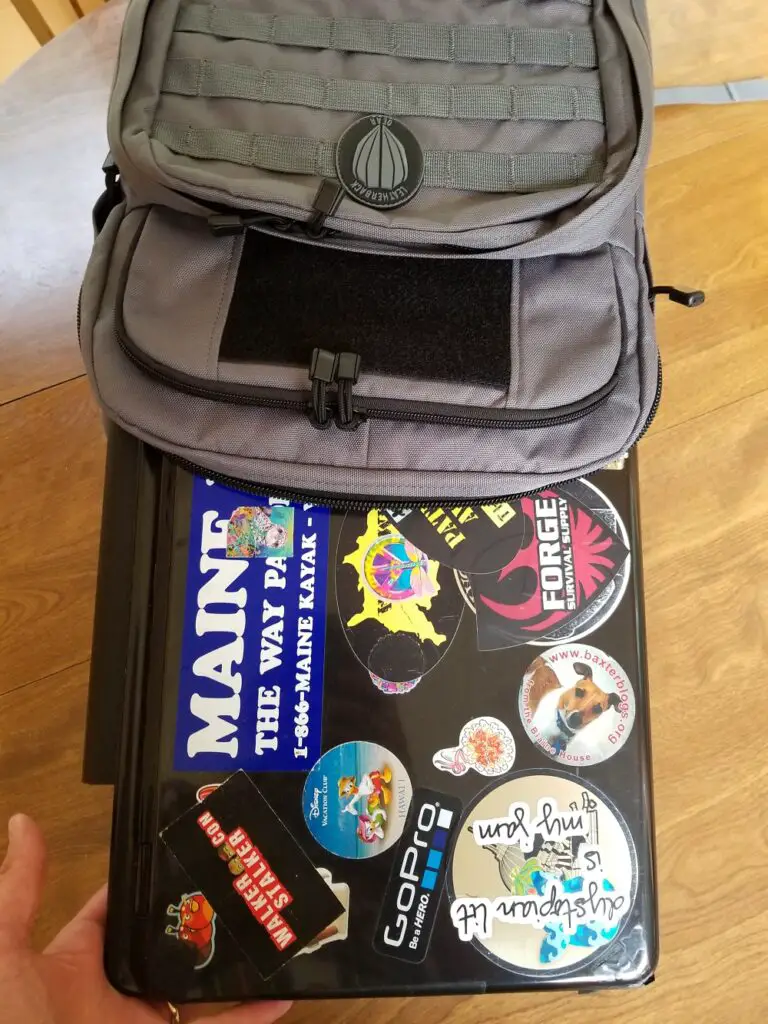
Check out: Survival Cache Podcast – Interview with Derrick of Prepper Press 

It must have features that allow easy access to different items. I wanted a bag where I could access different items without having to sort through the entire bag.

It must accommodate a laptop. Owning and operating a business like Prepper Press means I need to take a PC with me when traveling. The site has gone down (or required a different prompt fix) more than once.

It needed to be a tactical carry-on bag. “Tactical” means different things to different people. For some, it just means “tacticool.” For me, it means solid construction with top-grade materials, able to accept MOLLE accessories, and possessing the best safety features I can get.

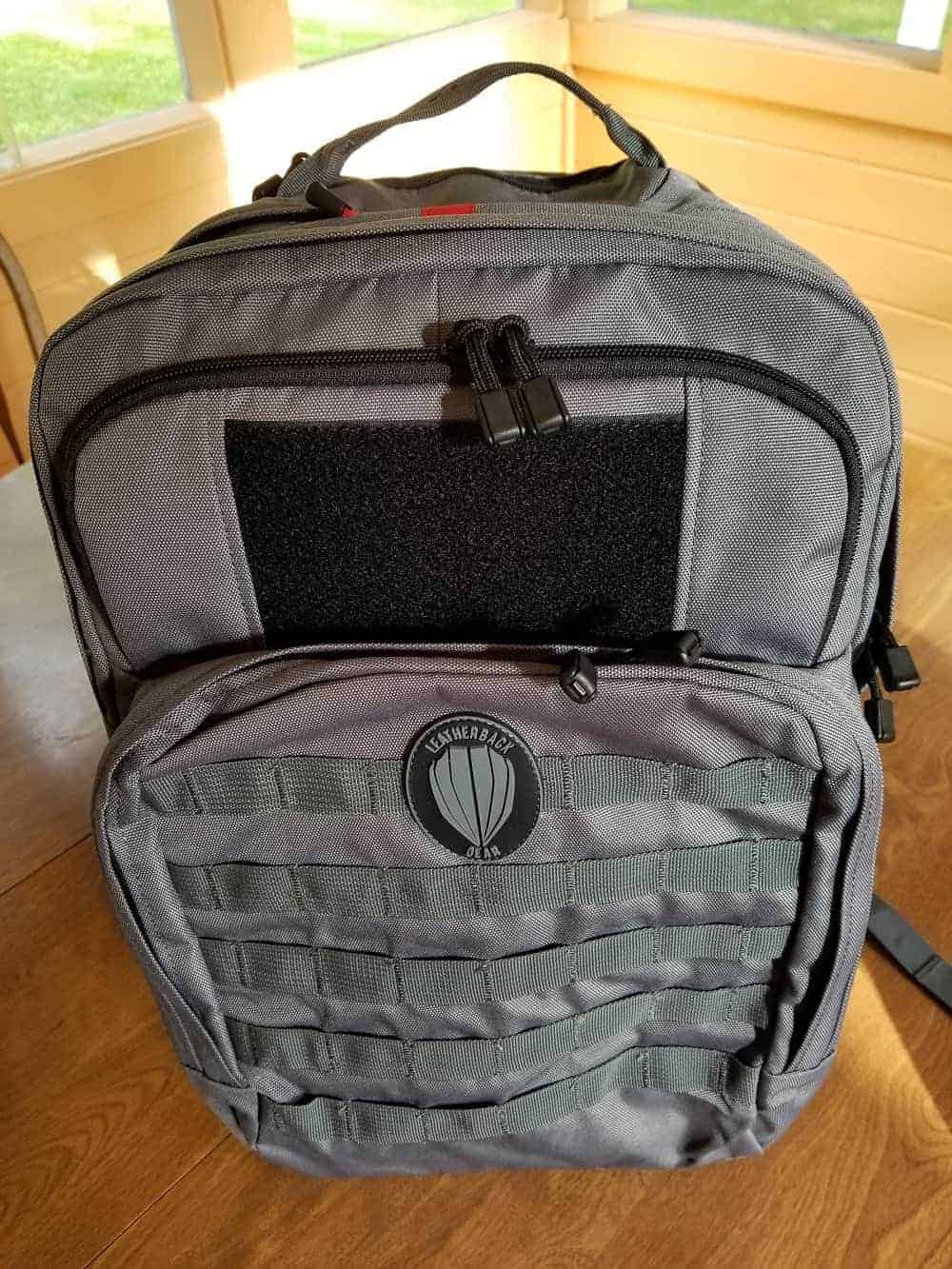
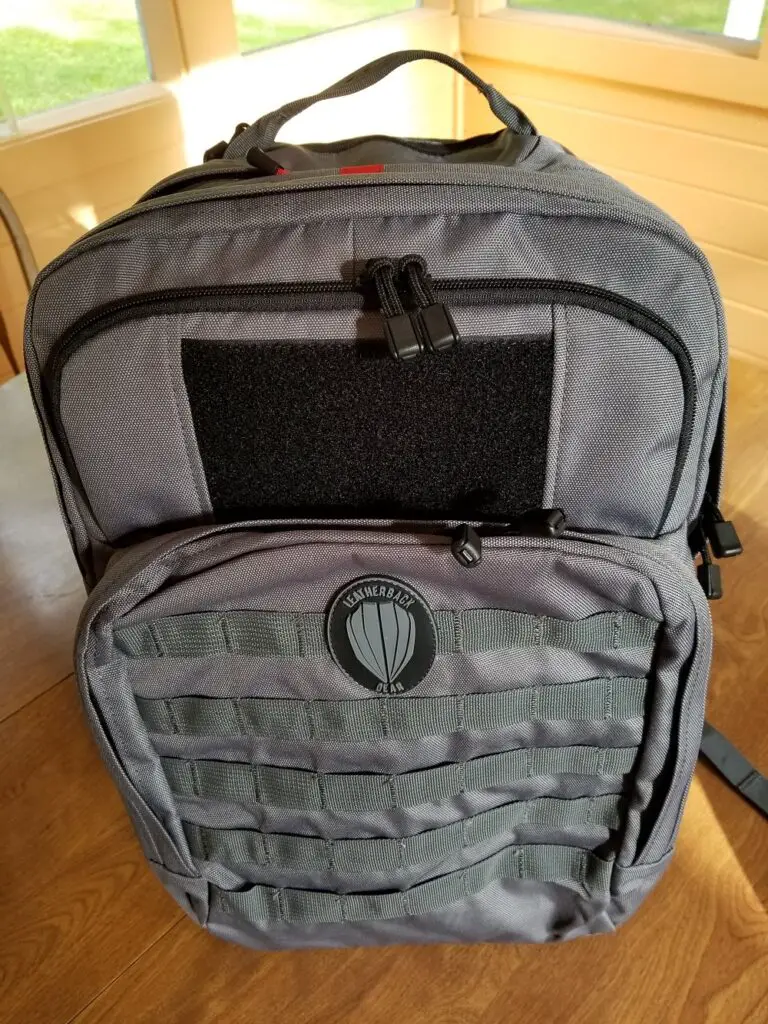
Enter Leatherback Gear’s “TACTICAL ONE Bulletproof Backpack Pro.”

The market for bulletproof backpacks has shot up (no pun intended). Mass shootings, school shootings, or the natural development of the firearms and related accessories market, pick your reason(s).

Whatever they are, the demand for bulletproof backpacks is only increasing. I never set out to buy a bulletproof backpack, but it fit the bill. Let’s see how it fit into my criteria. 

It must be a backpack.

It’s a backpack. I can carry all the weight on my back, but should I want to carry it by hand, it has a nice carry handle at the top. Criteria met!

It must fit within airline carry-on dimensions.

United and Delta Airlines’ carry-on bag dimensions are limited to 9”x14”x22”. This seems like the industry standard. The Tactical One Pro comes in at 9.5”x15”x20.5” (according to the manufacturer’s website). My measurements of the pack, when full, differed only slightly. Technically, it is not an exact fit, but I have never seen airline staff standing by with a tape measure, and I would be shocked if they told me I had to check a bag because it’s 1” oversized. That won’t happen. I’ve seen people get by with worse.

Also read: Building a TSA-Compliant Bug Out Bag

Related note: I didn’t think it would be a problem, but I reached out to Leatherback Gear to verify that body armor is allowed on airplanes. I didn’t want to buy a pack only to get lengthy questions from TSA agents. This was Leatherback Gear’s response:

“Great question! During development and testing, this was a key issue for us to confirm and verify otherwise it wouldn’t make sense for our backpacks to be sold in our mind. Rest assured, our backpacks travel through airports all over the world from Las Vegas to Los Angeles to New York to Toronto to Copenhagen to Dubai to Tokyo to Bogota and everywhere inbetween.”

It’s true. Go to the TSA security screening page on body armor and see for yourself.

Criteria met!

It must have features that allow easy access to different items.

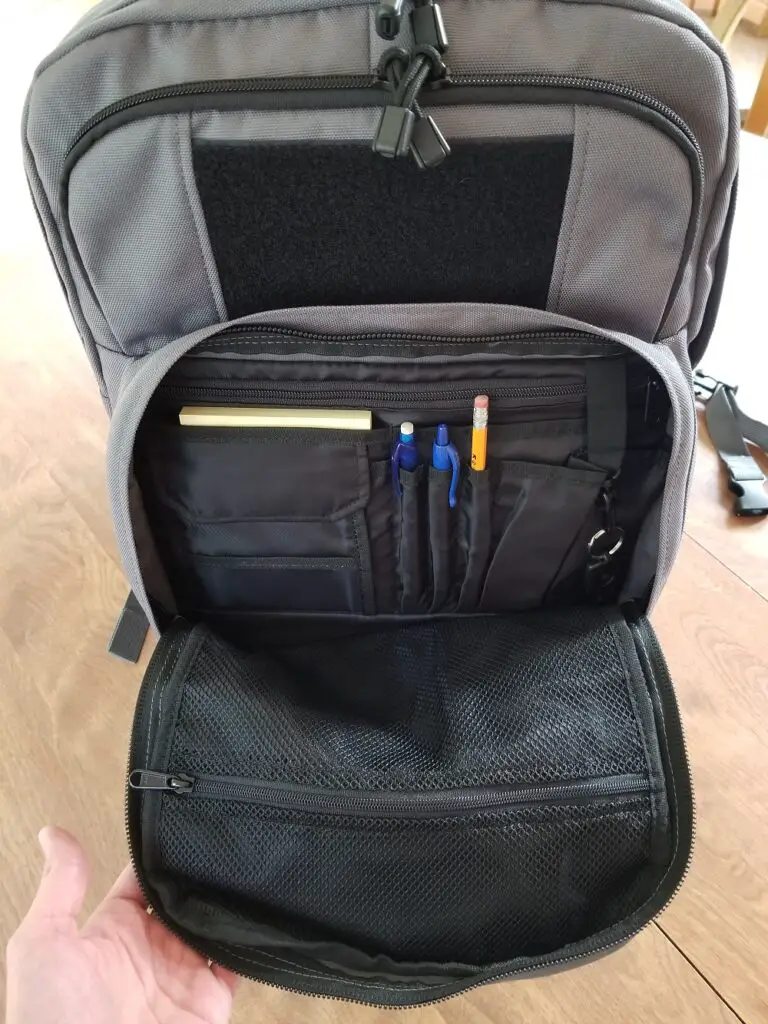
The Tactical One Pro has many pockets and feature that appealed to me. It has a felt-lined sunglass pocket (I wear prescription sunglasses, so this was a big plus). It has an internal organizer pocket for pens, pencils, etc. (perfect for working vacations and actual work travel).

Criteria met!

It must accommodate a laptop.

I’m still using an over-sized 17” Dell laptop. 

Criteria met!

It needed to be tactical.

This was the biggest criteria. Plenty of backpacks fit the above four criteria, but in this “tactical” prerequisite, the bags ran the gambit from a few MOLLE features to full on bulletproof. Just because this pack is named the “Tactical One Pro” didn’t mean it got a pass. I did some solid research into the subject and this pack came out on top. Heres why:

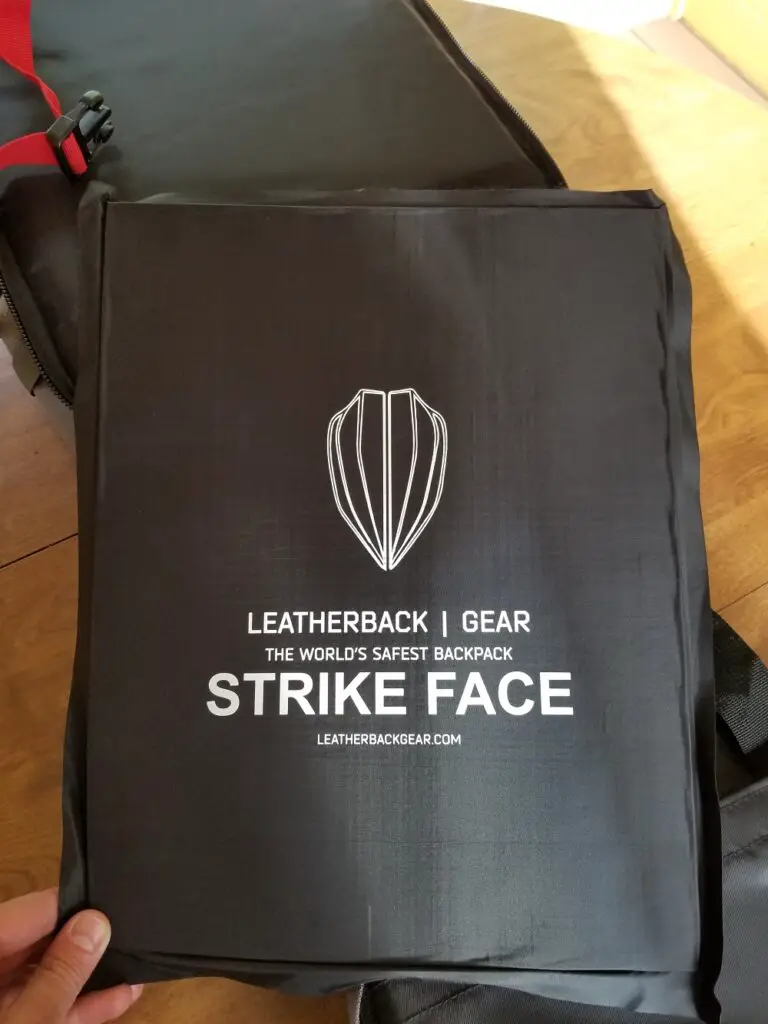
It’s bulletproof.  This is the biggest tactical feature of the pack. Leatherback’s armored panels are NIJ Level IIIA Rated Armor. That level will protect the wearer against nearly all handgun rounds up to .44 magnum with a mass of 240 grains and a velocity of 1,340 ft/s. This armor will even stop 12-gauge slugs!

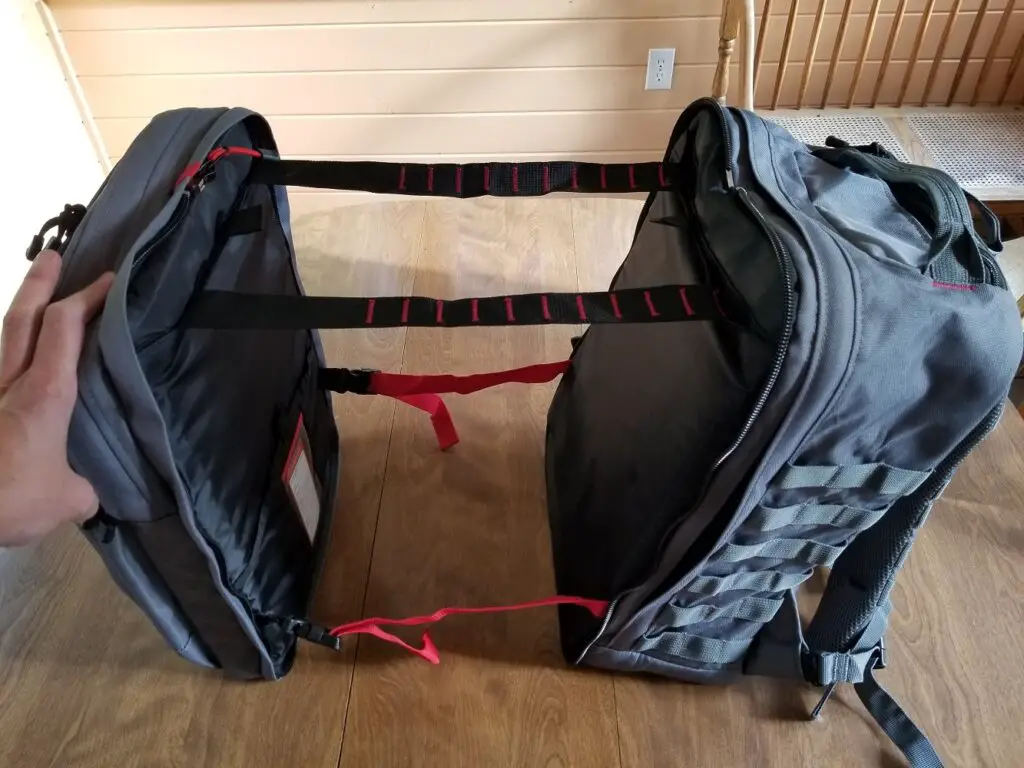
It won’t just protect your bag, but also your front. There are not one but TWO armored plates in this pack. You can see this as double the protection for your back (stopping even higher-caliber rounds) or as protection for both your front and your back.

How does a backpack protect your front?” you ask. This bag is tactical in every way. One zipper splits this backpack in half, exposing shoulder straps that allow you to wear it as conventional body armor vest
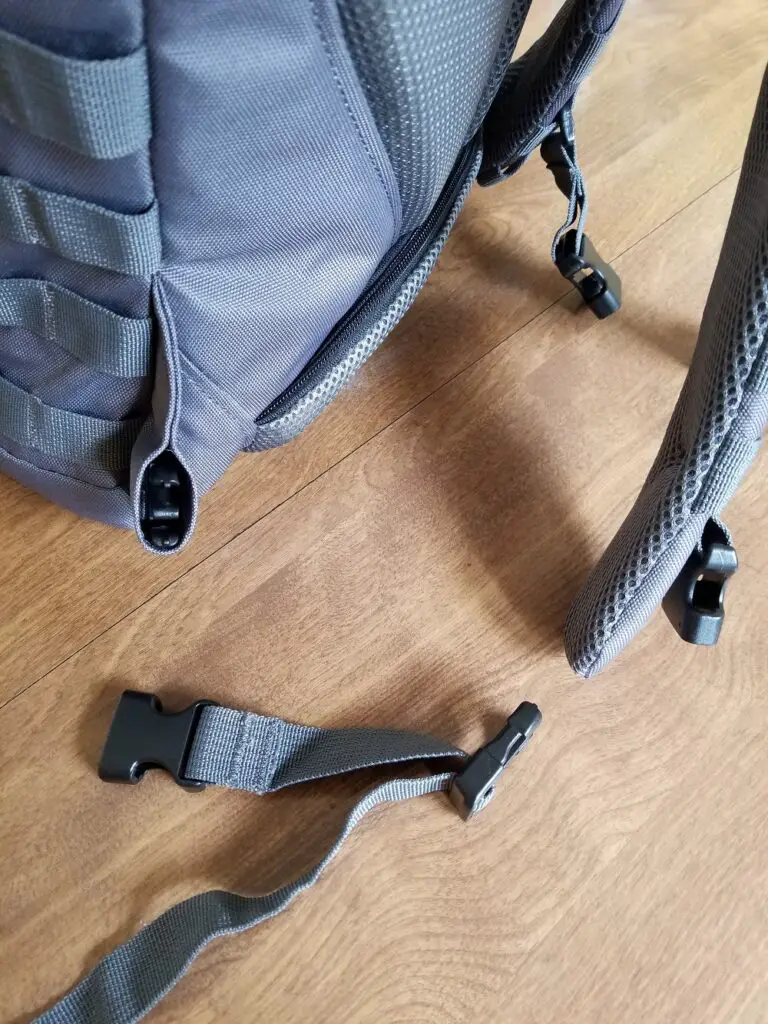
Quality of construction. Leatherback Gear didn’t cut any corners in the construction of this pack. The fabric is water resistant and strong. The zippers are covered with fabric protection. The Velcro and strapping are all heavy-duty.

Detachable straps. The Tactical One Pro has detachable straps. Why? To add versatility. They can be removed for use as tourniquets, door stop straps, or anything else.

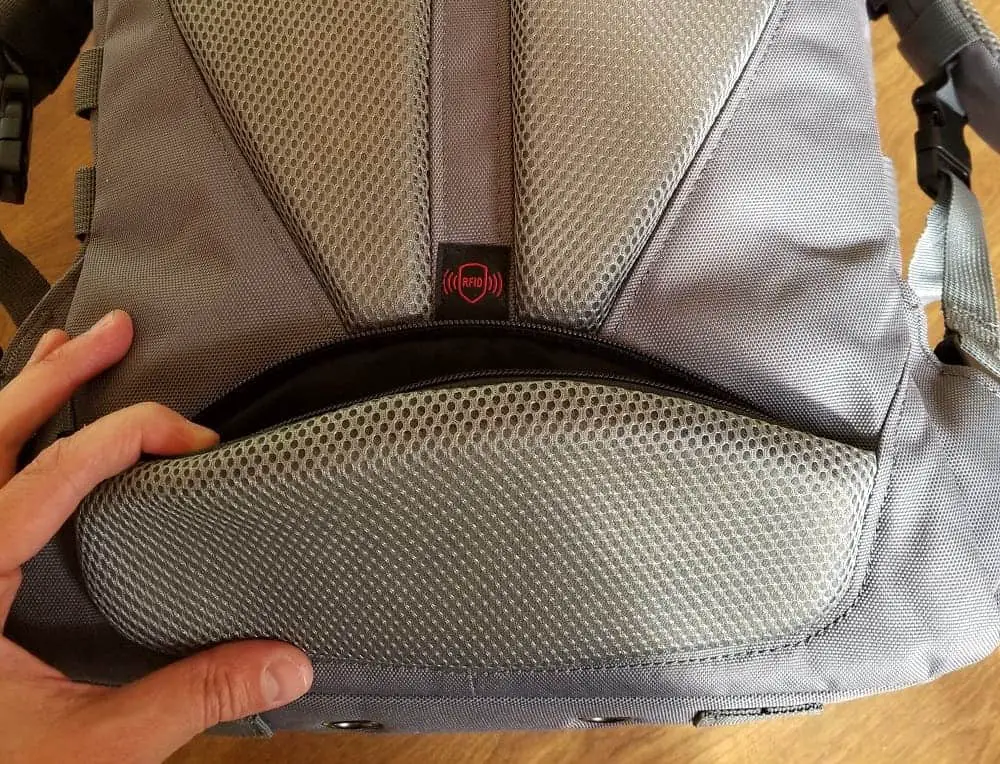
RFID protection. There is an RFID (radio frequency identification) lined/blocking pocket to protect your credit cards and passports from being captured and hacked (another benefit for travel protection).

MOLLE. I assume most readers are familiar with the MOLLE system for carrying equipment. It’s an acronym for “Modular Lightweight Load-carrying Equipment”. It’s the system used by many NATO armed forces, the U.S. and British Army in particular. There are many accessories available for MOLLE-equipped packs and vests, making it a truly versatile system. The Tactical One Pro is no exception with its many MOLLE loops on the back and sides. (For a complete description on how to use MOLLE for prepping, see Joe Nobody’s book The TEOTWAWKI Tuxedo).

Criteria met!

What I Do Not Like

The Tactical One Pro was hands down the best tactical backpack I could find for use as a carry-on bag, but there are two aspects that I don’t like.

My biggest, and immediate, criticism of the bag is that it’s lacking a place to store a water bottle on the side. This may not matter as much to others, but I carry a water bottle every day in my 5.11 laptop bag. I bristle at the idea of paying for bottled water, particularly when it’s airport pricing. It’s a waste of money; the plastic bottle is unnecessary waste. Whenever I am flying, I go through security with an empty water bottle and promptly fill it on the other side of security at the nearest water fountain. This bag lacks any easily-accessible feature to store that bottle.

This is where the MOLLE features of the pack come into play, however. Given the wide breadth of options available for MOLLE products, I can easily attach a MOLLE-compatible water bottle holder to strap onto the side of the pack. I can buy a MOLLE-compatible medical pouch, EDC pouch organizers, a shoulder strap bag, and various clips and straps to attach almost anything else.

The second aspect I didn’t like was the price. At $399.99, this tactical carry-on bag does not come cheap. I do not think the bag is overpriced, however. I did a very thorough analysis of packs of this type. If you want high quality, you have to pay for it. A pack of this type of construction costs a lot to produce, so expect a high price point on that alone. Then you add two plates of armor and you hit the justified $399.99 price point. Still, even though it’s a justified price, some of us may have to swallow hard when making the purchase. That said, I have now gone through many lower-priced packs that I have had to replace over the years because their quality deteriorates over time. That won’t happen with this pack as the construction is dramatically better. So, while a pack like this might cost more up front, it may break even (or even save money) in the long run as it stands the test of time.

What about you? Do you have a preferred carry-on bag for flights?

All photos by the author

The post Survival Gear Review: Leatherback Gear TACTICAL ONE Bulletproof Backpack appeared first on Survival Cache.

Survival Gear Review: Leatherback Gear TACTICAL ONE Bulletproof Backpack Read More »

Here’s How to Survive an Armed Robbery

The stick-up is a crime nearly as old as time: a robber, sometimes more than one, threatens you with harm or death if you don’t part with your valuables. It is one of the first proper violent crimes many criminals commit, and one of the most common threats in many places, rural or urban, all around the world. The simple fact that a wallet full of cash or credit cards will get your average…

Source

Here’s How to Survive an Armed Robbery Read More »

Should you ask for money at Christmas?

(As an Amazon associate I earn from qualifying purchases. This revenue helps keep the blog lights on.)

Recently I interviewed Melissa J. Ellis, a certified financial planner from Kansas City, for an article about medical debt. One potential tactic I’d asked her about involved holiday and birthday gift-giving. Suppose when relatives and friends ask for gift ideas we were to say, “Help paying my bills”?

Ellis thought this might work for some people. But some people are embarrassed to ask for money outright. It seems gauche or greedy. The CFP suggested framing it this way:

I really appreciate that you want to give me a gift, and here is something that I could really use. It will help relieve my stress and help me feel better than a new sweater ever would.

Is that gauche? Greedy? Personally, I’m torn.

Part of me thinks it’s not polite to dictate a gift and that it’s particularly squicky to ask for money. But the rest of me thinks some people wouldn’t mind being misdirected. If your parents want to spend $100 on a sweater and some frou-frou bath bombs on your b-day, they might find it more meaningful to send that money toward your co-pay.

After all, they’d be helping their beloved child pay less interest total on the obligation. If other relatives/friends did the same, you could see some real progress on the debt. Besides, how many sweaters does one person need?


Then again, some people fret over not having “something under the tree” for you vs. an invisible budget booster. It might cause them to spend more than they’d planned because they want you to have something to unwrap.

Which, in turn, could cause them to feel even more guilt that they spent $125 on Abby and only $100 on Alison – and run out to buy $25 worth of something-or-other for Alison to be “fair.” If you give a mouse a cookie…


#ad


Another potential Christmas dilemma


Here’s another sticky issue: Not everyone wants to disclose how much they spend on gifts.

Some people do most/all of their shopping after Christmas and other holidays, or at yard sales and thrift stores. Maybe it’s because they’re frugal. Maybe it’s because they’re nearly broke but aren’t ready to give up on giving. #beenthere

Suppose you spent only $2.99 on that hat-and-gloves set, or picked up a hardback best-seller for a buck at the library book sale – only to hear a relative or close friend announce, “What I really need this Christmas is cash so I can pay down my bills.” Suddenly you’re in the position of:

  • Having to say, “I can’t afford to do that.”
  • Having to measure disrupting your money goals (retirement, building an emergency fund, keeping the youngest child in parochial school) against the embarrassment of otherwise being able to put only $5 or $10 toward your loved one’s bills.

Talk about a lose-lose situation.


Crowdsourcing Christmas?


These days it’s increasingly common to ask for cash rather than gifts for weddings, graduations, bar or bat mitzvahs, the birth of a child. You can crowdsource your fertility treatment or a feral cat spay-neuter program.

Old notions like “You can’t dictate a gift” or “It’s the thought that counts” seem to be morphing as fast as Internet startups. (Which you can also crowdsource.) However, we shouldn’t forget the underlying notion of etiquette: Courteous behavior, aka “manners,” exists to keep people from being put on the spot, or having their feelings hurt.

Here’s what I think: You can ask for whatever you want. What you can’t do is act cranky if you don’t get it, because you have no idea what’s going on in other people’s lives.

If Grandma is giving everyone hand-written recipe cards, it might not be because she’s out of touch with what people really want. There might be a darned good reason your parents are suggesting a Secret Santa at this year’s family gathering.

So if anyone asks what you want, feel free to float the idea of “cash against my debt.” But make it clear that this is just one option.

And if your divorced mom gives you two or three small ceramic cats for your collection, one of which still has the thrift-store-sticker on it? The decent response is, “This will look great on the shelf with the other kittehs! You know me so well.”

Readers: Have you ever asked for cash for Christmas, or any other occasion?


The post Should you ask for money at Christmas? appeared first on Surviving and Thriving.

Should you ask for money at Christmas? Read More »