Meet the Winners: Go Ape!
Go Ape!, which has 34 activity sites across the UK, was the first-ever recipient of the  prestigious RoSPA Leisure Safety Trophy in 2019, in recognition of its practices and achievements in managing risks at its sites. Sponsored by Sportscover, the Leisure Safety Trophy is part of RoSPA Health and Safety Awards and celebrates organisations that embrace and appropriately manage risks in leisure settings.
We spoke to Linda Green, the Head of Health and Safety at Go Ape! about her health and safety background and how she helped Go Ape! attain the high standards needed to win the Leisure Safety Trophy…
What motivates your organisation to enter the RoSPA Awards?
We have worked with the RoSPA leisure safety team for a number of years and are firm believers of not being risk-averse when it comes to people enjoying themselves. This new award allowed Go Ape! the opportunity to promote and be recognised for our excellent approach to risk management of visitor safety.
What benefits does winning a RoSPA Award have for your organisation?
At Go Ape! we have spent the last 15 years fighting for the social benefits of risk. We are a high-risk activity and believe that people, particularly young people, get huge developmental benefit through the experience of well-managed risk. Winning this trophy demonstrates to the community that well-managed risk is a good thing!
Which innovative approaches, risk assessment practices and/or control measures to manage health and safety are you particularly proud of from your most recent RoSPA Awards submission?
We are proud of the role each member of our team plays in creating conditions for  others to thrive. We are very clear about our risk appetite not only for our staff but for visitors as well. We have developed our own practical instructor training supported by a bespoke online training package together with coaching, shadowing and mentoring which we believe was a particular strength of this submission.
What outcomes have come from your organisation’s approach to health and safety management?
What is our approach to risk? We all know that exposure to well-managed risk generates all sorts of societal benefits and is “a good thing”. But too often this is only until the well-managed risk translates into an injury. When this happens, the hue-and-cry assumes that all risk is unacceptable and that changes should be made to prevent the accident from ever happening again.
At Go Ape! We have spent the last 15 years fighting for the social benefits of risk.
With self-belay, the safety of the participant is maintained by at least one of the participant’s two safety lanyards remaining attached to the safety system at all times. Participants are trained to transfer between parts of the safety system by moving only one lanyard at a time, ensuring they are always attached. It is this reliance on the actions of the participants to maintain safety that stands out in today’s culture of infantilising risk aversion.
This is, physically, a very simple system with a very low risk of mechanical failure. The main risk, that of a fall from a height, is obvious to all and there are no hidden hazards. However, compared to continuous belay systems, it relies on a greater degree of training of customers in the safe operation of the course to achieve the required levels of safety.
How have the RoSPA Awards inspired your organisation to continually improve health and safety management?
We are striving to introduce new products into our portfolio – new thrilling challenges within the high ropes courses, plus the introduction of axe throwing. Safety of visitors, staff and contractors is built onto our everyday working lives, polices and procedures.
 In 2016, we introduced a 24/7 employee assistance programme for employees and their families. This has proved extremely successful in helping site managers direct staff with everyday issues (stress, relationship breakdowns, drugs, finance etc.) to free and confidential support and advice guidance, from self-help online tools to face-to-face counselling.
The company philosophy is to “create adventure and to encourage everyone to live life adventurously” – including our staff. An Adventure fund supports staff expeditions as well as organised adventure activities throughout the season.
What do you enjoy most about the RoSPA Awards process?
The opportunity to speak to colleagues about progress and the positive emphasis on getting things right every time for staff and visitors alike.
What do you think entrants could do over the year to keep drafting an awards submission simple?
Create a space in your day every couple of weeks to think about the questions and pick out the best example of each. It may well be that a better example comes up a few weeks later but building a portfolio of good evidence over time really works.
Have you used the reflective practice involved in drafting a submission for CPD purposes?
Drafting the awards submission provided us with the opportunity to look back over what has been achieved and how well everyone has worked together to deliver experiences that help people understand themselves and their ability to manage and overcome risk.
What advice would you give to organisations considering entering the RoSPA Awards for the first time?
Get ready to share your passion for safety and paint as rich a picture as you can when you draft your submission. You might be pushing yourself out of your comfort zone first time around, but success makes it all worthwhile.
How would you convince organisations not entering the RoSPA Awards to start entering?
I would encourage any visitor attraction company to apply for the award. By doing so you actually recognise how well your staff support your company’s vision in achieving this award. I am currently doing site audits and taking the trophy on tour with me, any opportunity to share success works for us.
Click here to find out more about the Leisure Safety Award, sponsored by Sportscover. To read more from our RoSPA Awards ‘Meet the Winners’ series, click here.
Meet the Winners: Go Ape! Read More »

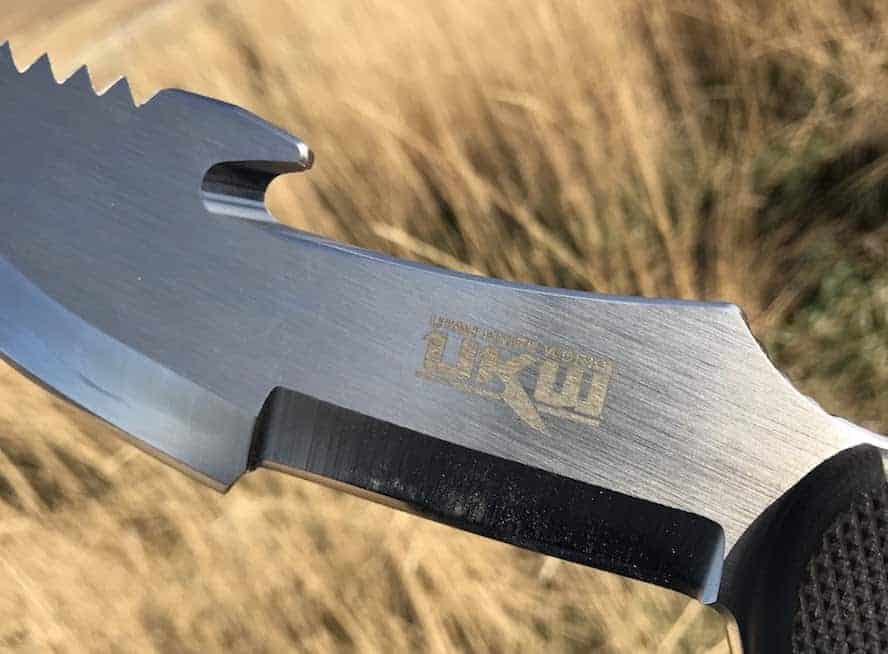 Origin stories are always interesting. Whether the first life on earth, or the beginnings of a Super Hero, the origin story starts the character arc. In the case of a knife, for some, the origin story can be as important as the actual blade. The
  Through documentation and primary sources, the initial design of what will become the famous Tracker Knife, or more specifically, the Tom Brown Tracker, had its roots with Robb Russon whose son Mark runs
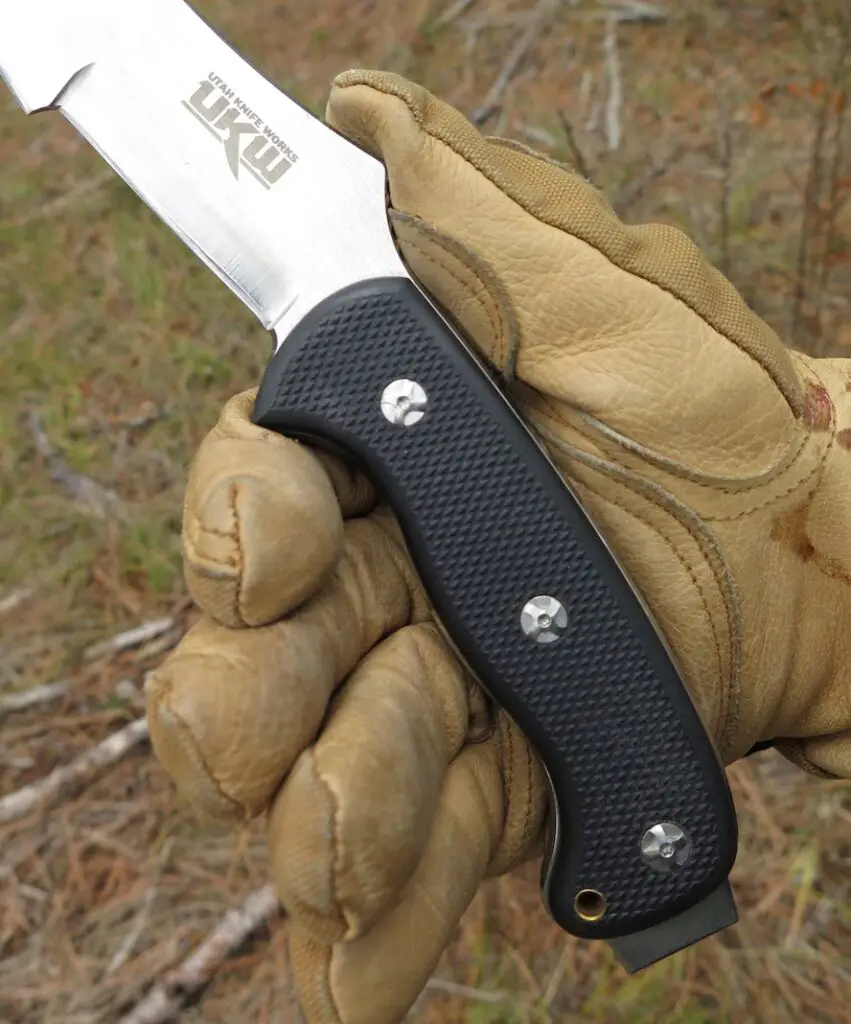
  The famous profile of the knife shape is mainly the transition from a somewhat inset flat blade to a seperate curved blade profile with saw teeth of some sort gracing the front end. In the case of this Survivor Knife, the presentation is about a foot long, and in a bright stainless with black glass-reinforced canoe-shaped nylon scales each fixed in place with three bolts.
 Other versions of the Tracker knife use high carbon steel, powder coated blades, and various scale choices. There are even larger and smaller versions being sold. What they all have in common besides an ancestor from Utah is an obvious shape; the shape of the Tracker.
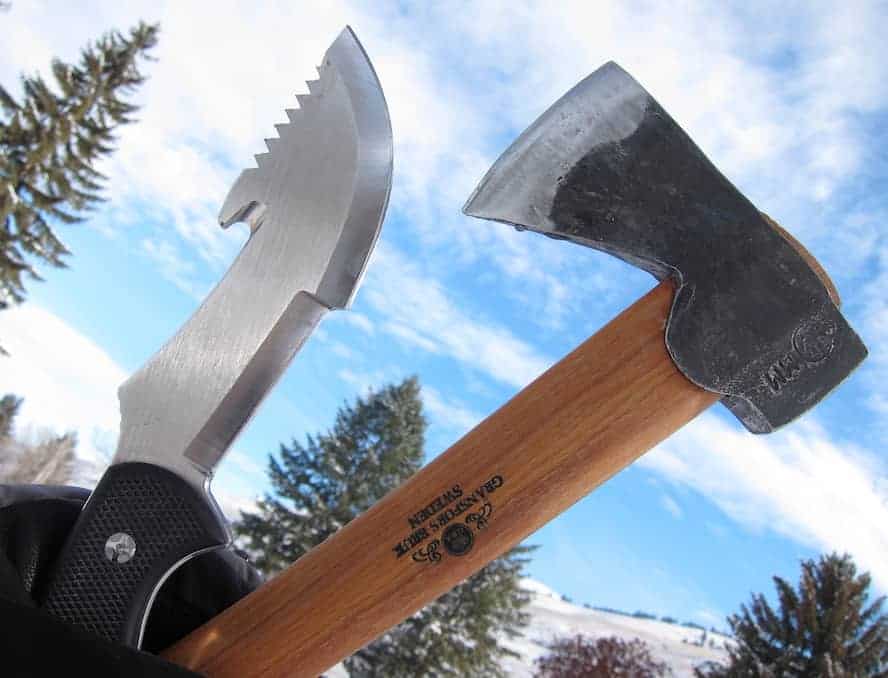 The initial two-and-a-half inches of straight blade just forward of the grip is steeper flat grind with its six covered by a solid thump ramp with melted jimping. The Survivor Knife’s flat blade works as draw knife and batoning face as well as a traditional cutting blade. And when batoning, care is needed because you don’t want to strike the saw teeth. Instead, you can go easy and aim just in front of the teeth where a small tip platform is open space, or you can strike to the rear of the gut hook on a sloping plain of steel directly above the straight blade. Of course you will quickly exceed the girth of the blade but at that point I’ve found I can often twist the knife handle counter-clockwise (right handed) further splitting the workpiece.
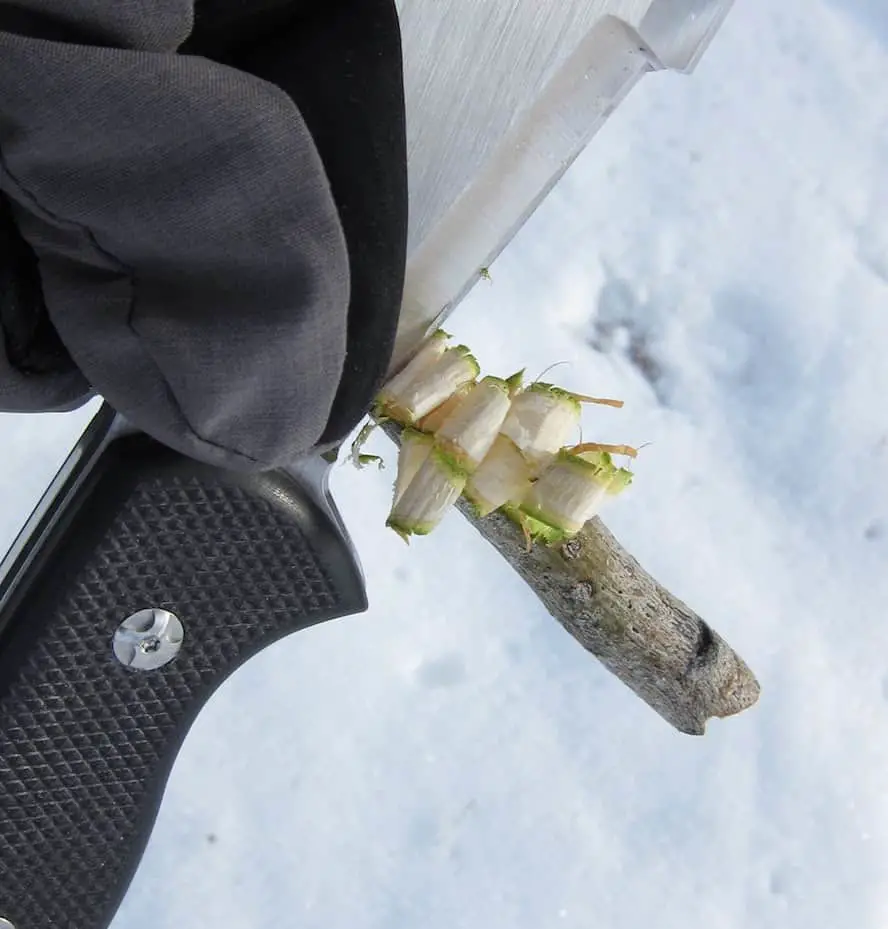 Cutting surfaces on the Utah Knife Works Survivor Knife do their job without complaint. When making feather sticks, the straight blade works wonders. And as a batoning section, it works well up to its full length. Given that it is a portion of the overall blade length, you can use it’s entire dimension to baton branches and section larger wood.
 The cross-cut saw teeth address the first two inches back from the point, and they are aggressive. Making more of a grinder than a saw, the teeth are exceptional at carving notches, short-throw sawing, and producing more sparks off a fire rod than you can imagine. Trying to saw a branch with the teeth is questionable. The short throw of the saw means you have to use it more as an oscillating tool.
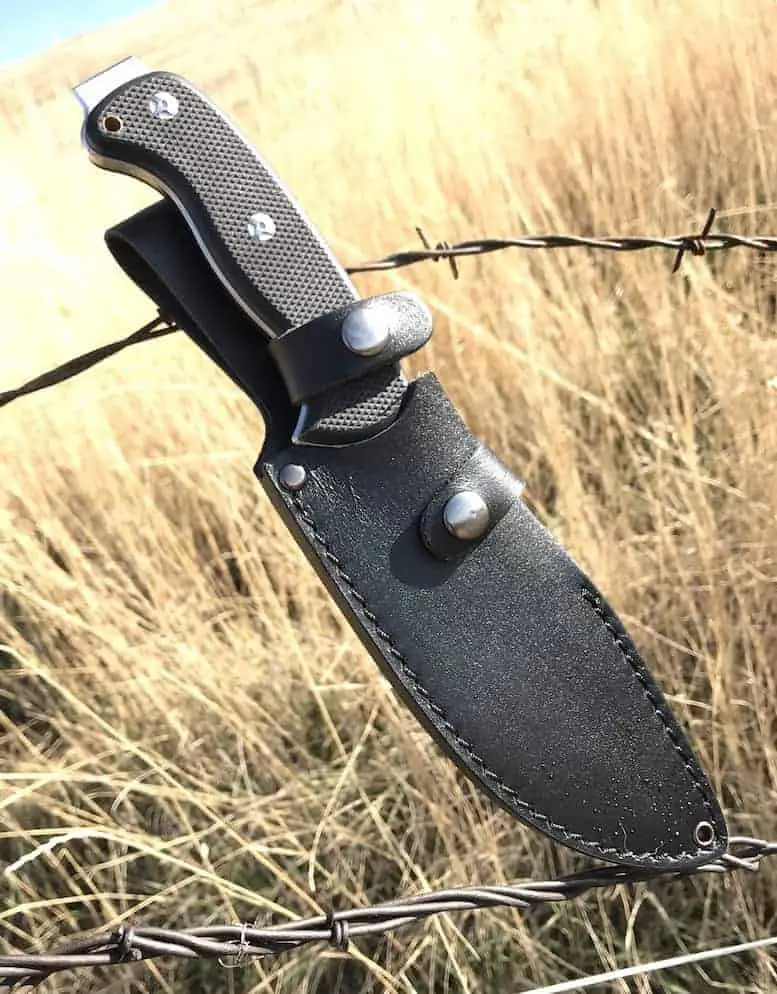 The black leather sheath is a single-stitched, two snap, belt loop design. The unique shape of the Utah Knife Works Survivor all but demands an unconventional sheath design. It works well. A nice touch in the future that would also accent the “Survivor” nature of this blade would be to sew a firesteel loop onto the sheath.