Brett

Eat Gluten Free and Survive With Valley Food Storage
Whether you choose to accept it or not, human cases of food allergies are on the rise. While the reasons why this is happening is a debate for another forum, the plain and simple fact is that you or someone within your circle of caring may very well develop a food allergy – and it won’t necessarily start at birth – it could develop at any time.

By Drew, contributing author to Survival Cache and SHTFblog
My wife developed concurrently a gluten allergy and a lactose intolerance. This occurred suddenly when she was about 30 years old, and it took a battery of tests and throwing a dart at the diet board to figure out what was going on, since the two allergies formed at the same general time. The symptoms are reportedly pretty wretched – crippling stomach pain, headaches, and severe diarrhea with accompanying dehydration, with onsets of the symptoms giving her almost no notice to get to the appropriate location to take care of the task at hand. As a consequence, her diet is severely limited, and a lot of time is spent in the grocery store aisle carefully reading labels. Dairy is not a huge issue to avoid, but gluten is sneaky and can be found even in foods labelled “gluten free”, if the product is even processed in a plant that works with gluten-based products. It’s a less-than-fun game with no winners – especially when it comes time to prep for long-term survival.

All of this means a couple things for me: one) I’ve sampled pretty much every gluten free food option there is, and two) prepping long-term storage food for unforeseen disasters is a complete pain in the posterior. Thankfully, the seriousness of gluten and other food allergies is starting to come to light with a corresponding semi-lackluster (but honest and definitely increasing) response from the market in general. However, a person or family with a need to keep an eye on the fixin’s still must struggle to find dedicated products with value. And when you whittle the available products down to a niche market such as specifically designed long-term storage food, choices are slim indeed – making me wonder if a subject with a gluten allergy would rather wish they had punched out when the bomb dropped instead of being caught in a bunker eating the same meal of bulk freeze dried beef cubes, peas, and rice for four years straight.

Enter Valley Food Storage
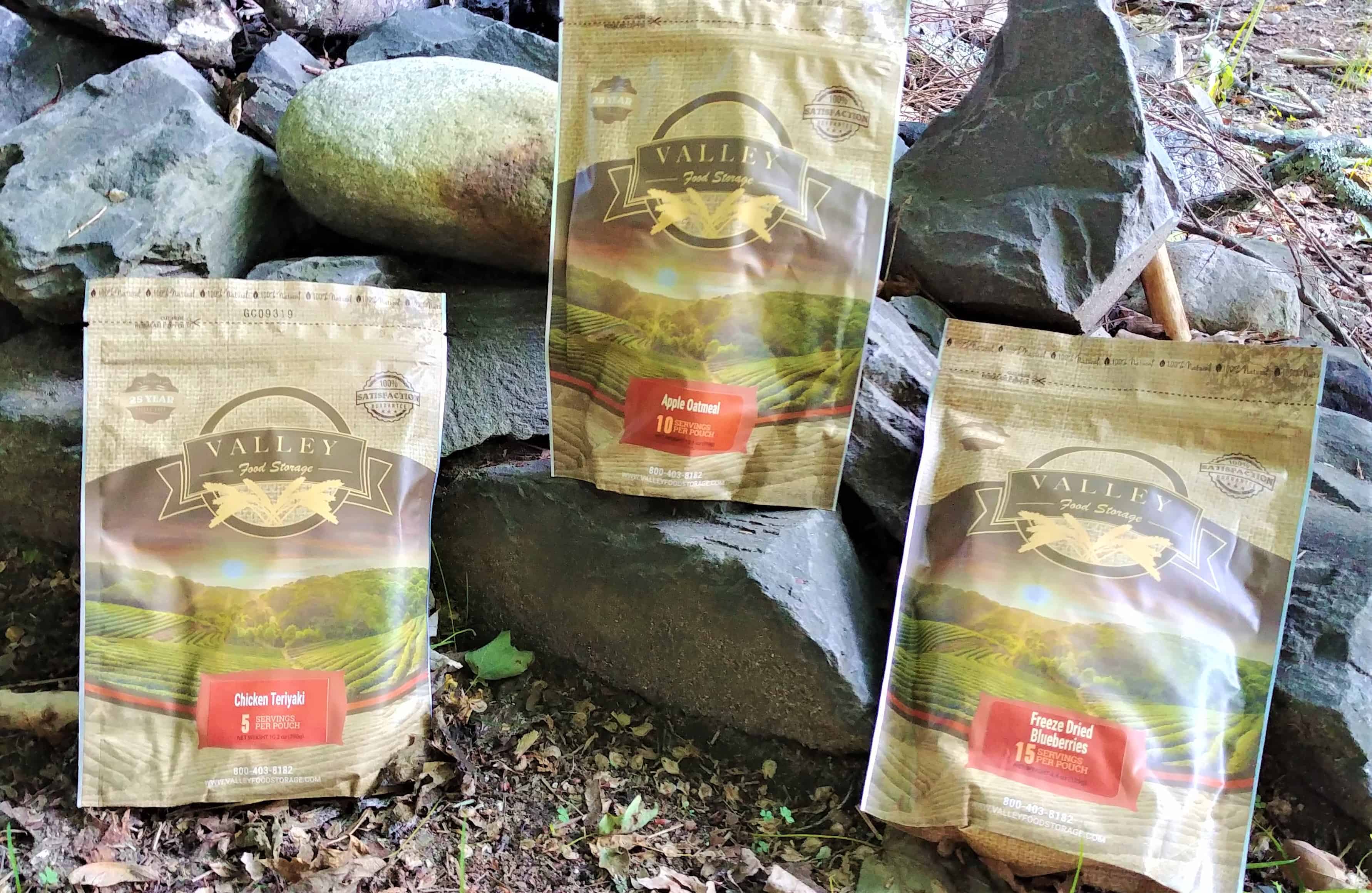
I was fortunate enough to be contacted by Valley Food Storage with an offer for a free sample of their freeze-dried food offerings (which you can get yourself on their website). I clicked over to Valley Food Storage’s website, and was pleasantly surprised when I saw that they have a dedicated suite of offerings that are specifically gluten free. (They also have other specific dietary-considerate options, to include lactose free, soy free, and vegetarian.) Admittedly, a large chunk of the products on the GF page are more side dishes or desserts instead of full entrees, but there are a few selections available to make a decent day’s full meal plan. This is refreshing – I have found that more often than not, a freeze dried food manufacturer’s “Gluten Free” options are pretty much a packet of dried strawberries or something similar. 

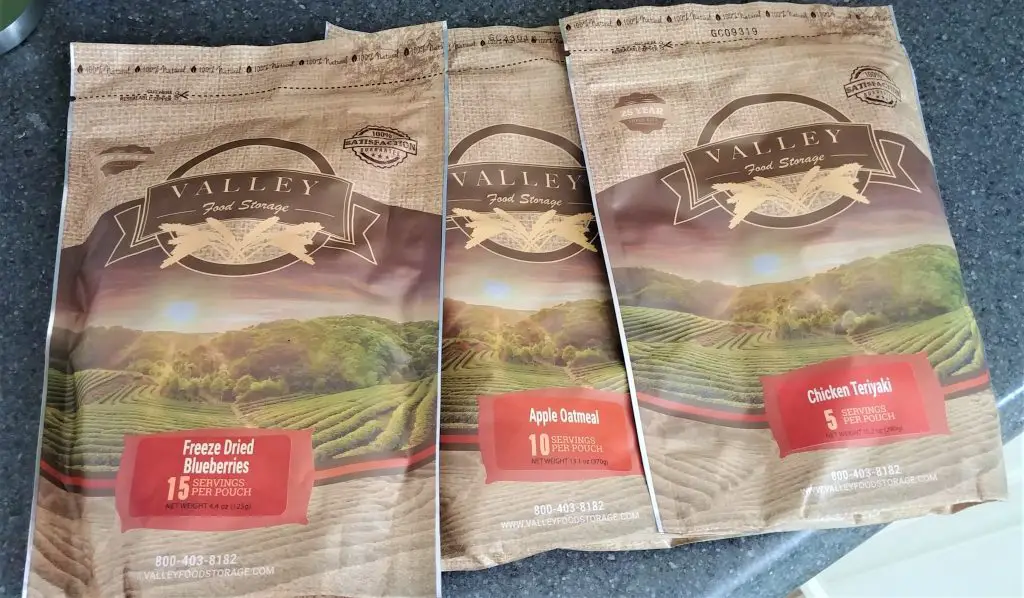
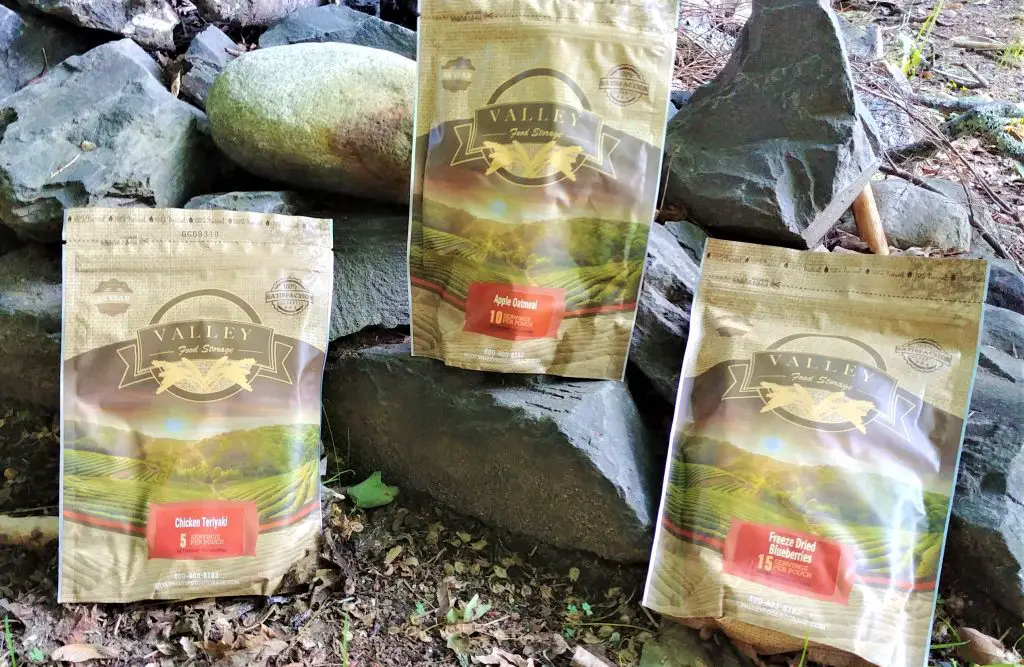
Also noticing that Valley Food Storage happily boasts that all their food products are 100% natural ingredients, with no fillers, GMOs, artificial flavors, preservatives, fillers, or MSG, I took stock of what was available and requested three packets, which Valley Food Storage was very generous to provide for this review: Freeze Dried Apple Oatmeal, Freeze Dried Blueberries, and Freeze Dried Chicken Teriyaki. Just a couple of days later, a package full of dehydrated goodness was in my mailbox.

I was hoping to scoop up my wife and son and tromp out into the woods and start a fire for the proper testing field testing ambiance, but alas, my preferred scenario was not in the cards. Therefore, the “field” consisted of my work office, and “testing” comprised of dumping water in bowls of freeze-dried food while watching the clock drain away my lunch break minute by minute. I soldiered on for science and for you, dear reader.

Apple Oatmeal For Breakfast

My first victim was the Apple Oatmeal. Opening up the bag and inspecting the contents confirmed my suspicions that the Valley Food Storage Apple Oatmeal would indeed look just like instant oatmeal offerings from other companies. A whiff told me it smelled really great, and so I poured the requisite serving size (½ cup) into a bowl I keep handy for eating occasions, and dumped in the proper amount of hot water (also ½ cup). While I absent-mindedly stirred the whole goopy mess up, I read the ingredients. Not much there – oats, sugar, apple granules, and non-fat milk powder. That’s it.

Apparently less is more, because the first spoonful was, without any hyperbole, as good or better than any other “instant oatmeal” I’ve ever tried. I wolfed down the first bowl and decided against another as I noticed the 15 grams of sugar per serving. However, I did make a bowl of the gummily delicious oatmeal up later for my wife to try, and the Valley Food Storage Apple Oatmeal received an official  thumbs-up…once she recovered from me stuffing a spoon laden with oatmeal in her mouth with little to no warning.

Lunch: Freeze Dried Chicken Teriyaki
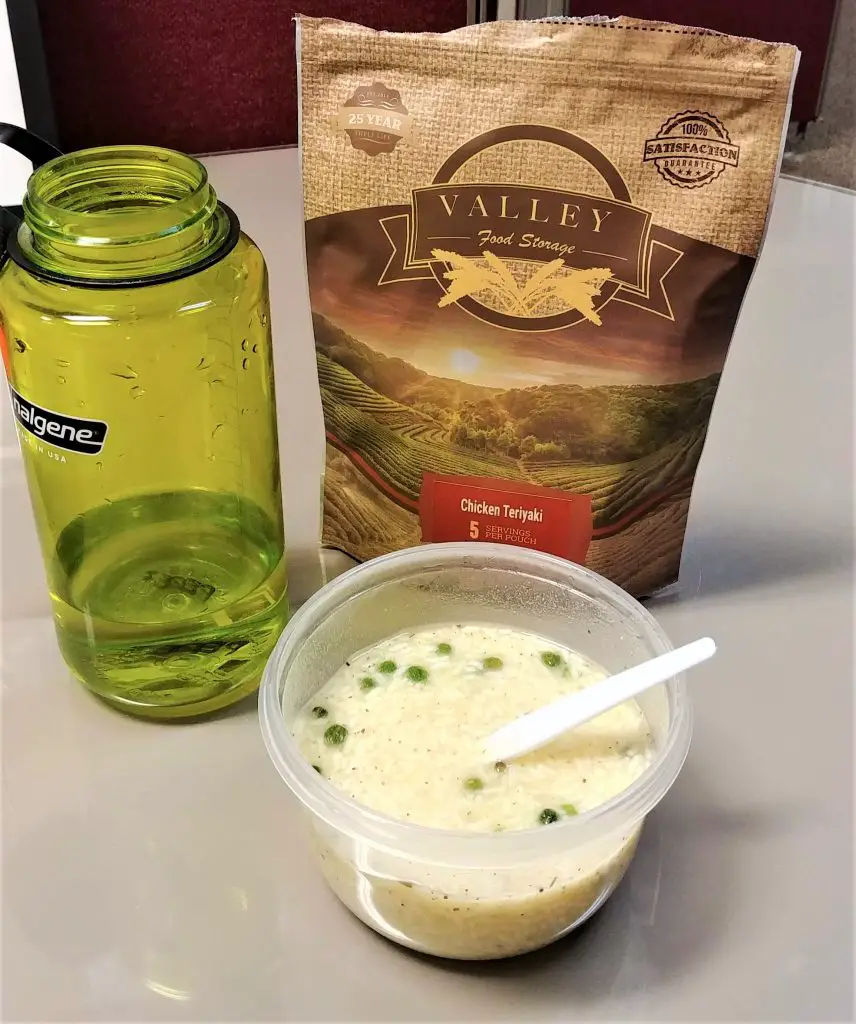
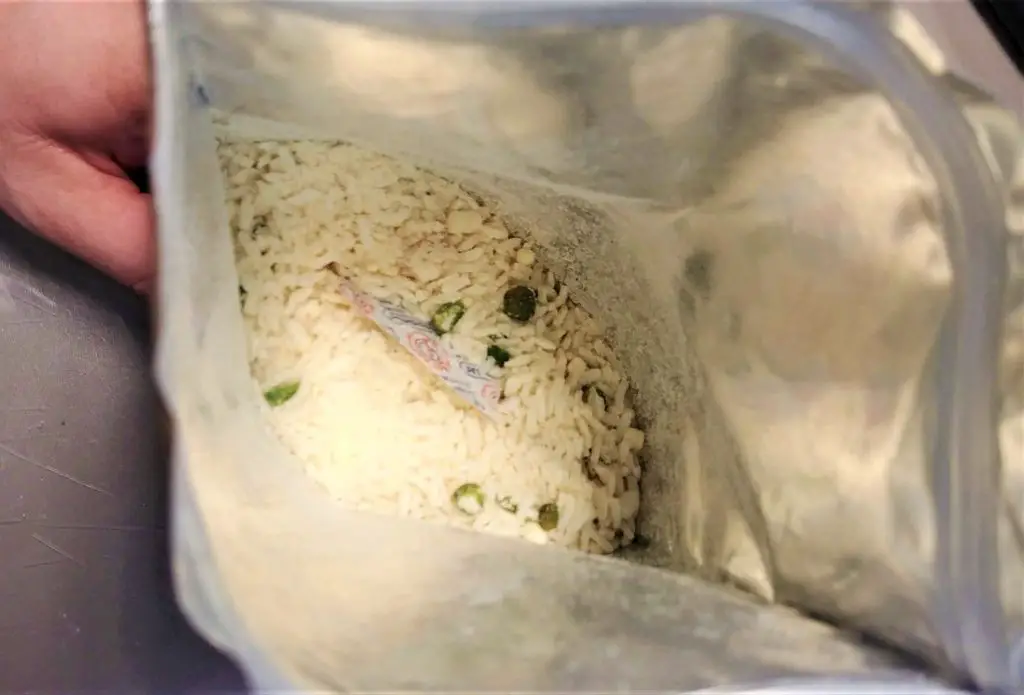
For my lunchtime course, I opened up the mylar bag containing the Freeze Dried Chicken Teriyaki. The directions noted that I should combine the ingredients with water and then boil the whole works, but i just went with standard survivalist behavior and combined the bag contents with the called-for amount of already-hot water, and let sit. After the requisite time had passed, I tried out the Chicken Teriyaki. It was kinda more like soup than I thought it would be – probably because I didn’t boil the ingredients together. I added more Chicken Teriyaki and let it sit for a bit longer.

12 minutes later, when I finally tried the meal, I was very pleased. What I thought were chicken chunks were actually bits of very sweet pineapple, and a mild, slightly peppery wasabi-ish flavor twinge really rounded out the palette. Again, no exaggeration here – I really, really enjoyed the Valley Food Storage Freeze Dried Chicken Teriyaki. The wife did not try it, since I actually demolished the bag over a few days at work for lunch. I’m going to bet she would have liked it. We’ll go with that.

Dessert – Freeze Dried Blueberries

Up for “dessert” (more like a at-desk snack) I tried out some of the Valley Food Storage Freeze Dried Blueberries (ingredients: 100% Blueberries) First up, I prepared by soaking in water per the directions, and found that the soaking time on the package seemed to be a general guideline – some were mushy, some were still a bit crunchy. It seemed to be a bit of a crapshoot which berries absorbed the water but they were pretty good. I drank the blue-twinged water that resulted from the blueberry soak, since I imagine it had a few nutrients there for me to use, and I’d likely be following a similar routine if I was eating these berries in a survival or disaster situation. Not bad.

Also read: Freeze Dried Foods As Part Of Your Preps

I found, however, that the best way (in my opinion) to eat these freeze dried blueberries was just simply to reach in the bag and pop them directly into my mouth, no soaking involved. It was a crisp, tasty snack that lasts quite a while – there’s a lot of blueberries in that there bag! Pro tip: combine the blueberries with the Valley Food Storage Apple Oatmeal for a little slice of freeze-dried mouth heaven. (be sure to prepare the two separately , THEN combine)

Oh yeah…when my wife tried them, well, I didn’t get the bag back. The Freeze Dried Blueberries were a runaway hit. Absolutely get you some!

Wrapping Up

It’s really superb that Valley Food Storage is addressing the needs of people with specialized diets in such a great, tasty manner. The food itself once prepared is outstanding, and the ingredients are simple and delicious. I absolutely love the fact that no preservatives or multi-syllable BS ingredients make their way into the packages – these Valley Food Storage meals are just plain food – nothing artificial or nasty added in the name of preserving the food for your bunker pantry. Don’t be fooled, though – properly stored, these Valley Food Storage freeze dried meals will last for many years (25 of them, according to the packaging) in your supply cache.

I will say that the serving size on the packages did seem to be a bit subjective; you’ll need to review your dietary and caloric needs before you take the serving quantities on the package as holy writ. A 1/3 cup serving of the Apple Oatmeal only provides 140 calories, so if one serving of this specific meal is what you were planning on tiding you over through a high-activity day, you’re gonna be a hurtin’ unit. All the dietary information for every Valley Food Storage product is available on their website, so you can review and plan ahead. You can also call and chat with the VFS team over the phone, and they’ll help you work out a specific food plan for you.
Also, be sure to check out Valley Food Storage’s other offerings – to include pre-built 72-hour kits, food subscription services, heirloom seeds, 30- and 55 – gallon blue water storage drums, a few knives, paracord, water purification tablets, and even financing for large volume orders.

So I’ll wrap up this little review by saying I wholeheartedly endorse the direction Valley Food Storage is going with their products, and I truly appreciate the fact that I now have viable options to feed the people in my family with special dietary needs. The Gluten Free offerings from Valley Food Storage are absolutely delicious and made with natural ingredients- and they are the direction I’ll be heading  towards when it comes time to re-fill my long-term food storage larder. There’s not much I can say about freeze-dried foods in general that hasn’t been said before, but the Valley Food Storage offerings are a cut above the rank and file and are definitely worth your attention…especially if you have dietary restrictions.

The post Eat Gluten Free and Survive With Valley Food Storage appeared first on Survival Cache.

Eat Gluten Free and Survive With Valley Food Storage Read More »

Meet the Winners: J. McCann & Co. Ltd

To win a RoSPA Health and Safety Award is by no means an easy feat. Last year alone, we received close to 2,000 entries from across the globe. To achieve one gold achievement McCann Master 2018award is a fantastic accolade for your organisation… however, to continue that winning streak year after year is outstanding. In 2019, Nottingham based civil and electrical engineering firm J. McCann & Co. Ltd did just that and achieved their fourth RoSPA Gold Achievement Award (and they couldn’t be more delighted).McCann info

An Achievement Award truly is the accolade that safety professionals across all industries aspire to. In our latest interview with four-time Gold Award Winner, J. McCann & Co. Ltd explains how winning a RoSPA Award has impacted their organisation…

What motivates you/your organisation to enter the RoSPA Awards?

Entering the RoSPA Awards motivates our organisation to drive improvements for our safe systems of work, year upon year. It also allows us to demonstrate our commitment to the safety of our staff, contractors and all others affected by our work, whilst enabling us to showcase and celebrate the success of our workforce, who work to an award-winning standard.

Winning a Gold Award for the fourth consecutive year is proof of how entry into the awards process drives and develops our systems.

McCann quote 3What benefits does winning a RoSPA Award have for you/your organisation?

Winning a RoSPA award supports our strong health and safety culture that we have here at McCann and helps to provide great supporting evidence to a client’s Pre-qualification Questionnaires (PQQs).

We also display that we are a RoSPA Gold Award Winner in all of our email signatures, which helps to promote us as an organisation that works to extremely high standards, especially when it comes to health and safety.

What do you enjoy most about the RoSPA Awards process?

We always look forward to the awards dinner because it is a great opportunity for our support staff to receive recognition for the very important work that they do. We arrange for as many of them as possible to be at the dinner where they can relax and meet with other employees from our sites and celebrate shared success.

McCann quote 2What do you think the applicant could do over the year to keep drafting an awards submission simple?

To guarantee a straight forward submission, it is important to remain organised. Initially, you should read the RoSPA submission guidance and take the time to digest all the information and thoroughly understand it.

Assigning the responsibility to one person ensures that they are focussed on the submission and can take control of what is needed at each stage. The designated employee should then make folders for each of the submission headings and collate evidence as they go, for example, saving any relevant emails. When filing evidence, it is useful to categorise the evidence early on as this will help to prevent a repetition of evidence across the different categories.

What advice would you give to organisations considering entering the awards for the first time, or how would you convince organisations not entering the awards to start entering?

First of all, the awards are about telling the story of what is going well using information you already have, which can be simpler than you may assume, so it is always worth entering. Also, don’t avoid entering if you have had an incident at work. The RoSPA Awards are a great opportunity to show that you have developed mature safety processes, but can also show how you learn from such incidents to prevent them from happening again. This can also lead to opportunities to demonstrate key learning and share findings with the rest of your wider industry.

We would advise not repeating the same evidence within the categories, which is where preparation and organisation play a huge part. It’s also good to remember that less is more with your written submission. Draft McCann quote 1your document and check the word count, you will likely exceed the word limit the first time you do it but keep working on it until it’s as succinct as possible.
So what’s stopping you? The process of joining the global RoSPA Award-winning community couldn’t be simpler. Simply visit www.rospa.com/awards, register online, and submit your entry via our online portal. First-time entrant? Don’t worry, as support and guidance is available through our mentoring scheme – read this blog to find out more.


Meet the Winners: J. McCann & Co. Ltd Read More »

Greater Patagonian Trail: GPT 7

El Puente Ingles

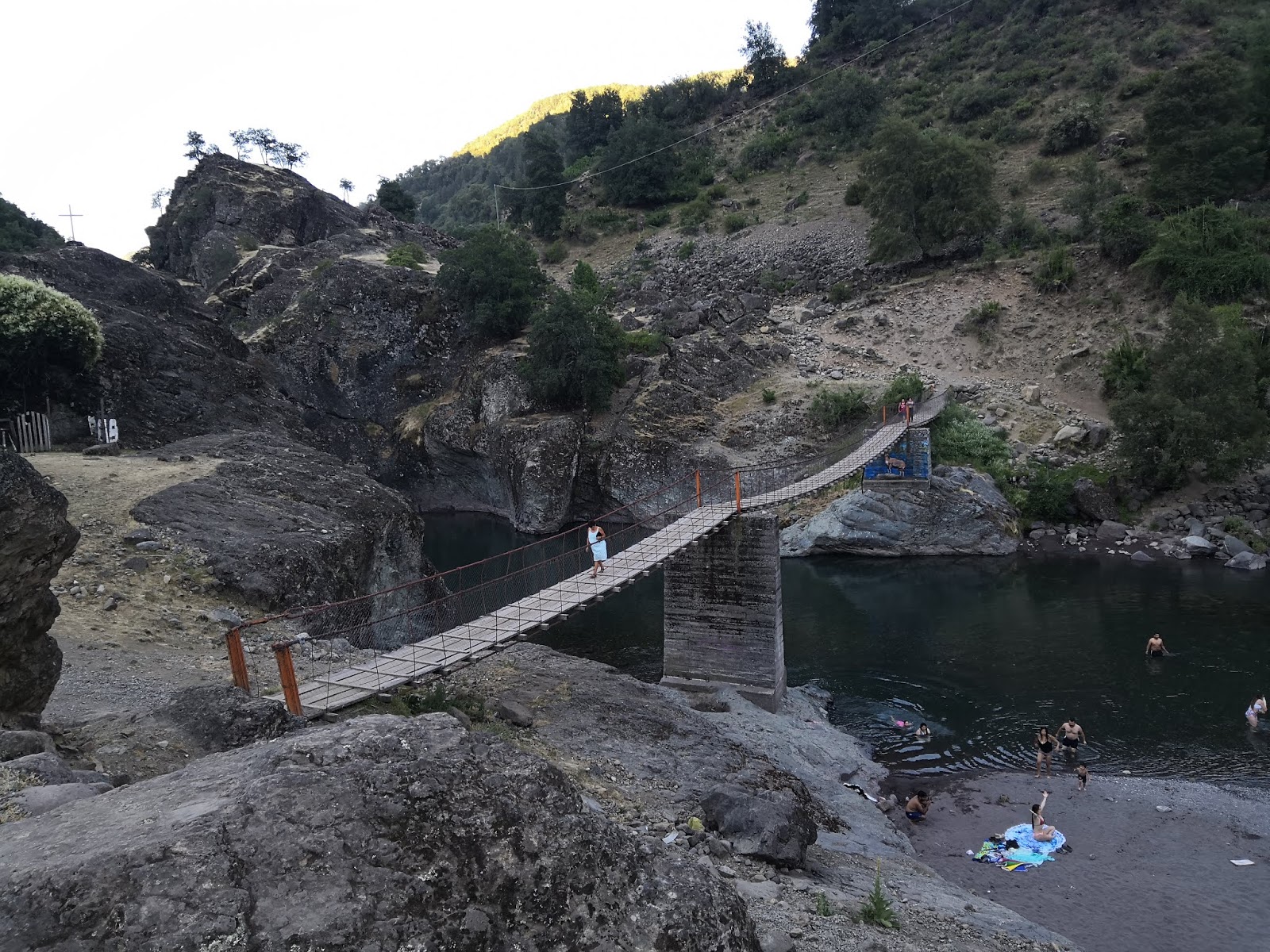
GPT section 7 starts at “Puente Ingles”, the English bridge which was constructed by a British engineer in order to drive cattle across the river. Nowadays it is a popular picnic spot. When arrived late in the evening there were still plenty of locals frolicking in the water. I walked half a kilometer to get away from the hustle and bustle and camped.

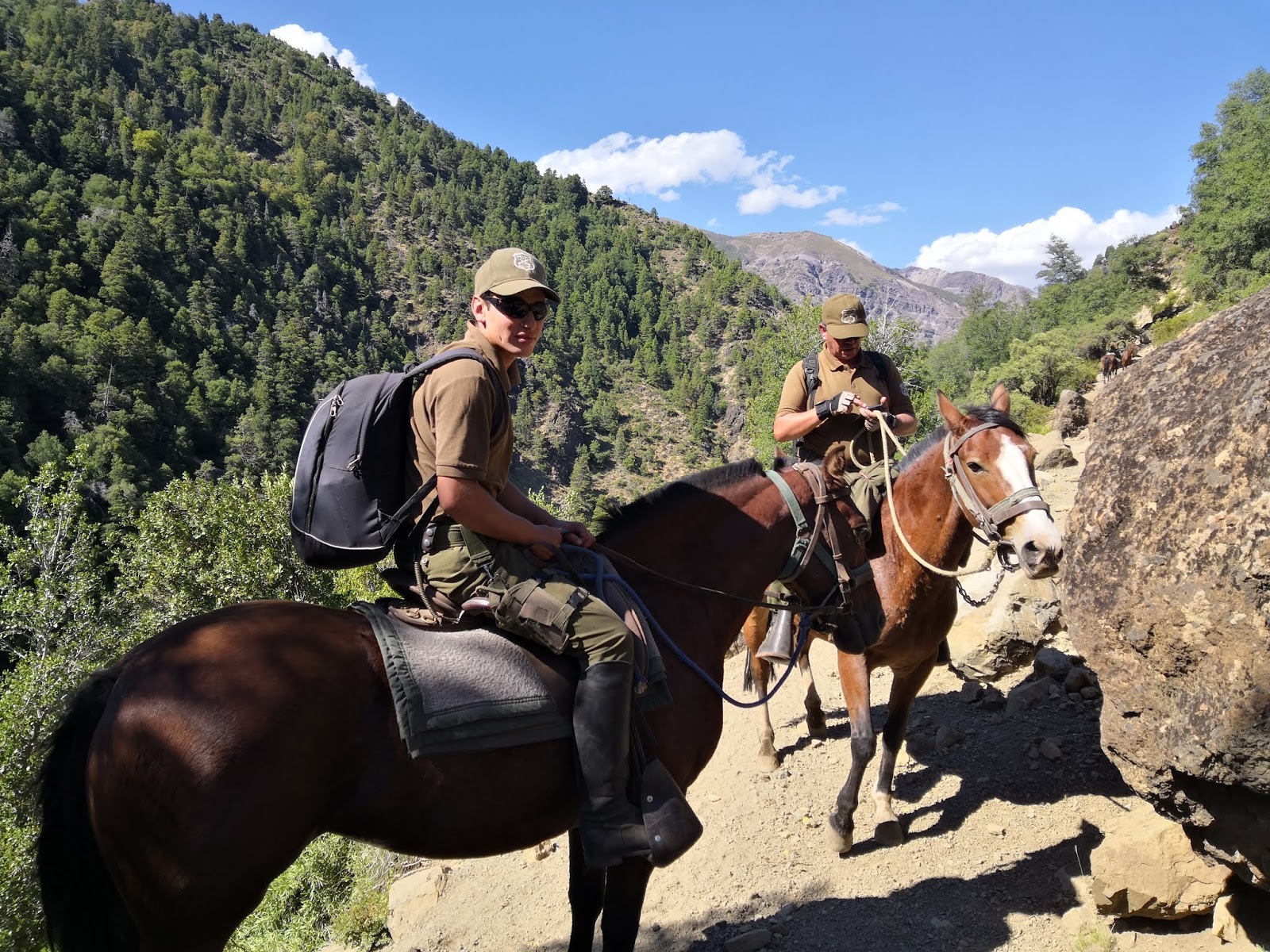
Next day started with a long and dusty road walk but I refused all offers of rides. When I finally turned onto horse trail I was passed by a group of friendly carabineros on a patrol ride.

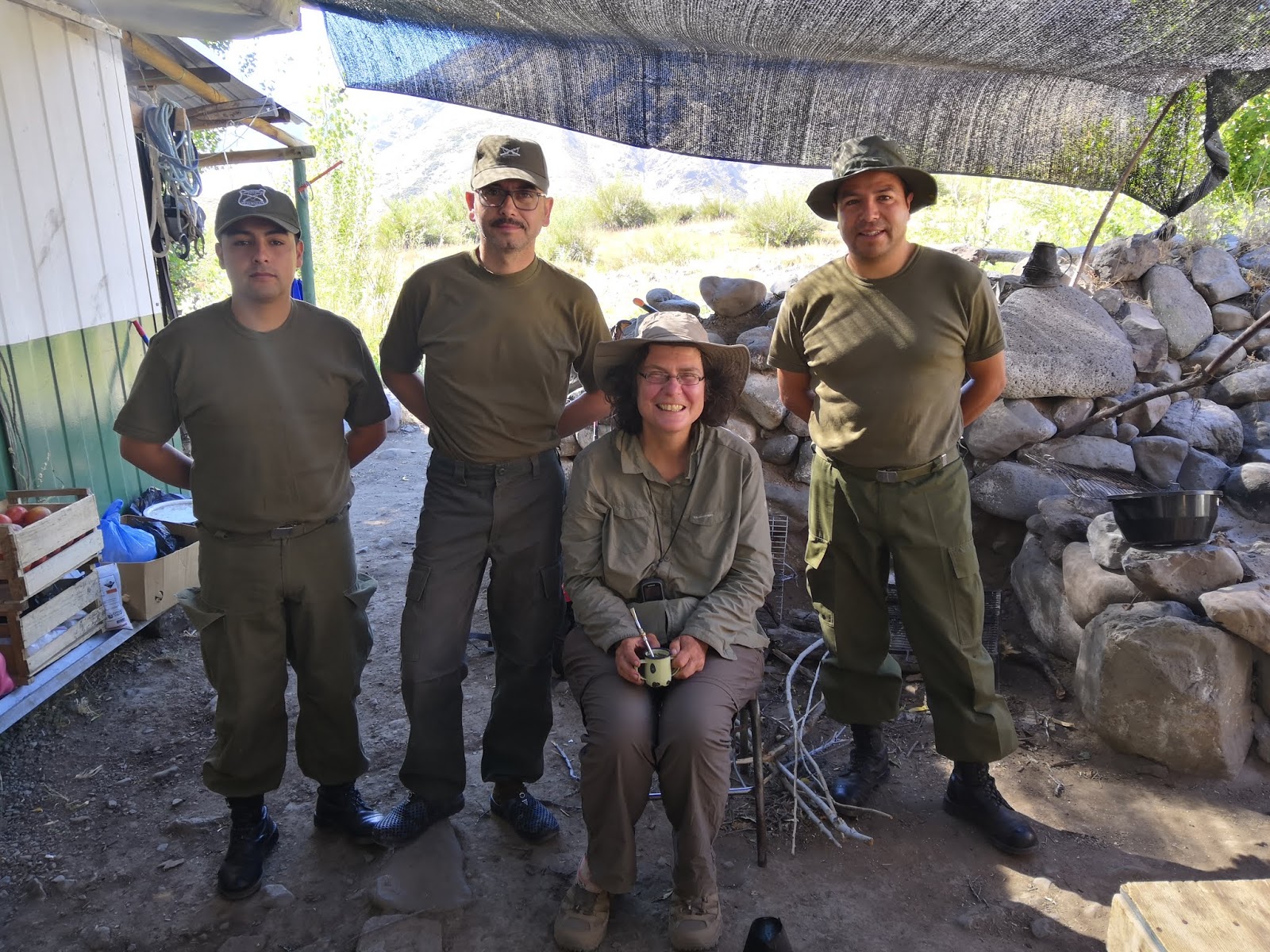
They knew the area so well that they used this last chance with cell phone receptions to make some calls. To my big surprise they did not object at all to have their picture taken.
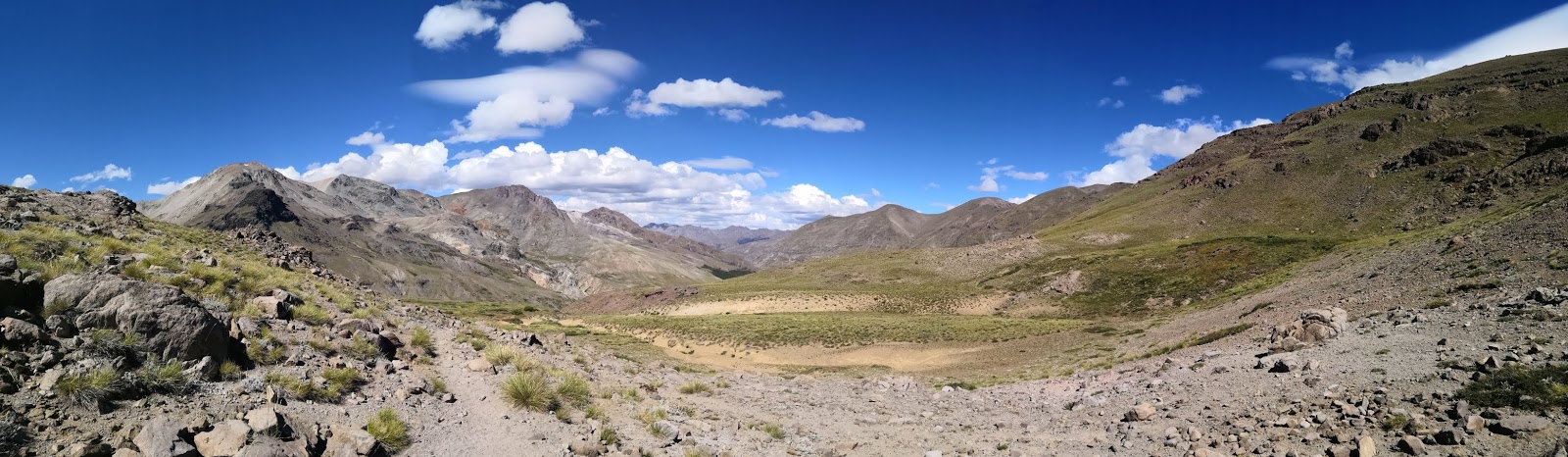
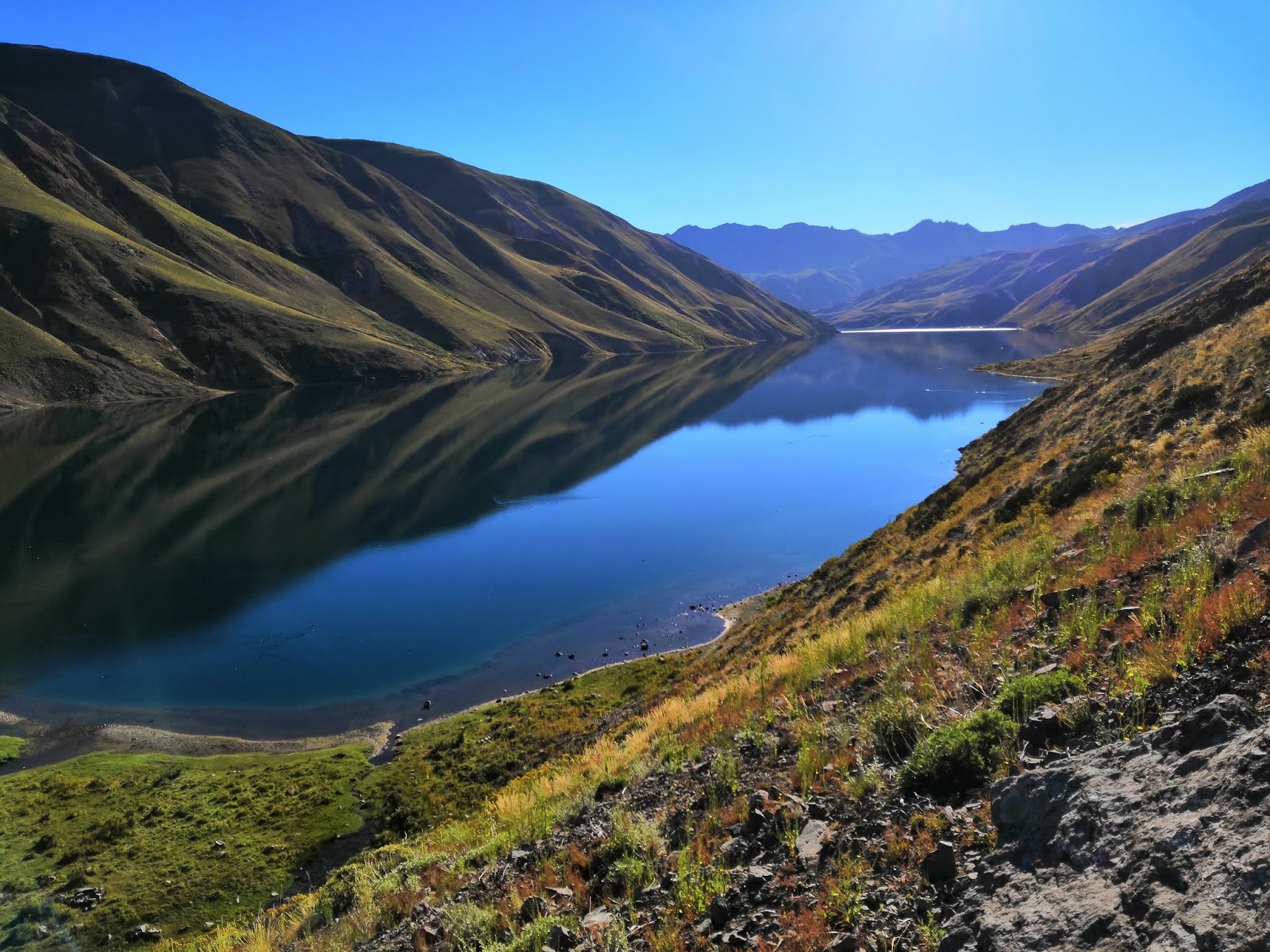
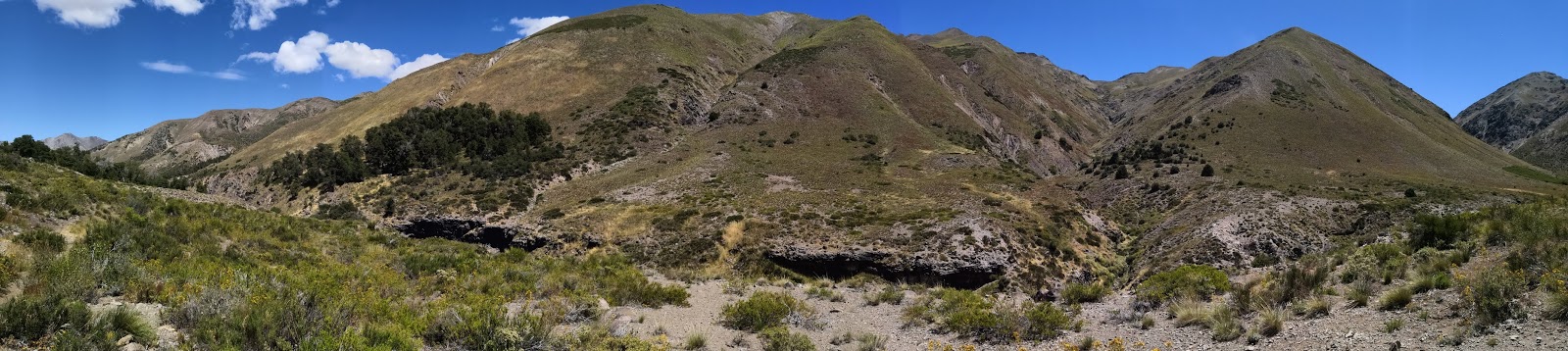
The following day turned out to be one the most beautiful on the GPT for me. The trail took me up a pass in the morning and down the pass in the afternoon. Views on each side were absolutely spectacular and I did not see a single soul that day which ended even more spectacular at the Laguna Maule. Although horse drops told me that this is a popular campsite I had the lake all to myself and enjoyed a wonderful evening swim.

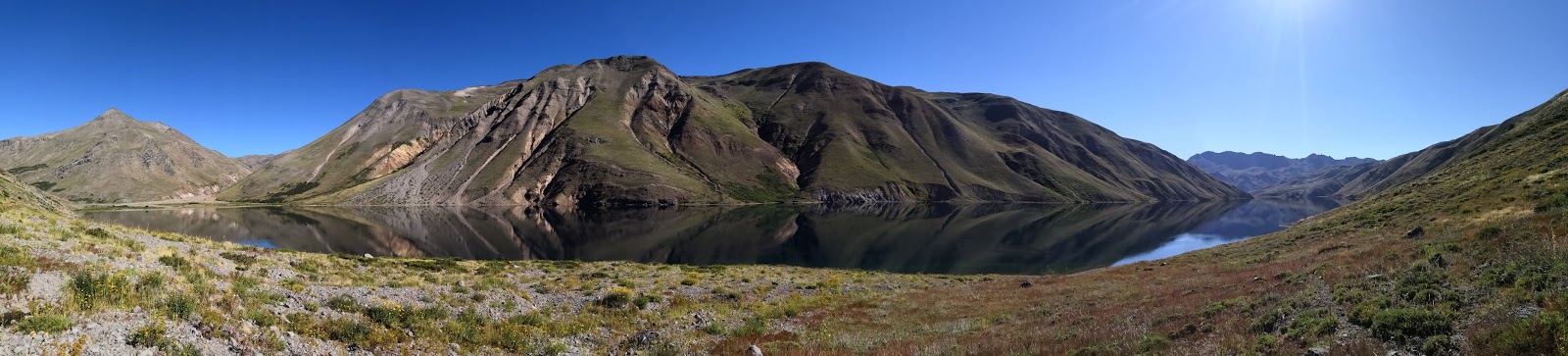
Laguna Maule (photo with no filter …)

I was a bit nervous in the morning because I now had to walk around the lake – but there was no easy beach! The horse trail contoured the steep slopes fifty or hundred meters above the lake. If I slipped I would just fall into the water but this did not make me feel a lot better … I even walked short bits in the water in order to avoid the eroded horse trail. In the middle of this stretch I even came across a lonely puesto and met the arriero who was living there a couple of hours later on horse back.
I still could not relax because at the end of this stretch the horse trail took me up to a pass and contoured around a terribly steep slope where a fall would send me down several hundred meters …

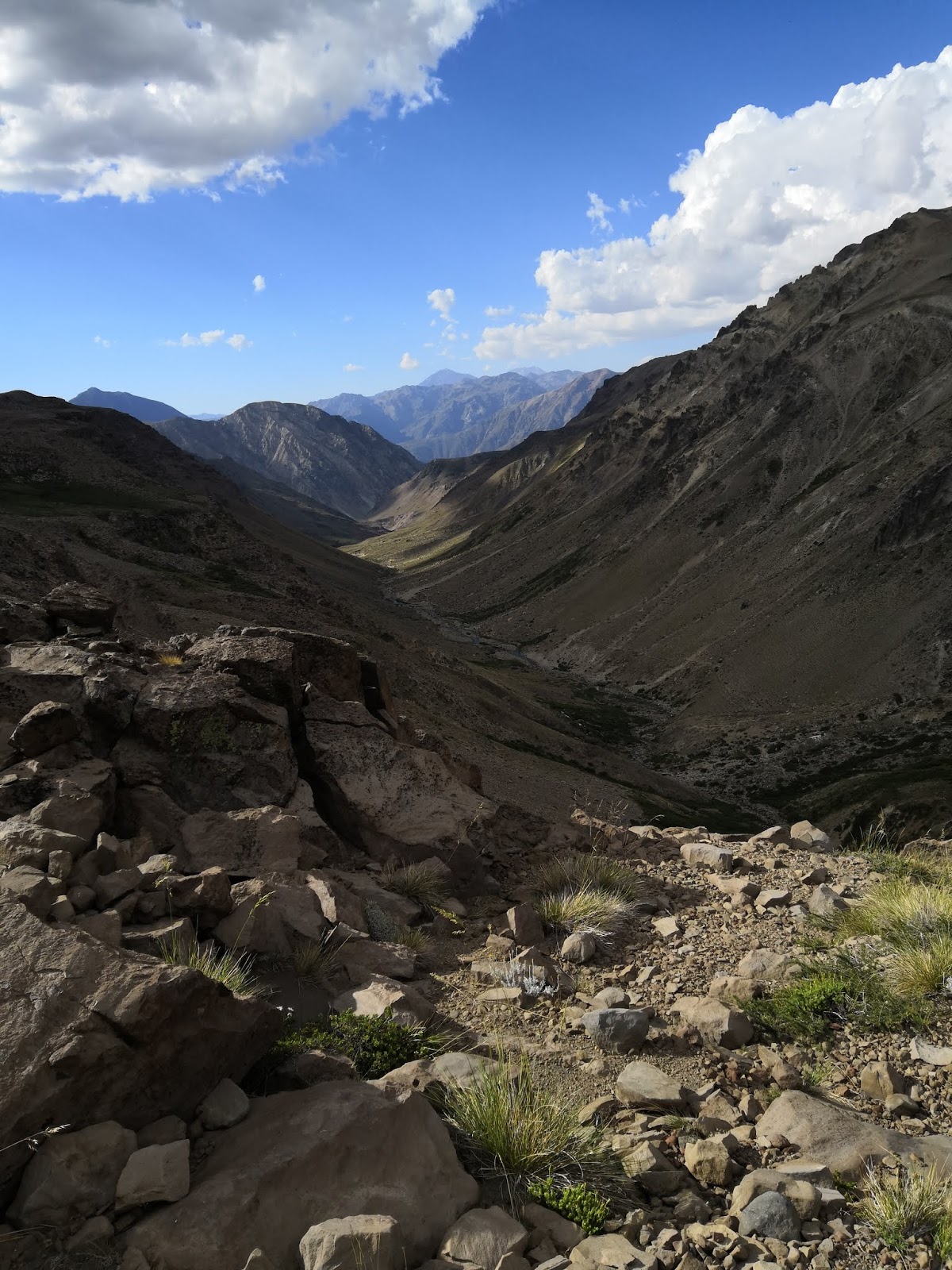
Descent down to Laguna Maule

Views from the pass onto the dark blue lake were fantastic and luckily the steep descent was on sand. I was sliding down but not slipping and falling. When I arrived at the outlet of the lake I took a bath and had a long break. I thought that now the worst was over but as usual on the GPT I was wrong. What I had thought to be a nice afternoon stroll along the river turned out to be more nerve-wracking hiking on eroded horse trail high above the river. The trail was so badly eroded that someone had even tried to repair it with logs – it was still scary as hell.
At one point I had to cross a slope where the trail was more or less totally washed out. I clang to some thorny bushes to avoid sliding down into the river and promptly had several thorns in my hands and arms …
At least the river crossing at the end of this demanding day was easy. I filled up my water bottles and camped at the first possible site being totally exhausted and fed up …

Trail high above the river

Next day was far less demanding and a lot more entertaining! I passed an outpost of Chilean carabineros who are not only police but function as border patrol. When arrived at their puesto in the middle of nowhere I was immediately offered breakfast and mate. Their main job is to prevent cattle rustling but of course they check for all sorts of contraband. Or as one of the carabineros put it: “If you check on one of the arrieros we always look what he has in his saddle bags. If we find marihuana, we sit down and smoke a joint together!” This guy looked so serious when saying this that I almost fell for his joke. Because Chilean carabineros have an excellent reputation and are not corrrupt!

But beside all this joking around these guys did their job and copied all my passport details. Or as they put it: “If you slip and fall here, you will not die immediately. It takes a couple of days. But when we find your bones finally we at least know who you were …”
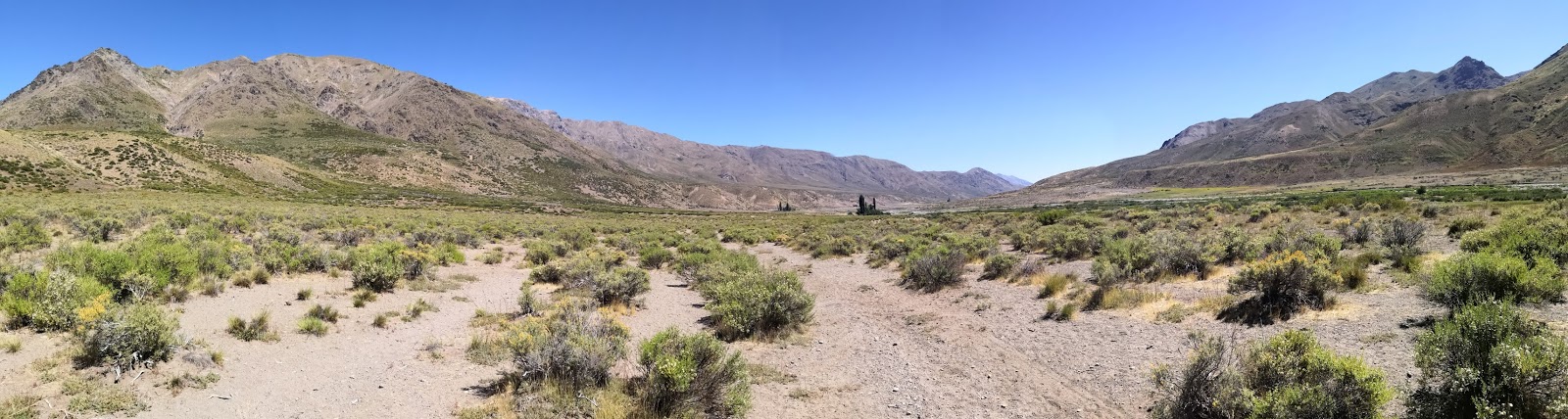
With this comforting knowledge I left my new friends and traversed a very hot and dusty plain, crossed a braided river and camped under a plum tree full with ripe fruit!  There were only bushes in this plain – only around puestos there were huge green trees giving shade. This way you could see each settler from far away.

See the dark green trees in the middle – there is a house there

Two days later I came across another highlight – hot springs close to the trail. As the crow flies they were only around 1 km away from the trail but of course the path was eroded steep. Luckily I was the only person there and could frolick in the hot water. I kept my clothes on because I wanted to wash them.
Unfortunately there was no shade and you cannot stay long in hot water with the hot sun shining directly onto your head. At least I was very clean when I continued to the little village of Carrizales which turned out to consist only of around three huts, no shop and no cell phone signal – but another carabinero post!

Here I was greeted with cold lemonade and learnt even more about their job in the mountains. Most of their “clients” are Chileans who hop over the border and steal Argentinian horses or cattle. The other way around (Argentinians stealing Chilean cattle seemed not to happen very often …). There are usually six men at these outpost. Three of them go on patrol for several days and the other three stay in the outpost for emergencies. Their shift is one month long and most of them seem to enjoy it a lot. “We shot rabbits and go fishing a lot …”
But they have to bring in all their food for one month! The government is only paying for the horse feed ….

I joined them feeding their horses and was allowed to take pictures – but only after they had changed from shorts and T-shirts into their uniform … Being a lot taller than any of them I kept my seat for the picture …

The next was very hot and dusty walk through cattle country. Although being generally very dry there were huge swampy meadows that were difficult to cross. I finally emerged up on a high plateau were I was nearly caught in a thunderstorm and then followed by a herd of cattle. When they saw the steep descent at the end of the plateau they turned around … Unfortunately I had to go down there ….

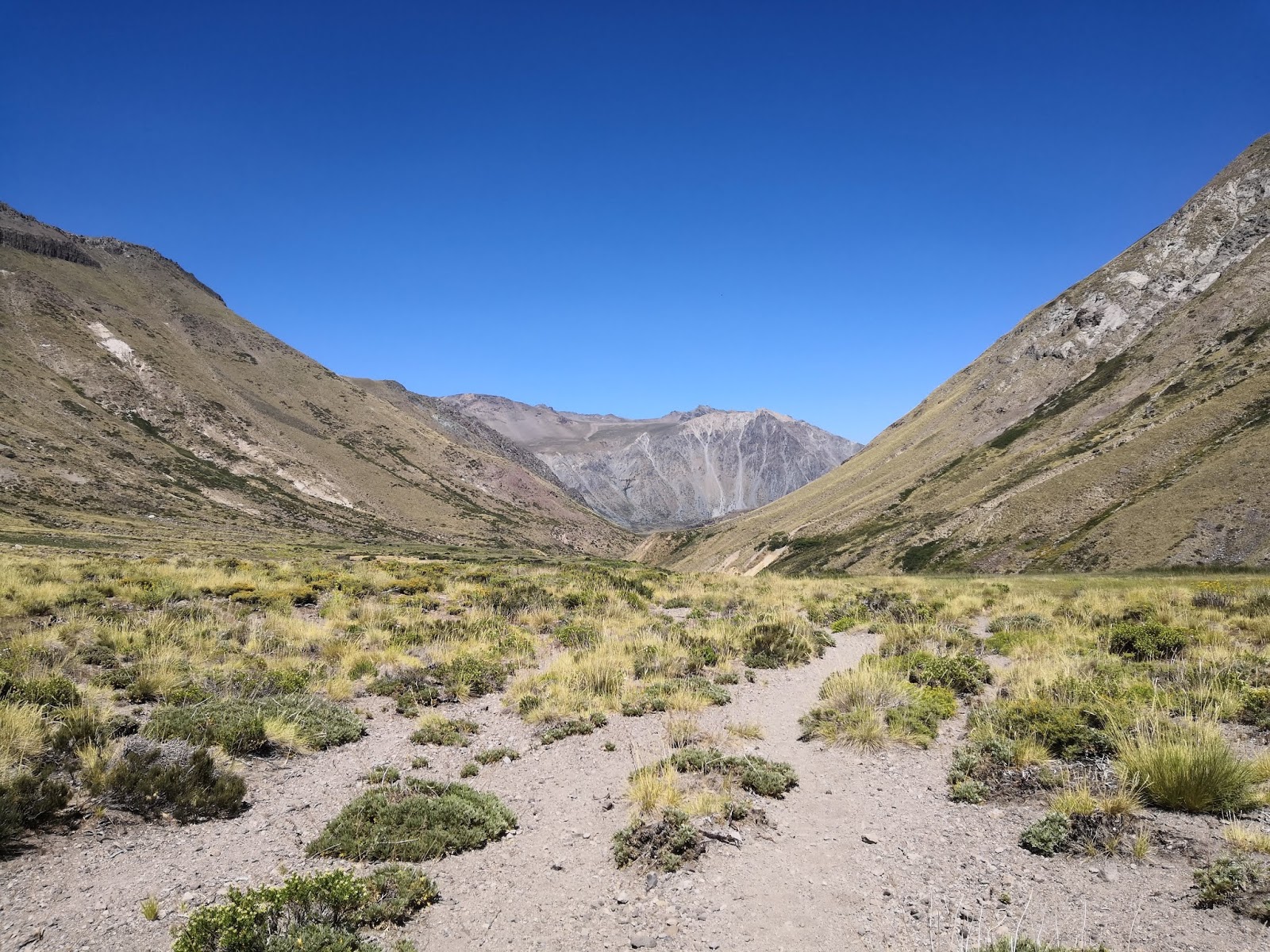
View into the valley

 Of course there was no trail and very carefully I descended meter by meter, sometimes sliding down on my butt until I finally reached some sort of cattle trail and the river. I pitched my tent on the first flat spot and thanked God that I had not hurt myself on the descent!

I had hoped that from now on it would be an easy stroll along the river out to the road and then back to civilisation but again the GPT was full of surprises. The cattle trail was generally routed high above the river and I was trying hard not to slip and fall. I finally reached a very well maintained dirt road and soon the highway came into sight. But to my utter surprise there was a locked gate and a guard station between me and my return to civilisation. But surely the guard would let me out! Well, he didn’t. The poor guy was very apologetic but explained that the camera would film it all and get him into trouble. After a short discussion he showed me a hole in the fence out of camera view were I could get out to freedom … From there it was a long road walk to some popular hot springs and a bus ride into town.

Greater Patagonian Trail: GPT 7 Read More »

Greater Patagonian Trail: GPT 8

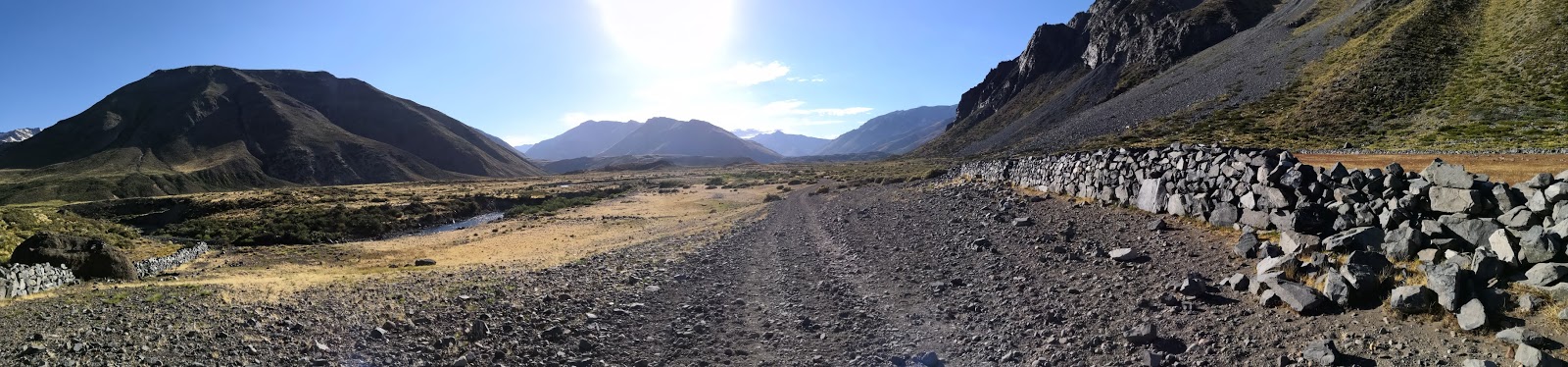
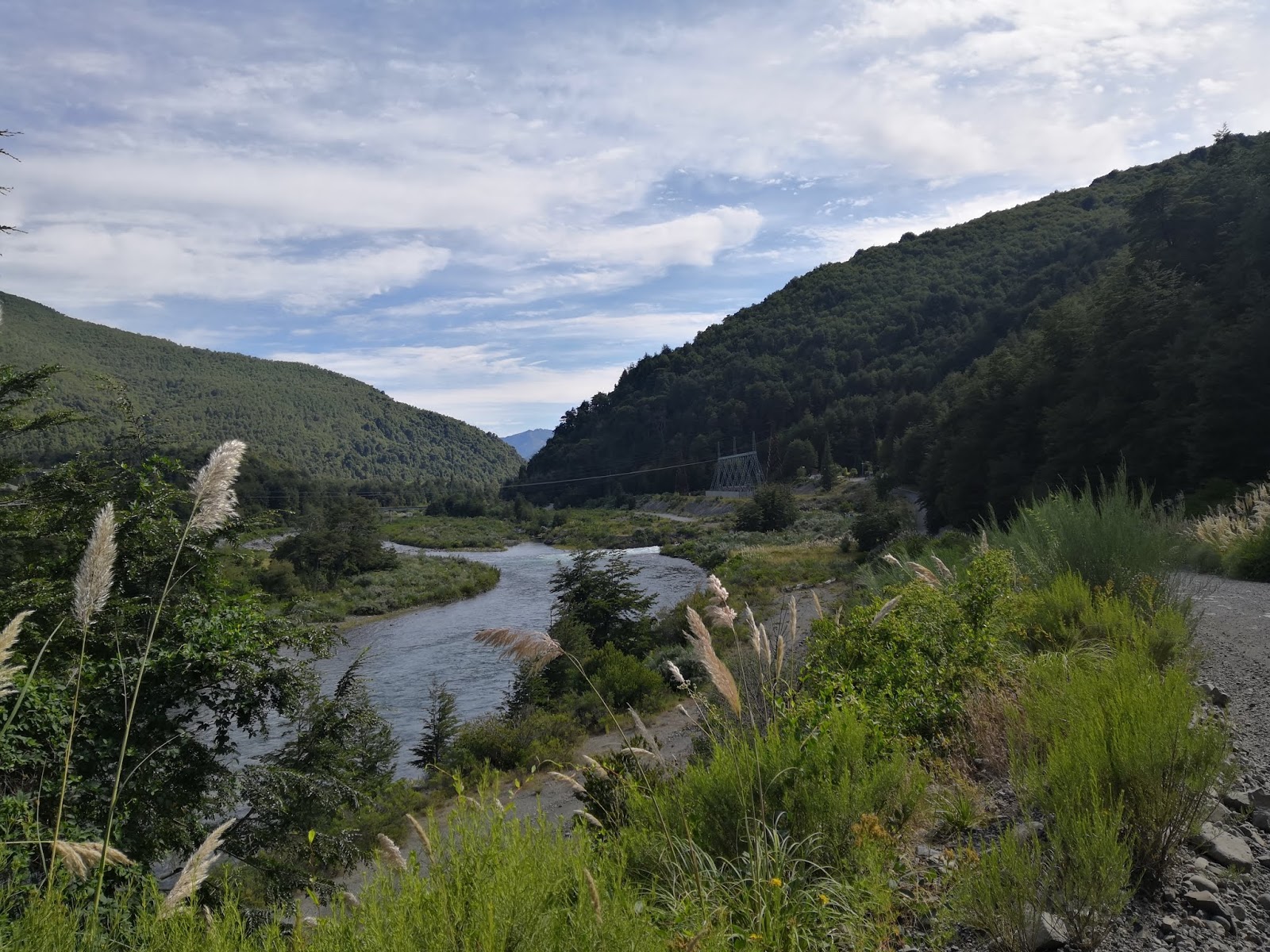
Along the road to the power plant

I decided to tackle this route on an alternate trail because I could reach this section terminus by bus. I knew from the map that there was a hydroelectric plant in the valley I had to ascend but did not think much of it … When I approached the valley on a well used dirt road I saw a big guard station at its entrance. There were lots of signs but none said “no entry”. So I tried to just walk by while the guard was dealing with some cars. Of course I was stopped. The poor guy did not really seem to know what to do with a hiker – and in order to play it safe he denied me access. I decided to not make a scene. This was all open landscape with no fences and it would be easy to just sneak in. And hopefully that late in the evening nobody would stop me once inside.

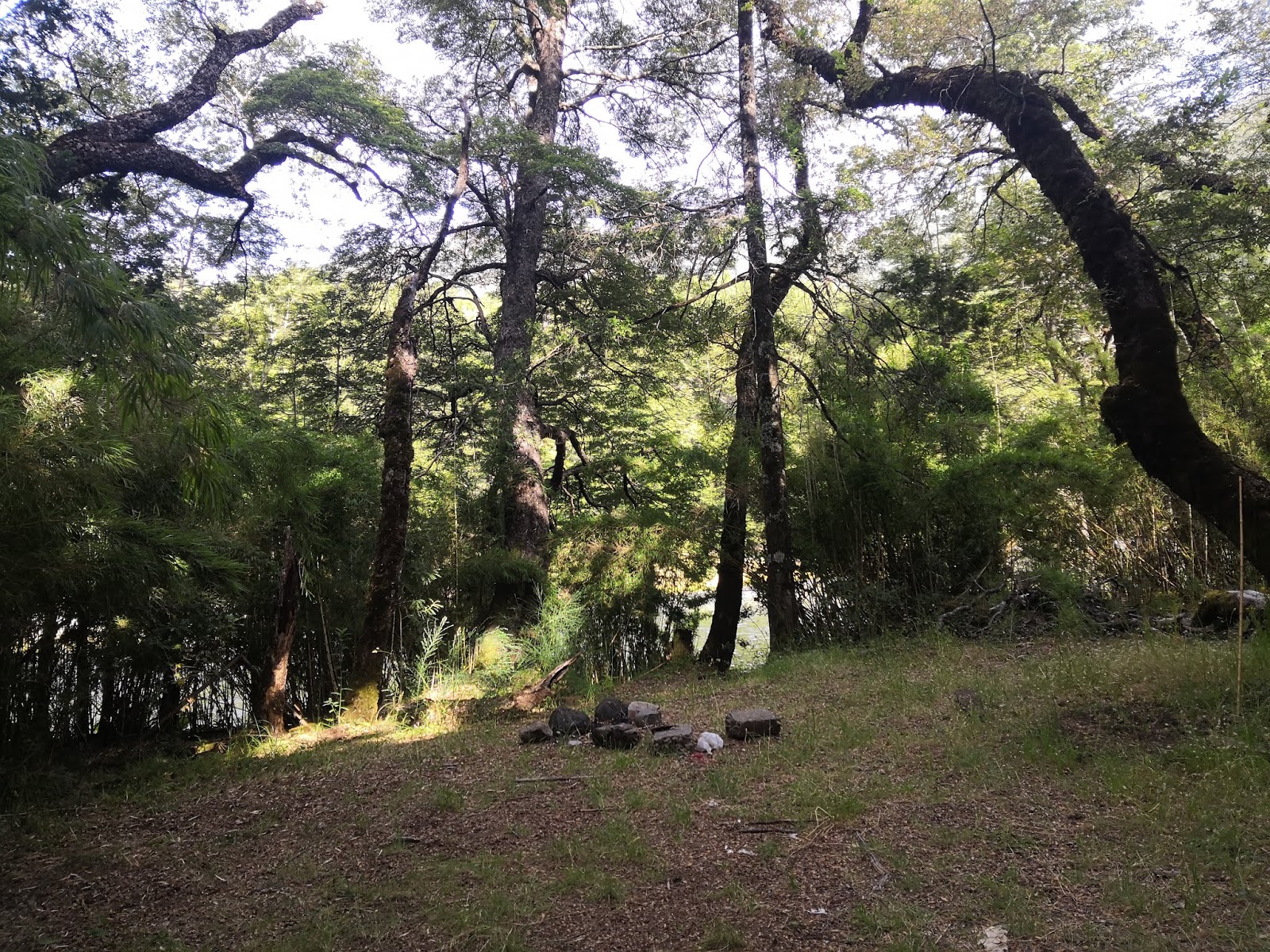
My designated camp site …

It was easy to bypass the guardstation without being seen and soon I was on a huge maintenance road leading towards the power plant. I just made it 2 kilometers in before I was discovered by another security guy in a car. He stopped immediately and asked me where I was going that late. “Have you registered at the guard station?”, was his next question. I mumbled something about cross country and hoped for the best. At least it now looked like hikers were allowed here. He told me to get into his car because he wanted me to register at the guard station and promised to bring me back afterwards. There was nothing I could do about this – but I wondered how the security guy at the guard station would react when he saw me again … It would then be very obvious that I had disobeyed his orders ….

But I was incredibly lucky: In the meantime a new work shift must have begun because a different security guard was sitting at the entrance. He copied my passport details and off we went going back. Unfortunately the driver would not let me out where he had picked me up. He told me again and again that this was too dangerous and there were pumas and so on. He would take me to a safe spot. Again there was nothing I could do. After five more kilometers he finally stopped, showed me a very nice camp spot close to the river and left. I don’t want anyone to know where I was camping but it was already getting dark. I decided to trust the guy and stayed. And indeed nobody showed up while I was camped there although vehicles were coming and going to the powerplant all night long.

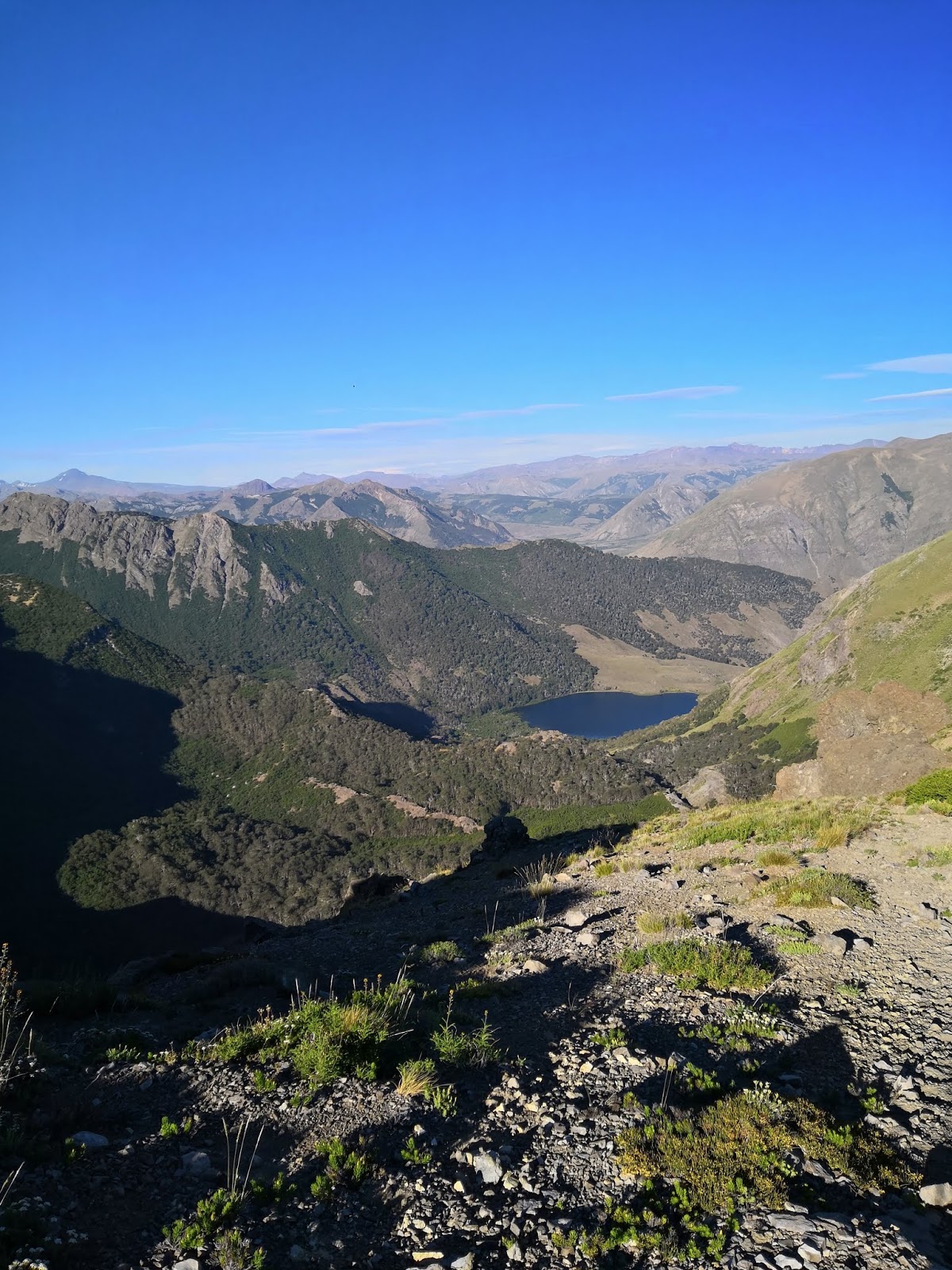
I never made it down to these lakes …

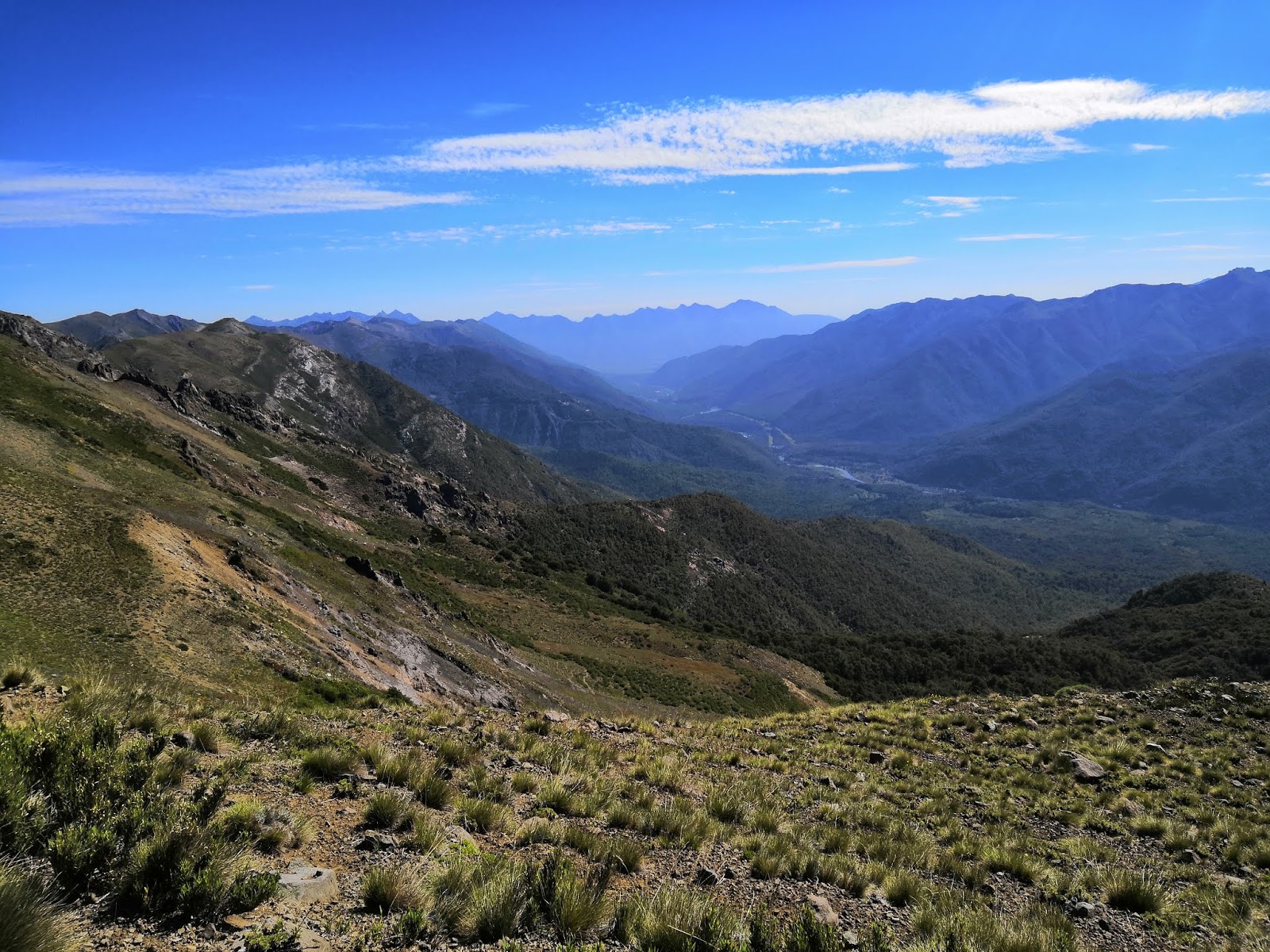
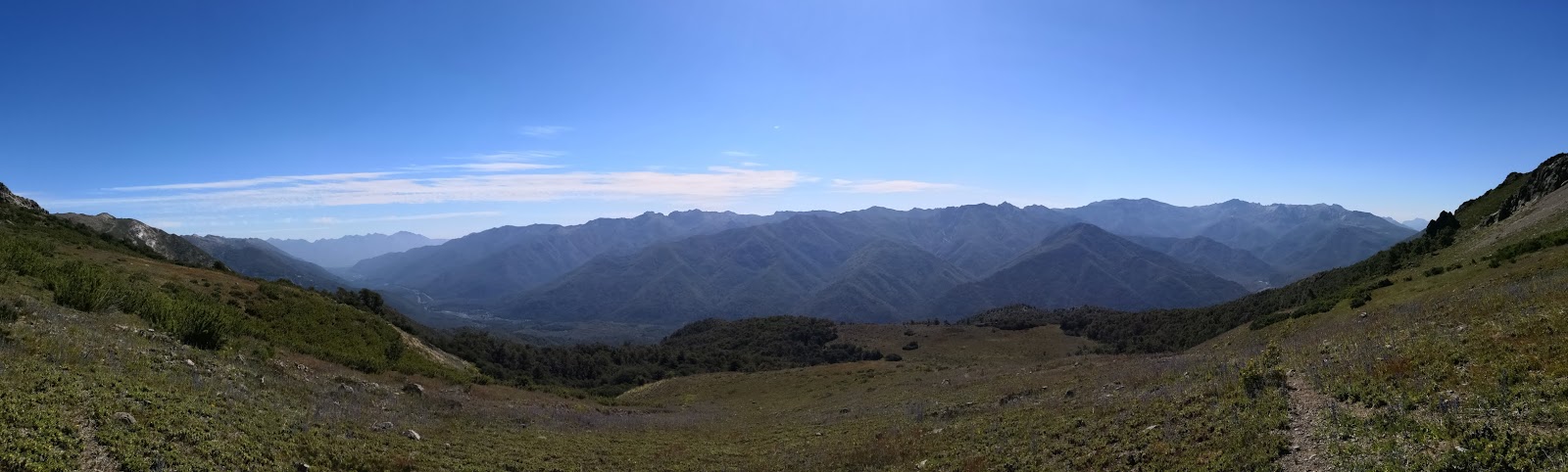
I did’t see a single person next day! I passed the power plant, ascended 1000 meters and walked in breathtakingly beautiful country. At the end of the day I wanted to descend down to the lake in the photo and camp there. I could already see on the map that this 400 meter descent would be difficult because it involved a 1 km long traverse of a very steep slope. When I stood at the beginning of this traverse and looked down things were a lot worse than expected. The very steep slope had eroded so badly that there was no more trail whatsoever – only sun baked dirt covered with loose pebbles. If I slipped there I would fall almost 400 meters … I retraced my steps very carefully. I felt too exhausted at the end of the day to tackle this difficult section and walked two kilometers back to the last water source. Next morning I deliberated my choices: If I took the risk to traverse the steep slope (and survived!) I would immediately be confronted with the next problem. The GPT passes very close to the volcano Chillan which was in “alerta naranja”, orange alert now. As hikers were not suppposed to get closer than four kilometers I would have to take an alternate route that involved a very long and very exposed cross country section …


I came to the conclusion that no trail in the world was worth this risk. I just did not feel comfortable continuing – and therefore decided to turn back and skip the rest of this section. In order to get some variety I wanted to hike out on the regular route which turned out to be incredibly beautiful – and full of steep slopes with eroded trails … After 16 kilometers I came to another section where a slip would have meant immediate death. As spectacular as the scenery was – I did not want to risk my life for it. I turned back and hiked out the route I had come in. For someone who is 100% sure footed and free of vertigo this would probably have been easy. And even for me the chance of an accident was minimal – but I did not want to take that risk …

I arrived back in the valley after a very long day and steep descent, set up my camp and slept very well. In the morning my decision to turn back was confirmed by the fact that my shoes were falling apart. The sole was coming off and I would have felt even more uncomfortable in this difficult terrain with defective shoes …
But before I arrived back in civilisation I was in for another surprise. A lonely puesto near the trail that had been empty two days ago was now full of people, probably a family. When the father saw my clumsy efforts to climb over the gate next to the puesto he immediately invited me over. “Have a drink, have a peach, relax!”, he told me and offered me a chair.

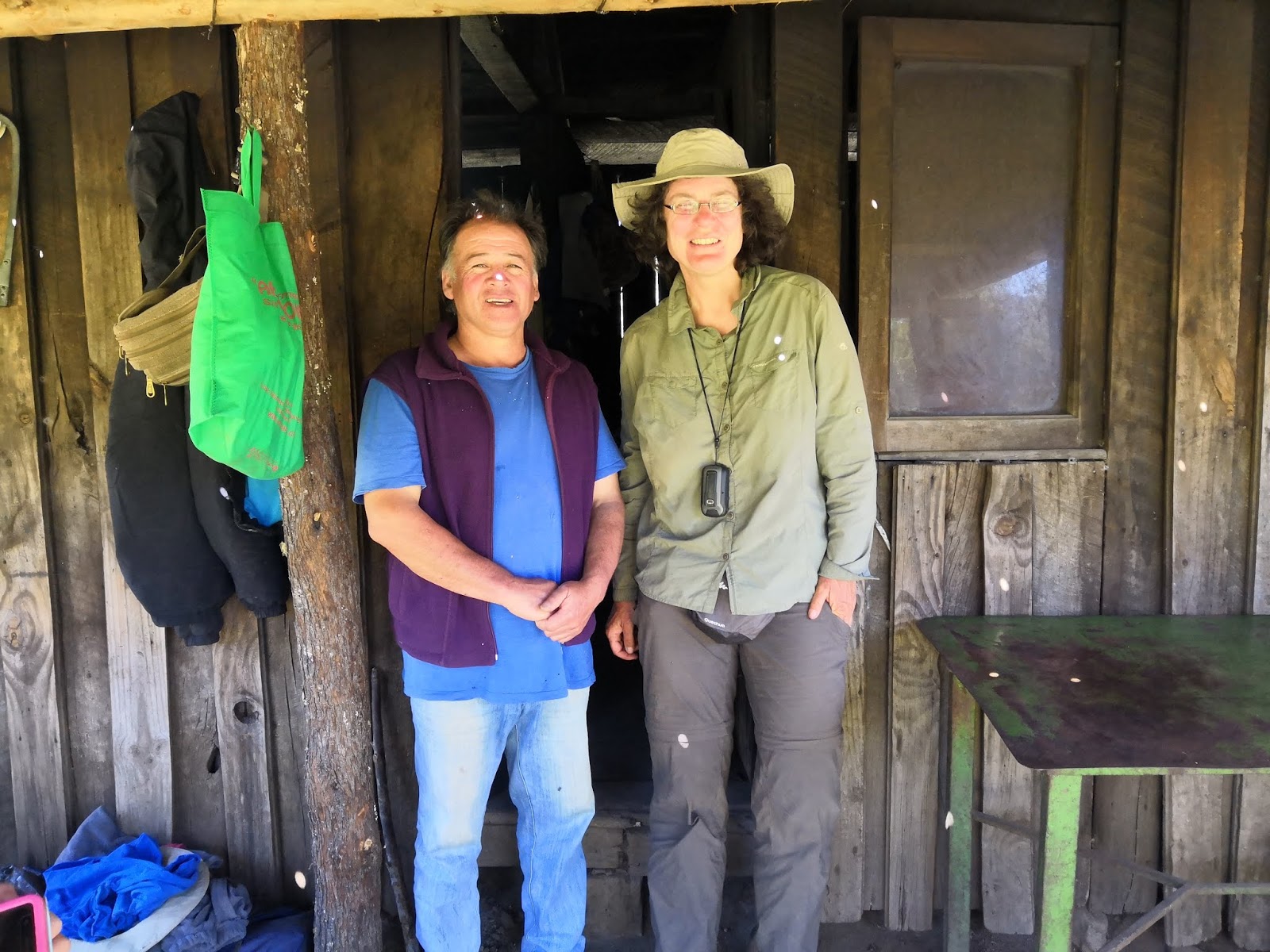
Hugo and yours truly in front of the puesto

Hugo was here on holiday with  most of his family. Only one son was back home looking after the cattle. They had brought a goat from their herd as food for the weekend. When I jokingly told him that I had never ever eaten goat, I was invited to try a bit. His wife put a huge piece of meat onto the open fire inside the hut and thus warmed up the rest of last night’s barbecue. Despite the rather primitive hut I was served this meal on a porcelain plate, with silverware and napkins. The meat tasted delicious and Hugo even sang for me!

When I left these friendly hosts my luck continued. When I reached the power plant and the road again I was picked up by two locals who had been cutting wood here. We passed the guard station without any problems and they took me to their village, where to only direct bus to Chillan, my next destination stopped for me within five minutes ….

Greater Patagonian Trail: GPT 8 Read More »

Division of NC Parks and Recreation Seeks Public Input on Wilderness Gateway State Trail Plan

The Division of Parks and Recreation is seeking public input on the Wilderness Gateway State Trail plan. When finalized, it will guide project stakeholders as they refine the planned corridor and build the trail.

The trail will connect Chimney Rock State Park to locations in Catawba County as well as the Overmountain Victory State Trail, the Town of Valdese, and South Mountain game lands and state park. When complete, the trail will traverse Rutherford, McDowell, Burke and Catawba counties.

The plan is being developed by the division with input from officials from the four counties, major towns in the corridor, Foothills Conservancy of North Carolina and Conserving Carolinas Land Conservancy, among others. It will identify opportunities, challenges, trail section sponsors and stakeholders along the trail corridor.

Drop-in style open house meetings to receive public input will be held on Jan. 14, 15 and 16 from 5 p.m. to 7 p.m. at the following locations:

Jan. 14 
Rutherfordton County Administration Office
289 N. Main St.
Rutherfordton, N.C. 28139

Jan. 15
South Mountains State Park
3001 South Mountains Park Ave
Connelly Springs, N.C. 28612

Jan. 16 
Catawba County Government Center
25 Government Drive
Newton, N.C. 28658

Members of the public are encouraged to attend and can expect to spend about 20 minutes to review, discuss, and comment on the planned trail corridor.

If inclement weather is anticipated for any of the meetings, a weather-related notice will be posted on the Wilderness Gateway State Trail planning webpage at https://trails.nc.gov/state-trails/wilderness-gateway-state-trail.

Jeff
HikingintheSmokys.com
RockyMountainHikingTrails.com
HikinginGlacier.com
TetonHikingTrails.com

Ramble On: A History of Hiking
Exploring Grand Teton National Park

Division of NC Parks and Recreation Seeks Public Input on Wilderness Gateway State Trail Plan Read More »

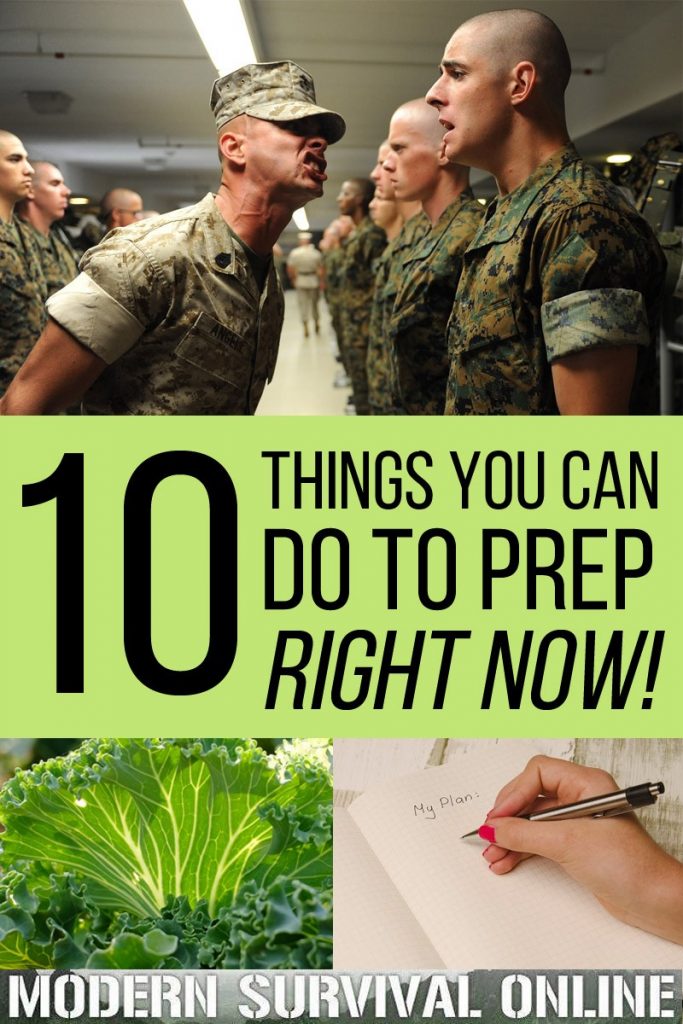
10 Things You Can Do to Prep Right Now

Prepping can sometimes seem like a daunting and time-consuming task that takes a lot of money to do right, especially for beginners or non-rural preppers. But, that is simply not so.

Sure, there are many survival supplies that will have you digging deep into your pocket and activities that require multiple steps and preparation, but there are also many things you can simply get up from your laptop or smartphone and do right this very minute to prep.

Taking the very first step or even a renewed interest in prepping needs not be hampered by either your budget or time constraints. If you are inspired to get up and start prepping right now, you can accomplish some vital survival tasks – most without even spending a dime … no matter where you live.

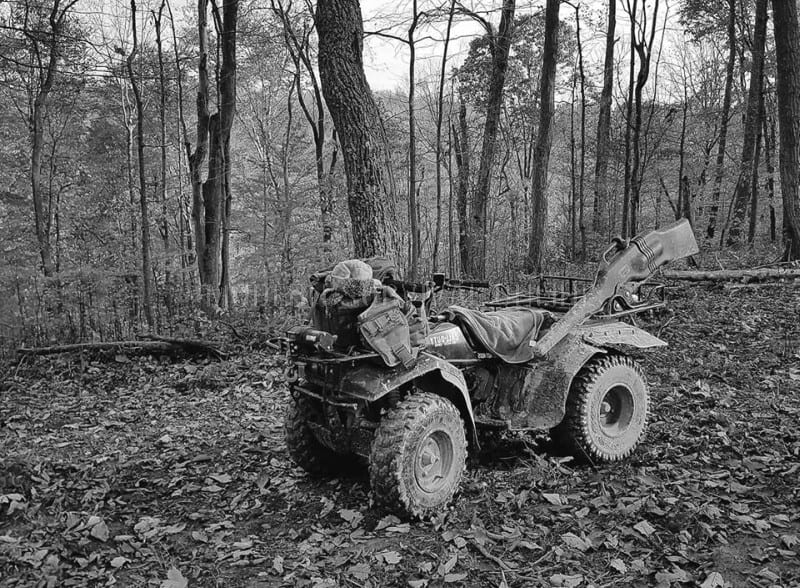
atv in the woods

1. Get Organized

This part of your prepping could be either low energy, or require a robust amount of manual labor. It all depends on how may preps you have stockpiled, and how developed your survival plan is.

All you need in order to do this crucial prep right now is a pen and paper. The first step in getting prepared is to set your survival goals, and develop a timeline to implement them. If you have already developed a survival plan, skip to number 2 on the list below.

Make a Survival Plan – Setting Prepping Goals

  1. Make a list of five to 10 things you need to do or achieve to become more self-reliant or skilled in order to survive a SHTF long-term disaster. For example: turn your home into a bugin location, find a bugout location – prepper retreat, stockpile basic essentials, list them each specifically, record the survival skills you possess and the ones you want to learn, etc.
  2. Make a prepper inventory of all the survival items you currently own, a list of all the food, water, and medicine you have on hand, and a list of items you want to purchase to make you more prepared in the following categories: food, water, medical, communications, bugout location, bugout bag, everyday carry – EDC, gardening, livestock husbandry, weapons, morale boosters, barter, tools, off grid cooking, and alternative power.
  3. Do a bit of math and determine how much of your budget you can devote to stockpiling preps or learning survival skills each week or month.
  4. Consider the amount of time your current work and family commitments require on a weekly on a monthly basis to determine how much time you can regularly devote to prepping.
  5. Create a timeline for accomplishing the purchases and goals that fit both your fiscal and free time schedule.

Once you have this necessary information infrastructure, you are well on your way to having an in-depth prepping plan and enhancing your chances of survival.

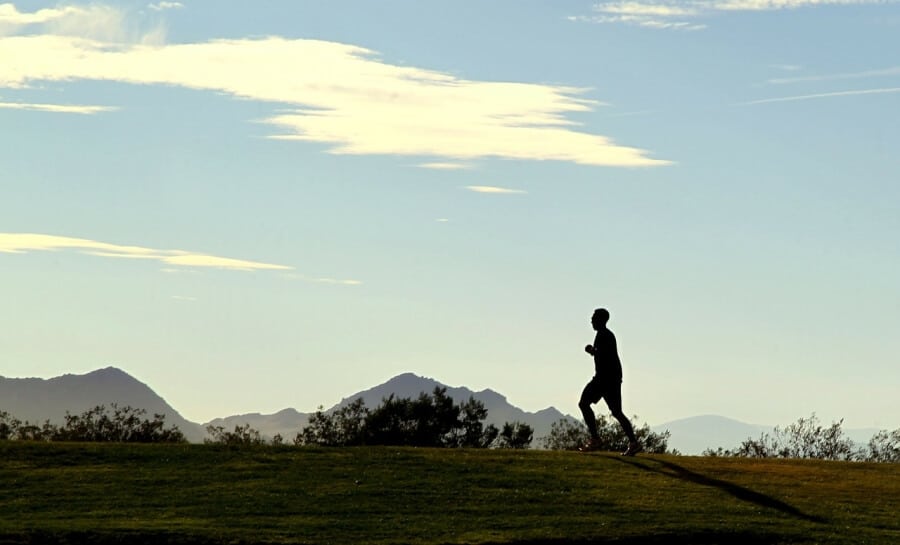
jogging in the outdoors

2. Physical Fitness and Endurance

Getting yourself in optimal physical shape should be at the cornerstone of your prepping plan. In our modern world, more and more people are living a sedentary lifestyle.

Increasing your muscle tone, strength, and endurance will help prepare you for the many physical hardships and manual labor that will be necessary to survive a long-term SHTF event.

If you are not used to working out on a regular basis, the physical challenges will be more intense during a disaster, and can likely lead to pulled muscles and tendons that will render you ineffective in a self-defense situation, for instance.

You may also have a hard time doing the multitude of rough daily chores that will be necessary in an off the grid world where you and only you are suddenly responsible for growing or raising all of your own groceries, keeping the family safe, and supplying alternative fuel sources to heath the home.

Free Ways To Get In Better Physical Shape You Can Do Right Now

  • Go for a run.
  • Go for a hike.
  • Walk or run up and down stairs.
  • Chop firewood.
  • Find some 5 to 10 pounds food containers or similar items, and use them as weights to work out your arms.
  • Put on music and dance for at least 15 minutes to simulate a cardiac workout.
  • Do manual labor chores you have been putting off like cleaning out the garage.
  • Take your dog for a walk.
  • Do push ups to increase upper body strength.
  • Do jumping jacks for at least five minutes,
  • Do wall sits to increase leg and back strength.
  • Find a YouTube fitness channel, and follow along.
  • Throw a ball around with your kids.
  • Set up an ax throwing range in your backyard (if legally allowed) and practice throwing the ax at a simple wood or hay bale target to increase strength in both arms.

These are just a few examples of free physical fitness training you could do right now without spending a dime to grow stronger in prepared for a SHTF scenario.

Once you get up and get moving you should find your energy levels increases and inspire yourself on to move lengthy or advanced physical training.

If you have any type of health condition or have not exercised in a long time, consulting your physician for tips and health risks is highly recommended.

3. Foraging

No matter what the season, there are likely always wild edibles growing on your land or somewhere around your home.

Going for a walk armed with a sack and the camera on your smartphone can help you not only acquire some wild edibles to taste, but also to bring home and learn more about the pros and cons of each, how to best identify the wild edibles, and any potential home remedy use they could provide.

Recommended Foraging Hike Wild Edibles

Plantain Daisies
Black Eyed Susans Clover
Dandelion Wild Strawberries
Wild Onions Wood Sorrell
Blackberries Black Raspberries
Cattail Acorns
Walnuts Purslane
Mullein Bull Thistle
Coltsfoot Curly Dock
Hickory Nuts Milk Thistle
Coneflower Blue Vervain
Chickweed Fireweed
Alfalfa Supplejack Vine
Morel Mushrooms Echinacea
Pineapple Weed Yarrow
Chamomile Lavender
Field Pennycress Queen Anne’s Lace – Wild Carrots
Stinging Nettles Peppergrass
Lambs Quarters Toothwort
Sowthistle

Always consult with your doctor before embarking on any natural remedy regimen. Simply because something comes from nature does not mean it is either safe to eat or safe to eat for everyone.

Never eat any wild edible that you are not 100 percent sure both of its identification and that it has not been sprayed with any chemical pesticides.

military drills

4. Emergency Drills

Part of being prepared is practicing to be prepared. Everyone in your family, no matter how young, must learn how to react during an emergency.

Make a plan for each emergency scenario you think your family could be subjected to. Share the plan with your loved ones, and then practice how they should react when faced with the emergency both when they are at home or away from home.

Emergency drill training can take place both as part of a pre-planned or surprise event.

Types of emergency situations you should do drills for:

  • Fire
  • Flooding
  • Hurricane or Tornado
  • Sudden Power Outage
  • SHTF when the family is separated – not at home
  • Medical emergency at home, away from home, and during SHTF
  • Home Invasion
  • Lost child or elderly family member at home and away from home
  • Martial Law Declaration

5. Water Collection

Start setting up a simple rainwater collection system with items you have on hand, or plan to implement one by purchasing items as a part of your survival budget.

You can also fill up empty plastic bottles and jugs with water.

6. Make a Cache

Find a piece of PVC pipe and connector ends, bucket with a firm fitting lid, or a trash can with a firm fitting lid, and create a survival cache to hide on your land – or somewhere along a frequently traveled route.

The items inside may need to be wrapped in plastic, or placed inside of a Ziploc bag to better protect them from the elements (if using a trash can as a survival cache).

Suggested Survival Cache Gear and Supplies

Unless you are sinking the survival cache in a pond or other body of water, the actually burying of the cache can also serve as part of your physical fitness prepper training.

7. Make a Faraday Cage

Making a Faraday cage to store you sensitive electronic devices in to protect them from an EMP attack or solar flare. Unless you feel so inclined, there is no need to drag out either power tools or manual tools to make a Faraday cage.

Use a metal trash can, metal box, metal chest, metal tool box, etc. as the base of your Faraday cage. Place cardboard along the bottom and sides of the Faraday cage to make sure none of the items inside are touching bare metal.

If the items are stored in their individual cardboard packaging, there is no need to do the cardboard lining, but it still wouldn’t hurt. Never store batteries inside of radios or other electronic devices.

Batteries of any type should be separated by cardboard from themselves, the device they will be used in, or the metal on the Faraday cage.

Before closing the lid on the Faraday cage, place a layer of cardboard on top of the items stored inside to add an extra layer of protection.

Suggested Items to store inside of a Faraday cage:

  • 2-way Radio
  • Electronic Tablet
  • Solar Charger
  • Jump Drive – Thumb Drive filled with important documents
  • Laptop
  • HAM Radio
  • Electronic Medical Equipment
  • Power Inverters
  • Generators

If you keep a 2-way radio in your bugout bag, take the batteries out if and place both the radio and batteries in separate Ziploc baggies. Wrap multiple layers of aluminum foil around each plastic bag to create a makeshift portable Faraday cage.

There areheated debates about the level of protection aluminum foil provides, but it definitely does not hurt to give it a shot, and help protect your communication tools from natural or man-made EMPs.

8. Make a Radio Communications Code

You definitely do not want others who might listen in on radio transmissions between your family or mutual assistance group members.

Develop a simple code to serve as survival shorthand to allow communications to remain as covert as possible. Example: Blue means stay where you are, I am coming to get you.
Suggested Survival Communications Code Keywords And Phrases

  • Stay where you are
  • I’m coming to get you – help is on the way
  • Rally point not safe
  • Home is not safe, go to X
  • Missing person found
  • Possible attackers on our X perimeter side
  • Unknown persons approaching
  • Code name for each family member or survival group member.
  • I found the survival cache
  • I am ok
  • I need help

9. Make an Off-Grid Communications Code

Radio batteries will not last forever, do not make a possibly fatal mistake of relying on them for communications for the duration of the long-term disaster.

Develop a simple no-tech communications code that can be used in place of radios in case batteries go dead, to prevent information from being detected by marauders who could read a regular written note.

Everyone in the family should be assigned a single color or symbol they can easily and quickly leave to let others know they are safe, or that they have been home or to the rally point, but had to leave and are going on to the bugout location or secondary rally point.

Whatever supplies used as tools in the off grid communications system should be lightweight and portable so they can be carried in bugout bags, purses, briefcases, and school bags. Never assume your loved ones will be either at home or all together when disaster strikes.

Example: a blue bandana or symbol could alert loved ones the house is not safe to enter so they travel to a designated rally point.

Suggested off grid communications code supplies

  • Single colored bandanas
  • Spray paint
  • Paint pens
  • Duct tape in different colors or patterns.
  • Chalk – this will not work if the space where the design is left is not undercover in the rain or is found and disturbed before the message has been relayed.
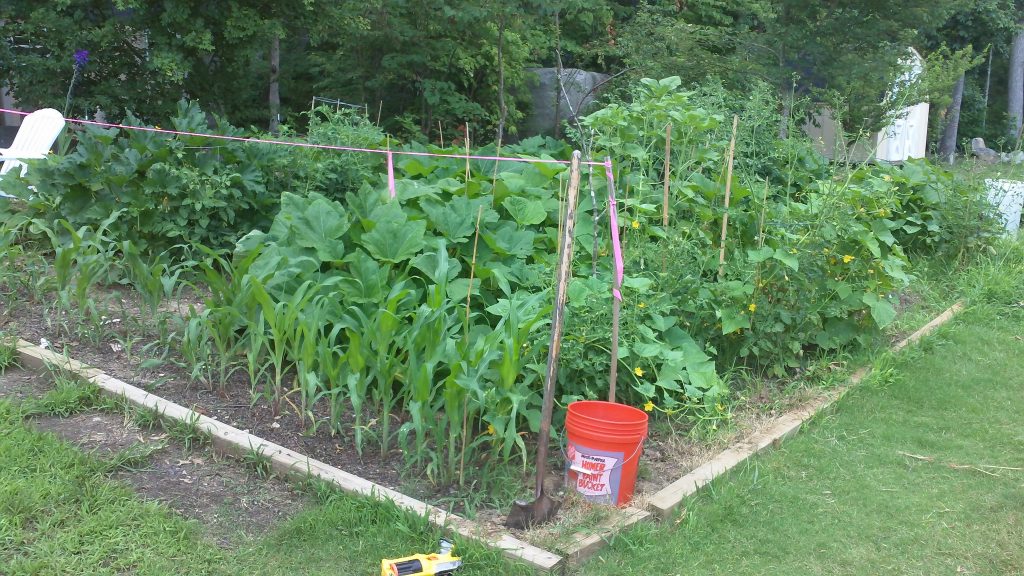
basic survival garden

10. Growing Your Own Groceries Planning

When the SHTF, expect grocery store shelves to go bare within just three hours and stay that way for weeks, months, or even years.

Things you can do to start or enhance your food cultivation efforts:

  • Clean out your refrigerator, and start a compost pile outdoors.
  • Find a bucket or other container with a firm-fitting lid, and use it as a kitchen compost container to regularly collect scraps that can be transported to the outdoor compost pile when it gets full.
  • Dig up a little bit of dirt from all of your current or prospective ground growing plots and any existing compost pile to test the soil to determine pH balance and nutrient levels. It can take months to enrich subpar soil, so do not hesitate to launch into this prepping project any time of the year.
  • Look for scrap materials or items that would otherwise be deemed trash that can be upcycled into growing containers. Plastic bottles, milk jugs, plastic barrels, old boots, cottage cheese containers, etc. are all great for starting seeds, growing herbs, and growing many types of vegetables.

Starting or enhancing your prepping can be just as simple as doing any of these superb 10 prepping right now projects.

Not only will you be invigorated to learn even more ways to build upon these initial efforts after getting rolling, you are bolstering your family’s chances of survival with each 5-pound coffee can lifted to get more muscle, and with every word written on a piece of paper to organize your preps or communications plan.

Get started prepping right now and don’t ever stop, there is always one more thing you can do or learn to increase the safety level of your family and to hone your survival skills.

things to do to prep right now pinterest

10 Things You Can Do to Prep Right Now Read More »

Preparedness Notes for Thursday — January 16, 2020

The Space Shuttle Columbia launched from Kennedy Space Center in Florida on January 16th, 2003. STS-107 would explode on re-entry 15 days later, killing all seven of the crew members on board. SurvivalBlog salutes all seven crewmembers: Commander Rick Husband, Pilot William McCool (pictured), Mission Specialist David Brown, Mission Specialist Kalpana Chawla, Mission Specialist Michael Anderson, Mission Specialist Laurel Clark, Payload Specialist Ilan Ramon. — Blog readers who live in Washington are reminded that there is a gun rights rally scheduled in Olympia on Friday (January 17, 2020.) Please be there! See the GOAL web site, for details. SurvivalBlog Writing …

The post Preparedness Notes for Thursday — January 16, 2020 appeared first on SurvivalBlog.com.

Preparedness Notes for Thursday — January 16, 2020 Read More »