Brett

Safety & Health Expo is looking for speakers. Are you interested in joining the line-up?

Over 100 speakers will take to the stage and thousands of visitors are expected to listen to the talks. The event will take place from 19 – 21 May, at ExCeL London, and speaker applications are open until 31 January.

The post Safety & Health Expo is looking for speakers. Are you interested in joining the line-up? appeared first on SHP – Health and Safety News, Legislation, PPE, CPD and Resources.

Safety & Health Expo is looking for speakers. Are you interested in joining the line-up? Read More »

Windbreaker VS Rain Jacket – What is a better option?

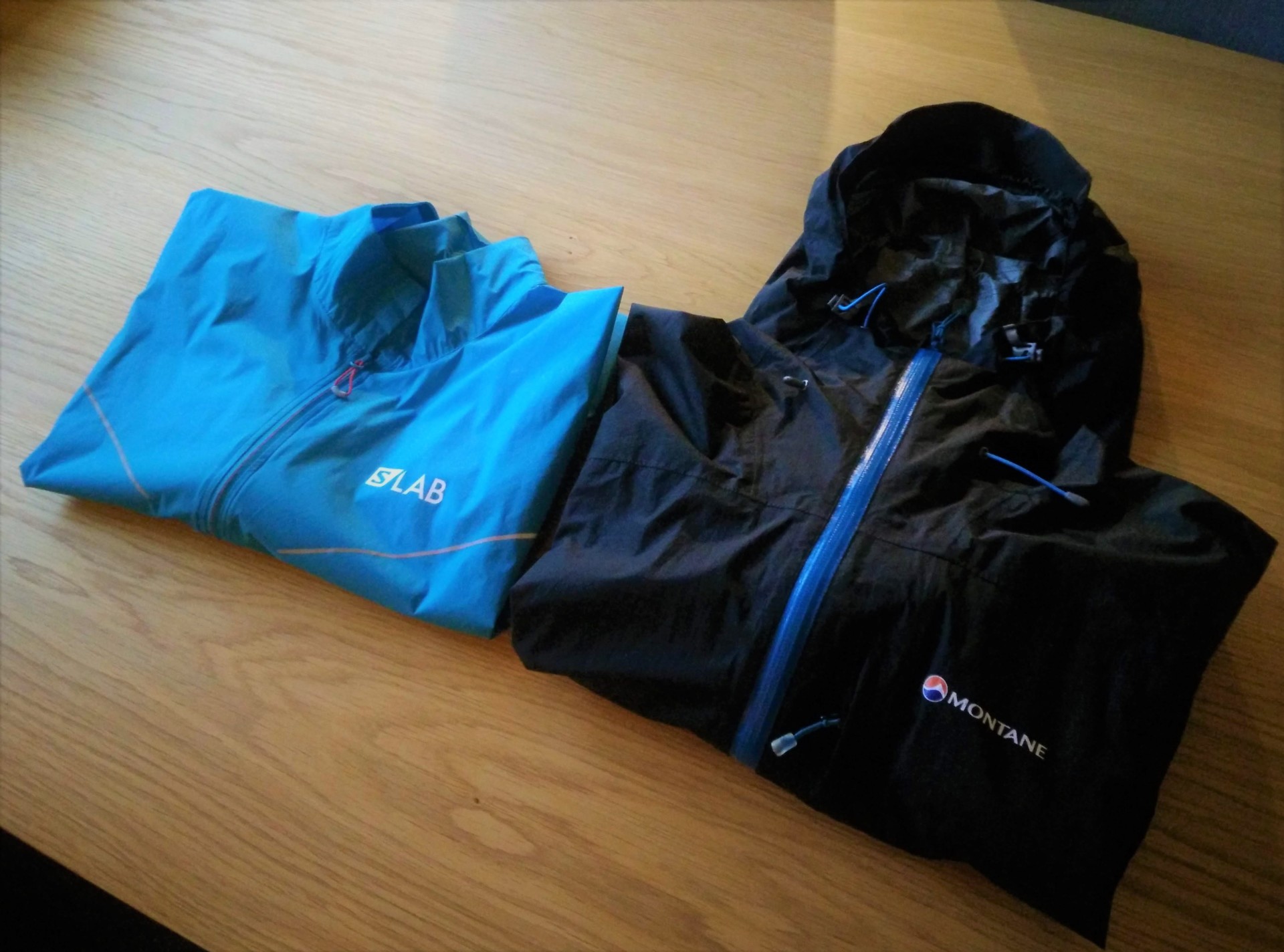
Windbreaker VS Rain Jacket – What is a better option? Left: Salomon S/LAB Windbreaker; Right: Montane Minimus Rain Jacket

Windbreaker VS Rain Jacket – What is a better option? Left: Salomon S/LAB Windbreaker; Right: Montane Minimus Rain Jacket

Windbreakers have become increasingly popular in the last years and many hikers have switched from rain jackets to these minimalistic shell layers. Windbreakers are lighter and pack smaller than rain jackets and are thus perfect for lightweight hiking. Nevertheless, it’s important to know that a windbreaker performs quite differently than a rain jacket. A rain jacket is, as the name suggests, primarily intended for protection against the rain, but it also provides good protection against the wind. Windbreakers, on the other hand, provide very little protection against the rain, but efficiently block the wind. I have a windbreaker (Salomon S/LAB) as well as a rain jacket (Montane Minimus), and I always decide which one to wear/carry in my backpack after checking the weather forecast and conditions on the trail in question. In the following I will explain the differences between windbreaker jackets and rain jackets to help you choose the right garment for your needs.

Fleece vs Synthetic Fill Jackets:

Air permeability
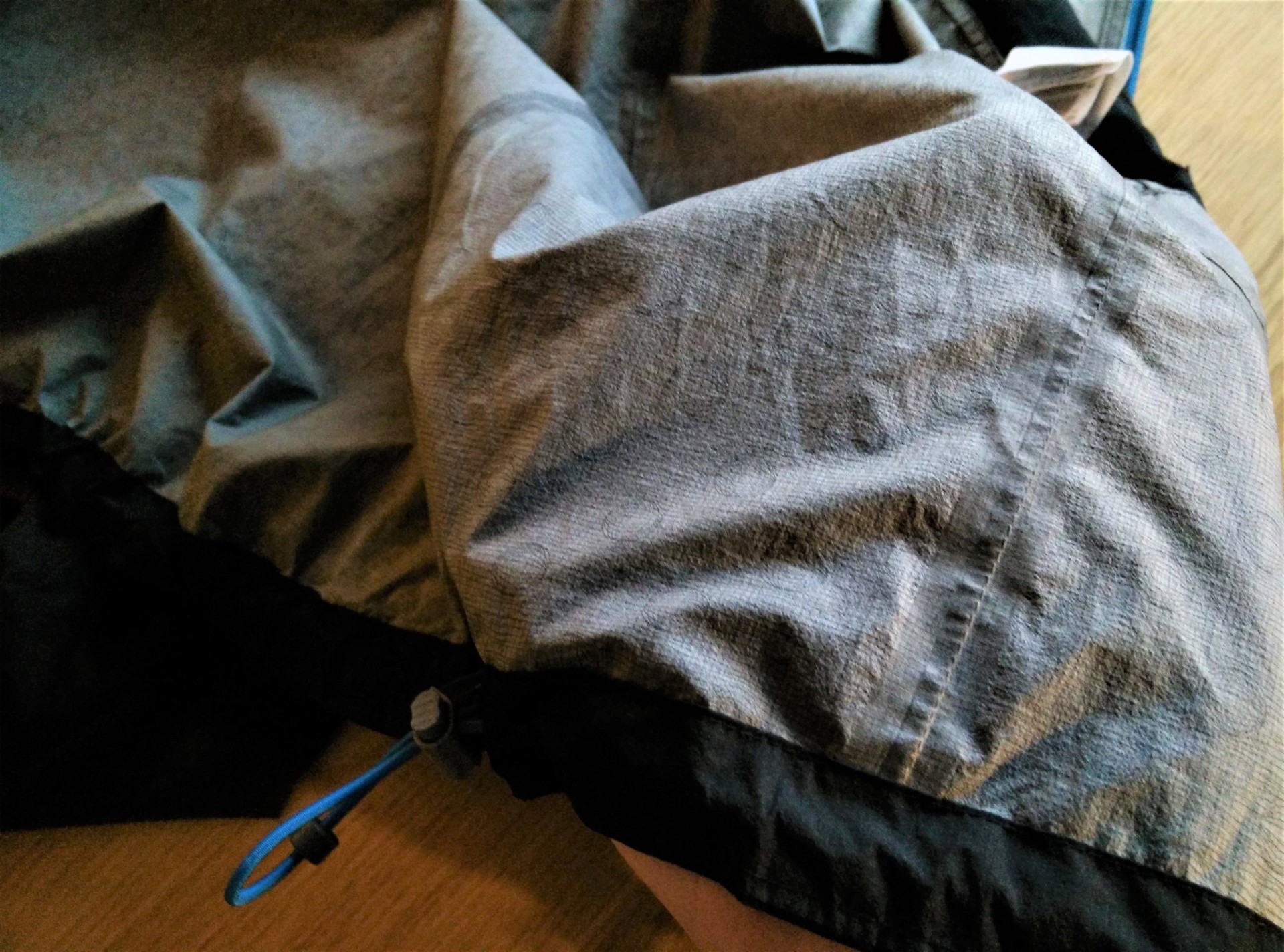
Windbreaker VS Rain Jacket - Rain jackets are made of multiple layers and have a membrane/coating which significantly reduces the air permeability

Windbreaker VS Rain Jacket – Rain jackets are made of multiple layers and have a membrane/coating which significantly reduces the air permeability

Air permeability (better known as breathability) is important when it comes to hiking, backpacking and sports apparel in general because you will sweat extensively throughout the activity if your clothes are not air permeable. Rain jackets are typically made of multiple thin material layers and have a membrane or a coating to prevent rain drops from penetrating the garment. This material structure significantly reduces the air permeability and therefore rain jackets are known to be the least breathable activewear, although breathability can vary hugely between high-quality rain jackets and cheap ones. You can read more about this in our article Rainwear: Hydrostatic Head and Breathability. Windbreakers typically provide better air permeability because they are made of a single layer of tightly woven synthetic fabric which blocks the wind – but not the rain (at least not for long). As such, windbreakers are perfect for highly aerobic activities like running, fast alpine ascents etc. Air permeability can also vary hugely between high- and low-quality windbreakers.

Weight and packability
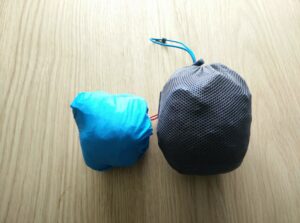
Windbreaker VS Rain Jacket - Windbreakers pack smaller and weigh less! Left: Salomon S/LAB Windbreaker; Right: Montane Minimus Rain Jacket

Windbreaker VS Rain Jacket – Windbreakers pack smaller and weigh less! Left: Salomon S/LAB Windbreaker; Right: Montane Minimus Rain Jacket

Windbreakers almost always pack smaller and weigh less then rain jackets. Therefore, they are very popular among lightweight hikers. Everybody should indeed use lightweight gear for hiking because lightweight gear reduces discomfort and strain on the body. You can read more about this in my article Why hike lightweight. So, how big is the difference in weight? A windbreaker for men can weigh as little as 80 grams (3 oz.) while it’s hard to find a rain jacket that weighs less than 200 grams (7 oz.). As for the packability, windbreakers obviously pack smaller than rain jackets. My Salomon S/LAB jacket for example packs so small that I avoid putting it in the main compartment of my backpack because I have trouble finding it if I need it later. In terms of packed size, a high-quality rain jacket typically has the size of a big apple while a top-tier windbreaker has the size of a small mandarin. The difference is not that big, but if you are, for example, going climbing and you want your shell layer attached to the climbing harness, a windbreaker will be less bulky.

Comfort

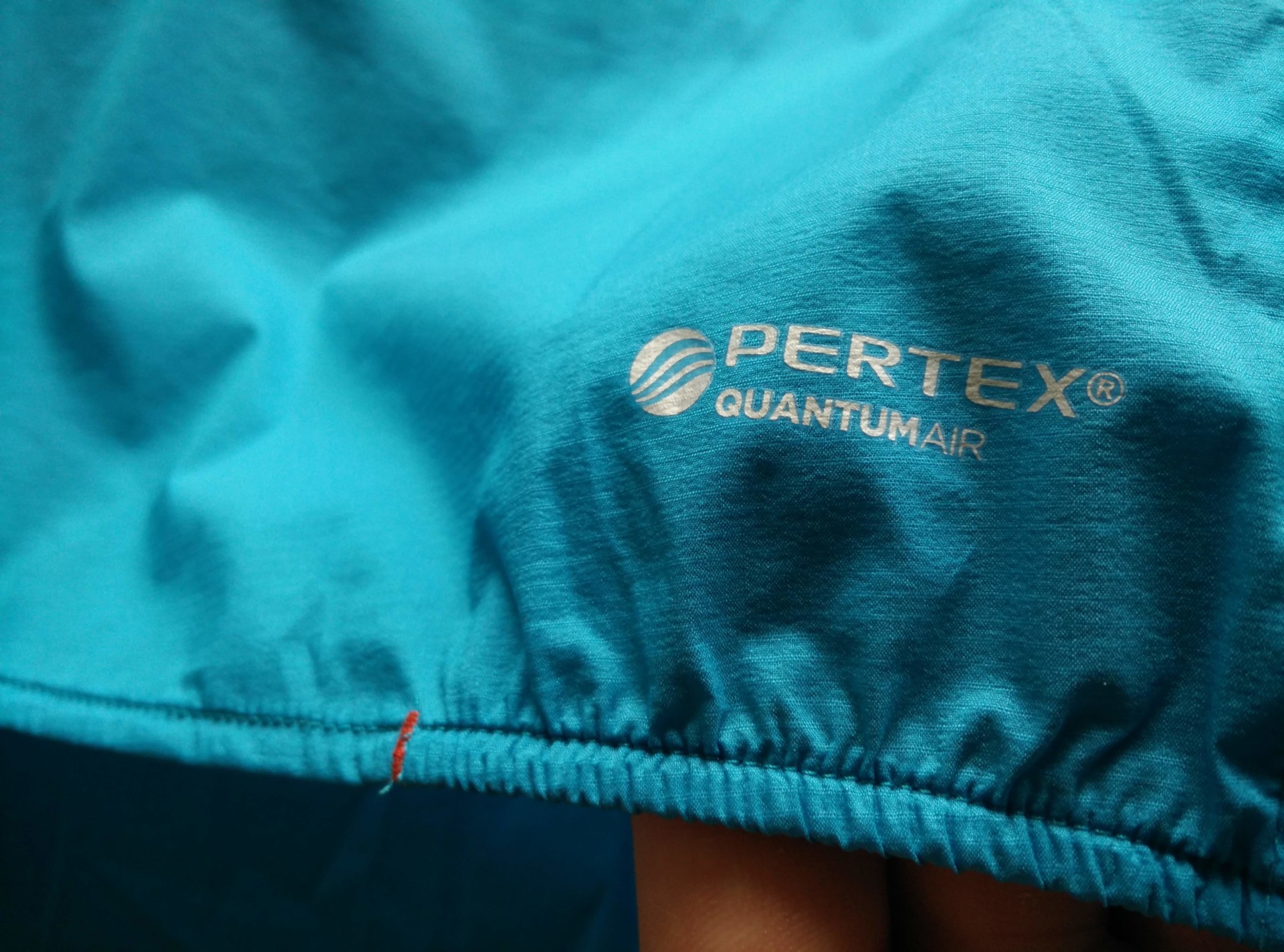
Windbreaker VS Rain Jacket - Windbreakers are more comfortable to wear because they provide better stretch and freedom of movement

Windbreaker VS Rain Jacket – Windbreakers are more comfortable to wear because they provide better stretch and freedom of movement

Rain jackets belong in the category of hardshells, which – as the name suggests – are somewhat stiff garments.  Therefore, they are not the most comfortable apparel to wear. Nevertheless, there are exceptions such as rain jackets made of Polartec NeoShell fabric which are known to be very stretchy. However, these jackets are also very expensive. Windbreaker jackets on the other hand provide much better stretch than most rain jackets and thus greater freedom of movement. They are also less bulky and less noisy (stiff waterproof fabrics tend to rustle when you move). All in all, windbreakers are a better choice in terms of comfort. However, they provide nowhere near as good protection against precipitation as rain jackets.

Protection against the precipitation

Windbreaker VS Rain Jacket - Without a doubt rain jackets provide better protection against the rain

Windbreaker VS Rain Jacket – Without a doubt rain jackets provide better protection against the rain

The primary function of any rain jacket is to keep you dry in (heavy) rain. Nevertheless, as rain jackets are made of relatively impermeable materials, they also block wind quite efficiently. Therefore, a rain jacket is a great option when you can’t rely on weather forecast (for example for long backpacking trips) and you need a versatile protection against all the elements. Windbreakers do provide some protection against the rain, but they will for sure not keep you dry for long. Unlike rain jackets, they don’t utilize membranes/coatings for weather protection, but merely a tightly woven fabric treated with DWR. However, windbreakers provide excellent protection against the wind. As such, they are perfect for short adventures (day hikes, trail running etc.) in dry but windy weather.

Durability and price

Windbreaker VS Rain Jacket - Windbreakers are made of thinner materials than rain jackets and thus tear faster

Windbreaker VS Rain Jacket – Windbreakers are made of thinner materials than rain jackets and thus tear faster

Windbreakers are more delicate than rain jackets because they are typically made of thinner fabrics. Nevertheless, many top-tier rain jackets are also quite fragile; the material simply can’t be robust and lightweight at the same time, and thus more or less all high-quality rain jackets are lightweight rather than heavy and robust. Therefore you should be careful not to get whichever garment you choose to wear caught on rocks, thorns, branches etc. because it will tear. Windbreakers are, however, easier to repair because the fabric can be sewn by hand or machine without affecting performance. Mended tears might block wind less efficiently, but the garment should still preserve its functionality. It’s harder to sew a rain jacket and preserve its performance because you will obviously make holes into the membrane or coating, through which precipitation can enter and spread.

When it comes to price, rain jackets are in general more expensive – at least if we are comparing products of the same quality. Nevertheless, high-quality and super lightweight windbreakers can also be very expensive. Some windbreakers from brands such as Salomon and Black Diamond cost more than $150 which is indeed a lot for such a minimalistic garment.

Conclusion

So, should you buy a windbreaker or a rain jacket? If you mostly hike in dry weather, a windbreaker is the obvious choice because it provides good breathability and is lighter and more packable than a rain jacket. You can also use it for running and other highly aerobic activities which is indeed a benefit. Now, if you often hike in rainy weather, in areas with unstable weather (for example at high altitudes) or do long backpacking trips where you can’t rely on the weather forecast, a rain jacket is a better option. For such conditions a windbreaker doesn’t provide appropriate protection against the elements.

I typically use my Salomon S/LAB windbreaker jacket for day hikes and fast alpine ascents in the Alps in dry weather. For all other trips I use my Montane Minimus rain jacket because it’s more versatile – it provides protection against the wind as well as protection against the rain.

I’d love to hear about your thoughts on windbreakers and rain jackets. Write them in the comments section below.

How helpful was this post?

Click a star to rate it!

No votes so far! Be the first to rate this article.

Post Author

Post Author

Blaz

Outdoor enthusiast with experience in all types of hiking and mountaineering. Hiked in the Alps, Iceland and other countries. In love with via ferrata trails and snow-covered slopes. Check out my hikes.

You may also like…


The post Windbreaker VS Rain Jacket – What is a better option? appeared first on Best Hiking.

Windbreaker VS Rain Jacket – What is a better option? Read More »

5 Tips For Your First Backpacking Trip

Almost everyone loves to travel as it introduces us to new experiences and create long-lasting memories. An increasingly popular trend in traveling is backpacking: traveling with simply a bag and its contents. Backpacking is usually dependent on public transportation, hitchhiking, and shelter is usually found at more public locations rather than homes for rent. Backpacking trips usually enrich you with the local culture, rather than simply visiting tourist attractions. For example, a backpacking trip to South America would have you interacting with local residents on a daily basis In addition, backpacking trips are usually much more extensive than normal vacations, meaning you’ll be away for a long time. So how exactly can someone get into backpacking and have a successful first trip? Here are five tips that should help you with your first backpacking trip.


Pack Accordingly

Packing accordingly is important for any trip, but it is especially important for backpacking trips. Backpacking trips are much longer than traditional vacations, making packing extremely important. In addition, you will likely only be traveling with your backpack, meaning that there is even more importance placed on how you pack and what you pack. Make sure you have everything you need to get by on your trip, including food, clothing, water, and money. You obviously don’t have to go overboard as that would ruin the purpose of a backpacking trip, but you should still pack well enough to ensure that your first backpacking trip is a happy and healthy one.


Bring a Friend

Backpacking by yourself is quite the experience, but it can be dangerous if you don’t know what you’re doing. That’s why it is recommended that new and inexperienced backpackers bring a friend along for their first trip. Having someone with you while you’re backpacking allows you to have someone able to help you if something goes wrong, making the trip much safer. There are plenty of things that can go wrong while you’re traveling the world with minimal possessions, making backpacking a scary prospect. Due to this, you should probably backpack with a friend in order to learn the ropes before you immediately jump into a solo backpacking trip.


Train Physically

Being in peak physical shape is highly recommended for your first backpacking trip. While you’re backpacking you’ll be doing a lot of physical activity including walking, hiking, and lifting. If you’re not in peak physical condition, it could be quite difficult to complete your first backpacking trip. Being out of shape could cause you to stop early or be unable to complete your journey, as the physical toll of all that walking and hiking can be too much for some people. So if you plan on taking your first backpacking trip soon, ensure that you train your body and are in great shape.


Buy the Right Gear

Another important aspect of backpacking for the first time is buying the right gear to use. Obviously, you will need the right backpack, as you will need one that is large enough to fit all of your belongings inside of it. You will also need other gear such as hiking clothes like boots and comfortable walking shoes. You also may need things like flasks and containers in order to keep your food hot or cold depending on the situation. You also will likely need gear for shelter including a tent and a sleeping bag, allowing you to sleep no matter where your backpacking travels take you. Bringing the right gear on your first backpacking trip can make the trip much easier and safer for you.


Keep an Open Mind

One of the most important tips for first-time backpackers is to keep an open mind on the trip. Backpacking trips can involve lots of unexpected events. You never quite know what you’re going to see or who you’re going to meet. Due to this, it is important to keep an open mind while on your trip. You shouldn’t plan out your days too much or become too focused on getting specific things done. You should simply relax on your backpacking trip and go with the flow. Let things happen naturally around you and let the experiences naturally come to you. This will make your backpacking trip much more authentic and much more enjoyable.

5 Tips For Your First Backpacking Trip Read More »

Europe Diagonal: Luxembourg

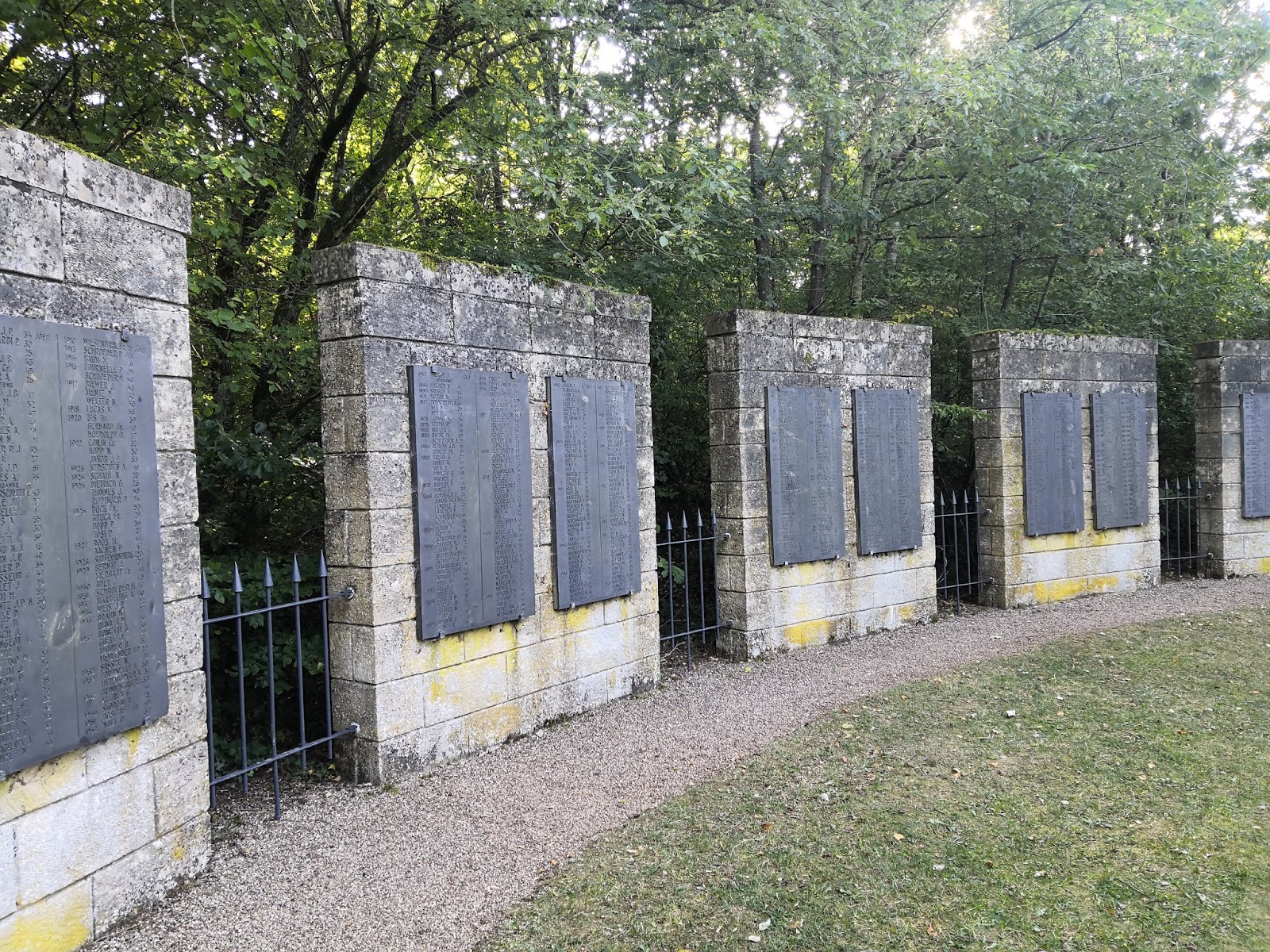
Luxembourg is kind of a hikers’ paradise with wonderful trail – but unfortunately these are all in the North of this small country. My route was leading me through the heavily industrialized South. Up to only decades ago mining was predominant in this area which was documented by a memorial for all the miners that had lost their lives in work accidents. It was interesting to see that the number of accidents significantly decreased over the years! Right nex to this impressive memorial is a much smaller one, a little chapel with the Madonna of Leiffrächen – a very popular pilgrimage site not only for miners.

I was very lucky to have an invitation in Kayl
where one of my FB friends had invited me to her house. I was not only heavenly fed but could eventually ask all my questions about multilingual Luxembourg: The little country has its own language which is kind of similar to German so that I could halfway understand what is going on. When I tried some newlearnt words on my hosts’ dog it even obeyed! And most people here also speak German as a second language plus French as the third official language! Very impressive also the incredible apricot cake I was served for dessert. I liked it so much that I was given the leftovers when I departed next morning!

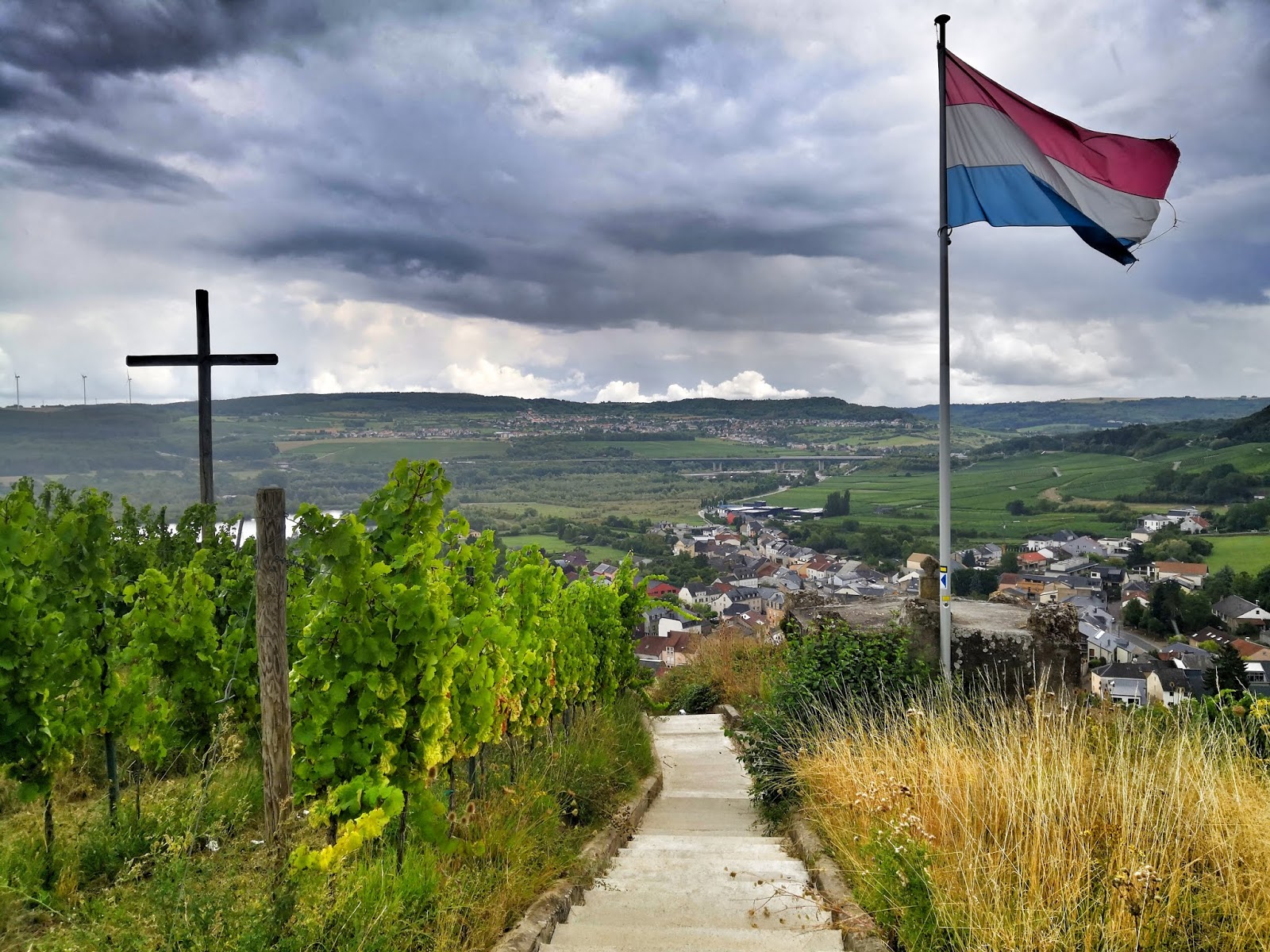
The rest of my route through Luxembourg was unremarkable. Nothing to write home about, but it was still amazing that  the trail planners found some relatively unspoilt areas where to route the trail through. Sometimes the scenery was really pretty but I could always here a motorway or trainline. Scenic highlight was my arrival at the three country border at Schengen / Perl where I hiked through the vineyards of the river Mosel and couldn not resist to nick some grapes.

Europe Diagonal: Luxembourg Read More »

Tactical Reloading

There is still considerable disagreement about the utility of the Tactical Reload. However, whether it has utility or not, it doesn’t have to be a clumsy technique. This is how the Tactical Reload is taught at the elite Rogers Shooting School and Dodd & Associates.

The magazines are handled by the thumb, forefinger, and middle finger. For visual clarity in this photo essay, the partially depleted magazine is depicted by an empty stainless magazine and the full replacement magazine by a blue magazine with a dummy round on top.

  • Draw the reload magazine as usual, forefinger along the front.

1 Draw magazine

  • Slip the forefinger down the magazine so the full magazine is held between the forefinger and middle finger. This leaves the thumb and forefinger available to catch the partially depleted magazine.

2 slip finger

  • Eject the partial magazine between the thumb and forefinger and catch it.

3 catch depleted

  • Insert the full magazine, which is held between the forefinger and middle finger, into the pistol.

4 both mags

  • Stow the partial magazine in a pocket, pouch, or your belt.

This method uses the hand’s two most dexterous digits, the thumb and forefinger, to catch the partially depleted magazine. Using the hand’s most dexterous digits makes it simple to handle even double column magazines.

Tactical Reloading Read More »

Safety & Health Expo is looking for speakers. Are you interested in joining the line-up?

Over 100 speakers will take to the stage and thousands of visitors are expected to listen to the talks. The event will take place from 19 – 21 May, at ExCeL London, and speaker applications are open until 31 January.

The post Safety & Health Expo is looking for speakers. Are you interested in joining the line-up? appeared first on SHP – Health and Safety News, Legislation, PPE, CPD and Resources.

Safety & Health Expo is looking for speakers. Are you interested in joining the line-up? Read More »

Surviving Alone: Is It Possible?

Man is a social being, no man is an island… we hear these phrases so often in this life. There is no society more complex than that of humans because surviving is not only about preserving one’s own life, but protecting those around us. Of course, there are those extremists who tend to be antisocial loners, but for the most part we have a desire and need to surround ourselves with other people, even in survival situations. Our chances for surviving increase when we are part of a group. Being part of a group means that that we can give and receive protection and help in the most desperate of times.

Surviving Alone: Is It Possible?

Being part of a group enhances the chances of survival for each member. The group supports the individual and the individual supports the group. As individuals work together to gather food and other resources, hunt or build shelter, each member benefits from the combined manpower. Defending a home or bug out location becomes easier. Life outside the comforts of the home would definitely demand a lot of work every day, and a group can help everyone reach their survival goals.

When it comes to surviving in a SHTF situation, it can be tempting to break off from the pack and fend for yourself. But is this your best bet for survival?

Click here for the full post.

The “Lone Wolf” mentality will get you killed

Arm chair warriors are a dime-a-dozen.  For many years I have seen this in martial arts discussions, tactical shooting discussions and now in survival discussions.  It seems that there is a relatively low percentage of the population that thinks that if the ship-hits-the-sand so to speak, that they are going to go-it alone and survive off the land.

Forgive me for being blunt here.  If you are one of those people I want to thank you right now.  When you die after a couple of months (probably less) of that lone wolf mentality there will be more resources for me and mine.  Seriously, thank you.

There is a fringe group of people out there who think they will just up and leave and make it on their own.  Some of the obvious points that are not considered when thinking you will be able to accomplish this are:

1.  Have you ever done this before and for how long?  If you have never engaged in long term (months long) trips into the wild subsisting on what you gather, forage, trap and hunt.  Then you are not going to make it unless there is a huge amount of luck on your side.  For me personally, I do not believe in luck, blessings yes, but luck, no.

2. What happened to the people you left behind?  So lets say you are the average family man, who has a job, its labor intensive, you work hard, real hard.  You spend a great deal of time each day working in all sorts of weather, etc.  You are tough, there is no doubt about it.  For some reason you think that translates into you being able to hack your way into the wilderness.  Whether that wilderness is trees or buildings is inconsequential here.  In your mind, you can make it.  But what about your family, friends, etc.  Are you simply going to walk away from them.  Do you for some reason think you are going to kill big game and drag it back to the house for them?  When was the last time you drug a deer that far?

via The “Lone Wolf” mentality will get you killed – Dan’s Survival Depot.

Of course there is always a chance that you will end up when SHTF. But you should still plan and strive for survival in a group. Having other people around will greatly increase your chances of surviving, for so many reasons.

Reality can be cruel, but you can at least hope to still have your family with you when it goes down. Having a group around to help and support you can be a source of strength in a survival situation. All of the difficulties are easier to deal with when you have other people to rely on. Living alone can elicit feelings of isolation and can lead to depression. Surviving together with those you love is not an added complication, but a blessing.

Check out related articles from our site:

How To Test Your Family’s Survival Skills

The Psychology of Survival – Why Your Mind Matters Most

16 Creature Comforts For When You Need To Hunker Down

Surviving Alone: Is It Possible? Read More »

How to Properly Select and Outfit a Home Defense Weapon (Guest Post)

Selecting the right home defense weapon can be confusing. We’ll elaborate on how they are effective as a home defense weapon, and what upgrades can be applied to them for improving their performance.

You’re reading How to Properly Select and Outfit a Home Defense Weapon (Guest Post), originally posted at Graywolf Survival – Emergency preparedness from a Counterintelligence Agent by Graywolf.

How to Properly Select and Outfit a Home Defense Weapon (Guest Post) Read More »

How to Hunt Small Game – The Basics

If you are in a survival situation, or just trying to supplement the meat available for an independent homestead, small game can be a great source of calories and protein. Small game animals are more abundant that large animals, they live in a greater variety of habitats, bag limits are often quite generous, and the hunting pressure is often zero. The small game species that have most often been…

Source

How to Hunt Small Game – The Basics Read More »