Best Wood for Bow Drill: How to choose the perfect wood for your Friction Fire Bow Drill Kit
Learn how to find and identify the best wood for Bow
Drill to start a fire using a Bow Drill Kit. The top trees and plants in North
America for bow drill friction fire kits.
Choosing the best wood for your Bow Drill Kit is critical to success. Even if everything else is PERFECT, choosing the wrong wood will likely result in failure. This article will highlight the best trees and woody stalked plants in North America to use for carving your Bow Drill Kit. Before we get into the specific species, let first discuss some basic wood properties.
DOWNLOAD my 6 Identification Guides for the Best Bow Drill Woods in North America – FREE – just enter email below.

Best Wood for Bow Drill: Wood Properties & Selection
Dry
If the wood you choose is not bone dry then you will not
succeed in making fire with your bow drill kit.
An ember can only be born in the near absence of moisture. For this reason, live green wood should never
be used for the spindle or the hearth board.
(Live green wood is actually preferred for the bearing block, which we
will discuss later.)
EXPERT FIELD TIP
It can sometimes be difficult to determine by touch if a
piece of wood is dry. I’ve found that the
lips, cheeks and chin are more reliable than my fingertips in determining if a
piece of wood contains moisture.
If at all possible, wood for the spindle should not be
gathered from the ground. With few
environmental exceptions (such as extremely arid locales) wood found on the
ground will be less desirable because it will have absorbed moisture. Dead standing wood and low-hanging branches
are almost always drier because they are exposed to sun and wind.
Wood Types
Although I have successfully used many different types of
wood for spindles, certain varieties work best.
While I want you to be familiar with specific trees and plants that make
excellent spindles, it’s important that you first understand their key properties.
Soft and lightweight woods are preferred over hard and dense
varieties. A popular rule of thumb
[LM1] is
that you should be able to use your fingernail to make an indentation in the
wood with little effort. While soft is
preferred, the wood should not be ”punky” or rotted. It should be firm.
EXPERT FIELD TIP
I prefer to use the same exact type of wood for both the
spindle and the hearth board. I’ve had
the most success with this arrangement.
Exceptions can be made, of course, but I prefer to cut both components
from not only the same type of wood but the same piece of wood as well.
I also like to use tree branches and suckers (these are
saplings growing from the base of larger trees) as opposed to the main
trunks. This faster-growth wood has a
more porous texture than the dense, main trunk and creates a faster ember with
less effort. Along that same line, I’ve
found that the faster the tree grows, the better it is for bow drill
spindles. Single-season growth is always
an excellent choice. It just so happens
that the tree varieties that work best for bow drills also grow extremely
fast.
Finally, any wood you choose should be as straight as
possible and free of knots or cracks.
Drying a Green Kit
You may not find dead, standing wood of the variety you
need, but you can cut live green wood and let it dry. For one kit, I typically cut a branch or
sucker (preferred) about the diameter of my wrist and at least one foot
long. I then split this piece in half and
let it dry on a south-facing window sill for at least a week. Splitting the branch allows for a faster
drying time.
DOWNLOAD my 6 Identification Guides for the Best Bow Drill Woods in North America – FREE – just enter email below.
Best Wood for Bow Drill: Specific Tree Species
As mentioned earlier, soft woods make ideal bow drill
kits. Below is a list of trees in order
of my preference for both the spindle and hearth board. Where applicable I also list other noteworthy
facts about these incredible survival resources.
Best Bow Drill Wood: Basswood (American Linden) (Tilia
Americana)

Besides balsa, I know of no softer wood than basswood. Also known as the American Linden, basswood
is a favorite of wood carvers and one of the best woods for bow drill. My friends from Britain refer to this tree as
Lime. Except for areas of extreme
climates, basswood can be found in most of the northern hemisphere. It is a water lover and will almost always be
found growing around water.
Basswood leaves are somewhat heart shaped and almost always
asymmetrical. They have a small,
pea-shaped fruit that dangles from a tongue-shaped bract. Young, tender basswood leaves are among my
favorite wild edible greens. I make basswood salads several times a week in
early spring.
The ”bass” in basswood comes from the word ”bast,” which
means fiber. The inner-bark fibers of
the basswood tree make incredible natural cordage. Instant basswood bark cordage can easily be
obtained in spring and summer months by peeling the bark from younger suckers
or saplings. You will find this cordage to be flexible and strong. I have made many a bow drill string using
basswood cordage. The bark from slightly
older basswood trees (3 – 5 inches in diameter) can be pounded and peeled from
the trunk during the same time of year when the sap is flowing heavy. After soaking in water for 3 – 4 weeks
(called “retting”) the inner bark fibers will easily peel away from the rough
exterior bark in long, ribbon-like sheets.
I recall one summer when lightning struck a large basswood
tree at the edge of the pond near my training facility. This powerful strike caused the bark of that
large tree to be blown from the trunk in several massive sheets, around 2 feet
wide and 20 feet long. After soaking
them in the pond I was able to gather several wheelbarrows of basswood cordage,
which I used in training for many years after.
While I’ve used basswood of every age and type for bow drill
kits, my favorite is that which is sourced from sucker trees that are 2 – 4
inches in diameter. The consistency of
fast-growing sucker wood is unlike wood cut from the main tree. However, green sucker wood will require
drying time. If you find a standing
sucker tree that’s already dead, count yourself lucky. If suckers are not available,
low-hanging branches are a good second choice.
Best Bow Drill Wood: Eastern Cottonwood (Populus
deltoides)

Cottonwoods were a favorite among Native Americans across
North America, as the trees were used to make dugout canoes. (Often, these were
coal burned.) Cottonwood trees have a triangular-shaped leaf with toothed
edges. The bark is deeply fissured. Like basswoods, cottonwoods grow primarily
around water. I’ve seen massive
cottonwoods along streams from Arizona to Virginia. When it comes down to it, some would argue
that cottonwood is the best wood for bow drill.
Cottonwoods grow very fast—almost too fast for their own
good. The combination of this fast
growth and their soft wood makes for very weak branches, which is a good thing
when searching for stock to make your spindle and hearth board. Dead, broken branches can almost always be
found littering the base of large cottonwoods and hung up in smaller trees or
underbrush nearby.
During the spring, when the cottonwood bears the source of
its name, one can gather not only wood for the spindle and hearth boards, but
tinder bundles as well. Cottonwoods
produce seeds that are covered in cotton-like down. When gathered together, these downy clusters
make a very flammable tinder bundle.
Best Bow Drill Wood: Eastern Red Cedar (Juniperus
virginiana)

The eastern red cedar grows primarily in the northern woods
of the United States and into Canada, but I’ve had success with many different
cedar varieties including western red cedar from the Pacific Northwest. Cedars are coniferous evergreens and are
easily identified by their flat, fan-like branches with scaly leaves.
The dead lower branches (also known as “squaw wood”) often
make excellent spindle and hearth board choices. Shredded cedar bark makes one of the most
effective tinder bundles. It can easily
be processed by scraping a knife at a 90-degree angle against the tree. The bark will shred off in fibrous masses
that can be further processed by rubbing the shredded bark between the palms of
your hands until they reach a hair-like consistency.
LEAD
MAGNET: DOWNLOAD IDENTIFICATION GUIDES
Best Bow Drill Wood: Willow (Salix spp.)

There are hundreds of species of willow throughout the world,
and for many, it is the best wood for bow drill. They belong to the genus Salix, and are simply called that
in many areas. They love water and grow in nearly all temperate regions of the
world where water is available. I’ve seen them along the banks of arroyos in
the Sonoran Desert and in the marshy swamps of Maine. They grow in nearly every
roadside ditch, along rivers, and at the edges of ponds. If you cut a live
willow twig (called a cutting) off the
tree and shove it in the ground, it will likely root and grow into a tree of
its own. I’ve planted hundreds of willow trees on my own property using this
method.
Willow leaves are typically long and narrow. They are widest
in the middle and taper to a point on both ends. The leaf margins are finely toothed. The
upper-side of the leaf is bright green, and the underside is often pale green,
which gives many willows (such as the white willow, Salix
alba) a silvery appearance from a distance. The bark of young trees and branches is very
smooth and becomes darker and furrowed with age. Many varieties of willow,
especially those related to Salix alba have
brightly colored bark in early spring that can range from yellow to red.
Best Bow Drill Wood: Sycamore (Platanus occidentalis)
The sycamore tree, another water lover, is nearly impossible
to misidentify and is a good wood for bow drill. Its very unique bark has a winter camouflage
effect: mottled with whites, tans, creams and grays. As the tree grows, the exterior bark peels
off to the ground in thin, brown curls, leaving a pure white base layer exposed. No other tree in the forest has bark that
looks like or behaves like the sycamore’s.
When layered into a large cigar-style roll, a thick tube of sycamore
bark also makes for an excellent fire carry.
It will smolder a red hot ember, which can be used to blow a tinder
bundle into flame when desired.
The sycamore tree also produces small balls of clustered
seeds in the fall, which can be broken apart and incorporated into a tinder
bundle. The seed clusters alone don’t
make an ideal tinder bundle, but they are great filler when mixed with dried
grasses, pine needles or bark fibers.
Like the cottonwood, the base of all sycamores will be
littered with dead and broken branches all year round. These branches make very serviceable spindles
and hearth boards. Sycamores also grow
suckers at the base, which can be used.
Other noteworthy bow drill trees are:
- Red Alder
- Staghorn Sumac
- Aspen
- Tulip Poplar
Best Wood for Bow Drill: Woody Stalked Plants
My first successful bow drill kit wasn’t made from a tree at
all, but from a woody, stalked plant – the yucca. In fact, there are several noteworthy plants
with woody stalks that make fantastic bow drill spindles and hearth
boards. Some of the fastest embers I’ve
seen generated with a bow drill were from those carved from woody, stalked
plants. Let’s discuss a few of the most
popular of these.
Yucca (Yucca spp.)

I list yucca first because it has a special place in my
heart since it was the first material I learned to use in my bow drill
kit. It makes an excellent choice for
first-time drillers. Yucca is a plant
native to America’s Southwest, not to be confused with yuca, also known as
manioc or cassava, which has an edible root.
Yucca is a popular ornamental plant and can now be found all over the
United States and throughout the world.
It grows in arid deserts as well as the four-season eastern woodlands.
Even the harshest of winters will not kill it.
I’ve often found it growing in old cemeteries, where it no doubt was
planted as an ornamental.
The leaves of the yucca are green and sword-like. Beware of
the very sharp points on the tips. They grow from a central rosette and remain
green year-round. There are many
different species of yucca (some even growing into large yucca trees). While not edible, the yucca root is loaded
with saponins and can be crushed and used as soap for washing.

Yucca’s claim to fame is its fibrous leaves, which are
filled with long, strong fibers that can be woven into durable survival
cordage. (This process is covered in
great detail in my Pocket Field Guide entitled NATURTAL CORDAGE.) Immediate
cordage can be sourced from the green leaves, but I prefer to use the dead
leaves that typically can be found around the base of the plant. It is very easy to slough off the brown, flakey
exterior and extract the fibers from the already-dead, dried leaves. I have successfully used yucca leaf cordage
combined with a yucca stalk spindle and hearth board for many bow drill kits. Yucca is nearly a one-stop shop when it comes
to gathering bow drill kit components.
The stalk of the yucca grows from the center of the plant
starting in early spring. The height and
diameter it reaches depends upon the species and age of the plant. Beautiful white flowers (which are actually
edible) bloom all around the stalk, creating a very impressive display in
spring and summer. Soon after full
bloom, the yucca stalk begins to die, dry, and harden. By late fall and all through the winter it’s
ready to be cut off at the base and used for a bow drill spindle and hearth
board. The lightweight, porous
consistency of this dead, dry, woody stalk makes for one of the best bow drill
spindles available on earth. The trick
can sometimes be finding a stalk that is thick enough AND straight enough to be
used as a drill and hearth.
Sotol (Dasylirion spp.)

Sotol, also known as desert spoon, is similar in appearance to yucca. It, too, is an evergreen and produces long, thin, sword-shaped leaves in a circular pattern around the base. Unlike yucca, sotol cannot handle prolonged cold and therefore grows exclusively in the warm, arid environments of America’s Southwest, including the Sonoran Desert of Arizona.
Like the yucca, sotol produces a central flower stalk that
is adorned with a bristle-like plume of tiny white flowers. This stalk can grow as tall as 20 feet, and
I’ve seen them as large as 2 – 3 inches in diameter. The leaf edges are lined with sharp, barbed
thorns, so use caution when cutting the stalk from the base.
The dead, dry, and woody stalk is used extensively for the
fire plow method of friction fire-starting and is large enough to make many bow
drill kits. This stalk works incredibly well for bow drill and is highly
recommended if you reside in an area where the sotol plant is native.
Elderberry (Sambucus spp.)
Elderberry is a deciduous shrub found throughout the
Northern Hemisphere, except in areas with extreme climates. A year-round identifying feature of the
elderberry it its bark. The exterior of
the bark is covered with evenly spaced little raised ”bark warts.” This is a very unique feature of the
elderberry.
In spring, the elderberry bush produces flat,
dinner-plate-sized flowers, which are actually made up of many small white
flowers. These flowers can be battered
and fried (elderberry fritters), but they are traditionally used to make
elderberry syrup after being steeped in sugar water. If left to their own devices, the flowers
will ultimately transform into clusters of berries colored from purple to
black. These are used to make jellies, jams, wines, and all sorts of other
delicious treats. All other parts of
elderberry are poisonous.
The elderberry branch is unique in that it has a very large
pith with a Styrofoam consistency. It’s
one of the very few bushes/trees/woody, stalked plants that can be hollowed
out. It’s the soft wood of the
elderberry combined with its pithy center that makes it a wonderful bow drill
spindle candidate. An elderberry spindle
is better paired with a hearth board made from a different type of wood. It’s
challenging to create a proper hearth from an elderberry stalk because of its
central pith.
*Special Note:
Because of the pithy center, it can be difficult to carve the top of the
spindle to a point. Consequently, it is
better left rounded.
Download my 6 Bow Drill Wood Identification Guides – FOR FREE! Just enter your email below!

Mullein (Verbascum thapsus)

The dead, dry stalk of the mullein plant in fall and winter
makes a very suitable bow drill spindle.
Much like elderberry, it is better paired with a hearth board made from
a different wood because a suitable hearth board is difficult to split out from
a pithy-centered mullein stalk.
Mullein, also known as lamb’s ear, has large, pale–green,
fuzz-covered leaves in spring and summer.
The plant has a two-year life cycle.
The first year it grows a low rosette of large fuzzy leaves that are
nature’s perfect toilet paper and padded inserts for shoes. During its second year it shoots up a tall,
straight, and woody stalk topped with masses of beautiful little yellow
flowers. This stalk is almost always
perfectly straight and I’ve started many a bow drill fire with a mullein
spindle.
The woody stalk is firm, yet soft, and the center is filled
with a dense pith. One fall I built an
entire bow drill kit (excluding the bow string) from one giant mullein. I used the root for the bearing block; the
stalk for the spindle, hearth and bow; and the leaves and seed head for the
tinder bundle.
*Special Note:
Because of the pithy center, it can be difficult to carve the top of the
spindle to a point. Consequently, it is
better left rounded.
Best Wood for Bow Drill: Carving Your First Kit
Material selection is only one component that you have to get right when starting a friction fire using the Bow Drill. You must also carve the kit correctly. To help make sure you carve the kit correctly, I’d like to give you my BOW DRILL CARVING TEMPLATES to use as your guide. They are FREE for you to use – all you have to do is enter your email below so that I know where to send them!
Download my FREE Bow Drill Carving Template by entering your email below!

Thanks for checking out my article about how to choose the best Bow Drill Wood – I hope you’ve found it helpful!
CR///EK

The post Best Wood for Bow Drill: How to choose the perfect wood for your Friction Fire Bow Drill Kit appeared first on WillowHavenOutdoor Survival Skills.
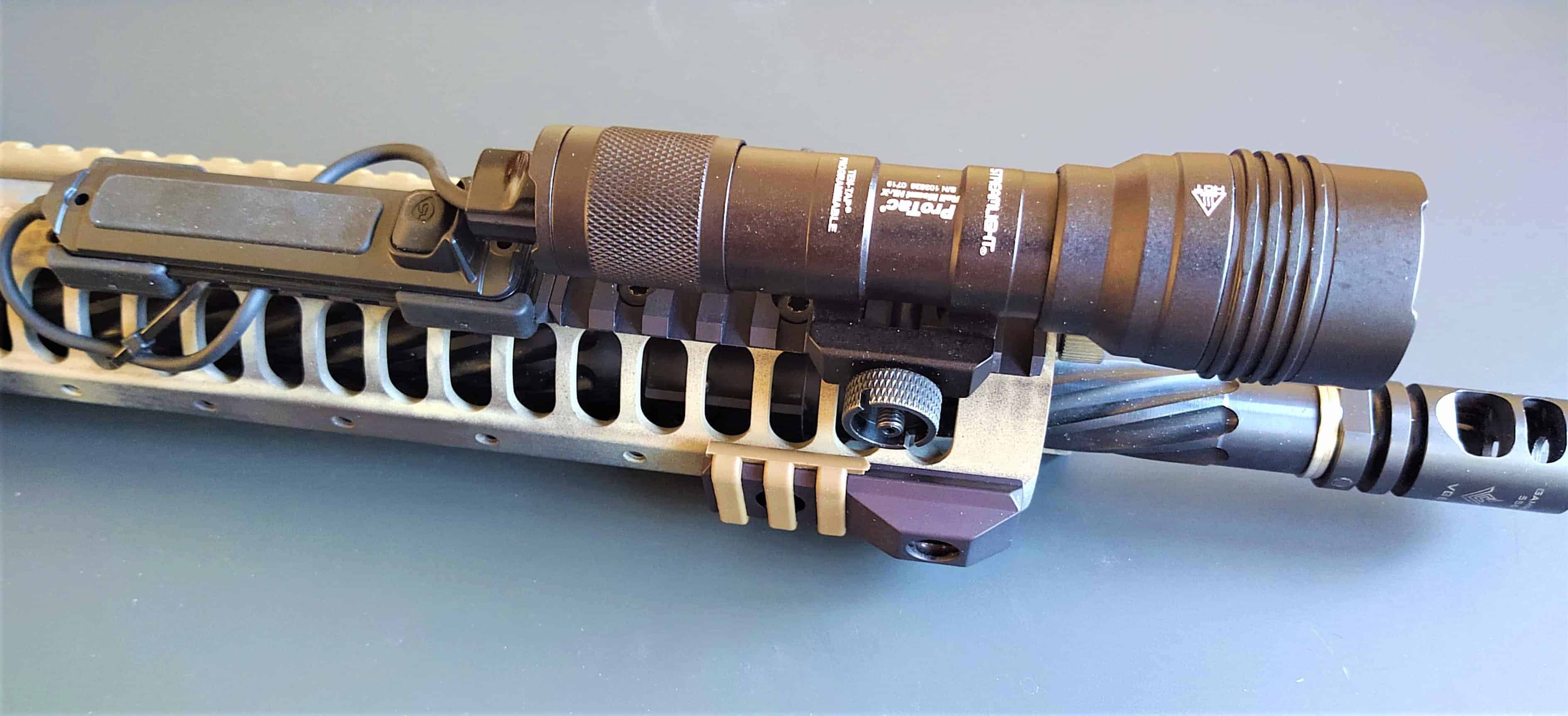
 I’m not a huge fan of bolting things onto rifles, but a white LED light is definitely an exception. Finding a quality weapon light isn’t difficult; finding a quality weapon light that won’t break the bank is another story. If you’ve lusted after the multi-hundred dollar
  My love affair with Streamlight began during my time at the fire department. We used the right angle
 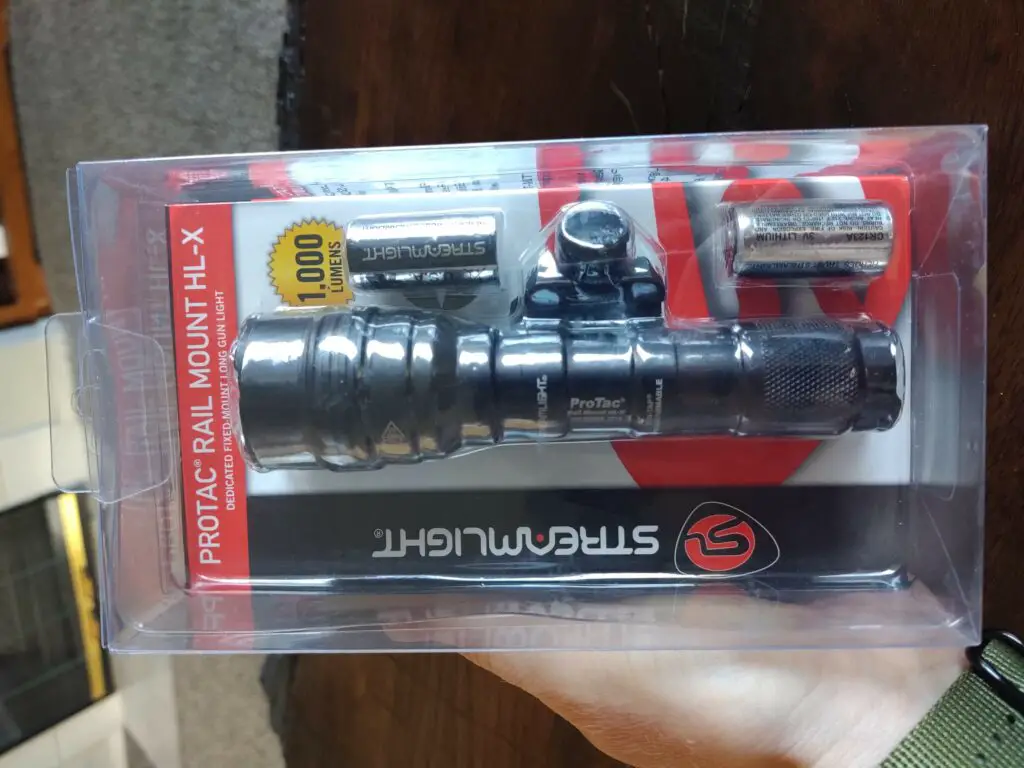 The ProTac HL-X is about 5.5”
 One of the things I love about this light is the
 I tried the ProTac HL-X out on a snowy morning before the sun came up to see how far it’d throw a beam. At 25 yards, this light is positively blinding. Same at 50 yards. At 100 yards, you would still have zero problem identifying your target. At 200 yards,you would be able to see what you’re looking at, but I think this is where it starts to get dicey. You may be able to see a person at this distance, but are your eyes good enough to make out their intentions at night? Or can you tell a dog from a coyote? You may need a magnified optic, but it certainly will throw light that far. I use a 50/200 zero on my AR, so this is just about perfect for me.
 The light adds a little weight to the front of the gun, but it’s barely noticeable. A 3 o’clock mount isn’t my favorite spot, but I like it better than 6 o’clock. At 6 o’clock the shadow it casts from my suppressor covers up the 12 o’clock position on a target. What the hands are doing is probably more important than faces, but I’d still like to be able to ID someone if I had to.