In the border with Lebanon.

In the border with Lebanon.
In the border with Lebanon. Read More »

“Best” is an adjective that starts fights faster than quick. No sooner than you declare something the best you have a dozen folks ready to refute you with master-crafted rebuttals, Powerpoint presentations or name calling. This is true of the gun world as with any other.
You might even make a reasonable argument that even dabbing that most irritating of descriptors onto any professed information is simply a recipe for disaster.
Can you really declare anything as best? Gun, ammo or otherwise, considering how many variables there are to consider? How different people are? Is there any point?
Yes. Yes, there is. When it comes to self-defense, the terrible arithmetic and attendant chaos of a gunfight demands that you seek every possible advantage beforehand.
Choosing the right ammunition is essential in order for your shots to have maximum effect on your adversary. Over time and through our mutual history of shooting one another, humans have learned some basic rules, some fundamentals, as to what the best way to shoot someone is, and with what.
The somewhat grisly science of wound ballistics has yielded actionable data, and shaped modern ammunition design accordingly.
In this article, we’ll be taking a look at what makes for good self-defense ammunition, and I’ll be offering my top three recommendations for defensive loads in the ubiquitous 9mm Luger.
Before we begin, let’s put to bed permanently a few egregious but persistent myths surrounding the wounding mechanisms of bullets, specifically handgun bullets. I have no doubt that most all of you reading have heard of such terms as “stopping power,” knockdown power,” “hydrostatic shock” and other pseudosciencey vernacular.
“.45 is the best cause it has the most stoppin’ powah than the 9mm!” “I use a big .44 Magnum cause it causes more hydrostatic shock effect,” and so on and so forth.
These terms are nearly totally meaningless. Hydrostatic shock is often an erroneous misnomer for an occurrence known as temporary cavitation (more on that in a moment), but in the general lexicon is often used to describe some mysterious effect where the impact of a bullet causes such disruption of the tissue in the body it causes a sort of system-wide shutdown.
This is bunk, at least, bunk in as much as what happens when a person “shuts down” after being shot may result from one of several causes, causes like a central nervous system hit, or a psychological stop resulting from the person simply falling down and giving up.
Either may occur, or may not, but the former is caused by physical destruction of critical organ structures in the body and the latter for reasons beyond our control as they are dictated and calculated in the shootee’s mind.
“Stopping Power” is a long runner piece of treasured shooter lingo that simply does not mean anything in a quantifiable sense. But words must mean something, so in most cases the person using it is making a proclamation that Cartridge A is better than Cartridge B because it is bigger or faster or something.
How do you calculate such a thing, and why once calculated to we see multiple, repeated failures of bullets to have effect on a target, even bullets with commonly accepted “high” stopping power?
Knockdown power is an utterly meaningless term; no bullet from a shoulder fired gun or a handgun can knock someone down. It’s simple physics, and not in any way, shape, form or fashion open for debate. If a fired projectile could blow the target off their feet, the shooter would likewise be bowled over.
What either above term may be referring to is a colloquial ranking of “effectiveness.” This is a little more forgivable, as bullets and cartridges are not created equal, and some are decisively more effective against humans than others. Even with this explanation, what makes Cartridge A more effective than Cartridge B?
There is the question. But to answer it, it is illuminating to answer another question first: just how do we damage and incapacitate, or stop, an attacker as quickly as possible?
Very briefly, there are only two ways by which we can stop an attacker with gunfire, and of those two only one is reliable or predictable in any real sense.
Those ways are physiological in nature and psychological in nature. As you have no doubt intuited, one has to do with physical bodily processes and the other has to do with mental and emotional processes.
A physiological stop results when the person can no longer physically continue their action against you. This result itself could be one of several outcomes: a loss of blood pressure or volume severe enough that physical movement is impossible, or destruction of central nervous system targets responsible for the voluntary or involuntary control of the body and its many processes.
In essence, if we shoot an attacker, we punch a hole in them in addition to damaging or destroying any tissues in the bullets immediate path. Any bullet wound will result in a certain amount of blood loss. Once blood volume and pressure in the body is insufficient to sustain movement, the body collapses.
If the brain is not supplied with enough oxygen, consciousness is lost. If we strike more “valuable” targets in the body, e.g. major cardiovascular tissues and organs, heart, aorta, major arteries, etc., and strike them multiple times, then we can generally depend on a correspondingly faster loss of blood volume and pressure, and less oxygenated blood staying in the system, thereby resulting in faster incapacitation.
A solid hit to the central nervous system, specifically the brain or upper spine, is the most typical cause of true instant incapacitation, but even that is no guarantee.
A person struck in the spine may lose partial or near total body control, but may have enough control left to pull a trigger or swing a knife. Often referred to as “off switches” in LE and military vernacular, they are still not 100% infallible.
But on the other hand we must consider psychological incapacitation. These factors we have little control over, as they solely between the ears of the person being shot. Psychological factors essentially boil down to the person being shot giving up, either from mental or emotional distress.
These are the reasons why some people, when shot, fall down and are done for as far as the fighting is concerned. These are the reasons why some people will actually die from minor, non-life threatening hits; they always believed that people, when shot, die. And so they do.
Psychological factors are also the reason why some people can fight on, fiercely, after sustaining severe, even mortal, wounds. They may or may not be in agonizing, excruciating pain.
But remember what we just learned: if sufficient blood volume and pressure exists, movement is possible. If enough oxygen is supplying the brain, consciousness is possible.
If highly motivated, enraged, trained or otherwise sheer force of will may keep them in the fight until their body is either mechanically disabled or they succumb to their injuries.
If our attacker is shot and gives up, or quits, that is great. But we cannot count on it. We can count on, eventually, enough blood loss occurring or enough damage to the CNS occurring to result in dependable incapacitation.
So, in summary, to stop an attacker reliably we must:
To do this, we need bullets that will reach the targets we need to strike in the attacker’s body, and do so reliably. Reliably meaning it can penetrate deeply enough through both flesh and any reasonable intervening barrier, and that the bullet is of sufficient diameter to actually cause adequate destruction on its passage through the target.
To be considered a good bullet for self-defense, we are looking for a couple of specific characteristics. We need a bullet that will penetrate at least 10 to 12 inches into a human body, and do this after defeating intermediate barriers it may encounter on the way, barriers like clothing, a limb, glass, and so on.
This is why FBI testing standards mandate a bullet penetrate at least 18” into calibrated ordinance gelatin to be acceptable for duty use; you don’t always get to shoot someone broadside when they have a t-shirt on.
A bigger hole is better than a smaller hole, but over a certain size, about .36 caliber, handgun rounds all perform about the same with modern ammo.
Additionally, a bullet that retains its weight inside the target, that is, a bullet that does not break up or fragment, is desirable as this ensures its momentum and overall diameter will be preserved as it passes through the target, maximizing the amount of destroyed tissue, and creating a greater wound.
Bottom line: handgun bullets do damage reliably only by piercing the body and destroying the tissue along their passage, not from shock effect or anything else.
A bullet that will expand, i.e. a hollowpoint, will create a larger path of destroyed tissue and is desirable, in addition to minimizing the chances that the bullet will exit the body. A bullet that is more likely to stay together and not break apart is more likely to perform well at the above requirements, and is desirable.
Considering all of the above attributes together, the bullet that most reliably and consistently performs accordingly is the best bullet for the task at hand.
The list of 9mm loads below is based on objective performance as tested according to FBI protocols, and is the most reliable laboratory-based testing measures for handgun bullet performance to date.
Please note, all of these loads are excellent, and any will serve you well as a primary self-defense round.
Not all ammo is created equal. If you have the funds and opportunity, you should not be shooting FMJ or lead ball for defense of life. Take the time to get educated on handgun bullet performance, and choose a round that will do the most work when the stakes are high.
The Best 9mm Luger Ammo Read More »
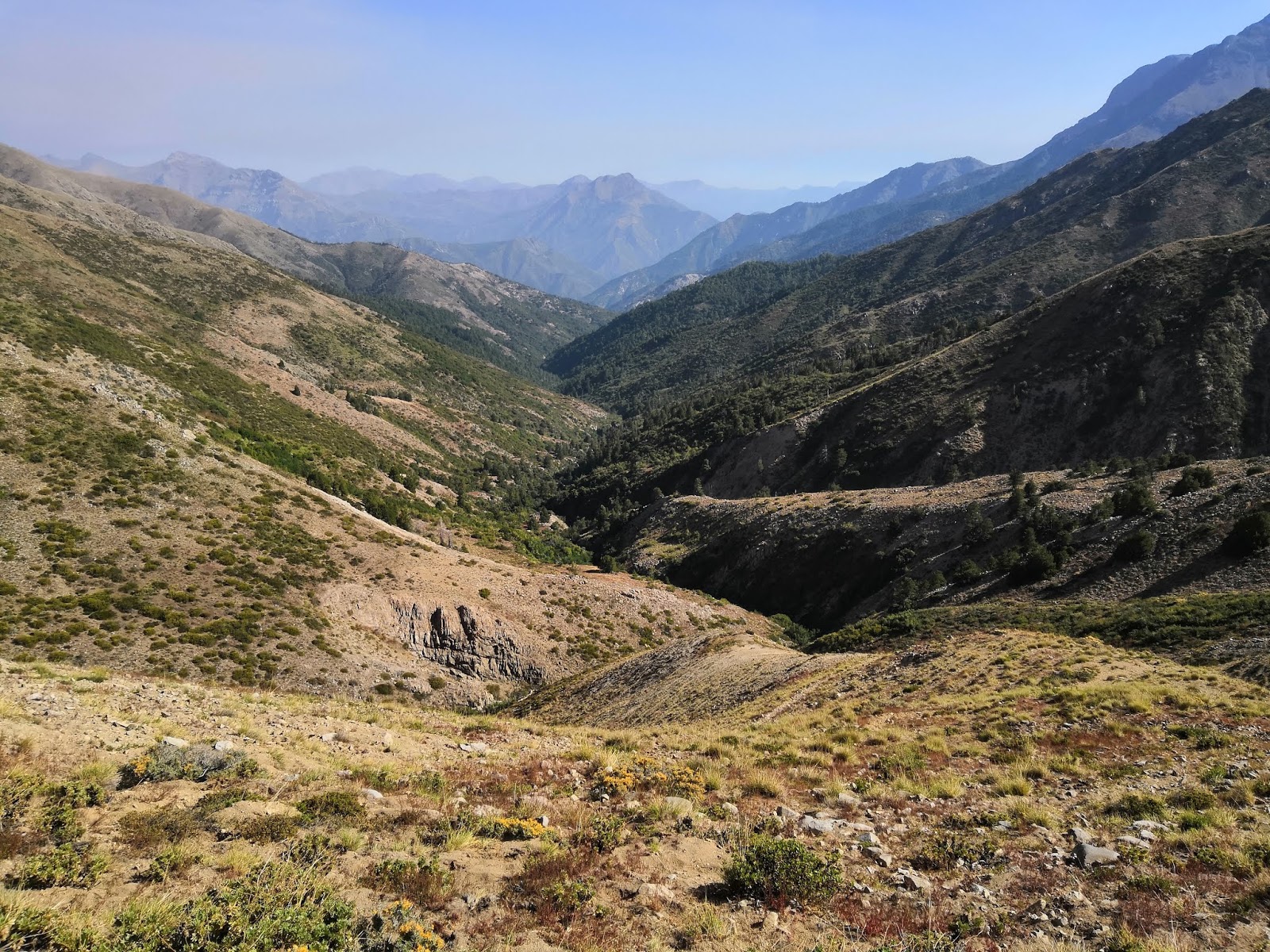
My time on the GPT was now slowly coming to an end. With less than two weeks left before my flight back to Germany it became clear that I would probably not be able to hike all the way up to Santiago de Chile. Therefore I was not very disappointed when I heard that section 5 was closed due to another volcano alert. I skipped forward to section 4 which was not rated as particularly attractive. As I was soon to find out this rating is completely wrong.
After more than one day of continuously ascending in dry mediterranean landscape I reached two alpine lakes – and a herd of wild horses and cows.
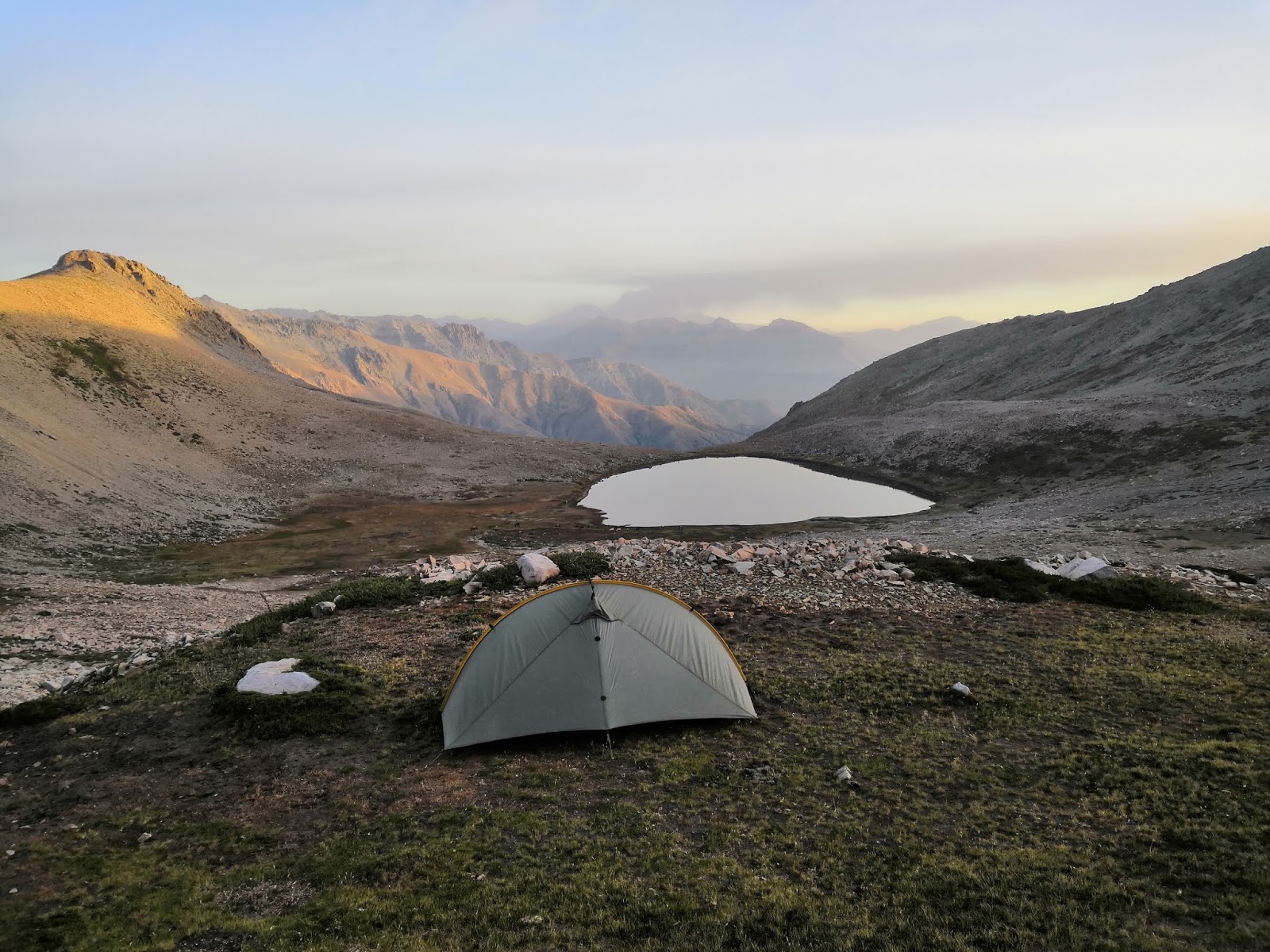
As I did not want to be woken up by a four-legged friend, I camped a bit further up and away from water. When I looked out of my tent into the sunrise I saw a big cloud of smoke in the distance and realised only after a while where it came from. This was not a forest fire – this was smoke from an active volcano! And this volcano was the reason why I was not able to hike section 5! Although this volcano was more than 50 kilometers away I felt pretty uncomfortable and tried not to think about a volcanic eruption … But when I woke up in the morning the sky was clear again and all the smoke had disappeared.

After some climbing over rocky slopes I reached another beautiful mountain lake in the morning and could not resist the temptation to take a swim. Continuing up to the next pass I came across two arrieros on horse back – and right on top of the pass 4 G cell phone reception …
I must admit that I ignored the spectacular mountain scenery for half an hour while checking on my smart phone what had happened in the world.
The descent was as long and dusty as the ascent and when I finally reached the valley bottom I could not even find a campsite!
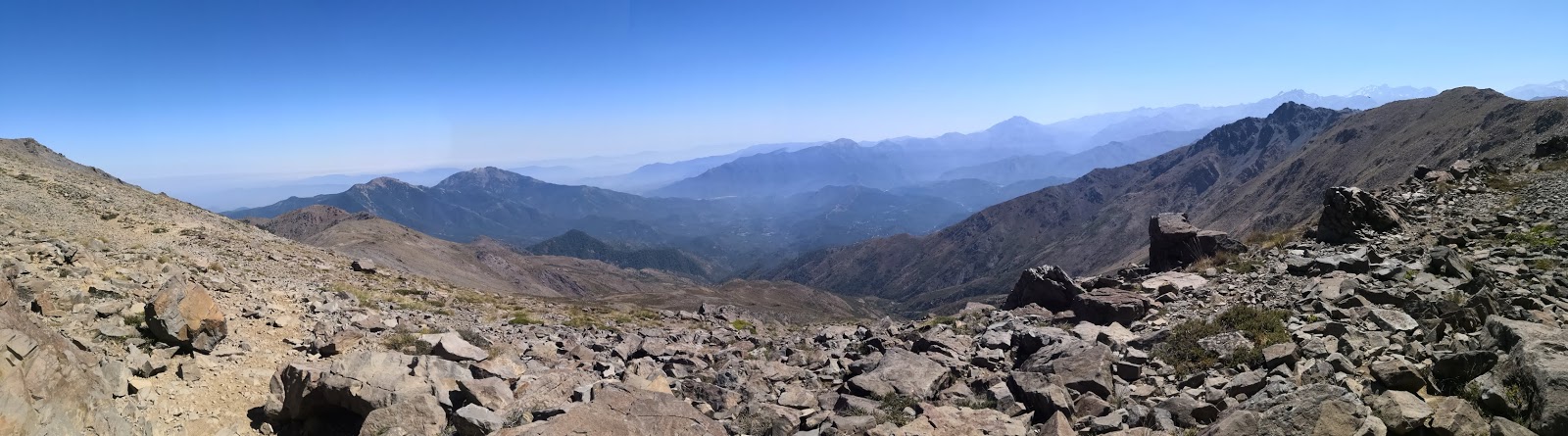

A small water fall in the valley was a very popular picnic spot and very crowded in this hot summer evening. Luckily I did not have to pay the entry fee as I was walking out. First it was too busy and crowded to camp, then everything was fenced in and in the end I had nearly reached the road. With a little detour I eventually found a decent campsite but I could still hear the noise from a nearby youth camp.
I woke up next morning to a rare phenomenom in this area: fog! I even had to pack a wet tent …

As soon as I had reached the road I came across a mini-market where I could buy some more snacks and delicious freshly baked bread. I needed this motivation because there was a long road walk ahead. It would have been unbearably hot and dusty in the sun, therefore I was more than grateful for the fog.
But where the route presumably turned off the road there was a huge fenced-in private property with a farmhouse right at the entrance. No way I would be able to sneak in there. So grudgingly I continued walking on the tarmac road which meant a huge 10 kilometer detour!

When I saw a bus shelter next to the road I decided to try my luck, sat down and waited. And for sure, after only half an hour a bus arrived and saved me 16 kilometer road walk! I was so happy that I bought some ice cream in a mini-market before finally embarking into the mountains again.
The GPT route took me along a very popular valley where now dozens of families were picknicking and camping. At the end of the dirt road a locked gate was decorated with several “no entry”-signs. All the locals ignored it and there was even a soical path around the gate …
Unfortunately a couple of kilometers later there was another gate like that with even more “no entry”- signs. I climbed it and felt very uncomfortable. I walked several kilometers with seeing anyone and already felt relieved when all of a sudden I heard a truck approaching. I disappeared into the bushes. The car stopped just a couple of hundred meters later. I decided to walk around it off trail. Very bad idea! I ended up fighting my way through blackberry bushes, lost half an hour of time and got several scratches.
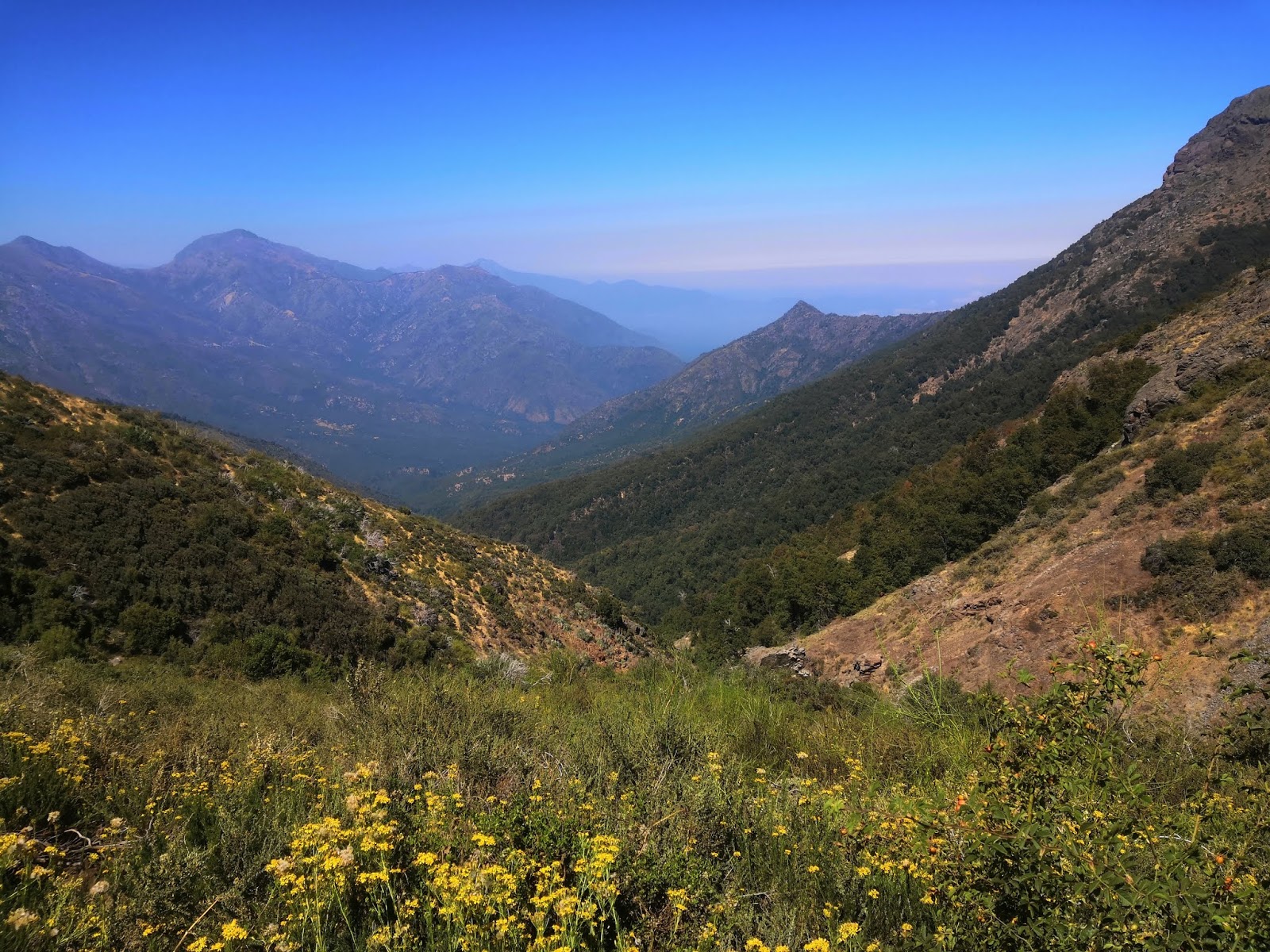
Plus I discovered that there were discarded beer cans and old fire rings all over the place. Despite all these “No Entry”-signs this was a popular fishing area. The people I had tried to avoid were probably harmless fishermen trespassing here as much as I did.
When I climbed out of the valley I encountered a group of arrieros descending you told: “If we had know that you are here we would have brought wine …” Luckily they were going the other way …
And when I finally had found a nice campsite I was visited by a lonely cow.
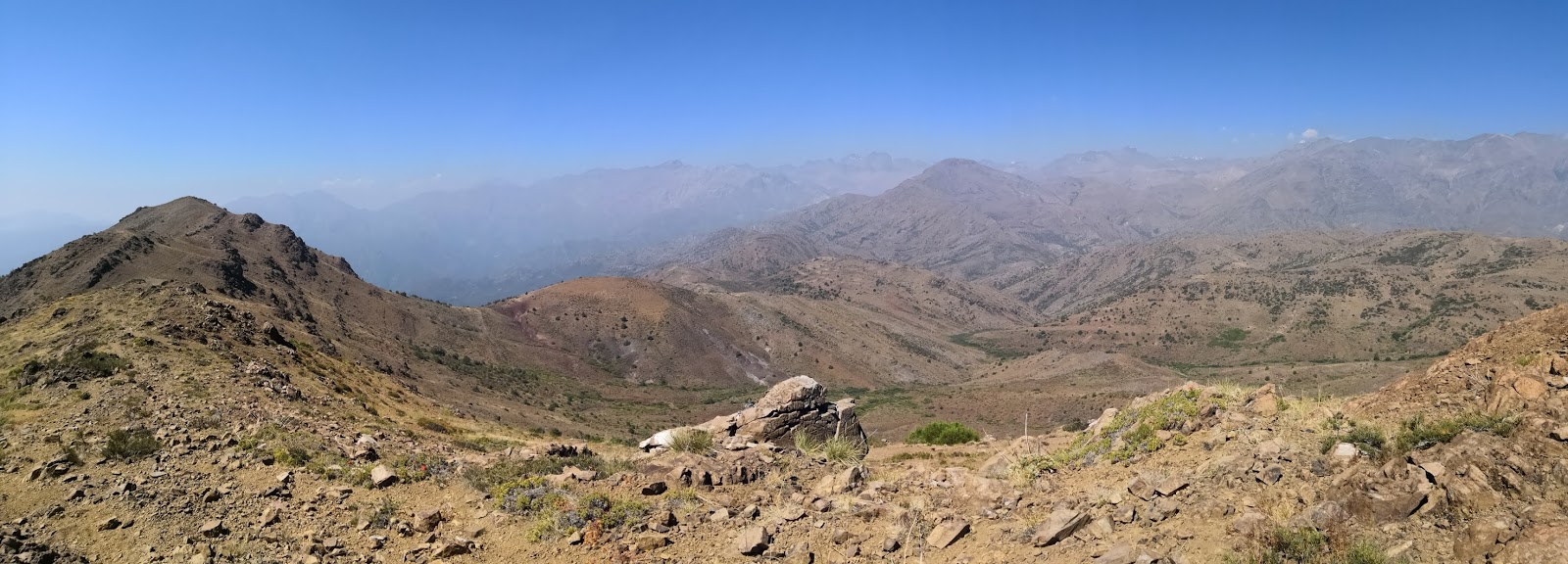
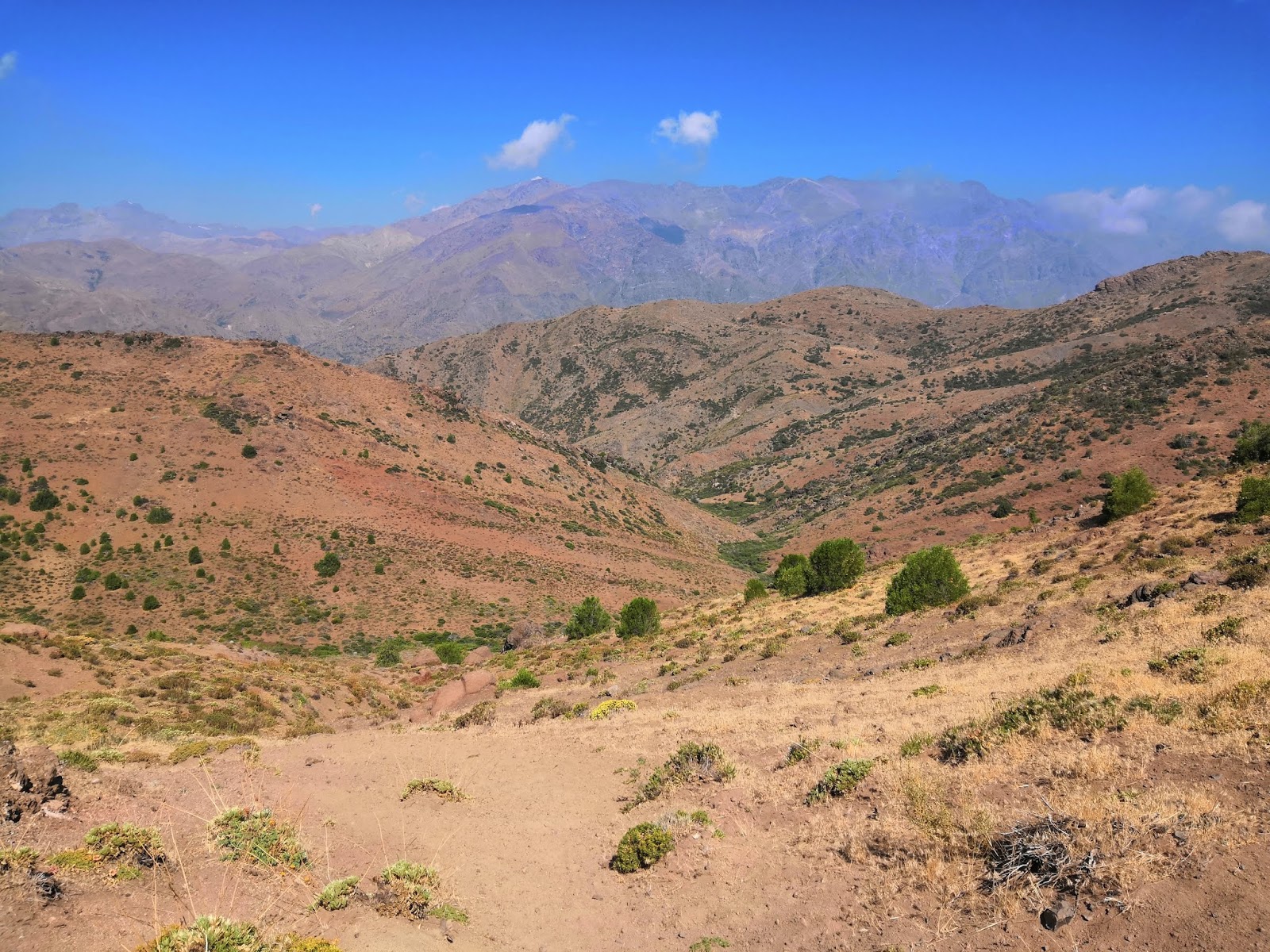
Next day was very hot and very dry – and unfortunately I had not brought enough water from the last water source. The trail dragged on forever under the relentless sun and I was cowering under a bush to get some shade during my thirsty lunch break. When I finally reached a water source in the evening I drank 1,5 liters straight …
I was now a bit worried about the rest of this section because there was a river crossing ahead which Martin had not been able to do two months ago. I hoped that the river would now be passable after snow melt. I fortified myself with a lot of blackberries which were growing at lower elevation.
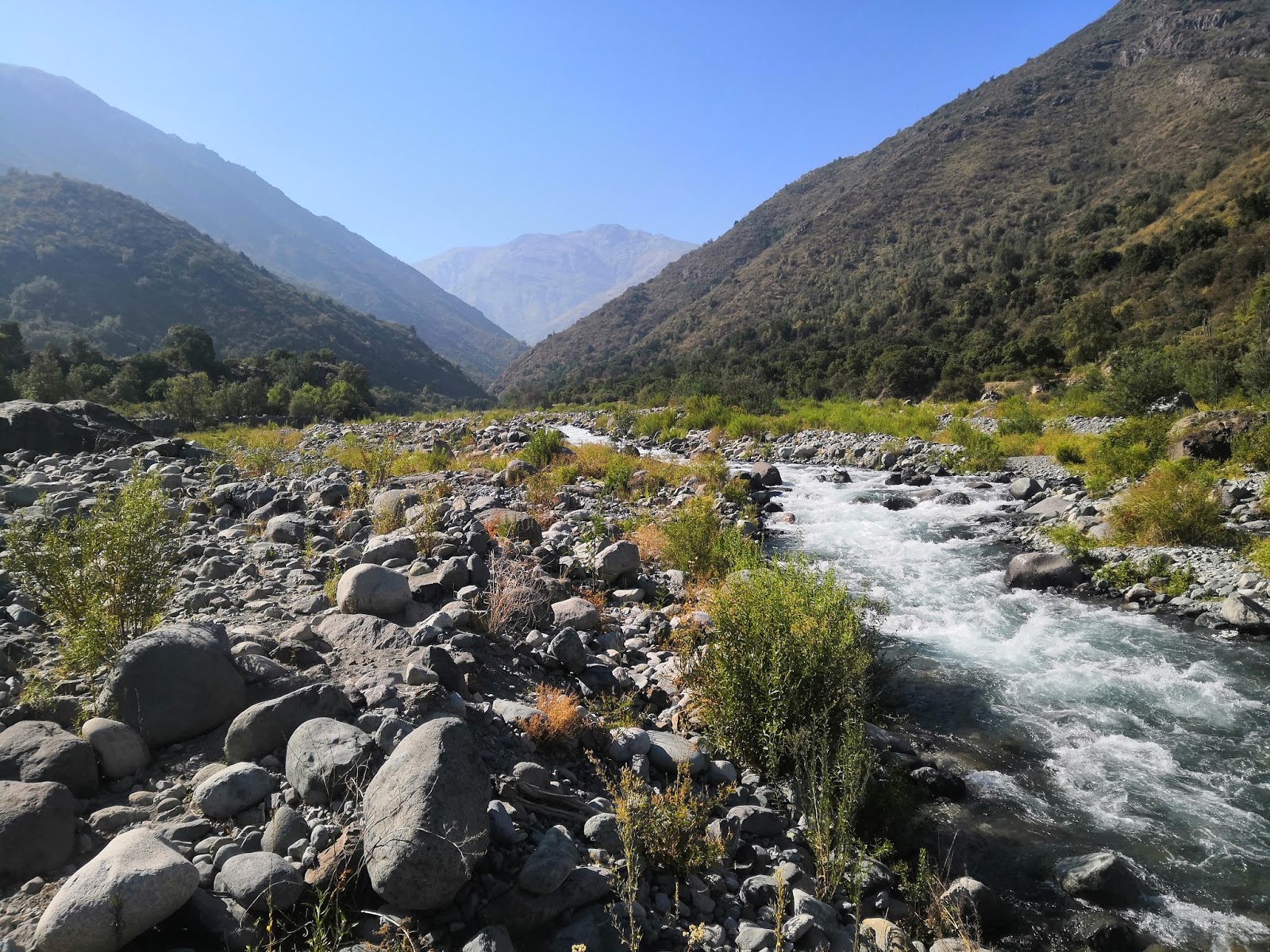
The river was very cold and very swift and I had to concentrate hard to find the best way but I made it safely to the other side. Relieved I took a thorough bath to wash off all the dirt before I started another long ascent.
I had been warned by other hikers but the route now took me through one of the worst bushbashes of the entire GPT. Apparantly now cattle was driven up here and therefore there was no trail. But when I finally reached the pass the view into the next valley more than rewarded me for all the hard work. It is so typical for the GPT to go from “this is horrible” to “this is so beautiful” within five minutes …

Unfortunately on this occasion it changed back to “this is horrible” within one hour. As usual the “trail”, in this case a faint horse trail” was routed high above the river in the valley and in several places I was afraid of slipping. But by now I was already so used to this kind of hiking that I just walked on until I found a flat spot near the river for camping. Although I did not know it then this was my last night on the GPT … In the morning I wondered if I could make it out to civilisation in one day. It was more than 30 kilometers to the next road – but God, I needed some time off the trail after the last hard days.

And the day started difficult indeed: Within half an hour of walking the trail disappeared completely into blackberry bushes. I first tried to fight my way through the thicket with the help of my trekking poles but I soon gave up. Without a machete there was no way I could make it through several hundred meters of the thorny jungle. I ended up wading directly in the river! Eventually in lower elevation the trail got better and better and I was hiking faster and faster despite the fact that I still had to get up and down several little passes. In the evening I passed some wonderful campsites and stopped briefly. I could stay here another night and hike out to the road next morning instead of rushing it now. But I felt that the hike was over for me. As spectacular as it had been – I have now had enough!
But this is the GPT and therefore it had another surprise waiting for me: When I emerged onto the brandnew and paved road there were plenty of trucks carrying sulphur from the mines – but no bus!
 |
| Beach near Valparaiso |
There was a huge container building nearby in the middle of nowhere so I walked over and asked the security guards about public transport. There was none – I was told. But this was workers’ housing and I could ask people exiting the premises. The first truck was occupied by three worker who happily gave me a lift into the next village from where a bus took me to Rancagua. I must admit that I booked myself into a push four star hotel to get a bit of luxury.
After some brainstorming in the hotel I decided next morning that I would indeed spend my last week in Chile sightseeing instead of returning to the trail. The last missing sections were not the most attractive ones and I basically had had enough. I spent my last days in Valparaiso and Santiago de Chile before flying back to Germany.
Greater Patagonian Trail: GPT 4 – 3 Read More »
By David Crane david (at) defensereview (dot) com October 23, 2019 DefenseReview (DR) readers may (or may not) remember our exclusive interview with Guy Cramer about Hyperstealth Biotechnology Corp.’s Quantum Stealth light-bending multi-spectral “invisibility cloaking” (i.e., visual cloaking/stealth) adaptive camo (camouflage) technology way back in May, 2011. Well, Quantum Stealth has just gone very public …
I remember the first “tactical” flashlight I bought. It was a flat dark earth Surefire G2 Nitrolon. Everyone I showed the flashlight to was amazed by how bright it was. Before that, I had never even heard of “lumens.” Until then, the only flashlights we had around were huge D-cell Maglites or those 6-volt monstrosities the size of a tub of ice cream. Flashlights sure have come a long way in my lifetime.
By J. Bridger, Contributing Author to Survival Cache and SHTFblog.com
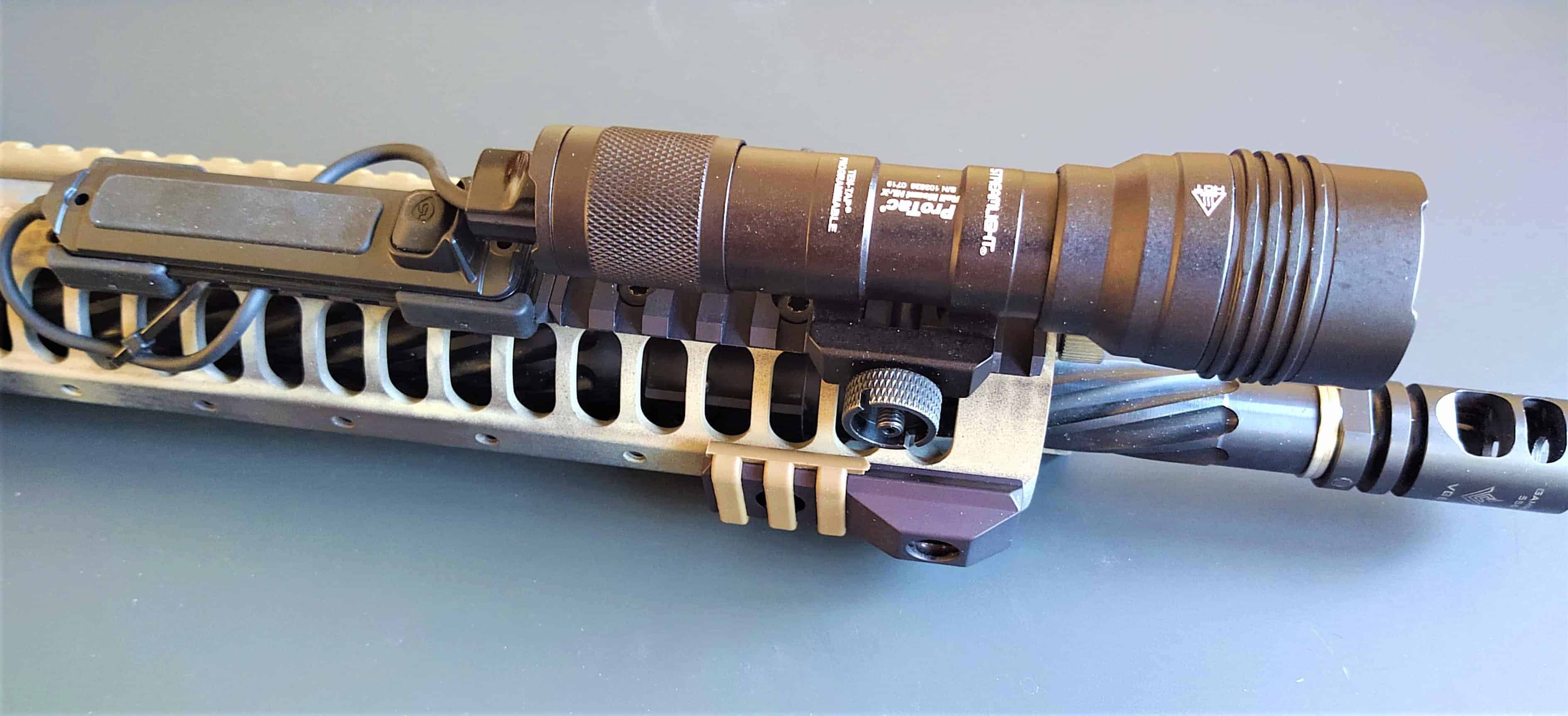
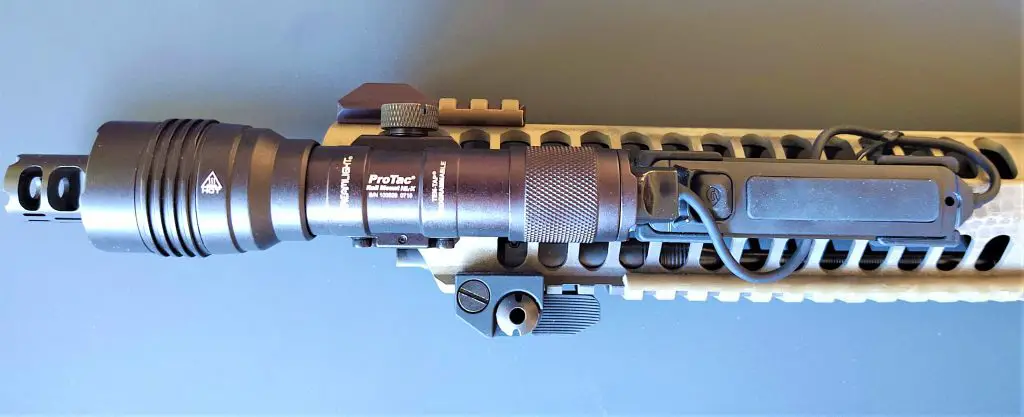 I’m not a huge fan of bolting things onto rifles, but a white LED light is definitely an exception. Finding a quality weapon light isn’t difficult; finding a quality weapon light that won’t break the bank is another story. If you’ve lusted after the multi-hundred dollar Surefire M600 Scout light but lack the Benjamins, you absolutely need to take a look at the $106 Streamlight ProTac HL-X.
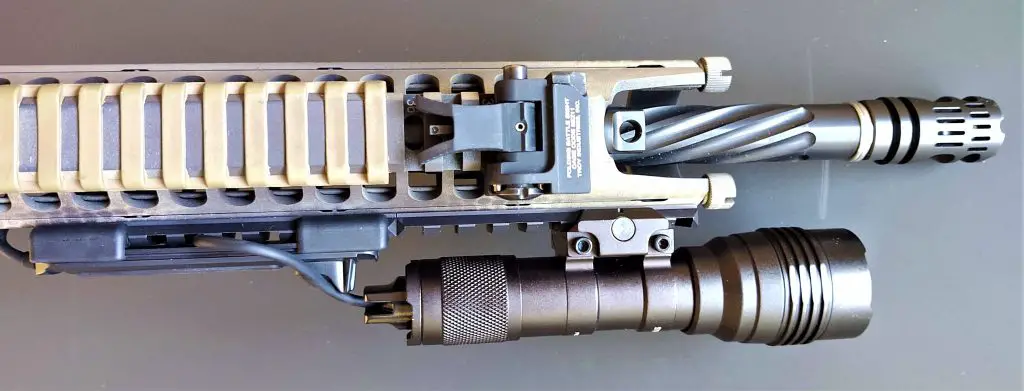 My love affair with Streamlight began during my time at the fire department. We used the right angle Streamlight Survivor lights, and they kicked ass. The Survivors worked wet, they worked in freezing temperatures, they worked in 100°F+ temperatures, and they worked in the burn trailer the University would bring down. That burn trailer used propane-fueled fires for interior training and generated temps over 900°F . It gets hot. The Survivor lights took 6 AAs which only needed to be replaced every six months or so, if I remember correctly. They were very bright. I could illuminate the top of the grain elevator and count the buzzards at night from the bay doors, 100 yards down the block. Suffice it to say, I am a fan of Streamlight products! When I saw the ProTac HL-X, I had to have one for my rifle. From what I’ve seen so far, the quality is just as good as the tried and true Survivor lights.
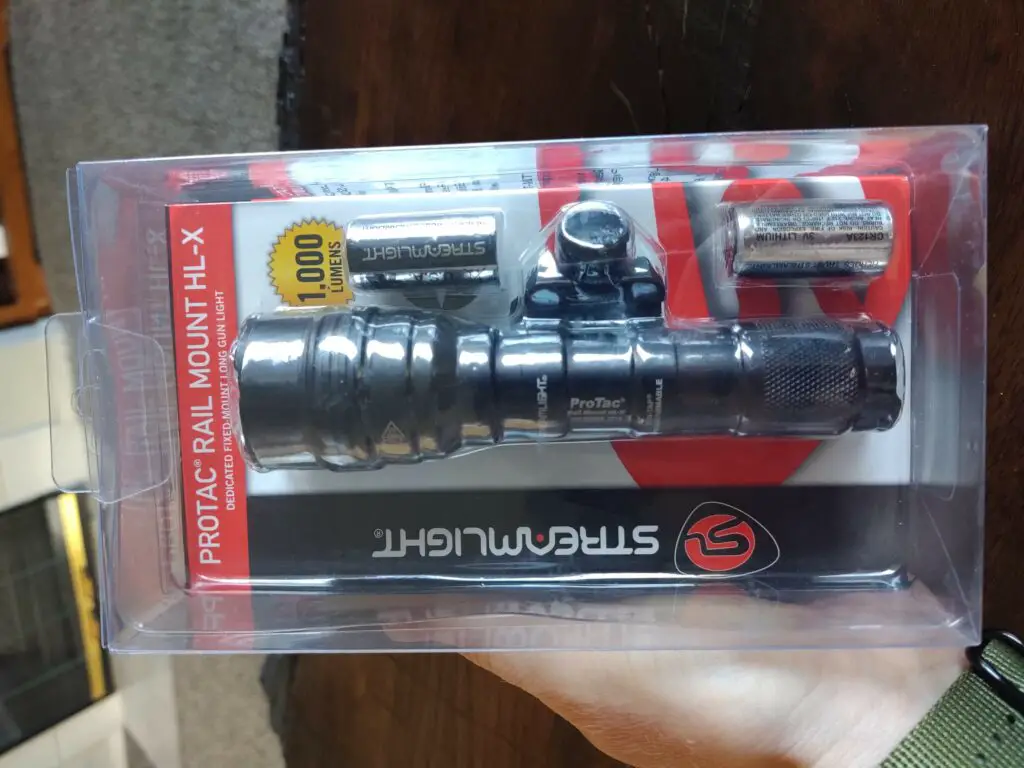 The ProTac HL-X is about 5.5” long, weighs 6.4 oz, and has a single picatinny mount for MIL-STD-1913 rails. The ProTac HL-X’s body is machined from aluminum and comes with two tail caps: One cap with a pressure switch, the other with a standard tailcap button. The kit comes with a pressure pad, a couple zip ties, snap on pressure pad retaining clips, Alan wrench, two screws, and an adhesive pad. The light is water resistant, but only for thirty minutes. Rain won’t hurt this light, but I wouldn’t swim with it. It does take up a good chunk of rail space. It can accept two CR123s or one 18650 battery. On high output, the Streamlight ProTac HL-X will run for 1.25 hrs, and on low, 23 hours.
Also read: Bugout Flashlight Wisdom
Streamlight uses the HL designation to mean “High Lumen.” These throw a wide beam pattern, increasing your situational awareness. Tip: If you want to see less of what’s around you and more of what’s downrange, try their HPL series lights. The ProTac HL-X is 1,000 lumens (27,600 Candela), and Streamlight reports it can throw a beam 332 meters. 1,000 lumens is a lot of output, and in my experience, really is too much for indoor use. I think this Streamlight really shines as an outdoor light (pun intended).
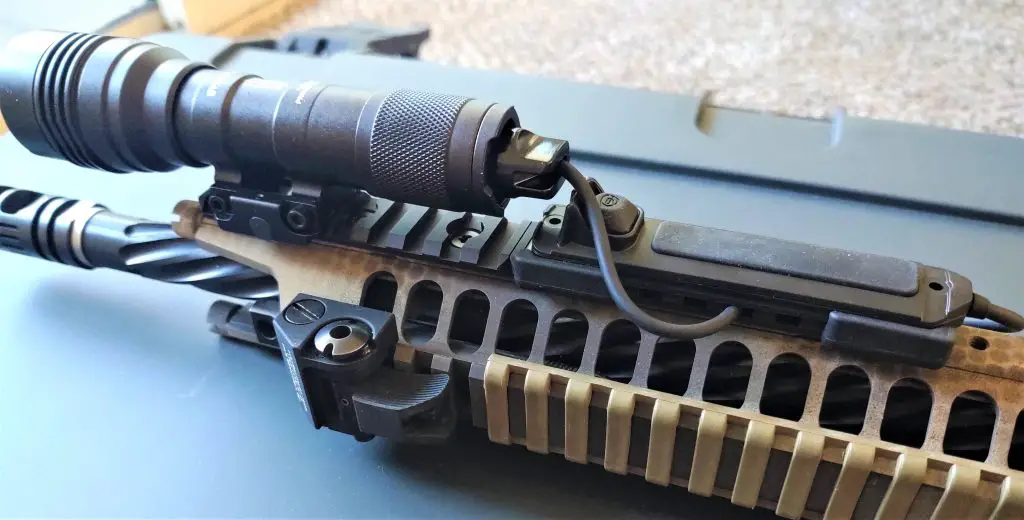 One of the things I love about this light is the TEN-TAP programming. I like my EDC lights to have a high and low setting, but I think a WML should have just one setting: brighter than shit. I’m not a big fan of low, “SOS,” or strobes, so I really appreciate being able to get rid of those. There are 3 available programs: High-strobe, High, and Low-High. To cycle through the available programs, tap the button 9 times in quick succession and hold it on the tenth time. Voila. You can do this with the tail cap or the pressure switch.
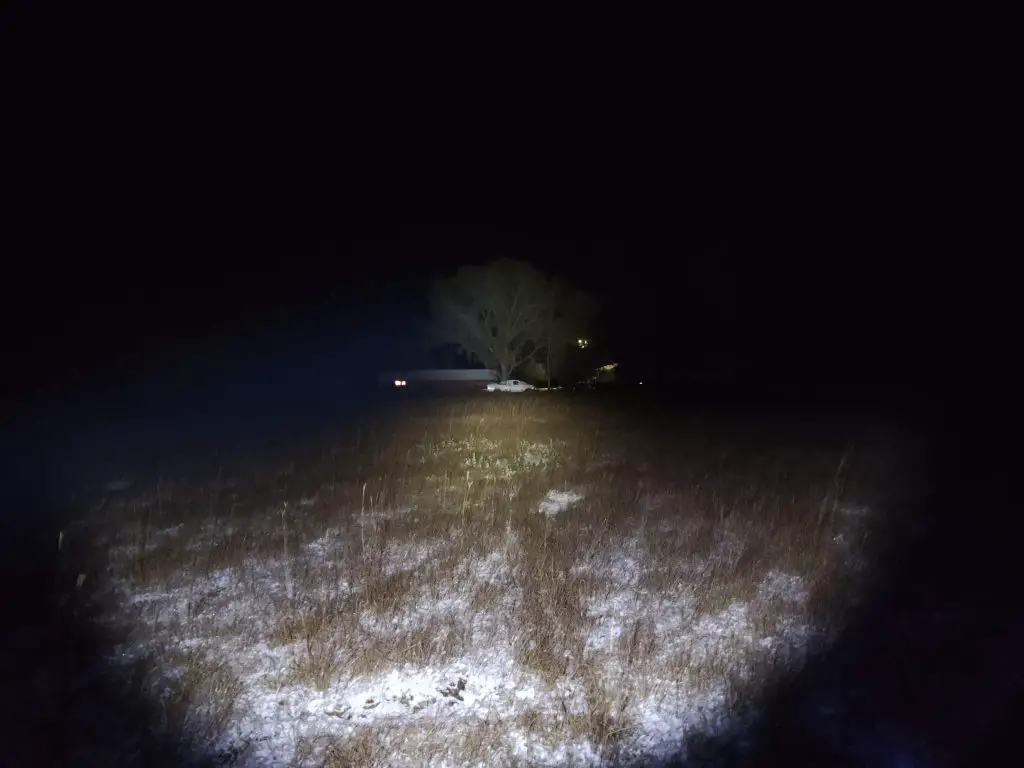
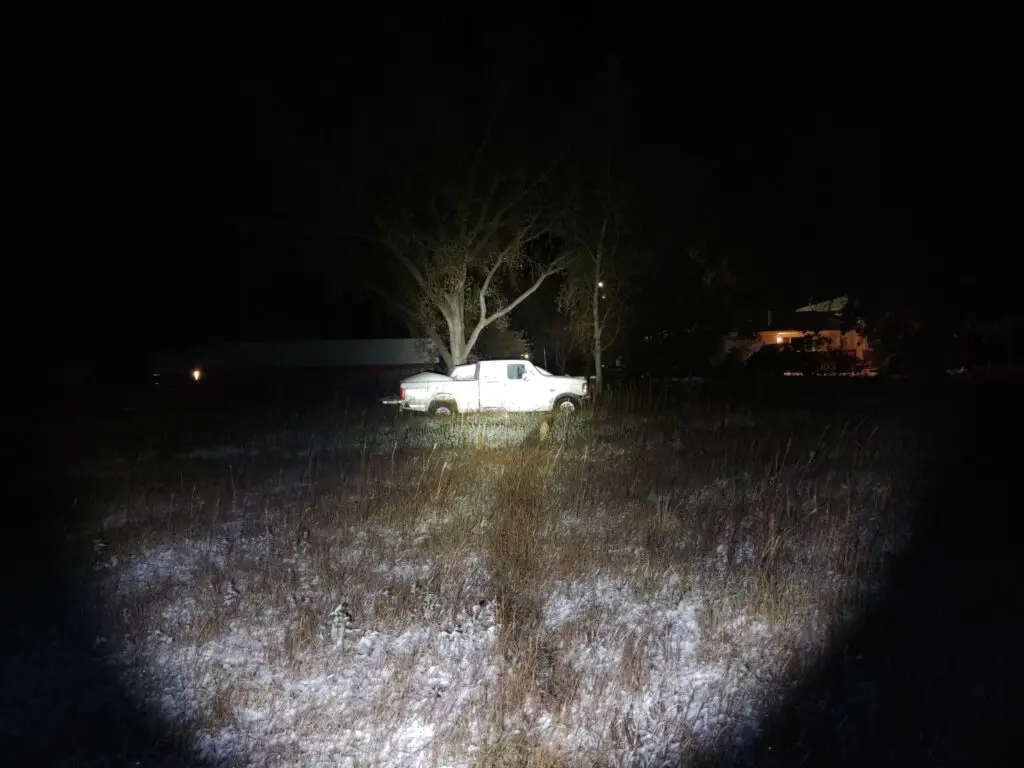 I tried the ProTac HL-X out on a snowy morning before the sun came up to see how far it’d throw a beam. At 25 yards, this light is positively blinding. Same at 50 yards. At 100 yards, you would still have zero problem identifying your target. At 200 yards,you would be able to see what you’re looking at, but I think this is where it starts to get dicey. You may be able to see a person at this distance, but are your eyes good enough to make out their intentions at night? Or can you tell a dog from a coyote? You may need a magnified optic, but it certainly will throw light that far. I use a 50/200 zero on my AR, so this is just about perfect for me.
Related: Survival Gear Review: Streamlight TLR-3
 The light adds a little weight to the front of the gun, but it’s barely noticeable. A 3 o’clock mount isn’t my favorite spot, but I like it better than 6 o’clock. At 6 o’clock the shadow it casts from my suppressor covers up the 12 o’clock position on a target. What the hands are doing is probably more important than faces, but I’d still like to be able to ID someone if I had to.
I can’t speak for any other calibers these crazy kids are shooting these days, but 5.56 NATO recoil doesn’t bother the Streamlight ProTac HL-X at all. It never flickered or malfunctioned, even being in close proximity to the muzzle of my LWRC. I’m not surprised; this isn’t my first WML from Streamlight. (I also have a TLR-1 HL mounted on a Glock 19, and is a hell of a light! ) As I said before, on full power, this light may be too bright for indoor use. There is definitely some technique involved in using a light “tactically” to avoid blinding yourself, especially if you’ve just woken up. I can say from experience, its perfect for “in the yard” distance engagements with coyotes and skunks. For the casual shooter on a budget or a professional in need of a solid high-performance weapon mounted light, you can install the Streamlight Protac HL-X light and not think twice. You can rest assured it will turn on when you need it.
The post Survival Gear Review – Streamlight ProTac HL-X appeared first on Survival Cache.
Survival Gear Review – Streamlight ProTac HL-X Read More »
Since I begin to invest (I always say I´m not a prepper, but a smart, retail long term investor) in some useful gear, one of my concerns has been to secure it. Best investment ever? A couple of land patches … Continued
How To Secure Your Preps: Lessons From Venezuela Read More »
The Barbican Arts Centre in London is set to undergo a major upgrade to address a series of health & safety corners within the grade II-listed building.
The post London’s Barbican Centre set to address health & safety issues in new £10m upgrade appeared first on SHP – Health and Safety News, Legislation, PPE, CPD and Resources.
London’s Barbican Centre set to address health & safety issues in new £10m upgrade Read More »
Are you planning to visit Grand Teton National Park this summer – or anytime down the road? I wanted to let you know that I just published a new eBook that provides hikers with access to trail information while hiking in the park.

Exploring Grand Teton National Park is the mobile version of TetonHikingTrails.com, the most comprehensive website on the internet for hiking trail information in Grand Teton National Park. This book was published to provide readers with convenient access to the information contained on TetonHikingTrails.com while in the park, or on the trail, where internet access is most likely unavailable. Additionally, the format of this book will provide a much better experience for smartphone users.
Exploring Grand Teton National Park covers 44 hikes. This includes 41 hikes within Grand Teton National Park, as well as 3 hikes in the Teton Pass area, located just south of the park boundary. Like the website, the book includes driving directions to each trailhead, detailed trail descriptions, key features along the route, difficulty ratings, photographs, maps and elevation profiles, which provide readers with a visual representation of the change in elevation they’ll encounter on each hike. Some hikes will also include historical tidbits related to the trail. Whether you’re looking for an easy stroll in the park, or an epic hike deep into Grand Teton’s backcountry, this book provides all the tools you’ll need to make your hiking trip as enjoyable as possible.
As with our four websites, this book also contains several directories that will help you choose the best hikes suited to your preferences and abilities. This includes hikes listed by location within the park, hikes listed by key trail feature, and hikes sorted by difficulty rating. I’ve also included lists of our top 10 hikes, the best easy hikes, the top fall hikes, and the top early season hikes.
The book is now available at Amazon.
Jeff
HikingintheSmokys.com
RockyMountainHikingTrails.com
HikinginGlacier.com
TetonHikingTrails.com
Ramble On: A History of Hiking
Exploring Grand Teton National Park
Headed to Grand Teton National Park? Read More »
Every day I bring you an item on Amazon that I personally use or has been purchased by many members of the audience and I have researched enough to recommend. Today’s TSP Amazon Item of the day is Wild Planet … Continue reading →
Wild Planet Mackerel Fillets in Organic Extra Virgin Olive Oil – Item of the Day Read More »