We are proud to announce our 2019 Will Hike for Food hike and food drive! Once again we will be collaborating with Walking Pasasdena and collecting food items for donation to Friends in Deed. The hike will take place at Cherry Canyon Park in Glendale. Approximate distance will be 3 miles with some moderate climbing. Parking is free and leashed dogs are welcome.
In the past, NHLA has scheduled Will Hike for Food events on Black Friday to tie-in with the #OptOutside movement. This time, we will be hiking on Saturday, November 30th at 9am, to allow those who have to work on Black Friday the opportunity to join us. Of course, if you have Friday off, you should #OptOutside anyways – and since the Saturday after Thanksgiving is Small Business Saturday, if you decide to reward yourself with a post-hike burger, beer or kale salad, feel free to patronize your favorite local small business.
One last note: this year, in a new twist, the food drive hike will be taking place on BOTH coasts – NHLA founder David Lockeretz will be leading a food drive hike at Minute Man National Historic Park at 10am on Sunday, December 1st. This hike will start at the Minute Man National Historic Park visitor center at 250 Great Rd., Lincoln, MA. Donations will go to the Greater Boston Food Bank.
No matter which coast you find yourself on this Thanksgiving weekend, join us to get some exercise, meet some people and give back to the community!
A Military Vet, known online for his pro-gun views and his posts on Instagram, was in a seven hour standoff with Putnam County, New York police after being red-flagged for having a 30 round mag (above the legal limit in NY). His house was surrounded by police, including an APC and SWAT officers. […]
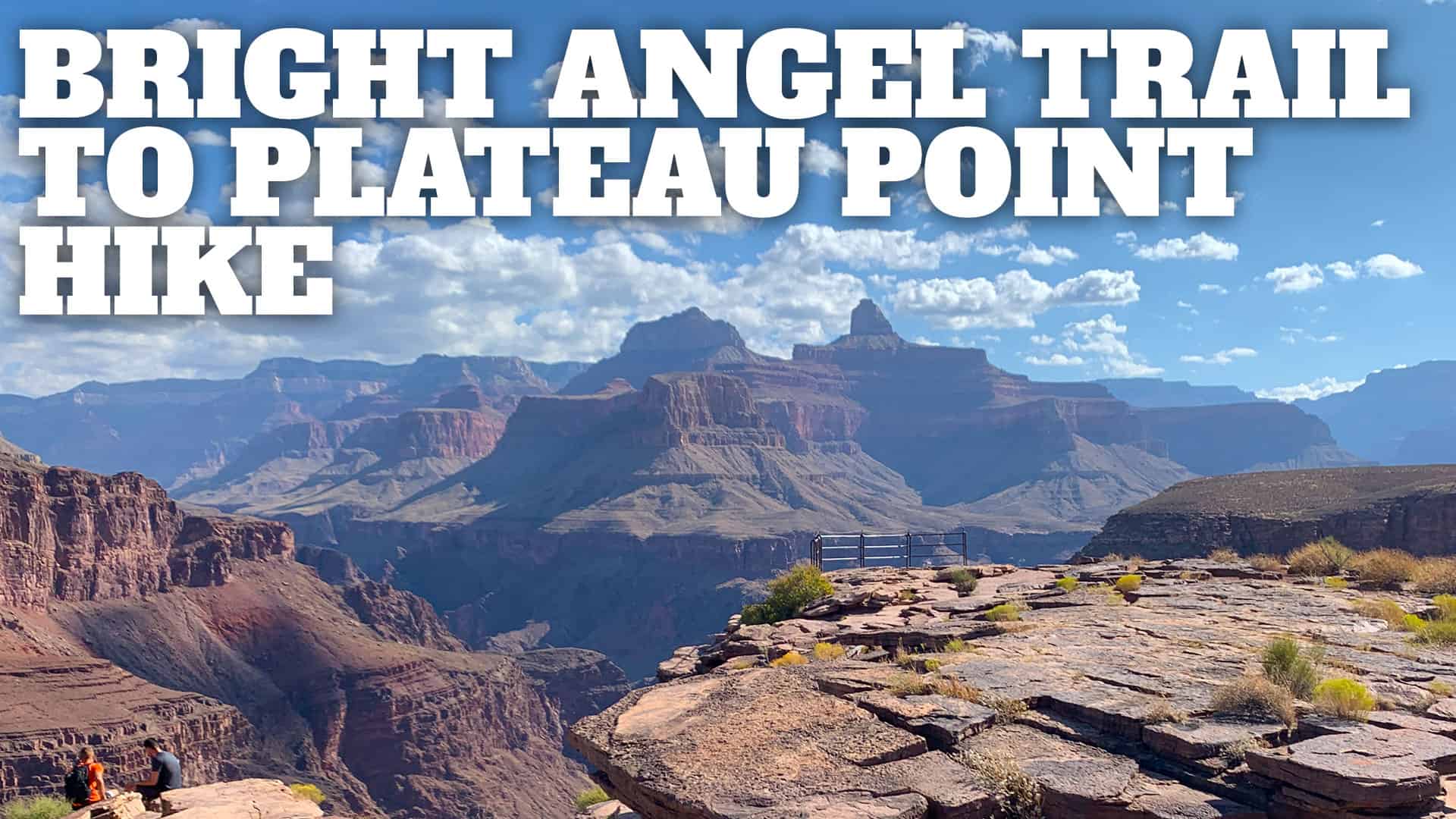
The Bright Angel Trail to Plateau Point hike takes you on the Grand Canyon’s most popular hiking trail to the peaceful and scenic Plateau Point, offering stunning views of the Colorado River. It’s a tough hike, but the Bright Angel Trail is the safest and most well-maintained trail in the park. Regular water stations, park rangers, and shelters make this hike manageable without being a desert expedition. This guide arms you with everything you need to know to hike to Plateau Point successfully.
A lot of people spend thousands of dollars on firearms and accessories, but when it comes to training or protecting their investments, they tighten up. A good hard case may cost a couple hundred dollars but will probably save you money and heartbreak in the long run. Think of it as insurance; if you take your rifle to the range, travel, or fly, a good case is a must have.
By J. Bridger, contributing author to Survival Cache and SHTFblog
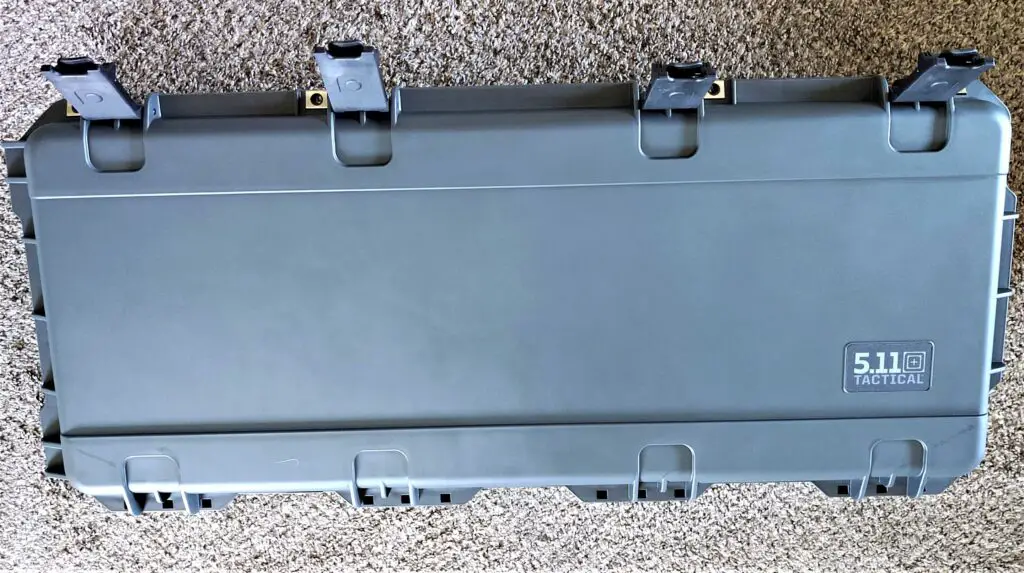
Enter the 5.11 Tactical Hard Case. Taking this case out of the box, it was obvious right away that it is very well-made. It looks great. It has four beefy hinges and four latches. The outside dimensions are approximately 38.5”x 17”x 7″, and it weighs a hair over 17 pounds when empty (this differs slightly from the website specs). The case is injection molded from high strength polypropylene co-polymer resins. It is dust proof, crush proof, and watertight. The lid has foam glued inside. There are two removable foam inserts – one 1.75” thick, and one foam pad 0.5” thick. With inside dimensions of 36.5”x 14.5”, The 5.11 Tactical Hard Case can easily accommodate a 16” AR style rifle with the stock retracted, and its associated goodies.
The 5.11 Tactical Hard Case has two wheels on one end. I’ve never used a roller bag, but I could get used to this! It’s much easier to roll than carry, especially if you’re walking a long way in an airport. There are 4 metal reinforced padlock holes, and a pressure valve to regulate pressure inside the case. This is for pressure changes due to elevation and temperature fluctuation, to prevent damage to the case. The case surpasses current applicable Military Standards MIL-STD-810G and MIL-STD-648C.
The 5.11 website says this Tactical Hard Case is waterproof (to MIL-C-4150 Standards), even if fully submersed. As soon as I read that, I knew I’d have to test it out! Here’s some knowledge for you: Archimedes’ principle says the buoyant force exerted on a body in a fluid is equal to the weight of the fluid it displaces. Water weighs 62.4 pounds per cubic foot. If you have a box that displaces 1 cubic foot of water, you would have to put 62.4 pounds of force on that box to submerge it. That means, since this case is 38.5”x 17”x 7”, or 2.65 cubic feet, it would take 165 lbs to fully submerge it. Because the case weighs 17 pounds, assuming the case was a perfect rectangle, and with my weight being a lean 160 pounds, well, the case should sink if I stood on it. So, in theory, you can load this 5.11 case down with as much gear as you want (short of lead ingots) and it will still float. (And you probably didn’t think you’d learn anything here today). I filled the tub and tossed the case in. It floated without any problem. I stood on the 5.11 rifle case to submerge it, and waited until I got bored, which honestly didn’t take long. I took the case out of the bath, and upon opening, found that everything inside had remained bone dry. From what I’ve tested, you can rest assured this case is waterproof. However, it did sink under my weight, so you will need to buy a separate stand-up paddle board.
Using this case is absolutely a delight! I use it to carry my guns to and from the truck when I go shooting in the desert. It fits behind the seats perfectly. I don’t have to worry about my optic going out of zero while it’s getting banged around on dirt roads. It keeps the harsh Vegas sun off my fine Rust-Oleum finish and the dust out of my Glock magazines. The handles are decently sized, well placed, and comfortable. People think the custom looking foam cutouts are right out of a John Wick movie (excellent Instagram material, btw). This 5.11 hard-sided case is light years ahead of my soft case. If you have the means, you absolutely should treat yourself.
Cutting the Foam
To cut a silhouette of your firearm and accessories, you should start by placing them on the foam to get an idea of how much room you have and how you will arrange them. I tried to keep at least two inches of foam between items, but it didn’t always work out. That’s okay. I arranged my goodies on the foam mirrored from how I wanted them; that way the sharpie lines wouldn’t be facing up. There are several ways you can cut the foam. You can try a long-bladed utility knife, filet knife, electric knife, or a hot wire. I decided to use an electric knife from Walmart, just to make my life easier. It was only $15, and it gave me an excuse to look at gun magazines and buy a corndog. The electric knife made cutting the foam a breeze. Don’t force the blade through the foam, just let it do its thing and trace slowly around the inside of your lines. If you cut exactly on your lines, the cutout will be too big. I recommend cutting at least ¼” inside your tracing. When you pull your firearm from the case, the top layer of foam may come out with it. You can glue the top layer to the layer underneath, if you wish. Spray glue or Gorilla Glue are two options I am considering.
Flying with a Firearm
There are a lot of reasons to fly with a firearm. A hunting trip, a training course, so you can carry your CCW at your destination, or just for the hell of it. It still is America, after all (in most places). Because the 5.11 Tactical Hard Case is a lockable rigid case with wheels, it is perfect for transporting via aircraft. Flying with a firearm is still easier than you might think.
First, check your local laws. Some places are not as gun friendly as others (we all know where I mean). Just to be clear, you cannot bring a firearm in your carry-on bag…even if you have a CCW, and even if the firearm is locked up. You cannot take magazines, gun parts, or ammo in your carry-on bag. However, per the TSA website, you CAN take rifle scopes in your carry-on bag.
Secondly, I would definitely check your airline’s website. They may have specific information on how much ammunition you can bring with you, and where and how to declare your firearm.
Lastly, you need to check your firearm when you get to the terminal. I strongly dislike checking bags, but in this case, you will have to. This is a pretty easy process. All you must do is declare the case and firearms at the ticket counter. The idea of carrying my firearm into an airport made me pretty uneasy the first time; these days, people lose their minds over gun shaped Pop Tarts (I’m not kidding). Just be sure to keep the firearm locked up. You can call ahead at the airport if you gives you a warm and fuzzy.
When you arrive at your destination, all that’s left is to pick your firearms case up at the baggage claim at your destination. Just to be on the safe side, I take a picture of everything in the case and make sure I have the serial numbers written down. If you have a personal article policy through your insurance provider, they may cover your goods in the event something happens. Regarding locks, per the TSA website, “Only the passenger should retain the key or combination to the lock unless TSA personnel request the key to open the firearm container to ensure compliance with TSA regulations.” The TSA also states: “You may use any brand of or type of lock to secure your firearm case, including TSA-recognized locks.”
As far as ammunition goes, the amount you can fly with varies by airline. 11 pounds seems to be pretty standard. That’s about 350-400 rounds of 5.56 NATO or 9×19, give or take (despite their size differences, the two cartridges are pretty close in weight). The ammunition must be completely enclosed in a box (cardboard, plastic, etc.) or magazine. I take that to mean Magpul P-mags with the dust cover in place are OKAY, but aluminum GI mags that are open at the top are NOT okay. The TSA agent of the day will have the final judgement call on that. The ammunition can be transported in the same case as your firearm, and the firearm must be unloaded (no magazine inserted).
Back To Your Regularly Scheduled 5.11 Tactical Hard Case Review
If you can afford a good rigid case, I highly recommend it! A hard case will make your life easier and will help you exercise your second amendment rights away from home. 5.11 also carries 42” and 50” rigid cases for your longer hunting rifles or shotguns; they even offer handgun and camera sized rigid cases. If you’d like something soft with more storage, 5.11 offers options for you as well. And here’s my favorite detail: they’re made in the USA!
What do you think? Does a hard sided case make your SHTF plan or get daily use? Sound off in the comments below!
MIL-C-4150J, MILITARY SPECIFICATION: CASES, TRANSIT AND STORAGE, WATERPROOF AND WATER-VAPORPROOF (29 NOV 1989). Scope: This specification establishes the requirements for rigid, reusable, fire retardant, waterproof and water-vapor proof, rectangular cases manufactured from ferrous or non-ferrous metals or non-metallic materials.
MIL-STD-648C, DEPARTMENT OF DEFENSE DESIGN CRITERIA STANDARD: SPECIALIZED SHIPPING CONTAINERS (11 FEB 1999). Scope: This standard establishes general design guidelines and associated tests for specialized shipping containers used by the Department of Defense. Definitive requirements for specific containers will be defined by the individual specification, acquisition, or task order. This standard is intended to be used as the basic reference document in all specifications and standards prescribing performance requirements to be applied to a shipping container.
MIL-STD-810G, DEPARTMENT OF DEFENSE TEST METHOD STANDARD: ENVIRONMENTAL ENGINEERING CONSIDERATIONS AND LABORATORY TESTS (31 OCT 2008) (24 MB)., Scope: This standard contains material acquisition program planning and engineering direction for considering the influences that environmental stresses have on materiel throughout all phases of its service life.
There’s nothing worse than doing a long hike, getting back to your car, and finding out that your keys are missing. And it’s even worse when you are parked at a trailhead in the middle of nowhere. These tips will help you make sure that your keys are safe during the hike and that you get home safely.
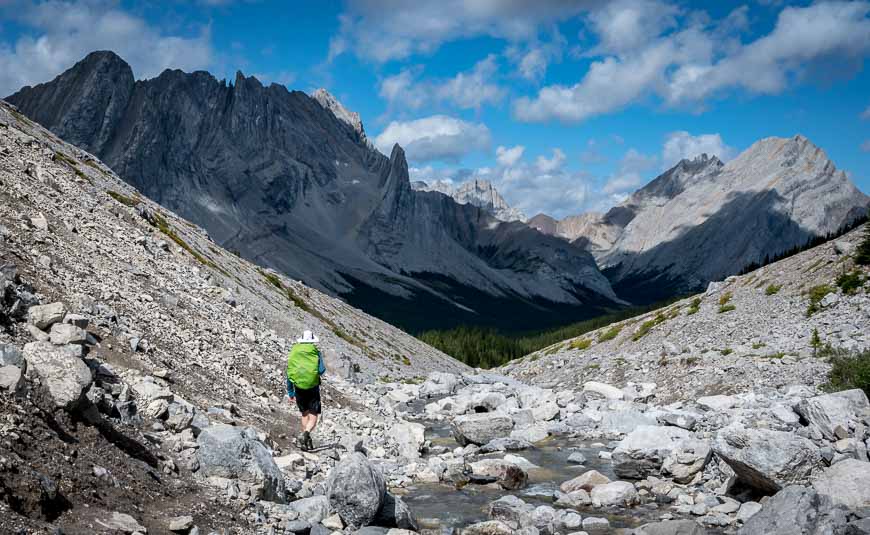
One of the easiest hikes to do in Kananaskis Country is the hike to Elbow Lake. It’s only 1.3 kilometres in from the trailhead with about 137 metres of elevation gain. If you’re a keen hiker that won’t be enough but there is the option to continue to Rae Glacier. Note that the hike to Elbow Lake is ideal for families. And it makes a great first camping trip.
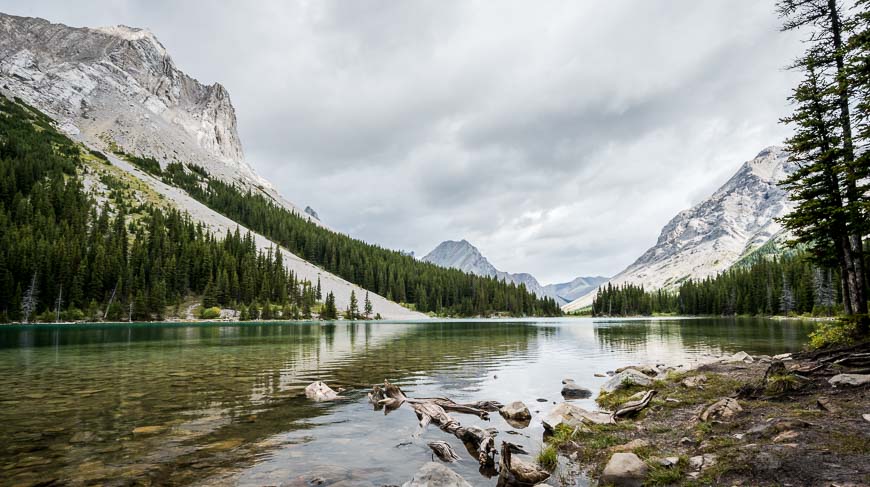
Beautiful Elbow Lake in Kananaskis Country
Getting to Elbow Lake from the trailhead
It’s a popular hike to Elbow Lake – in part because it’s short. However it is a steep hike from the get-go, climbing 137 metres to the lake. The trail is on an old fire road through the forest. It’s very obvious and not that interesting until you reach the lake.
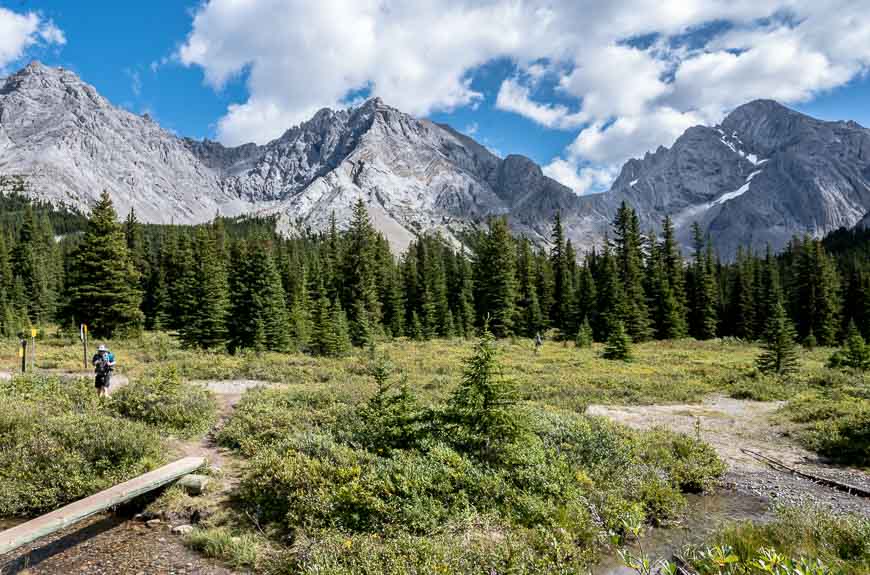
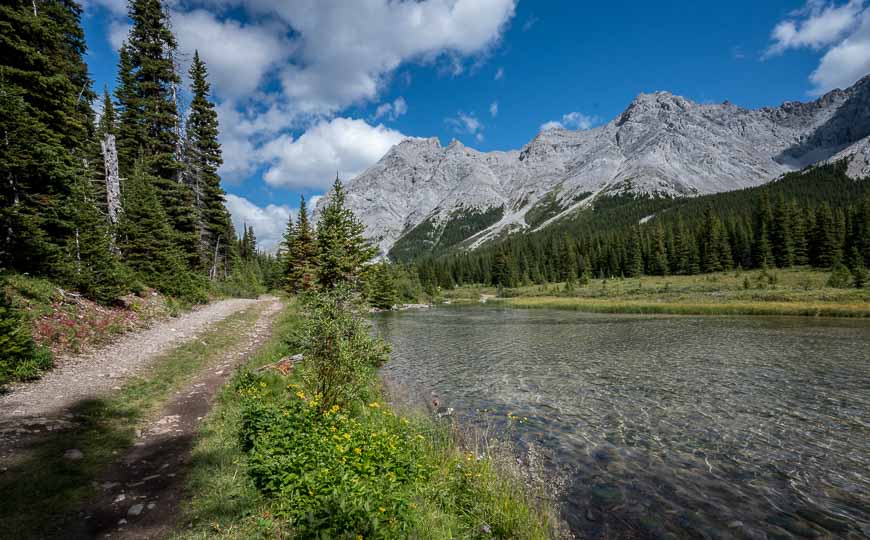
Be sure to do a full circuit of Elbow Lake on foot as it’s very pretty from different angles. If you hike it in a counter-clockwise direction you’ll reach the junction with the Rae Glacier trail. Continue instead on a well-worn path to a river crossing of the Elbow on wooden planks. Make your way along the western shore of the lake on a fire road, stopping to admire the blues of the lake and the pretty mountain backdrop.
Keep an eye out for mountain bikers as the trail connects to a network of excellent biking trails in eastern Kananaskis Country so it’s a favourite. Horseback riding is also allowed.
Be sure to do the full hike around Elbow Lake
Elbow Lake scenery from the fire road on the western shore
Camping at the lake
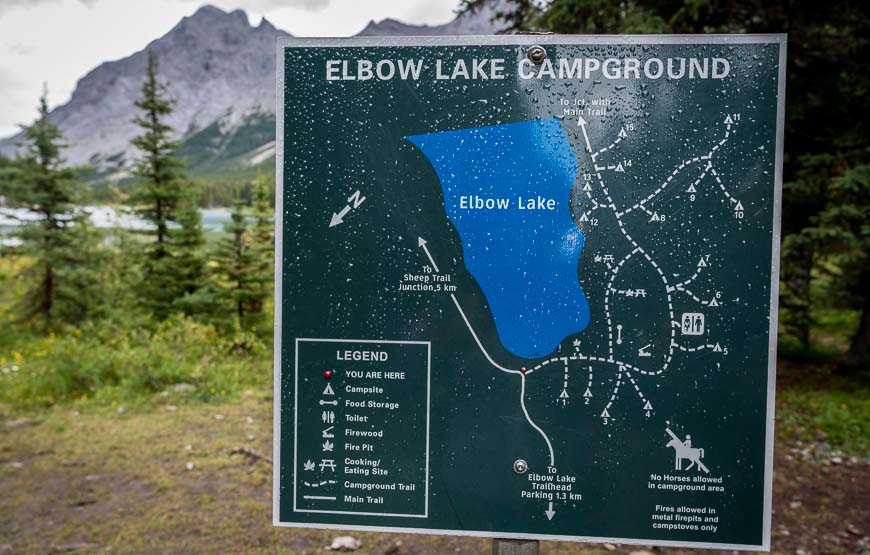
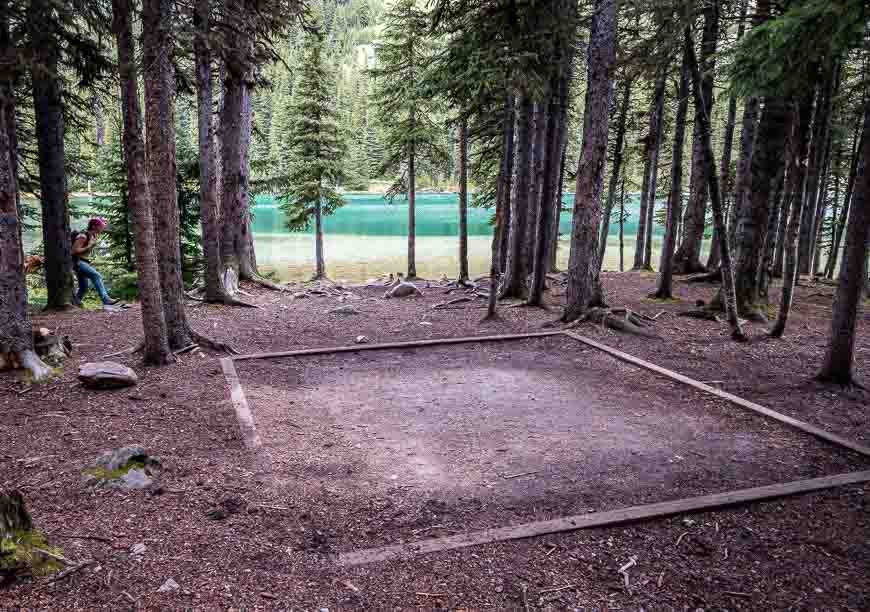
Elbow Lake is a very popular campground, especially for young families. As you can see in the photo below, most of the campsites are in the trees. But if your timing is right you might be lucky and score campsite 12 or 13 which will give you a view of the lake from your sleeping bag.
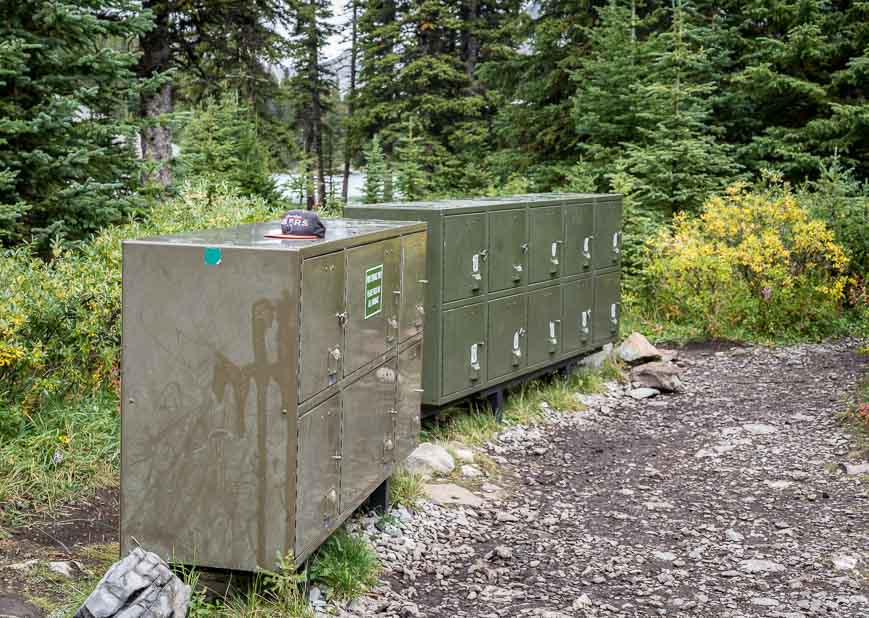
There are bear-proof lockers and outhouses as well as several picnic tables some distance from the tents for cooking. Firewood is provided.
For information on booking campsites and important dates visit the Alberta Parks website. Be prepared to book as soon as the dates open up especially if you’re trying to score a summer weekend.
Great family camping at Elbow Lake
Try and score this campsite close to the lake
Bear boxes at Elbow Lake Campground
The hike from Elbow Lake to Rae Glacier
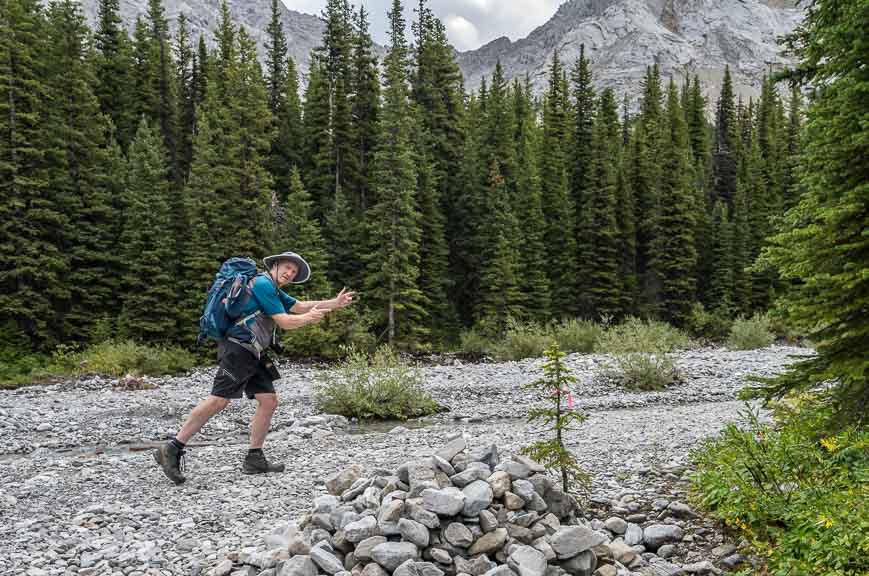
Continue anti-clockwise around the east shore of Elbow Lake to reach the turnoff to Rae Glacier. There isn’t any signage but there is a piece of flagging tape. The intersection is about halfway along the length of the lake.
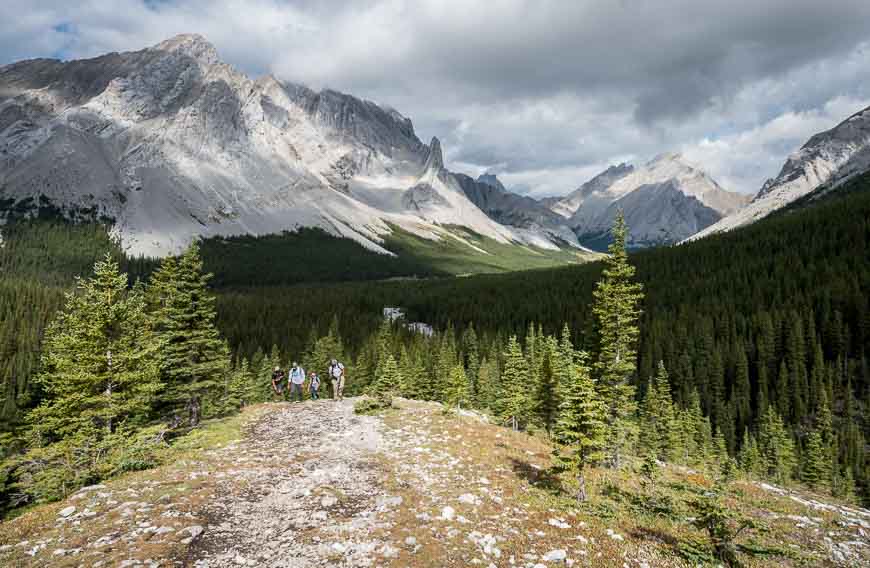
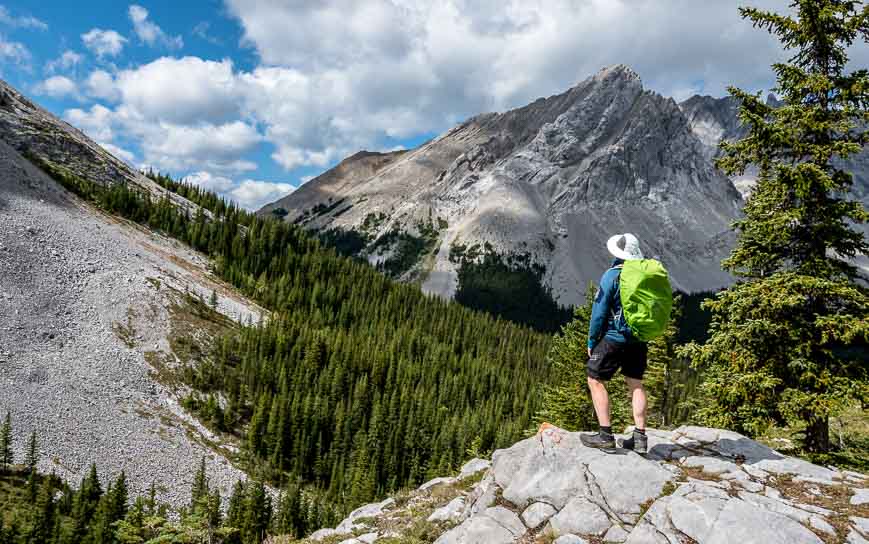
Turn right onto a rocky trail heading northeast. Follow the path up a rib. At the top there are some pretty views of three mountains – Rae, Tombstone and Alpaca.
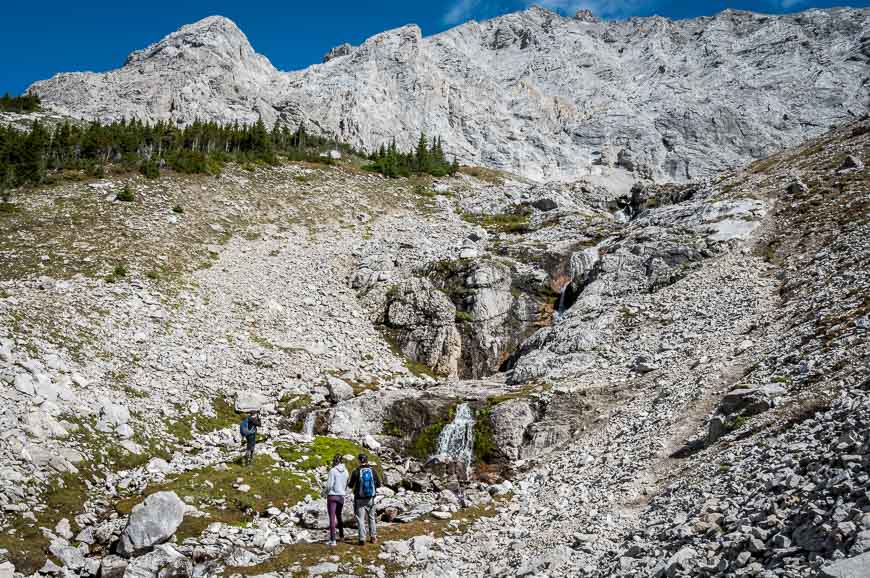
Continue along the rib eventually descending towards the creek. Stay to the right side of it on the scree. In short order the creek heads left. The névé above the small waterfall – five photos down, is the source of the Elbow River. While you can explore the area around the waterfall the trails here won’t get you to Rae Glacier.
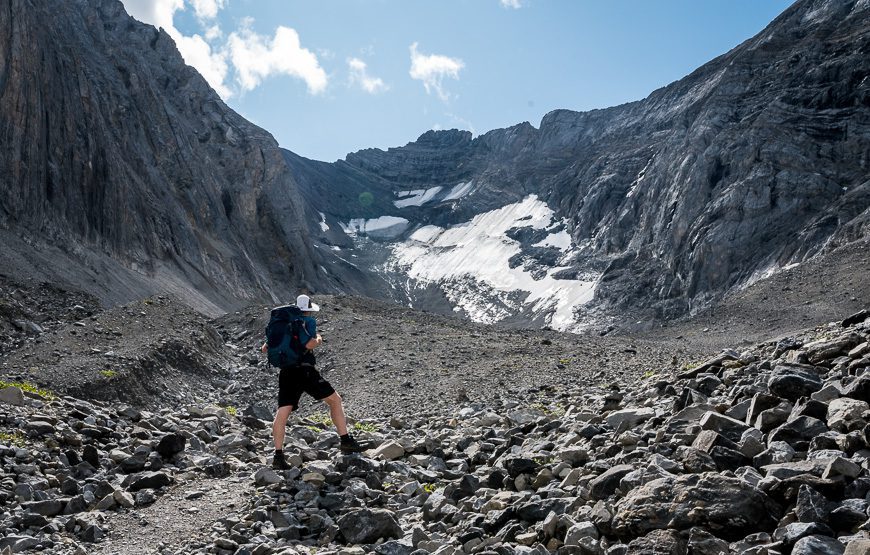
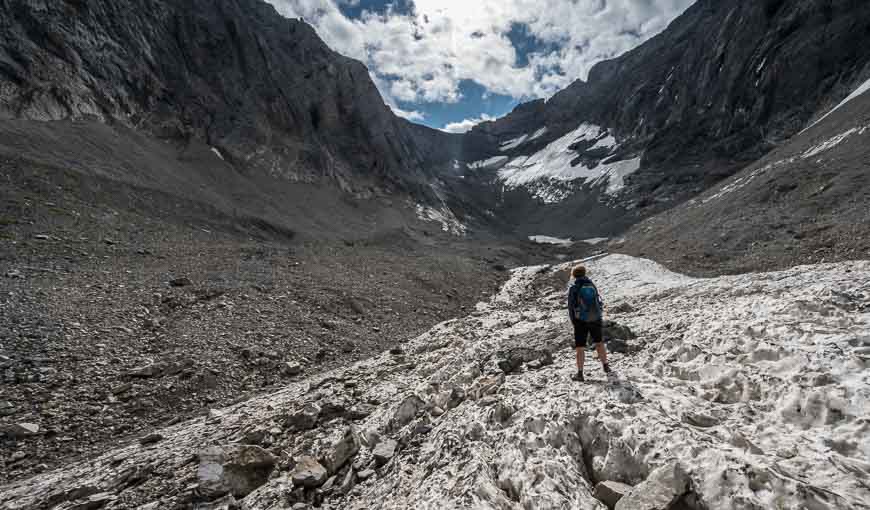
Instead stay right and climb on moraines to the Rae Glacier. Go as far as you feel comfortable. From Elbow Lake to Rae Glacier gain 229 metres over a distance of just 2.2 kilometres.
Descend the way you came but consider continuing anticlockwise around Elbow Lake to get back to the trail coming up from the parking lot.
Look for the flagging tape and turn right
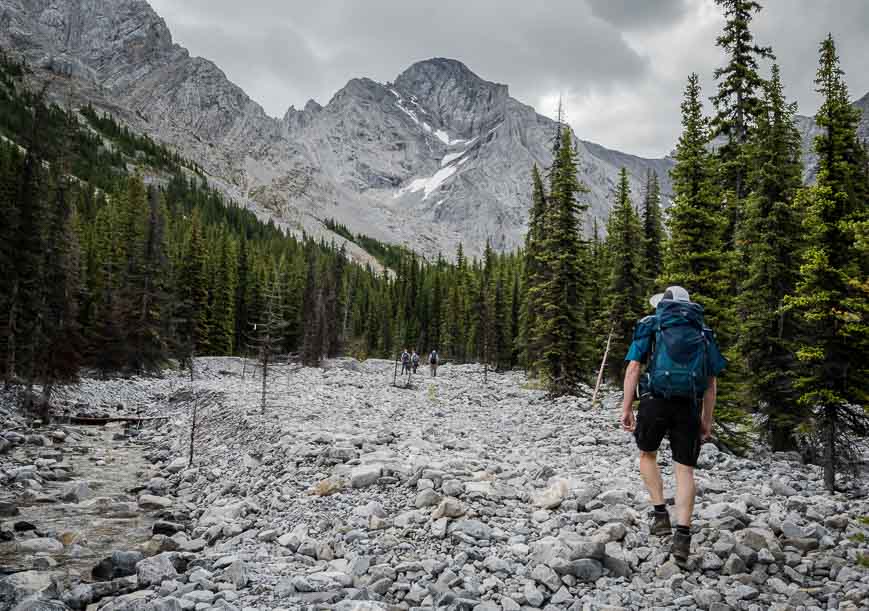
An obvious trail through the rocks on the way to Rae Glacier
Hiking up the rib on the way to Rae Glacier
Nice blast of yellow underfoot
This is NOT the way to the Rae Glacier but it is an area you could explore
Hiking through the moraines on the way to Rae Glacier
Standing on chunks of what’s left of the Rae Glacier
It’s a pretty descent back to Elbow Lake
Taking in the view on the hike back to Elbow Lake
Finding the Elbow Lake trailhead
From Calgary take the Trans-Canada Highway west to the Highway 40 turnoff. Turn south on Highway 40 and follow it for about 62 kilometres. The well-signed trailhead is on the east side of the highway. Note that Highway 40 is closed from December 1 – June 15th every year beginning just past the junction with the Smith-Dorrien Road. There is a winter gate.
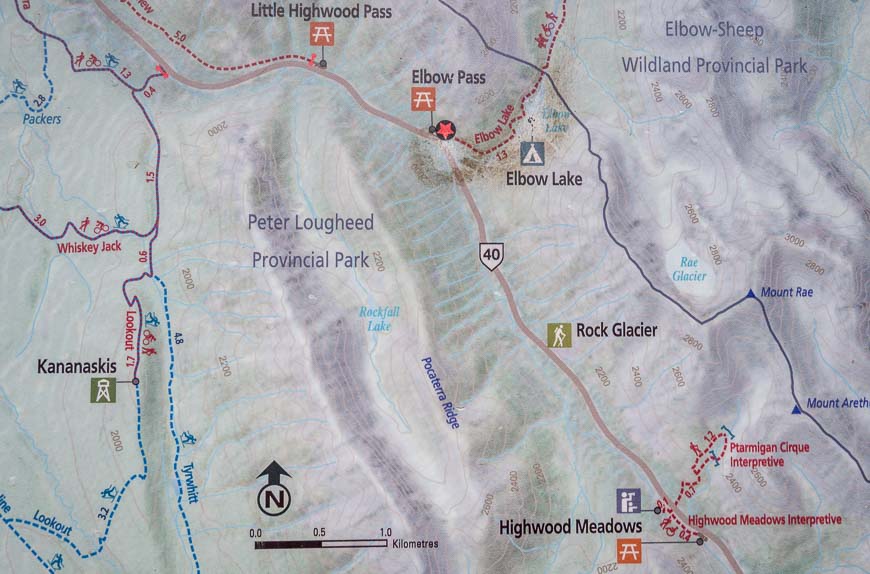
Map showing Elbow Lake & Rae Glacier in Kananaskis Country
Further reading about nearby hikes in Kananaskis Country
Though its from last year it still serves as a reminder as to just how dangerous these laws are. Two Anne Arundel County police officers serving one of the new “red flag” protective orders to remove guns from a household killed a Ferndale man after he A red flag order has resulted in the death of a […]
Guest Blog Post by Tim Webb CCEMT/P, WEMT/ P, US Army SFC (ret)
Ah, the seemingly innocuous blister. We’ve all seen them, likely we’ve all had them, and even more likely we have all been crippled by them at one time or another. When you look at the hierarchy of medical problems that can kill you in the back country, blisters aren’t very high up on that list. However, they are one of the most common problems encountered. My bet is that the first human beings, thousands and thousands of years ago, that strapped some kind of footwear on started suffering from blisters soon there after.
While not threatening in and of themselves, blisters can absolutely become an issue that can put your life at risk. Blisters can cause pain and slow you down, if not stop you completely. They are prone to infection and long-term issues if not promptly fixed and the pain and discomfort alone is enough to cause you to change the way you walk. Potentially putting you at risk for orthopedic injuries including falls, sprains, and strains.
Most of us, whether we are in the back country or in an urban environment, have experienced blisters in one form or another. Some are just a minor annoyance, while others that involve very large areas. Technically speaking, blisters are formed when frictional forces mechanically separate layers of skin, allowing fluid into the void. Blisters can have clear fluids which likely means only superficial damage. Red blisters indicate either deeper tissue or vasculature involvement.
There are three things that have to happen for a blister to form:You have to have heat, moisture, and friction. If you can stop any of those, you can likely prevent blisters. I call these three elements THE BLISTER TRIANGLE Let’s take a look at these three individually:
HEAT
Heat can be caused both by external forces (warm environmental temperatures) and by physical exertion (body heat). As our bodies heat up and send warm blood to the periphery, skin temperatures increase. Unfortunately, there is really no way to control this. Even with really cold temperatures outside, inside your footwear the skin can still heat up. So we can’t really control heat.
MOISTURE
Moisture on the skin can happen due to both environmental and physical causes. Moisture from outside sources in forms such as snow, ice, and rain and physically from heat/sweat. The moisture causes clothing to stick to skin. Again, this is almost impossible to control. Gore-Tex boots and other high tech fabrics like moisture-wicking materials help, but none can completely eliminate the possibility of moisture building. When we have heat, we most likely have moisture. Moisture makes the sock stick to your foot. Once that happens, the sock doesn’t freely move over your skin. Instead, it sticks to your skin. The skin layers then slide, which is where the blister starts to form. So that leaves us truly with only one way to break the blister triangle–eliminate friction.
FRICTION
Friction is the only one of these three blister-causing elements that can be completely controlled. If we recognize that we cannot control heat and moisture, then we need to concentrate on controlling friction. Controlling friction is the key to both prevention and the treatment of blisters.
There are many different ways to treat blisters. Most people that have dealt with blisters typically have their own way of preventing and treating them. Some are really effective and others aren’t very good at all. Most of the techniques I’ve seen or heard of are geared towards eliminating friction. Rightfully so.
ELIMINATING FRICTION–WHAT WORKS
In my almost 30 years of pre-hospital and wilderness medicine, I’ve seen and heard of an amazing amount of things people do to prevent and treat blisters. Anything from using Superglue injected into the blister to smearing Vaseline over their entire foot in an attempt to prevent friction. In the early years of my military career, it wasn’t uncommon for me to use about half a bottle of foot powder in each boot, thinking that would keep my foot dry. Literally, I would squeeze it into this sock and shake the sock until a cloud of powder came out. Obviously, that didn’t work. I still got some horrible blisters. Why? Because I tried controlling one of the sides of the blister triangle that simply cant be controlled (moisture). We’ll talk some more about foot powder later. Remember, foot powder doesn’t help at all with heat or friction. It’s meant to keep the foot drier, but due to its composition, it tends to form small little balls as it pulls in moisture. These little foot powder balls then grade against the skin and apply more friction, not less. The more foot powder, the more likely blisters will form. I learned some very painful lessons through my early years of military service.
CHOOSING PROPER FOOTWEAR–PREVENTING “HOT SPOTS”
So now we know, of the 3 major components that cause blisters, friction is our best bet to break. Obviously proper fitting footwear is a key, however with that said even the best fitting footwear can shift in rugged terrain causing “hot spots” and eventually blisters. On straight, flat terrain, even poor fitting footwear can be fine. On uneven, rocky, or root-filled terrain, where your foot slides back and forth in your shoe/boot no matter how well your shoes fit, you could be in trouble.
Rough or changing terrain can cause blisters, not matter how great the footwear.
Socks can be part of the problem as well. Drooping socks, socks that don’t wick moisture or socks not fit properly to your foot all can cause issues. On a recent 30 mile backpacking trip to the West Rim Trail in Pennsylvania, I developed a blister on my heal in boots that I’ve worn for years, boots that I never had issues with before. The most likely candidate–a drooping sock with a lot of small debris in my boot, due to not wearing gaiters. Friction, friction, friction.
When it comes to socks, there are some really fantastic products out there. Some brands now have socks that are double-walled with moisture-wicking or hydrophobic fabrics. Some hikers still prefer to wear a very thin liner sock and a thicker sock for cushion, which is a time-tested approach that works well. These techniques, whether it’s a double walled anti-blister sock or a liner sock of some sort, are beneficial because they can help break the friction cycle. The inner liner sticks to the foot and the friction happens between the sock and the liner, not your skin.
You can use a very light coating of foot powder or even antiperspirant applied for weeks prior to a trip in an attempt to cut down on the moisture or sweat that’s produced. While these steps are prudent and make sense, it still won’t control external moisture or even completely control sweat production, and it still does nothing to control friction. Another technique I’ve witnessed from others doing medical coverage for long term adventure races is Vaseline coating the entire foot. Some swear by it. Personally, I’m not sure I’d like that feeling on my foot. There are some new anti-chafing products out on the market that actually preform better when heated up. These show a great deal of promise and make sense. Especially when used in combination with a double-layered anti- blister sock.
Choosing the right sock will greatly help blister prevention.
BLISTERS BECAUSE OF SWOLLEN FEET
Another factor often underestimated is swelling or edema. On any hiking trip or extensive workout, your feet are going to swell, particularly in a warm or hot environment . It’s physiologically impossible to stop it–because of gravity. Your core warms up, your body pushes blood to your periphery to cool it, the vessels become engorged, allowing blood to pool there and before too long you have swelling. Have you ever walked a long distance or worked out hard and noticed your rings or watch seem to fit tighter? It’s the same principle. Even with well-fitting footwear, swelling can cause problems.
PRE-TREATING/PREVENTION OF BLISTERS and HOT SPOTS
We all learn through experience. If you know you’re likely to be prone to blisters or you’ve gotten them before, then a really good idea is to pre-treat those areas prior to going out. We’ll discuss some treatment ideas shortly but pre-treating as a means of prevention is ideal. The adage of “an ounce of prevention is better than a pound of cure” is certainly true with blisters. I have a good friend that, no matter what she does, she gets blisters in certain spots. Many of you can empathize with that and would tell a similar story. So now, the night before a trip or hard workout she applies a treatment to those known spots and is fine. Problem fixed.
Earlier I referred to “hot spots.” Most have probably heard the term before, but for those that haven’t a hot spot is the beginning of a blister. Let’s just call it a warning sign of significant trouble ahead if it isn’t cared for quickly. If you were to stop and observe your skin where you feel the pain, you’d actually see a reddish discoloring or inflammation of the affected area. Typically, it’s a little painful to the touch and may have some skin tissue starting to deteriorate. It indicates friction is being applied to the layers of skin and a blister is about to fully form. Fortunately, it can sometimes be fixed by simply adjusting a sock or pulling out debris that’s gotten into your footwear. However, it’s more likely it’s going to take actual treatment. The good news is that hot spots do not have to turn into blisters. If you take the time to fix them, you can prevent a full-on blister from forming
I think something that needs to be pointed out here is that the tendency for some of us to be a bit lazy, myself included. We want to push on, we don’t stop and check if a blister is starting to form. We feel the burn and think, “Ah we’ll be stopping soon, I just put these boots on, I don’t want to hold up the group.” Of course there’s legitimate reasons why you can’t stop, but the point here is that you really want to stop as soon as you can, investigate and treat the hot spots before it becomes a real issue. If you’re involved in guiding a group or a leader in any way, I think it’s a great idea to stop a couple of miles or hours into an event and have everyone check their feet, especially when it comes to kids. I’ve been guilty of not stopping myself and have paid the price for it. Trying to clean the area, drain a blister, prep and dry the skin, apply a dressing and other treatments will take far longer and delay you a lot more than if you just treat the hot spot.
Prevention is preferred over treatment. take the necessary steps to keep blisters from forming so you don’t have to endure discomfort and breakout your med kit on the trails.
TREATMENT
Treatment and prevention go hand in hand, and both start with eliminating friction from the equation. There are multiple ways to accomplish this, and many, many products on the market to assist you–some good, some not so good. Most of you have your own way of treating blisters, and if it works that’s perfect. Stick with what works for you. I’d love to hear about your techniques. But for those that are looking for help, here are some ideas that may be helpful:
First, obviously start with footwear that fits well, but remember, terrain determines whether or not you get blisters. I would suggest trying socks that are designed (double-layered) to help prevent blisters or add a very thin liner sock. Choose socks that are hydrophobic and not a 100% cotton blend. Cotton, while possibly slightly cooler, will hold the moisture and not wick it away from the foot. At night or on prolonged stops, get your feet out of the boots and let them dry out, elevating your feet can help decrease swelling in the short-term.
Mole skin and mole foam are the tried and true methods from years ago. Cutting the mole skin/foam so that it surrounds the blister and provides protection for the blister is simple. However, neither mole skin or mole foam are meant to cover the blister. They can form a protective barrier around the blister, but they won’t help if the blister expands. It works, but personally, I’ve moved away from it. I think there are better ways of managing. On occasion, while treating a major blister on the bottom of the foot, I’ll use it in conjunction with other treatments.
Anti-chafing products can work well as a prevention measure, but as a treatment technique have limited uses. These products are common, inexpensive, and work really well as a pre-treatment and sometimes help in conjunction with treatment. For instance, I’ve used these anti-chaffing products over top of a piece of duct tape that I’ve placed. In combination , this can be a game changer.
I think duct tape works really well, provided you use good, quality duct tape. Not all duct tapes are created equally and the glues used are vastly different. There are medical grade tapes that can be used as well, but they tend to be expensive and hard to find. I haven’t found many cloth tapes or other medical grade tapes to be very effective. Most medical products are not geared to take the heavy pounding we would apply to them, so your money is better spent on products that have multiple uses. The reason why duct tape is so effective is because, once it’s applied to the skin, it allows the friction to take place between the sock and the duct tape and not sock to skin. Typically, I’ll cover the blister itself with a dressing, a band aid or a small piece of gauze first and then apply the duct tape over the blister. Ensure that the duct tape is applied smoothly onto very dry skin. It’s also a good idea to curve the edges of the duct tape so that the edges won’t peel off. The key is to take the time, dry the skin, and apply the duct tape as smoothly as possible.
If using any type of tape around toes or fingers, be careful to NOT circumferentially wrap the digit. Tape applied too tightly can cause circulation issues and in freezing temperatures can lead to frostbite.
SHOULD YOU DRAIN YOUR BLISTER?
To drain or not to drain is the question. My advice here is to drain the blister. I understand the argument that by opening up the skin you risk infection, but I think that’s a minimal risk. The pressure and therefore the pain would be a great deal more if that blister remains intact. Eventually, the outer layer of skin will break and tear regardless, so a controlled drain the serous fluid, relieves pressure and offers the intact skin underneath the blister protection. Drain the blister with a clean needle, either a hypodermic needle (see blister kit picture) or clean safety pin. When you insert the needle, think gravity. This will assist in draining the serous fluid from the blister and then allow it to naturally drain while on the move. Cleaning the blister prior to and post drainage with soap and potable water or an alcohol prep pad should minimize the risk for infection.
Blister ready to be drained and treated
COMPEED–AUTHOR’S RECOMMENDED TREATMENT
After years and years of trial and error, both treating others’ blisters and my own, the single best treatment I’ve found is a product called Compeed. I was introduced to this by a seasoned Himalayan climber years ago and have never looked back. It really is amazing stuff. It sticks well, provides excellent protection, comes in many sizes, is inexpensive. I allows the serous fluid to drain directly into the dressing and it is safe to leave on for days. I have used Compeed in many different climates and conditions from cold Michigan winters to hot, humid desert climates and everything in between. There are other brands that make a similar product but Compeed’s glue is simply superior to anything else I’ve tried. Compeed is listed on Amazon for various prices and package deals.
Compeed’s dressings act like a second skin. They’re designed to help aid in healing the blister, act to provide a friction free area, have a cushion that actually expands a bit as the blisters release fluids and help tremendously with pain.The glue is remarkable and as long as it is applied to dry skin, it can stay on for days. Literally I’ve had these dressings stay in place on patients in very damp environments for over five days. Compeed deserves a place in everyone’s first aid kit and even in their EDC kits.
In extremely wet environments adding Tincture of Benzoin (see blister kit) will help the glue stick better. The key to using Compeed is to apply it to warm, very dry skin. Once smoothly applied to the skin, rub the dressing to warm the glue and it’ll be on for days. The dressing is designed to start to peel at the edges so that you know it’s time to remove the dressing.
I have nothing to disclose with Compeed. I don’t make any money from them at all. Despite that, I have absolutely found their products to be the best on the market. Use it both to treat and to prevent blisters. Pre-applying to blister prone areas can prevent blisters. Once a hot spot is felt, stop, and remove the shoes and socks, clean the area, dry it and apply a Compeed dressing. It can prevent a blister from forming.
HOW AN EMERGENCY MEDICAL EXPERT TREATS BLISTERS
Here’s how I typically treat blisters:
Identify the hot spot or blister. If needed, clean and drain the blister.
Clean and dry the site again after draining.
Apply a Compeed dressing to warm, dry skin.
If the environment is very wet, I may use Tincture of Benzion applied directly to the skin, prior to placing Compeed.
If the area of the blister is in a maximum friction area, I may apply duct tape over top of the Compeed as a protective covering.
Wait for the dressing sides to peel. Remove, clean, and reapply as needed.
Again there are many, many ways to treat and prevent blisters, the key truly is prevention. Stop, check your feet and the feet of your companions and treat as soon as there’s an issue. DON’T WAIT–I cannot stress that enough. Stopping early and taking the time to fix things before it really becomes an issue is immensely important. The adage “pay now or really pay later” applies here. Treat early before it becomes a potential evacuation issue.
AN EMERGENCY MEDICAL EXPERT’S BLISTER KIT
Hers an example of what I may carry in a blister kit:
You’ll note in the picture a small pair of tissue scissors. Quite frequently, wound debridement may need to occur, especially in large blisters. Having a good pair of tissue scissors will be invaluable.
FINAL THOUGHTS
We’ve talked a great deal about blisters to the feet. Granted that’s the most likely scenario, but friction blisters can occur in other places on the body as well. Most commonly on the hands and more likely from a repetitive motion without wearing protection, such as gloves (i.e. cutting firewood). Treat and protect these blisters the same way you would on the feet.
While usually just a painful annoyance, blisters can become a serious safety concern. So much so that evacuations and serious safety issues can occur, putting not only the individual but potentially the whole group’s safety or ability to complete their task at risk. For the most part, blisters are preventable and easily treated if caught in time. Avoid the painful nightmare of blisters by being proactive rather than reactive and your time in the woods or walking on a city street will be much more enjoyable.
Tim Webb CCEMT/P, WEMT/ P, US Army SFC (ret) is a 30 year wilderness and urban prehospital provider. A senior Instructor with Remote Medical Training, holds a Fellowship from the Academy of Wilderness Medicine from the Wilderness Medical Society. A formal tactical medic working with local and federal SRT teams. He served with the US Army for 22 years as a medic including tours during Desert Storm and Operation Iraqi Freedom. He has also traveled to Afghanistan with Wilderness Medical Associates to teach the US Army’s famed 101st Airborne Divisions medics wilderness and remote medicine. He currently works as a Critical Care Paramedic with American Medical Response in West Michigan.


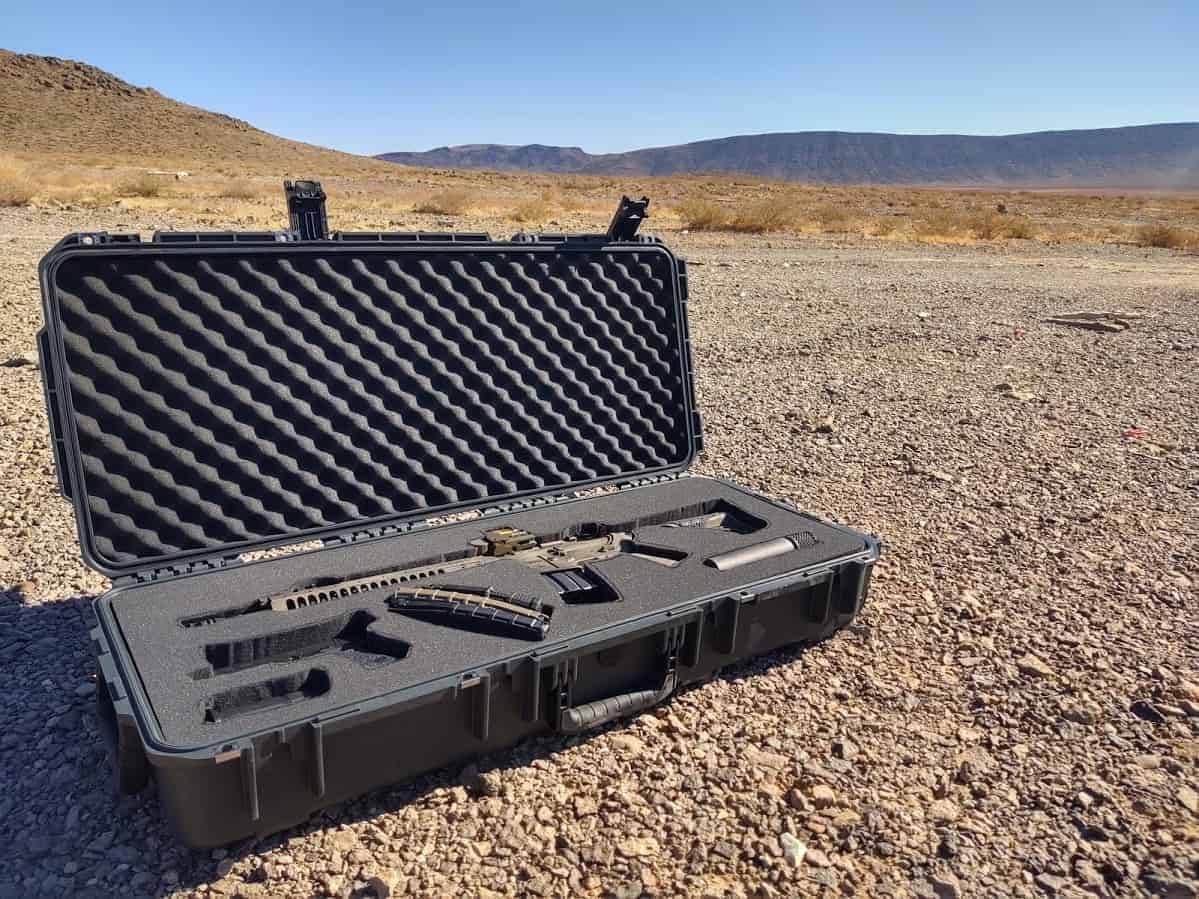
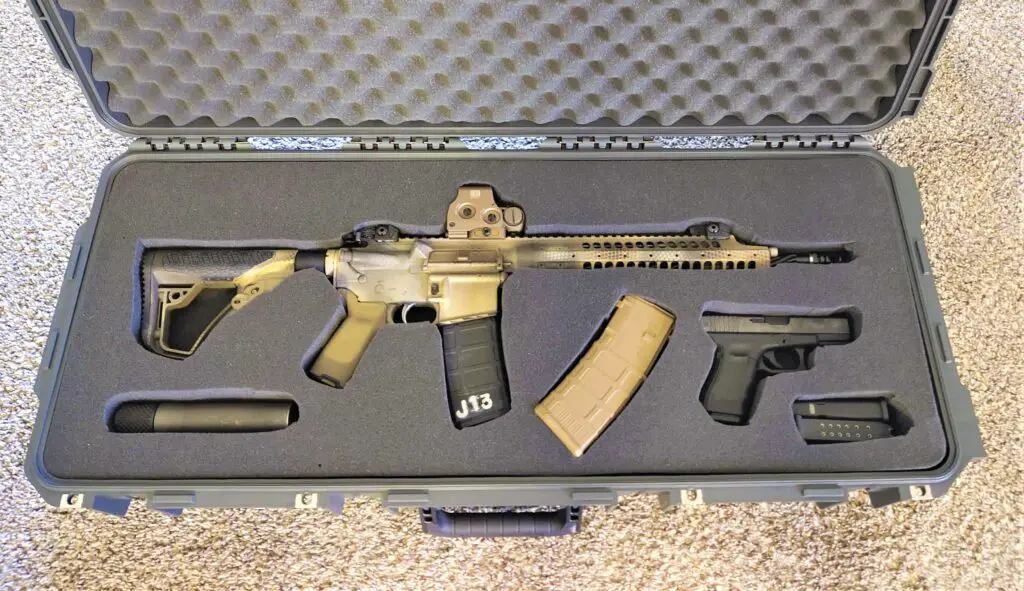 A lot of people spend thousands of dollars on firearms and accessories, but when it comes to training or protecting their investments, they tighten up. A good hard case may cost a couple hundred dollars but will probably save you money and heartbreak in the long run. Think of it as insurance; if you take your rifle to the range, travel, or fly, a good case is a must have.
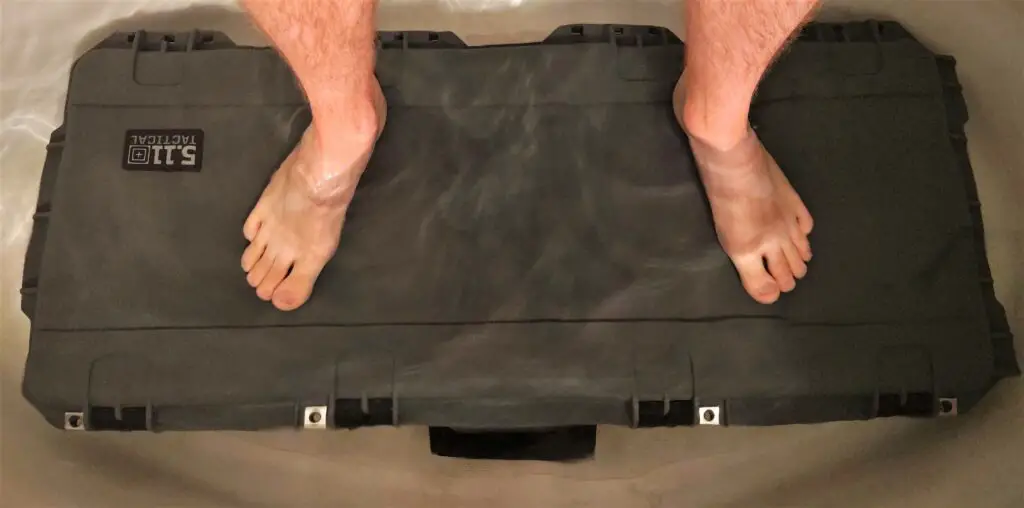 The 5.11 website says this
 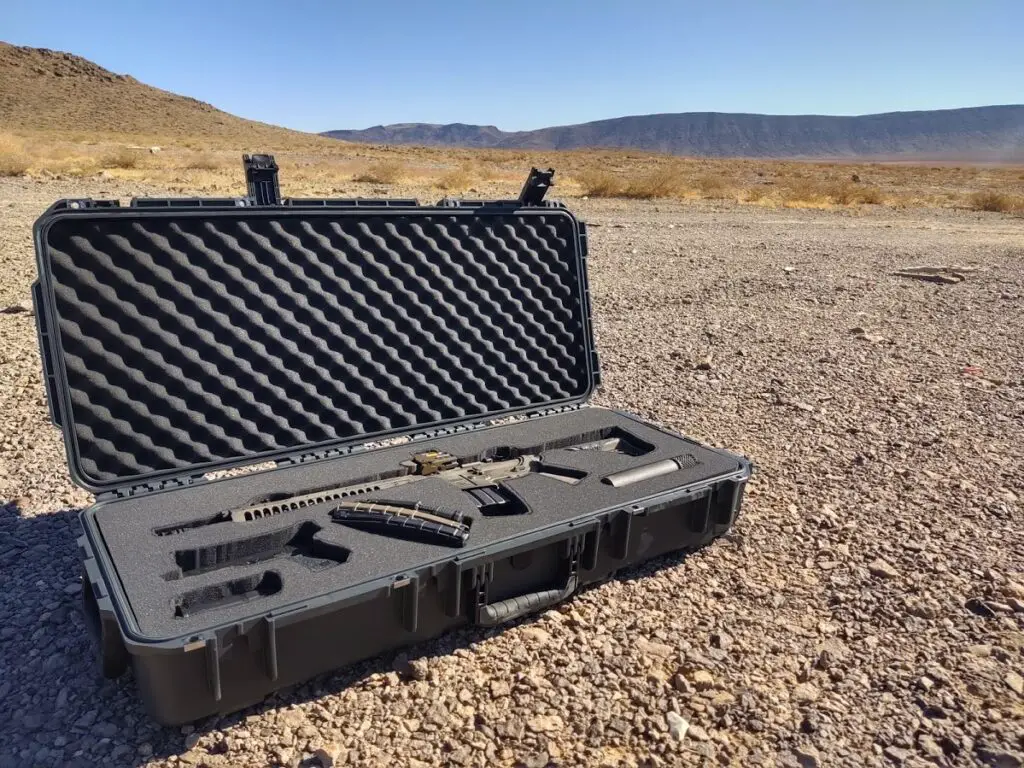 Using this case is absolutely a delight! I use it to carry my guns to and from the truck when I go shooting in the desert. It fits behind the seats perfectly. I don’t have to worry about my optic going out of zero while it’s getting banged around on dirt roads. It keeps the harsh Vegas sun off my fine Rust-Oleum finish and the dust out of my Glock magazines. The handles are decently sized, well placed, and comfortable. People think the custom looking foam cutouts are right out of a John Wick movie (excellent Instagram material, btw). This
 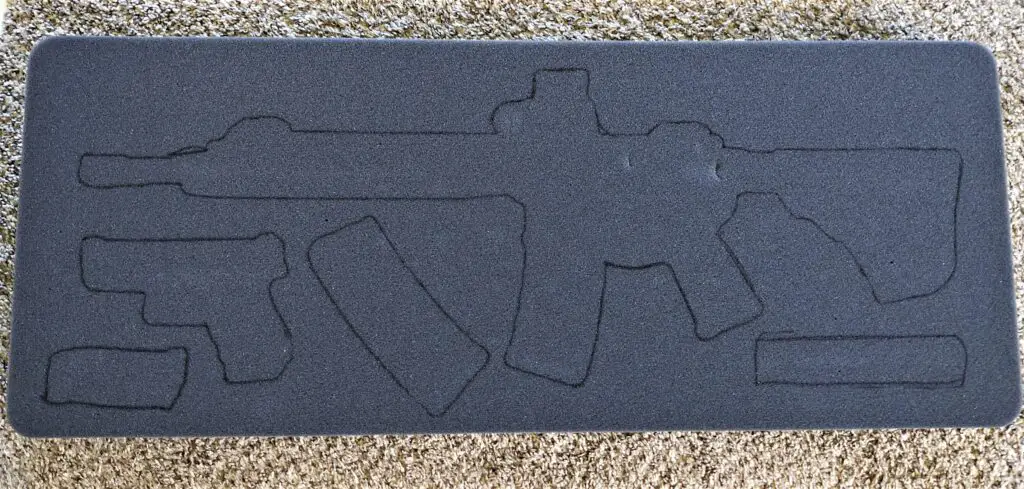 To cut a silhouette of your firearm and accessories, you should start by placing them on the foam to get an idea of how much room you have and how you will arrange them. I tried to keep at least two inches of foam between items, but it didn’t always work out. That’s okay. I arranged my goodies on the foam mirrored from how I wanted them; that way the sharpie lines wouldn’t be facing up. There are several ways you can cut the foam. You can try a long-bladed utility knife, filet knife, electric knife, or a hot wire. I decided to use an
 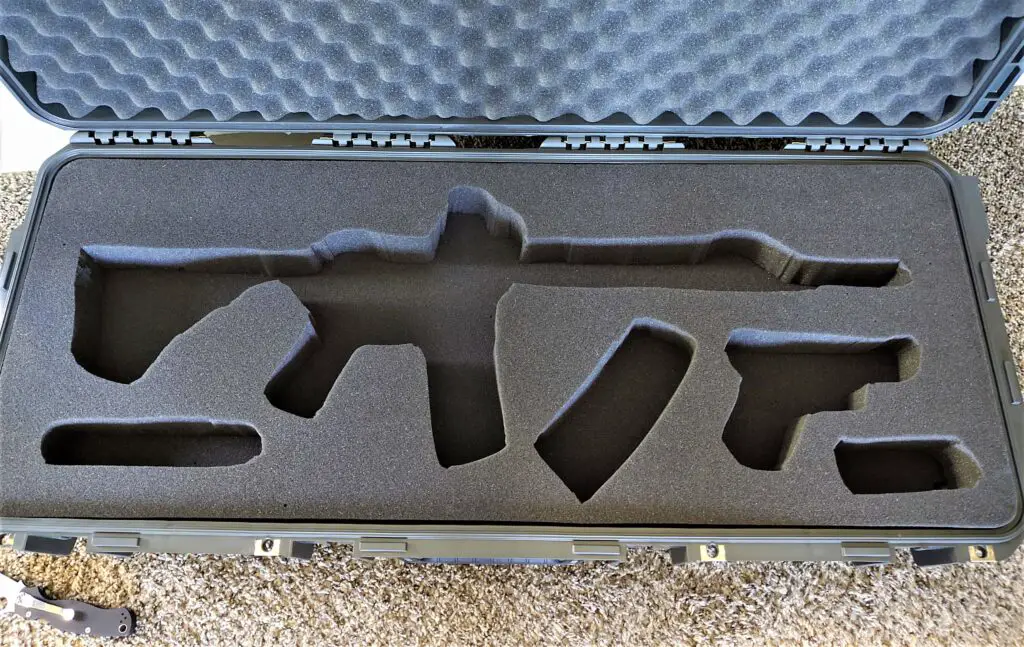 The electric knife made cutting the foam a breeze. Don’t force the blade through the foam, just let it do its thing and trace slowly around the inside of your lines. If you cut exactly on your lines, the cutout will be too big. I recommend cutting at least ¼” inside your tracing. When you pull your firearm from the case, the top layer of foam may come out with it. You can glue the top layer to the layer underneath, if you wish. Spray glue or
 First, check your local laws.
 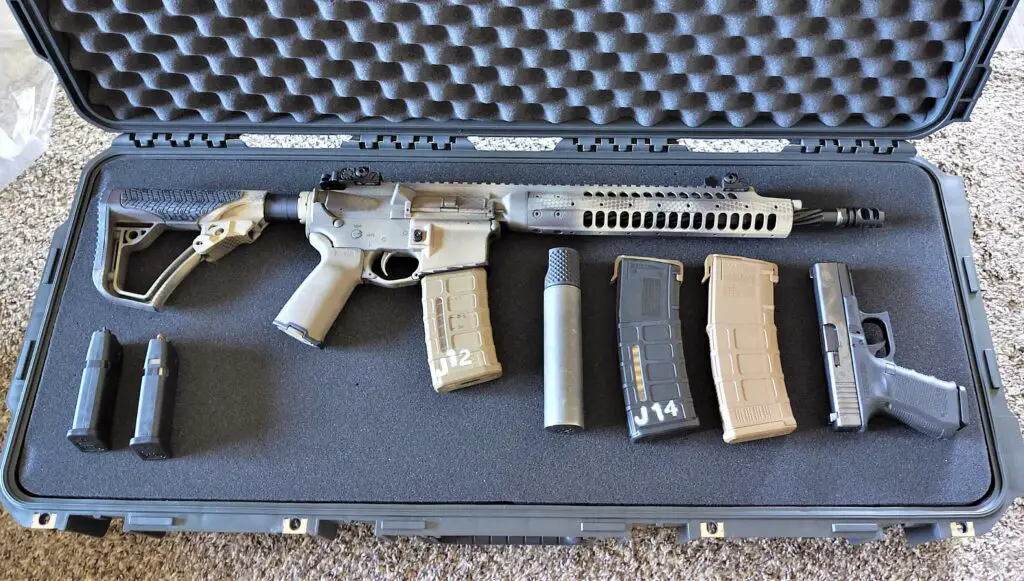 When you arrive at your destination, all that’s left is to pick your firearms case up at the baggage claim at your destination. Just to be on the safe side, I take a picture of everything in the case and make sure I have the serial numbers written down. If you have a personal article policy through your insurance provider, they may cover your goods in the event something happens. Regarding locks,