Brett

Extreme Frugality: Holiday shopping edition.

Surviving and Thriving has partnered with CardRatings for our coverage of credit card products. Surviving and Thriving and CardRatings may receive a commission from card issuers. Opinions, reviews, analyses and recommendations are the author’s alone, and have not been reviewed, endorsed or approved by any of these entities.

(This is the first in an occasional series of articles focusing on saving serious dough. A little background can be read here.)

Black Friday? How about Black November?

Not long ago, Black Friday – the day after Thanksgiving – was considered the kick-off for the holiday shopping season. The timetable has been moved up, though.

This year, some retailers offered “Black Friday in April” or “Black Friday in July” deals, and recently the National Retail Federation reported a phenomenon called “Black November” – big deals offered on Nov. 1, with more to come before Nov. 29.

Some of the busiest shopping days of the year, however, are the days between Thanksgiving and Cyber Monday. In 2018, an estimated 165 consumers spent an average of just over $313 during that five-day period.

“People plan their attack, and where they’re going to go. It’s a sport,” says shopping expert Trae Bodge, a senior editor at Retail Me Not.


The NRF predicts an uptick in buying this year: as much as $730.7 billion spent during November and December 2019, even though the 2019 holiday shopping season is six days shorter this year than last.

I’m not doing my part this year. In fact, I plan to spend relatively little in November and December. If you’re reading this site, chances are you’re right there with me, for one or more of the following reasons:

  • You shop all year long, as good deals pop up. (I do.)
  • You make a lot of your gifts, whether that’s handcrafts, homemade goodies or gifts of service.
  • You enjoy finding other ways to give gifts without spending much (or anything at all).
  • You’ve decided to buy out (as it were) of commercialized holiday expectations.

Personally, I love giving presents. It makes me happy to provide things that people want or need. It’s fun to see the looks on my nephews’ faces when they unwrap, say, an item from their Amazon wish list or a gift card to one of their favorite stores.

Yes, I love giving presents. But I refuse to go into debt for them.

According to a new study from Bankrate.com, almost two-thirds (63 percent) of adults in the United States have felt pressured to spend more than they can afford.

Fie on that. I say again: Fie! Do not break the bank for one day a year. Here are some of the tactics I use to give a whole lot of gifts without spending a whole lot of money.

Not every tactic will work for every person; for example, maybe you don’t own any rewards credit cards or have access to a great book sale. But at least some of these ideas should work for everyone.


Rewards programs


The ones I use most often are Swagbucks, Coke Rewards, MyPoints and Inbox Dollars. You earn points through activities like doing online searches, answering surveys and shopping, then trade them in for gift cards and other items. (Pro tip: Swagbucks lets you cash in for PayPal credit.)

The exception is Coke Rewards, which has changed from the original My Coke Rewards program. Formerly you could accrue points and trade them in for movie tickets, T-shirts and other goodies. Now the program is mostly about entering sweepstakes – but throughout the year they also put up gift-card offers. Earlier this week it was “enter four codes for a $2 Target e-gift card.”

Pro tip: You can have up to five accounts per household – in other words, your household could have received up to $10 worth of Target scrip. Not that a true frugalist would be averse even to just $2 off.


Rewards credit cards


These are my go-to gift sources. At times I cash in points for gift cards and use them to shop, but mostly I give the gift cards themselves as gifts. Not everyone is nuts about gift cards as gifts, but the folks to whom I give them seem genuinely happy with these things.

And if that’s not you? Again: Use them to buy gifts for your relatives and friends. Or apply the points you earn as a statement credit against the next month’s bill, and pay for your gifts that way.


Taking online surveys


I do fewer of these than I once did, but they’re still useful. Yesterday I did a short one (maybe 10 minutes?) for Radial Insight and was instantly given my choice of $3 gift cards (Target, Amazon and many others). Some other good sites are Survey JunkiePinecone Research, Toluna and ClearVoice.

Avoid any survey sites that:

  • Pay in points that take forever to add up to rewards
  • Pay in sweepstakes entries (really?)
  • Require you to subscribe to magazines or book clubs and then take a “survey” rating the experience (these are actually affiliate marketers)

About that last: You should never have to pay to take or complete a survey. Companies are supposed to pay you. “Membership fee” is synonymous with “scam.” Start a new e-mail address just for the surveys, and don’t give out bank info; you should be paid in gift cards or by check or PayPal.

Pro tip: As noted above, rewards sites like Swagbucks, Inbox Dollars and My Points have surveys.


Buy Nothing Facebook groups


Earlier today I picked up two really fun, dog-related gifts this way. They’re in perfect condition. In fact, they may never have been used at all because some people have been using the group for rage purging.

For a little background on this phenomenon (including how to find groups in your area), check out “Need something? Buy Nothing.”


Freecycle


Haven’t used this service much lately, but it was very helpful to me in Seattle (for giving as well as receiving). If you have a Freecycle group in your area, take a look at what’s being offered. You might luck out.


Craigslist


This free service has a (sometimes deserved) reputation for sketchiness. Check its “free” section first, then search for the snowboard or guitar or whatever gift you’re looking to acquire. Again, you might luck out.

When I was back in college at midlife, I won an iPod Shuffle in a campus drawing; got home, put it on Craigslist and almost instantly had half a dozen offers. The guy who bought it said it was for – you guessed it – a Christmas present.


Facebook Marketplace/Facebook Garage Sale


Someone in your area might have the perfect balance bike for your toddler, or Marvel collectible figurines to light up your geeky girlfriend’s eyes.


Offer Up/Let Go


Not unlike the Facebook pages mentioned above, these sites give people a chance to get rid of things they no longer want – which means you get great deals. What’s available, of course, depends on where you live and who’s selling.


Library book sales


Not necessarily “library-book sales,” either. Our local library has twice-annual sales of donated books along with library books that are being let go.

You’ll find a lot of best-sellers for sale – people don’t necessary once to keep these things once they’ve read them (or pretended to have read them for book club). The prices are great, especially if on the last day they offer a single price for everything you can fit into a bag.

And speaking of libraries, don’t neglect…


Little free libraries


These small repositories, scattered through neighborhoods all over the country, might be a source for a children’s gift – or an adult’s, since some of them have grownup novels and nonfiction. If the book is too beat-up to give, then don’t do it. But you might find something in great condition.

Pro tip: Bring a book you no longer want and leave it for someone else. You de-clutter your house a little each time you do that, and somebody somewhere gets to read something new.


Used bookstores


See above.


Thrift shops


These vary widely in terms of condition and selection. But sometimes la segunda will have just what you need. My favorite, oft-cited example: an elaborate (and unopened!) jigsaw puzzle of a section of the Sistine Chapel ceiling, for 35 cents.

Think of it as a treasure hunt on behalf of a relative or friend who’s crazy about Fiestaware, craft supplies or old-school board games. The thrift store is yet another place to find good books to give.


Dollar stores


Again with the books: When I visit my daughter in Phoenix, I make it a point to hit The Dollar Tree’s book section. A lot of the hardbacks are so-so but I’ve found some excellent fiction there for a buck.

You could also prowl the rest of the store to make up themed gifts, such as “Stuff For First Apartment” (potholders, dish towels, measuring cups and spoons, vinegar, baking soda) or “Movie Night” (several kinds of snacks and candy paired with a dollar DVD).


Free-after-rebate stuff


Anyone else remember when the big three drugstores outdid one another in offering these deals? They were especially fun if you had coupons, i.e., you were paid to use the items.

That’s died back quite a bit, but during the holidays retailers tend to offer items that are free (or cheap) after rebates. Find and follow a deal blogger, or search for “free after rebate Black Friday” or something. These things make great stocking stuffers* or even gifts (if I recall correctly, it was Kohl’s that does free-after-rebate small appliances each year).

If you’re buying for a young adult who’s shocked by how much everything costs when you’ve got student loans and a starter salary, may I suggest the “grownup Christmas stocking” idea? It came from someone I interviewed for MSN Money, and I thought it was a swell notion: All year long, this woman accumulated useful items either free or very cheaply with coupons and rebates, and divided them among copy-paper boxes to give to her grown children. All of them loved getting stuff like shampoo, body wash, lotion, razors, deodorant, laundry soap, cleaning supplies and other essentials. It cost her very little, but it was a huge boost to their budgets.

Pro tip: Each week sites like CouponMom.com will match rebates and coupons with sales at drugstores, supermarkets and dollar stores.


Regifting


You just knew I was going to bring that up, didn’t you? It can work, though, as long as the gift is appropriate, in excellent condition and – most important – not originally given to you by its intended recipient. My favorite anecdote is the woman who gave a cookbook with a $100 bill tucked inside as a wedding gift. A couple of years later the couple gave it back to her as a Christmas gift. And yep, the $100 bill was still in it.


Too late in the game?


You might not be able to do all of this year’s holiday shopping this way. Certainly the garage sale season is over and done here in Anchorage, and maybe where you are, too. But you might have some luck with with thrift shops, the Buy Nothing group and others.

It’s also a bit late to build up a ton of rewards points, unless you do a lot of online shopping or answer a lot of surveys. But you might earn enough to get a few things.

Your turn, readers: What are some of your favorite frugal hacks for holiday shopping?

*I’ll soon be giving away a batch of stocking stuffers. Stay tuned.

(Surviving and Thriving has partnered with CardRatings for our coverage of credit card products. Surviving and Thriving and CardRatings may receive a commission from card issuers.)

The post Extreme Frugality: Holiday shopping edition. appeared first on Surviving and Thriving.

Extreme Frugality: Holiday shopping edition. Read More »
Tread Labs Pace Insole Review

Tread Labs Pace Insole Review

Tread Labs Pace Insole Review

A few months ago, we got in touch with the American company Tread Labs which produces insoles for various types of footwear and activities. All Tread Labs insoles are specifically designed with arch support in mind and thus each model is available in four different arch heights. Now, I’m not an expert in arch support, but according to various studies the right level of arch support can increase balance, stability, recovery and running economy. Since every foot is unique, shoes and boots rarely fit one’s arch height perfectly. The more your arch height differs from the average arch height, the worse the fit.

I never had problems with arch support because I have quite normal arch height. Nevertheless, I was eager to test the Tread Labs Pace insoles and see how they compare to other insoles. The Pace insole belongs to the Pain Relief series and is designed to relieve pain from plantar fasciitis and other foot ailments. For the last couple of months, I’ve been wearing the Tread Labs Pace insoles for hiking, running and everyday use, and below is what I learned about them.

The Tread Labs Pace Insoles are suitable for:

  • Running
  • Hiking
  • Backpacking
  • Everyday use

Materials and Design

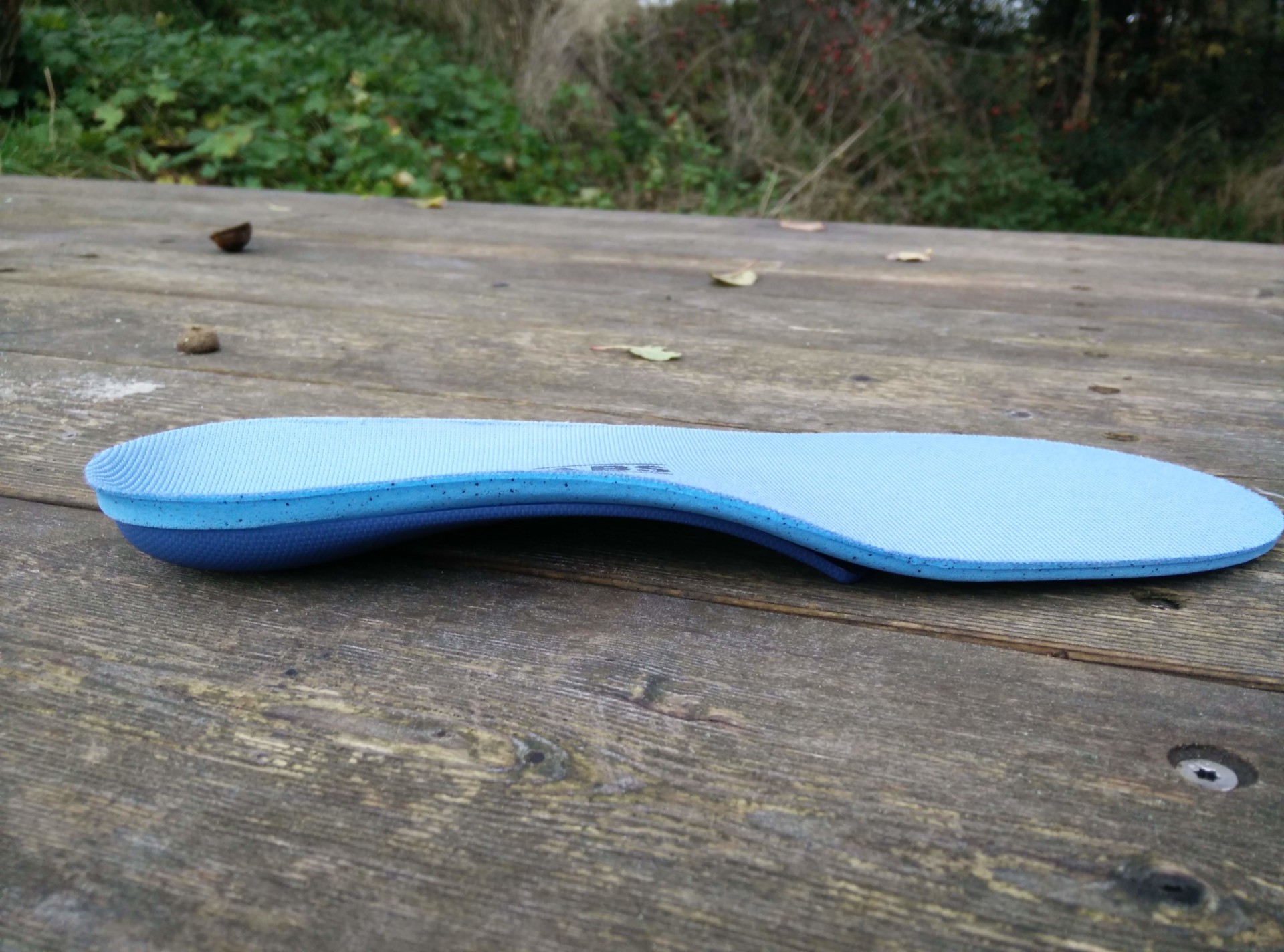
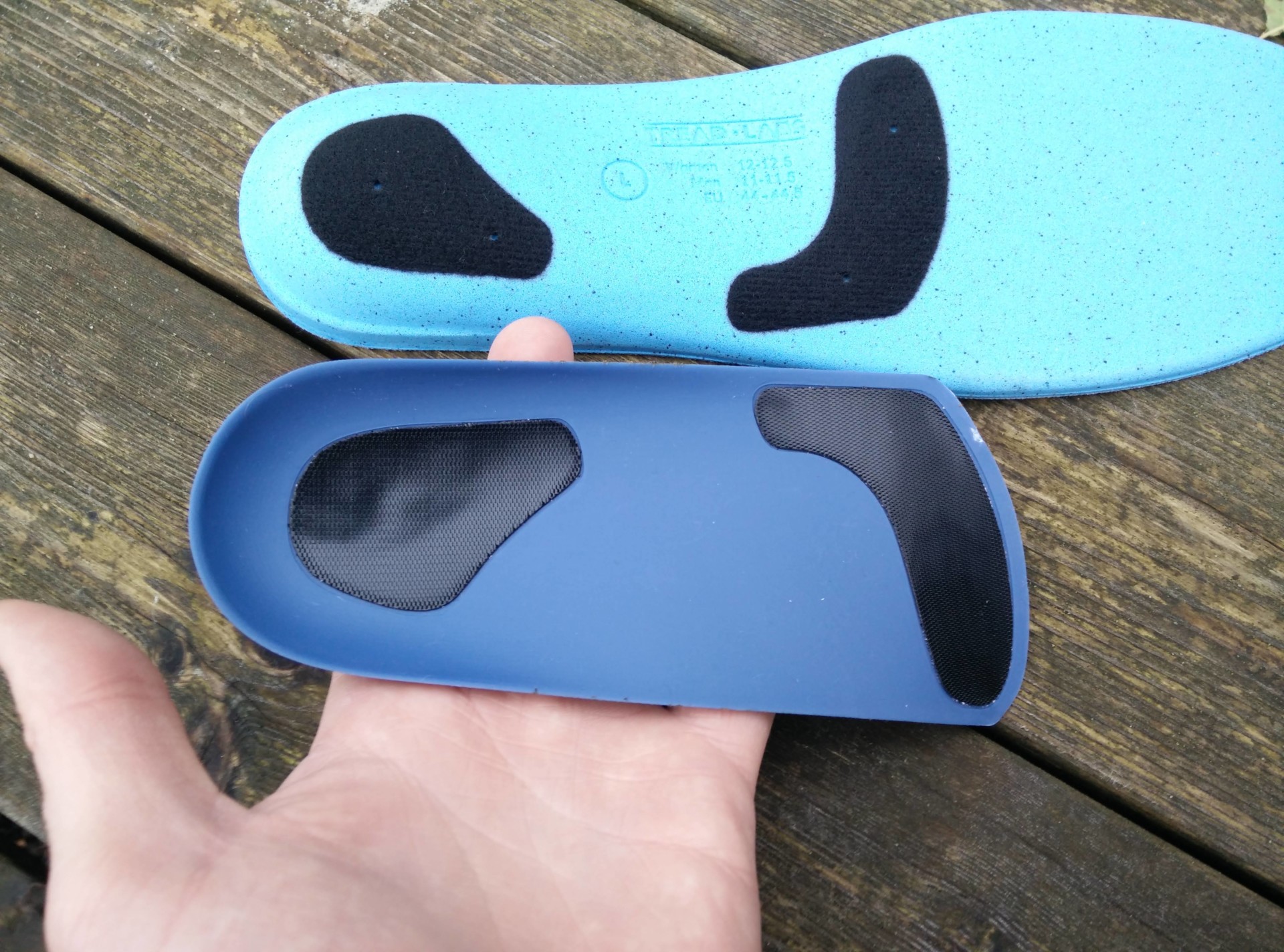
The Tread Labs Pace insole consists of two parts: a stiff arch support and a replaceable top cover. The arch support is attached to the top cover with a Velcro-like system. When I unwrapped the package, I was a bit skeptical over the concept because I doubted that the Velcro system could keep the arch support in place during intensive activities such as running. However, once I started wearing the insoles, I figured out that the Velcro-like system indeed holds the arch support in place regardless of the activity. It attaches the arch support to the top cover very firmly and I haven’t encountered any problems during the testing period.

The main benefit of this two-part system is that you don’t have to buy a whole new insole in case that the top cover gets worn out or you change to footwear where the top cover doesn’t fit in. Tread Labs also sells top covers separately and they are really not expensive. A top cover for the Pace insole will cost you merely $16 while the whole insole retails for $65.

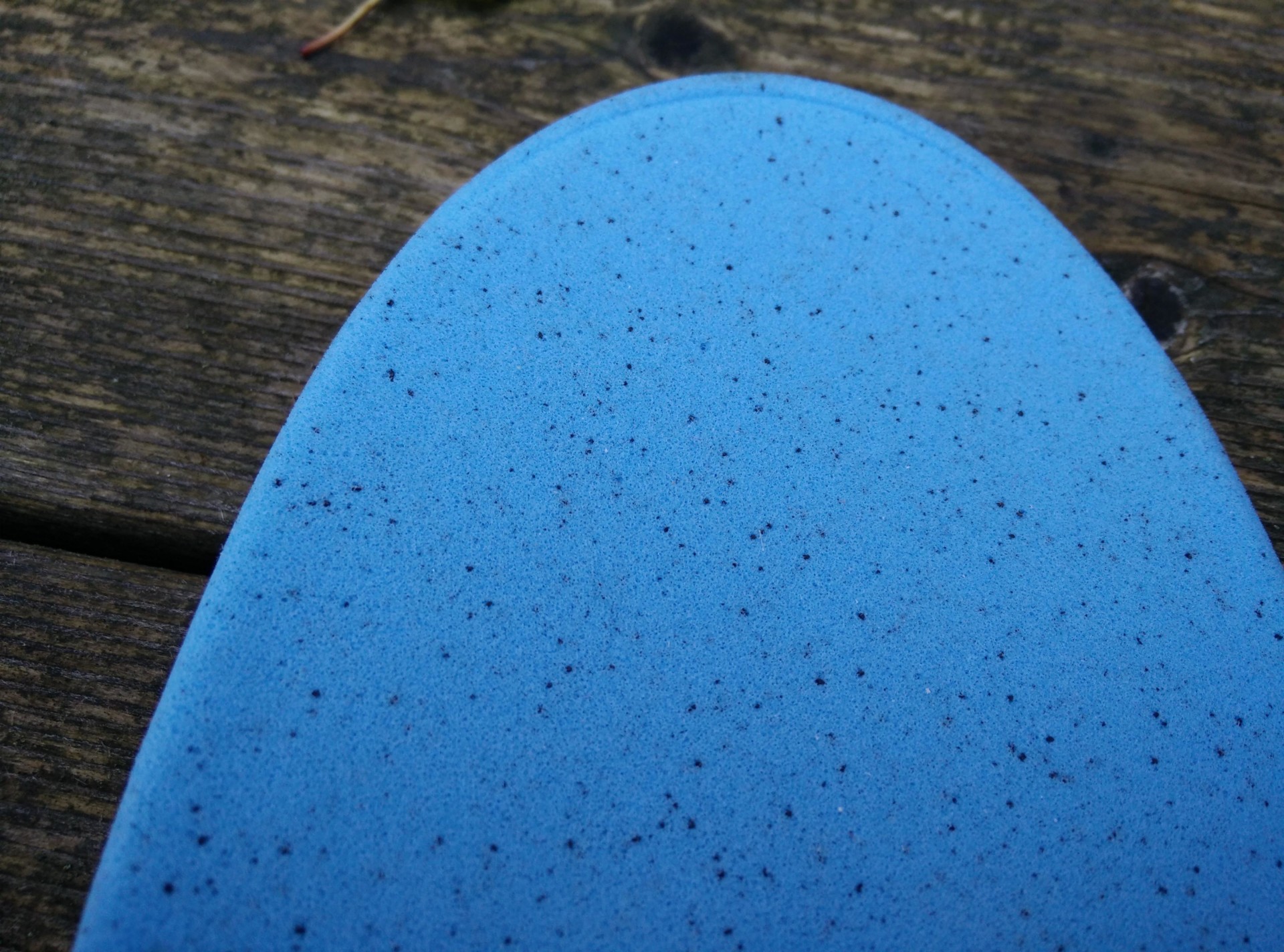
The arch support is made of a relatively stiff plastic material while the top cover is made of polyurethane. I found both pieces high-quality and sturdy. So far, I haven’t noticed any durability issues but if I do later on, I will of course update this review.

When I put the insoles in my Lowa Innox shoes for the first time and went on a short walk, I quickly noticed that the insoles indeed add stability. The shoes felt much more stable and comfortable on my feet. Furthermore, the position of the foot also seemed better due to the extra arch support. After that I started using the insoles for sports as well and I was very satisfied with their performance. The only complaint I have is that the insoles are not as breathable as the original insoles of my hiking and running shoes. The Tread Labs insoles are somewhat thicker and have a plastic arch support in the heel area which obviously decreases the breathability to some extent. On the other hand, I was very satisfied with their moisture-wicking performance.  The insoles nicely pulled moisture from my socks during intensive activities. They also seem to be treated with an antimicrobial agent as I’ve been wearing them for quite some time now, and there are no signs of odor.

Sizing

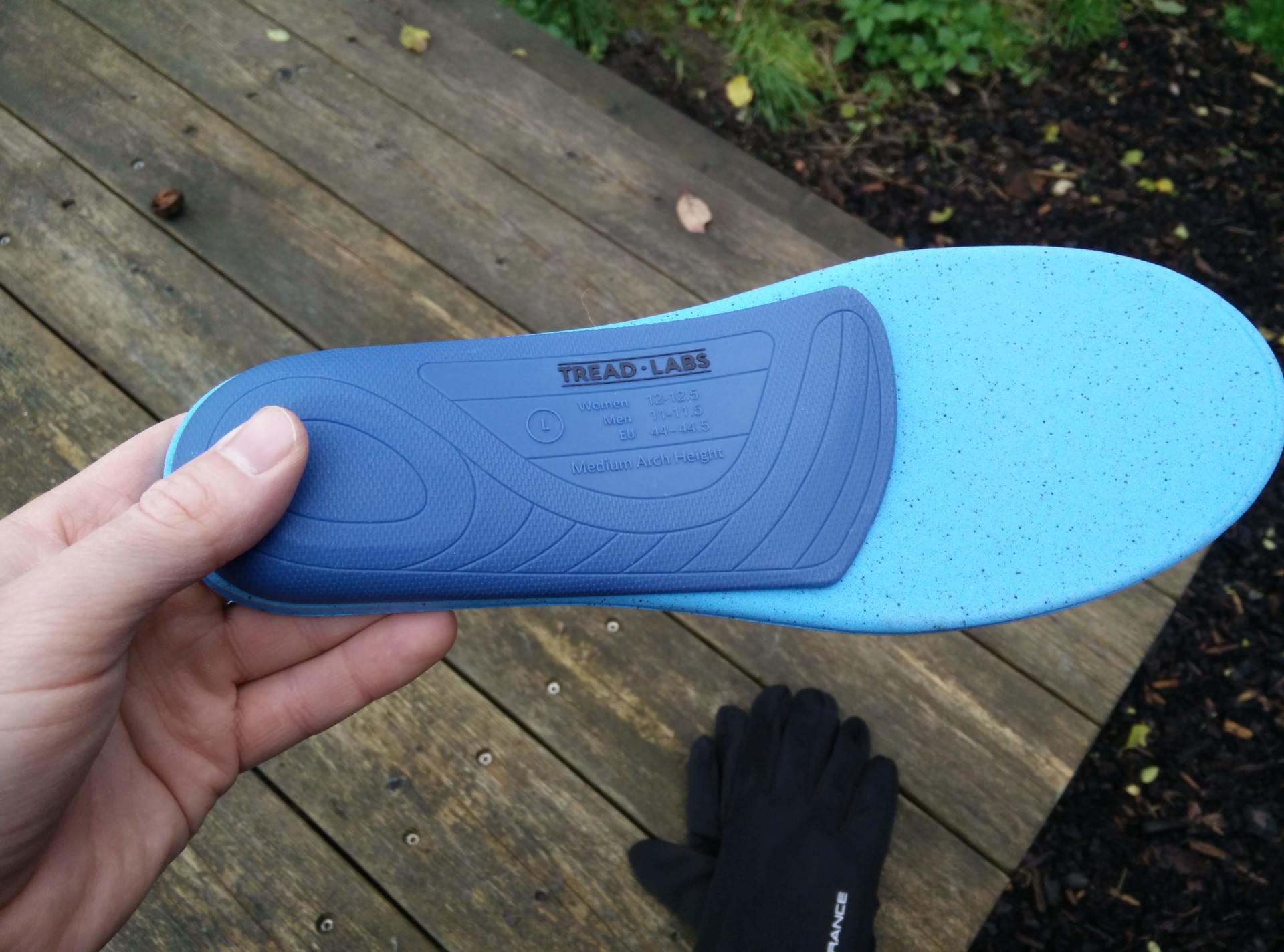
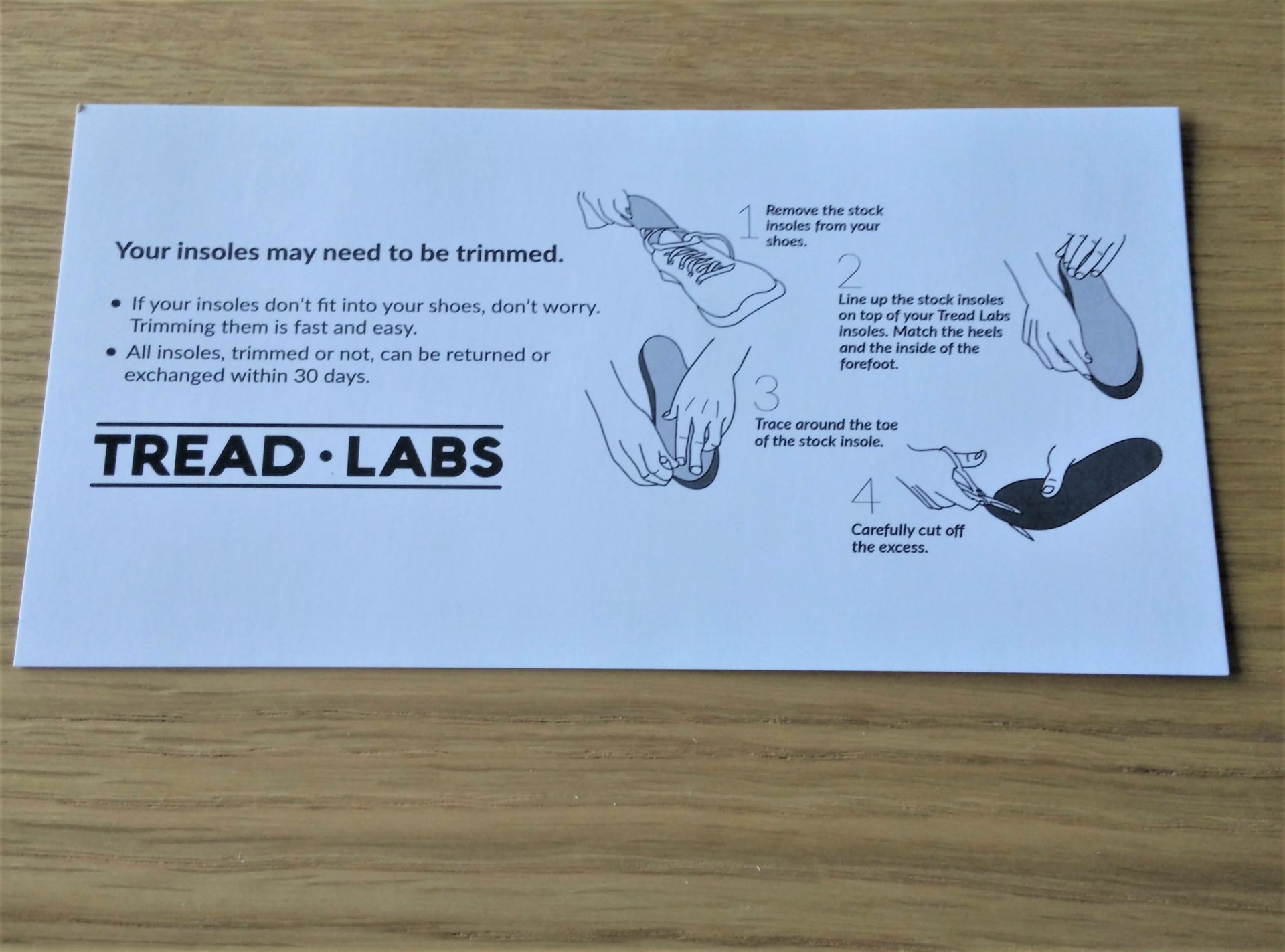
The Tread Labs Pace insoles are available in European sizes 35 to 47 (US sizes 4 to 13.5 for men and 5 to 12.5 for women). Since the insoles can be trimmed, getting the right size really isn’t a problem. I got the insoles in EU size 44 and they were slightly too long to fit into my shoes. So, I just followed this guide from Tread Labs to trim them with a scissor and in a couple of minutes they fitted perfectly. However, getting the right arch height can be a bit trickier. Tread Labs has a convenient fitting guide on their website and according to the guide I should go for the medium arch height insole. Nevertheless, the medium arch height insole was a bit too high for me. Tread Labs subsequently sent me the low arch height insole which fits me much better. So, if in doubt I recommend going for a lower arch height than the fitting guide.

Verdict

All in all, I’m really satisfied with the Pace insoles. They provide great support, improve the position of the foot and make you footwear more comfortable. They are also suitable for just about any activity, from running to hiking. I was also very satisfied with moisture-wicking performance and odor resistance. The only downside is that they are slightly less breathable than insoles that come with high-quality hiking and running shoes. Nevertheless, the insoles have served me great so far and I’ll keep using them for hiking, running and everyday use.

If you have any questions about this product, drop me a line in the comments below.

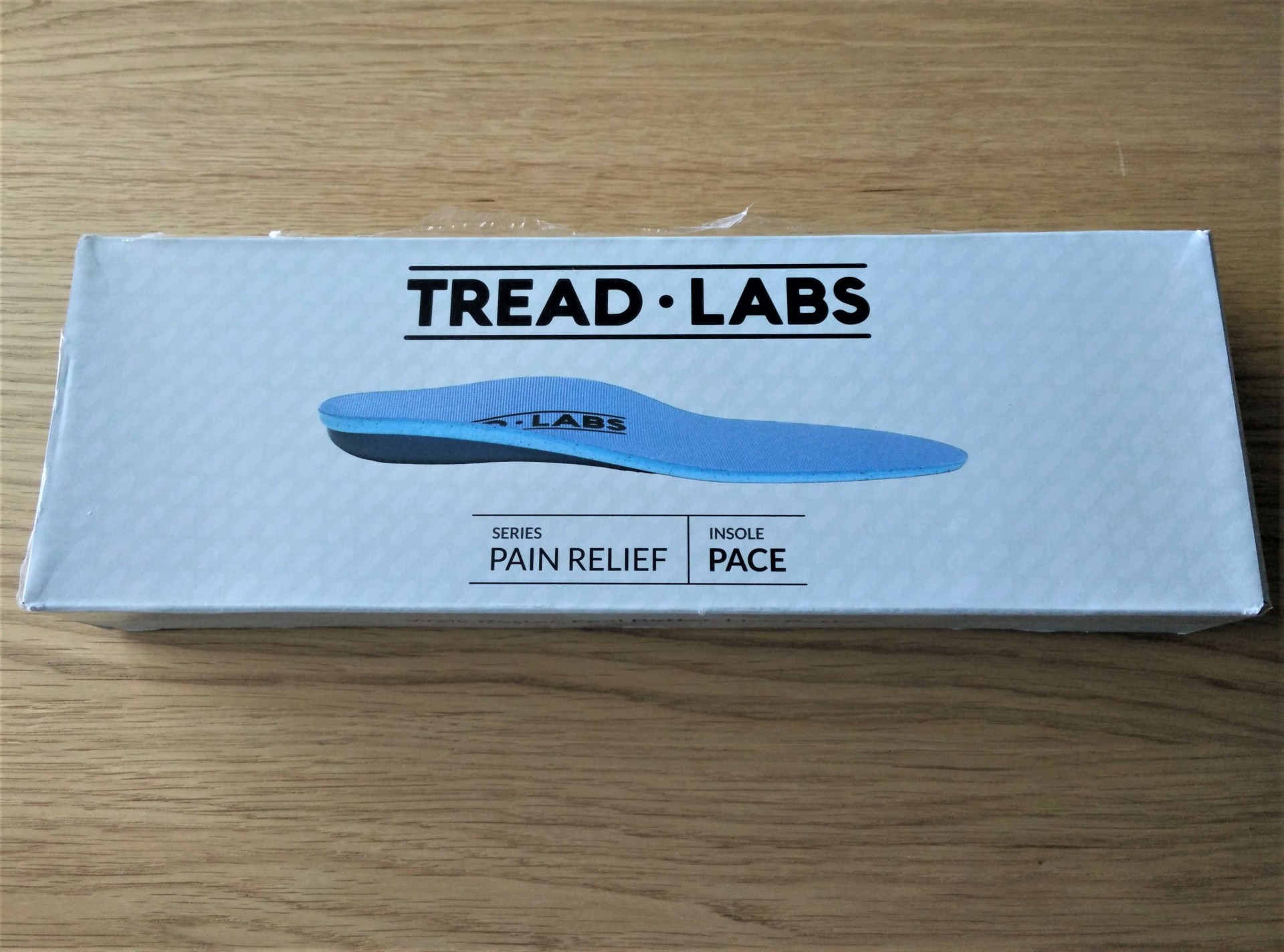
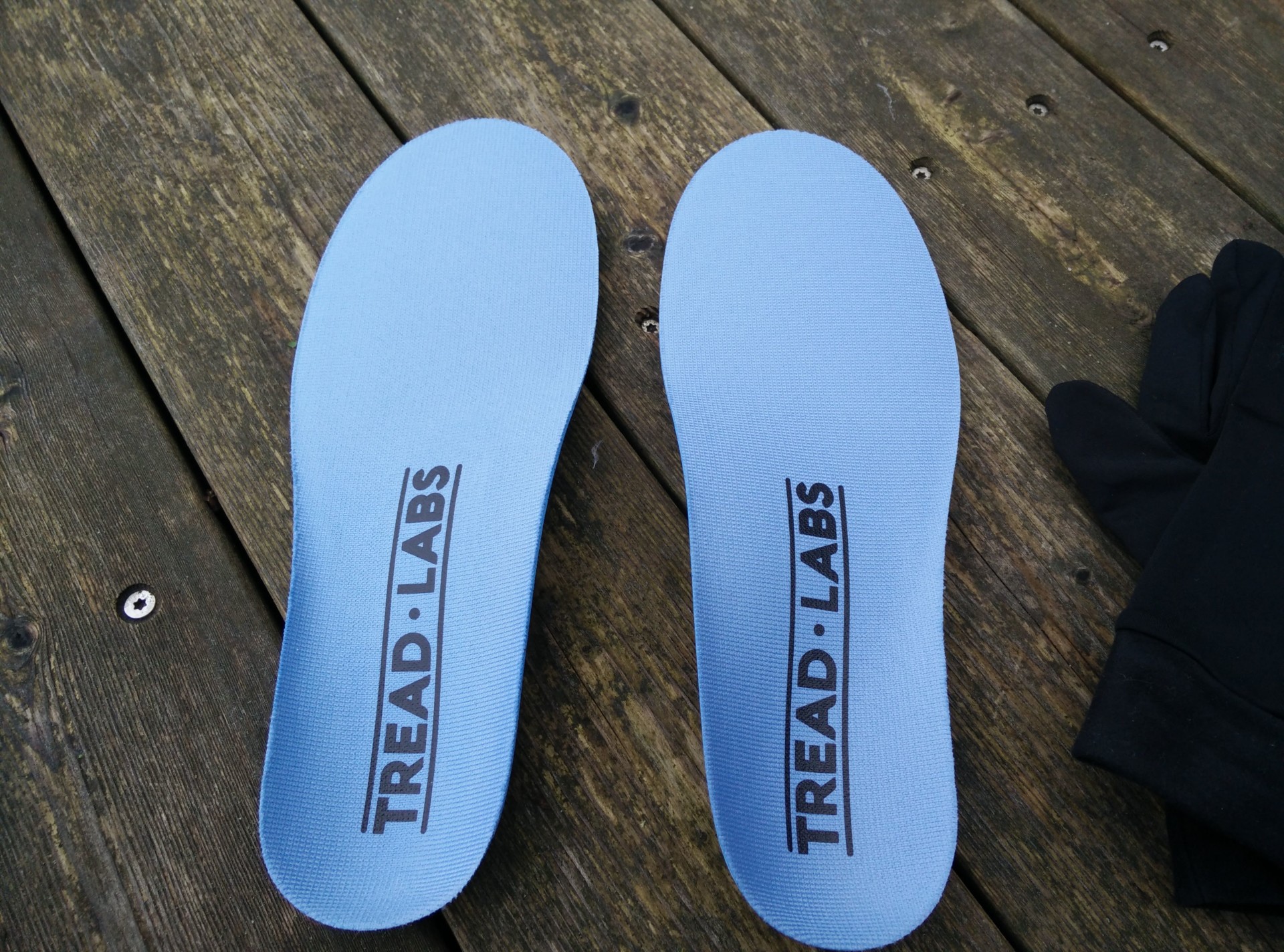
Tread Labs Pace Insole - Packaging

Tread Labs Pace Insole – Packaging

Tread Labs Pace Insole - The insole is shaped to provide great arch support

Tread Labs Pace Insole – The insole is shaped to provide great arch support

Tread Labs Pace Insole - The top cover is attached to the arch support with a Velcro-like system

Tread Labs Pace Insole – The top cover is attached to the arch support with a Velcro-like system

Tread Labs Pace Insole - The arch support attaches firmly and securely to the top cover via Velcro-like system

Tread Labs Pace Insole – The arch support attaches firmly and securely to the top cover via Velcro-like system

Tread Labs Pace Insole - The top cover material is sturdy and durable

Tread Labs Pace Insole – The top cover material is sturdy and durable

Tread Labs Pace Insole - The Pace insole can be trimmed for good fit

Tread Labs Pace Insole – The Pace insole can be trimmed for good fit

Rating

Design
Quality
Comfort
Functionality

About Rating

Pros:

  • Support
  • Stability
  • Comfortable
  • High-quality materials

Cons:

  • Slightly less breathable than insoles that come with high-quality running/hiking shoes


Details

Tested by: Blaz

Review date: 2019-12-06

Product: Tread Labs Pace Insole

Final rating: 5 out of 5

{
“@context”: “http://schema.org”,
“@type”: “Product”,
“brand”: {
“@type”: “Organization”,
“name”: “Tread Labs”
},
“image”: “https://besthiking.net/wp-content/uploads/2019/12/Tread-Labs-Pace-Insole-Review.jpg”,
“name”: “Tread Labs Pace Insole”,
“review”: {
“@context”: “http://schema.org”,
“@type”: “Review”,
“author”: {
“@type”: “Person”,
“name”: “Blaz”
},
“creator”: {
“@type”: “Person”,
“name”: “Blaz”
},
“publisher”: {
“@type”: “Organization”,
“name”: “Best Hiking”
},
“reviewRating”: {
“@type”: “Rating”,
“ratingValue”: “5”,
“bestRating”: 5,
“worstRating”: 0
},
“datePublished”: “2019-12-06”,
“name”: “Tread Labs Pace Insole Review”,
“headline”: “Tread Labs Pace Insole Review”,
“itemReviewed”: {
“@type”: “Thing”,
“name”: “Tread Labs Pace Insole”
}
}
}

How helpful was this post?

Click a star to rate it!

1 vote(s) so far. Average rating 5 out of 5.

Post Author

Post Author

Blaz

Outdoor enthusiast with experience in all types of hiking and mountaineering. Hiked in the Alps, Iceland and other countries. In love with via ferrata trails and snow-covered slopes. Check out my hikes.

You may also like…

The post Tread Labs Pace Insole Review appeared first on Best Hiking.

Tread Labs Pace Insole Review Read More »

How to Treat a Sprained Ankle on a Hike

There you are, just hiking along the trail when suddenly the footing changes and you roll your ankle to one side. You feel it stretch and maybe even feel it tear. It stops you cold and it hurts. You’re pretty sure you have a sprained ankle, and you’re miles from the trailhead. Before You Hit…

The post How to Treat a Sprained Ankle on a Hike appeared first on American Hiking Society.

How to Treat a Sprained Ankle on a Hike Read More »

Heckler & Koch SP5

Heckler & Koch is proud to announce the US availability of the HK SP5, the only authentic sporting version of the legendary MP5 submachine gun available. The SP5 was developed by HK as a semiautomatic, civilian sporting pistol that matches the look and feel of the legendary MP5 submachine gun. “Our whole team is very […]

Heckler & Koch SP5 Read More »

Build Your Own OKINAWA HAVERSACK

A Guest Blog Post by Aaron “Hutch” Hutchings

Imagine if everything you carried
was easy to transform into another piece of gear.  What if you could use a few pieces of fabric
and a couple of well-placed, easy knots to replace broken gear, improvise packs
and bags in a pinch, or even customize haversacks, backpacks, beach bags, belt pouches,
and other bags to your personal body type and adventure needs?

While serving in the Marine Corps, I lived in Okinawa, Japan for several years and was fortunate to have a job that put me in direct contact with local nationals. I was fascinated by the many, intricate ways that they wrapped gifts, lunches, packages, gear, and deliveries.  It was not uncommon to see someone walking down the street with their groceries, or some other heavy burden, safely contained in a piece of fabric. While attending some college classes I had a tutor that worked in a Furoshiki shop during the day.  She would show up to our sessions in clothes made from sheets of fabric and knots that rivaled some of the most attractive clothing I have ever seen.  She also carried all of our study gear in different types of bags made in the same fashion.  One of my favorites was what I call the “Okinawa Haversack.”  She would untie one knot, roll the bag out with a bit of a flourish, and we had a ready-made study area.  The cloth contained all her books, pencils, note cards, a small chalk board, and other study materials.  We could comfortably sit on the blanket, picnic-style, protected from moist or sandy ground, and did not have to worry about damaging books or losing items in the grass. When she was done, the study material was placed back on the blanket, and with a few quick folds and one knot and she was off to her next adventure.

I was so impressed with this style that I began to study
Furoshiki and other forms of cloth bending from indigenous peoples around the
world: the bags of the Maasai warrior, Sarong and Pareos-style skirts, the
rebozo materno dating all the way back to the Mayans, and many more.  All these forms use just a bit of fabric and
a few simple well-placed knots to create something useful from the most basic of
materials.  It was all so cool!   Maybe it is the sheer practicality of it,
maybe it is the fond memories of my time in Japan, or maybe it is my love for the
Indiana Jones movies, but for whatever reason I still find the Okinawa
Haversack to be one of the coolest and most useful tricks in my arsenal.

To get started, your choice of fabric is just about limitless.  This bag can be tailored to the size of your gear.  Generally, the length of your object is approximately one-third the diagonal of your fabric.  In the examples I will be using a normal sized handkerchief from Hobby Lobby, for short adventures I tend to use a Shemagh, and for my study trips I like to use a five-foot by five-foot piece of wool blanket that I acquired from a thrift store.  Just keep in mind the size of the items you are packing, and the size of the work area you want when your fabric is unfolded.  For example, my fire kit only needs to be large enough to keep everything dry, a fishing kit or art kit only needs to be big enough to sit on, and my study kit turns into a full-on picnic sized area that I can spread out and lay on, if I desire.  Once you have decided on size, then the only other requirement is that the fabric will be able to form a knot without too much difficulty. There are many different sizes of material out there.  Materials like silk and rayon tend to have more give and can be cut smaller; thicker fabrics with less give will end up a bit bulkier and tend to need to be just a bit larger in their dimensions.  A great way to pick sizes is to find an old bed sheet or other thin fabric and cut three squares out of it.  The dimensions should be about 12 inches by 12 inches, 34 inches by 34 inches and 5 feet by 5 feet.  These will give you a pretty good idea of general sizes you’ll need for the different items you may want to pack.  Then you can head to the fabric or thrift store and pick any fabric that you think will be strong enough for whatever you are carrying.  Experiment with different types of fabrics.  There are even many cool waterproof fabrics out there now that are great for keeping one dry while sitting on wet or snowy ground. 

THE KNOT

Ceremonial Furoshiki has some amazingly beautiful knots, but I have found that, for practical applications, we can replace most of them with either the basic square knot or an overhand knot.  For this application, we will be using the square knot.  You may remember the old rhyme from your childhood: “Right over left and left over right makes a knot both tidy and tight.”  The square knot works either as right over left, left over right or left over right then right over left.  You may use one method over the other, depending on the angle you start from, but to make sure that the knot holds under weight for your whole adventure—and unties when you need it—make sure you tie it correctly. 

TYING

First, Choose two corners and hold one in each of your hands.

Then, place the corner in your right hand over the corner in your left hand, then under the portion in your left hand.  Now pull.

Next, take the corner that is now on the left and place it over and under the new right corner.  Now pull and tighten your square knot (Note: Reverse if coming from the other direction).

UNTYING

Most people I meet can tie a square knot, but many do not know that there is a nifty trick that will “break” or untie the knot even after it has been cinched down by significant weight on a long hike.  So much of the Okinawan culture was based on elegance, flourish, ceremony and grace.  The art of Furoshiki taught me that every knot has a trick that will let it come undone easily and should make you look truly good while untying your wraps.

Start with with a square knot and pick a corner. In this example, we will pick the tail on the left side of our knot.  It does not matter which side you start on. 

Next, while holding the fabric underneath the left tail with your left hand, grab the left tail with your right hand. 

Once you have this tail in your right hand, pull it over the knot to the right side.

The secret is to pull the knot hard enough to straighten out the fabric between your hands.  Now, grasp the entire knot in your right hand.

Finally, pull the fabric out of the knot with your left hand.  It should slide out easily.  If it does not, go back to step 2 and repeat.


TAKE MY ONLINE COURSE: OUTDOOR FUROSHIKI: THE ART OF FOLDING YOUR OWN PACKS & POUCHES FROM FABRIC

Learn how to apply the art of Furoshiki (Japanese Scarf Bending) to make 6 different improvised packs, pouches, and haversacks for survival or outdoor adventure. Make functional outdoor bags and packs using only square pieces of fabric & knots.


THE WRAP

The Okinawa Haversack finished product looks complicated, but in truth, it is rather easy to accomplish.  As mentioned, I use it at different scales to keep my adventures compartmentalized, organized, and comfortable.  To practice it is easiest to start with two rectangular items that are the same size, say two books or decks of cards.  With time you will find that your items can be different shapes and sizes and still be wrapped with ease.  If you are packing heavy items, consider using a stronger fabric, just leave a bit more room between your items to make up for the thickness.

First, find a mostly flat area to work, (the ground or couch cushions work great), then lay the fabric as a diamond, with the “ugly” or “wrong” side of the fabric facing up.

Next, lay the items on each side of the diagonal line of the cloth. This step and the next are not necessary with items of the same size, but it is a great way to ensure even wraps, if you start using items of different sizes.

At this point, you want to flip each item toward the corners.  Count the flips as you go. Now, you will know how many times different sized items must be flipped to get back to the correct center position.  This way items of different sizes will end up tightly wrapped and in the exact position necessary for this bag to be carried with no concern of coming undone.

Place the corner of your fabric over your items.

Roll the items in the fabric by flipping the items back to the imagined diagonal line.  With items of different sizes, you will fold the number of times counted in step 4.  Over time, you wont need to count, you will just be able to eyeball the correct position.  Different fabrics require different spacing, but I have found one to two fingers of space is good for most fabrics, a bit more with something thick, like wool blankets.

Next, pull the top and bottom corners towards each other and cross them, pulling tightly so that the fabric begins to line up in the space between your items.

Then, fold the item on your right over and onto the other item and flip the entire package over.

Pull the two tails to tighten everything up.

Finally, tie the tails together using a square knot.  If you used larger fabric you will have a nice shoulder strap, if you do not need a shoulder strap you can use smaller fabric or cinch down on the knot to make a secure package. 

If you have smaller fabric and need a longer strap you can simply tie another piece of fabric to the two tails using the square knot.  I use this method often when using two shemaghs.

THE OKINAWA HAVERSACK
THE OKINAWA HAVERSACK (Full-Size)

This bag is harder to explain than it is to use.  Hopefully, the pictures will walk you through the process and you’ll end up with a nice, tight haversack. Now that you have mastered the mini version, detailed here, it’s time for you to try this to scale and make a haversack that first you!  I also shot a short, quick video that goes through the folds needed to set this up with a small fire kit and Esbit stove:

Thank you so much for your time, do not forget to customize
your fabric to your interests and adventures. 
I have found some great patterns for extremely cheap in the remnants
section of hobby stores, and there are countless treasures at local thrift
stores.

I would love to hear what types of things you pack, and any cool innovations or fabrics you find.  Whether your adventure is around campus, taking off to the back country, or simply packing an elegant gift, stay safe out there, and keep on adventuring!

P.S. If you like what you see here, I can take you further! Take my course OUTDOOR FUROSHIKI: THE ART OF FOLDING YOUR OWN PACKS & POUCHES FROM FABRIC here: https://www.outdoorcore.com/courses/outdoor-furoshiki

Aaron “Hutch” Hutchings is a survival instructor and outdoor educator.  His love for adventure was first sparked by his grandfather’s teaching and stories.  This spark was blown into flame in the Boy Scouts and fanned to a full-on bonfire in the Marine Corps.  The only thing Hutch likes more then adventuring is helping others start down their own path.  Learn more about Hutch on his blog at: http://www.hutchsadventures.com

The post Build Your Own OKINAWA HAVERSACK appeared first on WillowHavenOutdoor Survival Skills.

Build Your Own OKINAWA HAVERSACK Read More »