Brett

GoSun Sport Solar Stove Cooker Review

In an emergency, you can’t always rely on having fuel to cook. Solar cookers allow you to cook using just the sun, but not all solar cookers are created equal. Here’s what we think of the GoSun Sport.

You’re reading GoSun Sport Solar Stove Cooker Review, originally posted at Graywolf Survival – Emergency preparedness from a Counterintelligence Agent by Graywolf.

GoSun Sport Solar Stove Cooker Review Read More »

Preparedness Notes for Tuesday — December 31, 2019

December 31st is the birthday of both Alexander Solzhenitsyn (pictured) and Alexander Graham Bell. — And December 31st, 1851 was the birthday of Frederick Selous. (He died on January 4th, 1917.) – This is also the birthday of Dr. Cynthia Koelker, SurvivalBlog’s Medical Editor.

The post Preparedness Notes for Tuesday — December 31, 2019 appeared first on SurvivalBlog.com.

Preparedness Notes for Tuesday — December 31, 2019 Read More »

National Bacon Day giveaway.

(As an Amazon associate, I earn from qualifying purchases. This revenue helps keep the blog lights on.)

Apparently today is National Bacon Day. If you were to ask DF, he would likely insist that every day is National Bacon Day. (He eats a lot of the stuff.)

Some people believe that bacon is bad for you. It probably is. But if you need a reason to believe in bacon, check out this interesting factoid from National Today:

Bacon contains a nutrient (we know, we’re surprised too) called “choline.” It’s been known to increase intelligence and memory, fight Alzheimer’s Disease, and protect the heart from developing lethal problems.

We never thought our favorite food could get any better, but then we learn about its health benefits. Thank you, bacon; you’re the gift that keeps on giving.

I’ve been collecting porcine prizes for just such an occasion. The winner of the National Bacon Day giveaway will receive the following delights:

Makin’ Bacon game. This is touted as “a delicious dice game for the whole family.” I’ll let the winner be the judge.

Wooden sign. It says “Bacon is duct tape for the kitchen.” Agreed!

Bacon Strips Adhesive Bandages. Yes. Someone invented Bacon Band-Aids.


I Love Bacon,” by Jayne Rockmill. This cookbook has recipes for every meal of the day, and also for desserts. (My dear partner, who has been known to make Peanut Butter and Bacon Cookies and Bacon-Molasses-Cayenne Peanut Brittle, approved this message.)

Bacon Bowls. According to the packaging, these dishwasher-safe items let you make “delicious edible bowls out of bacon!” They can be used in the microwave, toaster oven or regular oven.


Bacon-Flavored Toothpicks. As DF notes, these are perfect for holding your bacon-loaded club sandwich together. Also great for dental hygiene, après your bacon-heavy breakfast. Speaking of which, the last item is…

Breakfast Floss. This trio of breakfast-food-flavored floss includes bacon along with waffles and coffee. Hey, I don’t make this stuff up – I just give it away.

And if bacon isn’t your jam* – well, these things would fit wonderfully into your next few white-elephant holiday gift exchanges.

As always, it’s easy to enter:

Be sure to leave a separate comment for each entry (e.g., “Subscribed via e-mail” or “Follow you on Twitter”).

The deadline to enter is 7 p.m. PST Tuesday, Jan. 7. If I don’t hear back from the winner by 7 p.m. PST Wednesday, Jan. 8, then the random number generator will be forced to choose a new name.

Note: Due to the high cost of international shipping, this giveaway is for U.S. residents only.

*Here is a recipe for Bacon Jam.


The post National Bacon Day giveaway. appeared first on Surviving and Thriving.

National Bacon Day giveaway. Read More »

Hyperlite Mountain Gear Dirigo 2

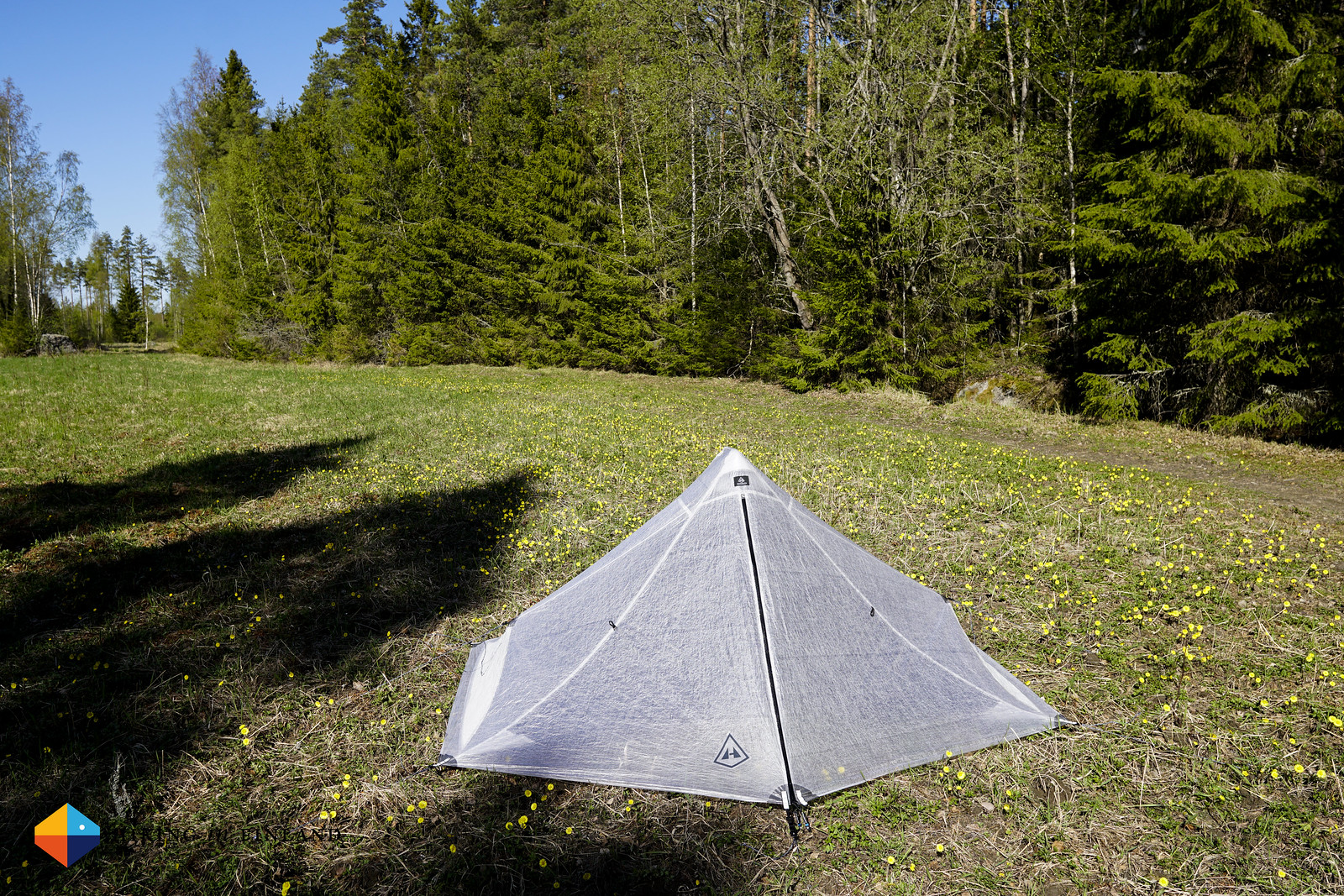
Are you on the look-out for an cuben-fibre shelter with two entries & vestibules, that is easy to pitch and keeps the bugs out? Then you should read my review of the Dirigo 2 from Hyperlite Mountain Gear!

Behind them leaves.

Disclosure: This article has been supported financially and with gear from Hyperlite Mountain Gear. As you know: I’m keepin’ it real and tell you how it is – I maintain full editorial control of the content published on Hiking in Finland. Read the Transparency Disclaimer for more information on the affiliate links in this article & blogger transparency.

tl;dr

Simple to pitch, spacious for one, and good for dry environments where you will encounter a lot of bugs, that’s where the Hyperlite Mountain Gear Dirigo 2 shines as an ultralight shelter. In humid and wet environments, if you’re tall or you hike with a friend then you might not find this shelter the best option.

Time

I received the Dirigo 2 in the spring of 2019 and slept in it a dozen nights in Finland and Germany.

Hyperlite Mountain Gear Dirigo 2

Function

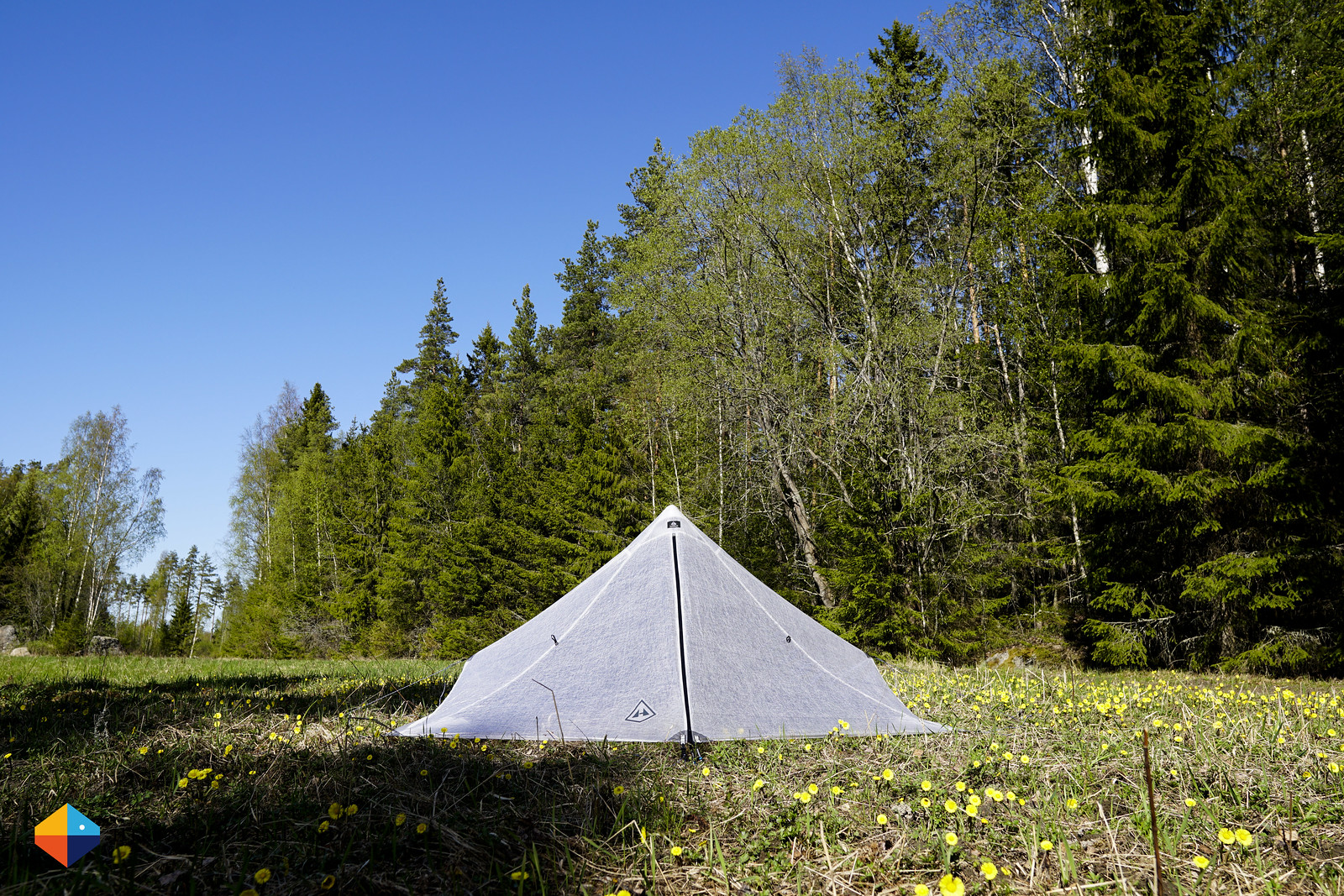
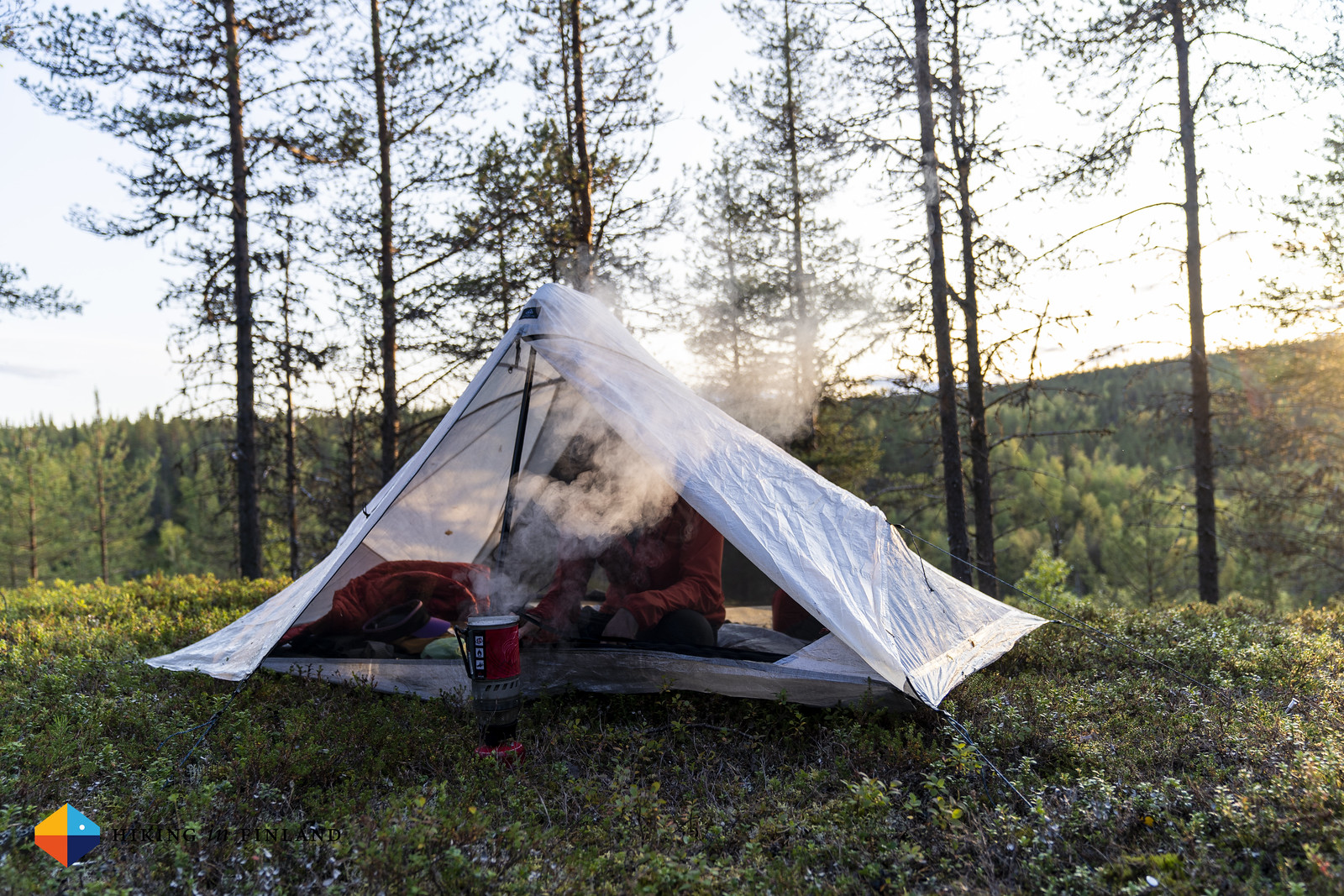
The function of this tent is to keep you protected from bugs, critters and rain when you are sleeping outdoors. It’s a hybrid single + double wall design which pitches with two trekking poles and has two entries and vestibules.

Hammastunturi Wilderness

Features

The features as per Hyperlite Mountain Gear:

  • Easy entry and exit for two with dual entry
  • Breathable panels at head and foot to combat condensation
  • Two vestibules for exterior gear storage with #5 YKK Aquaguard® Zippers
  • Two large mesh walls for maximum ventilation
  • Pitches with two trekking poles and eight stakes
  • Carbon Fiber ‘Ridge Bar’ adds superior strength and stability
  • Reflective guy-out points
  • Internal mesh hanging stow pocket
  • Internal D-rings for clothesline
  • Two side wall guy-out points for increased internal space
  • Fully seam-sealed
  • Line-locs on all guy-out points
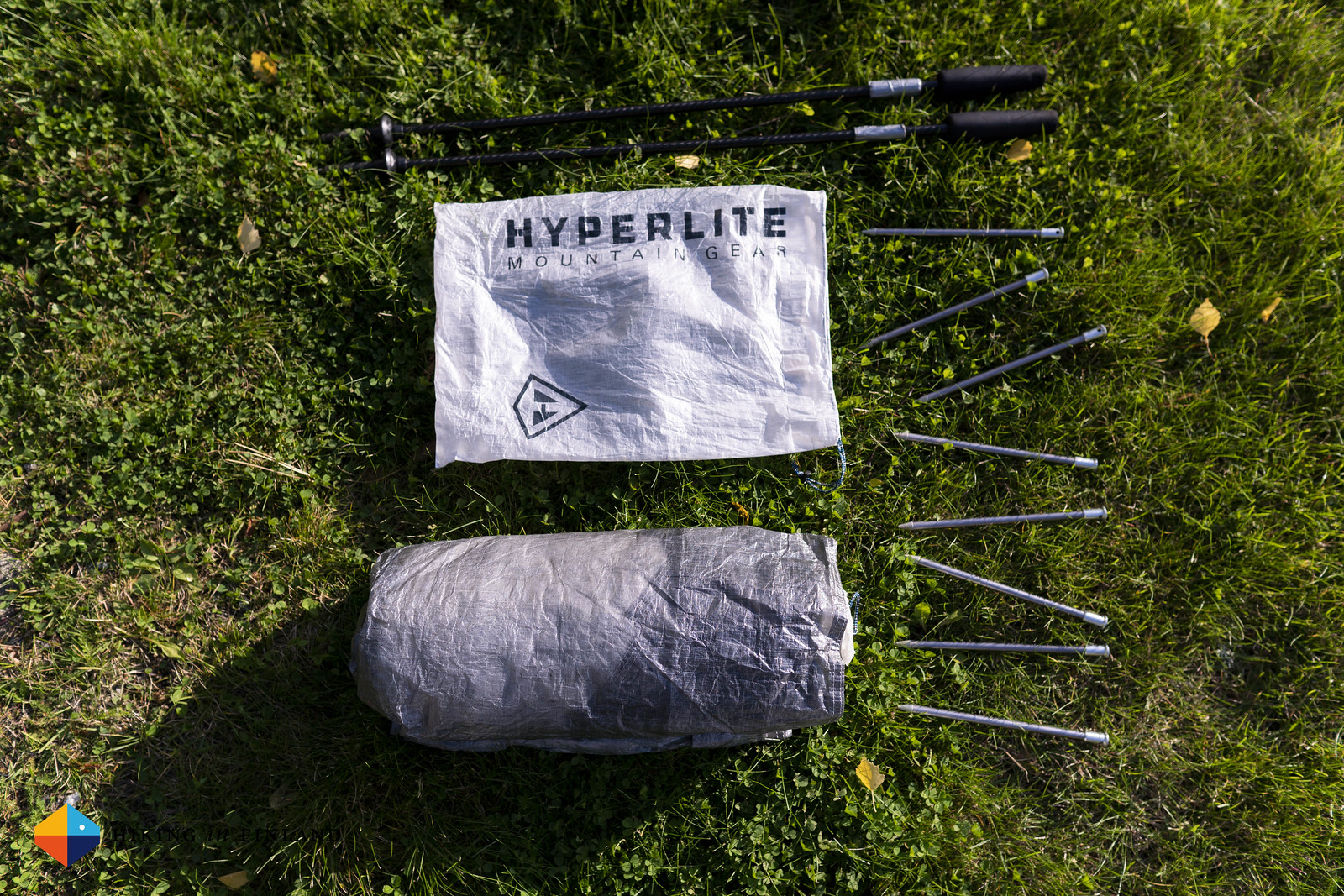
  • Includes X-Large Drawstring Stuff Sack for storage
  • Made in Biddeford, Maine, USA

Packed Hyperlite Mountain Gear Dirigo 2

Technical Innovations

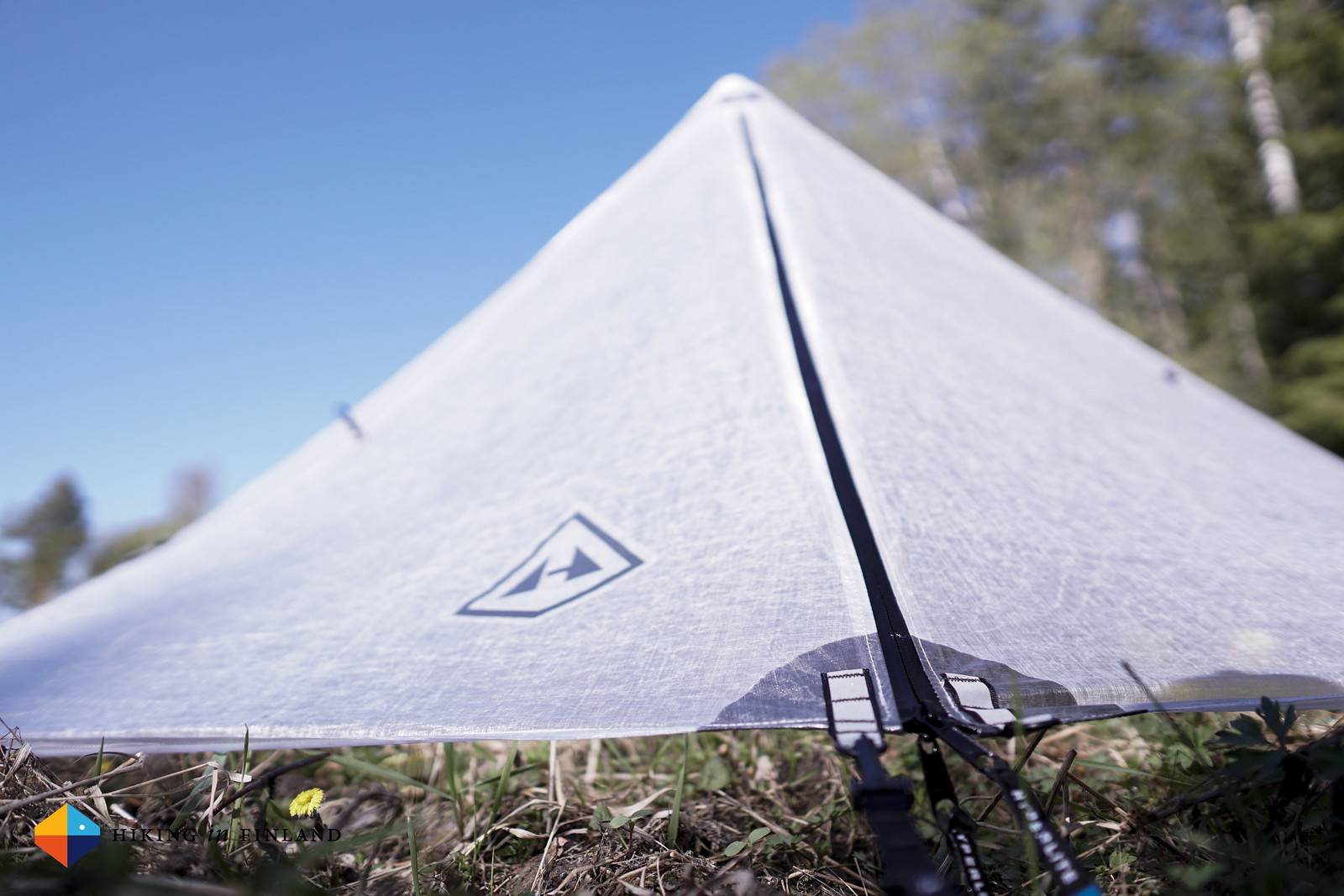
In the last couple of years I have felt there haven’t been that much innovations in backpacking. This time I’d say the use of breathable DCF-WPB (that’s the breathable Cuben material, the same which is used in The Shell) is an innovation, although I’m not totally convinced that the small panels are enough or at the right place. Also, other companies already have used breathable cuben (with eVent) for several years in shelters.

Breathable Side Panel of the Hyperlite Mountain Gear Dirigo 2

Quality

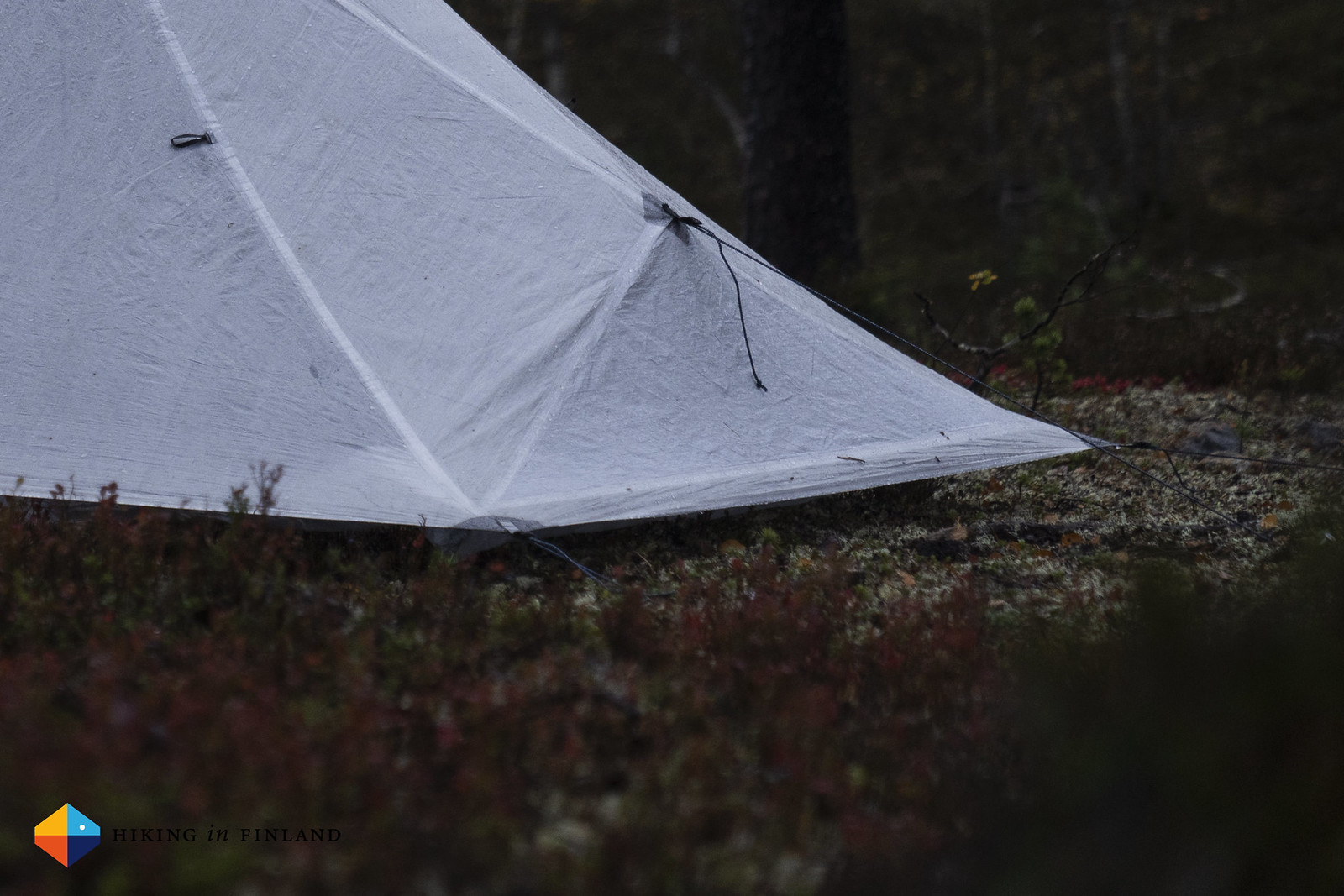
I found the quality of the Dirigo 2 excellent. High-quality materials assembled by precise craftsmen & women in Maine – yes, this is a “Made in the USA” product that is superbly crafted and deserves this label.

Hyperlite Mountain Gear Dirigo 2

Weight

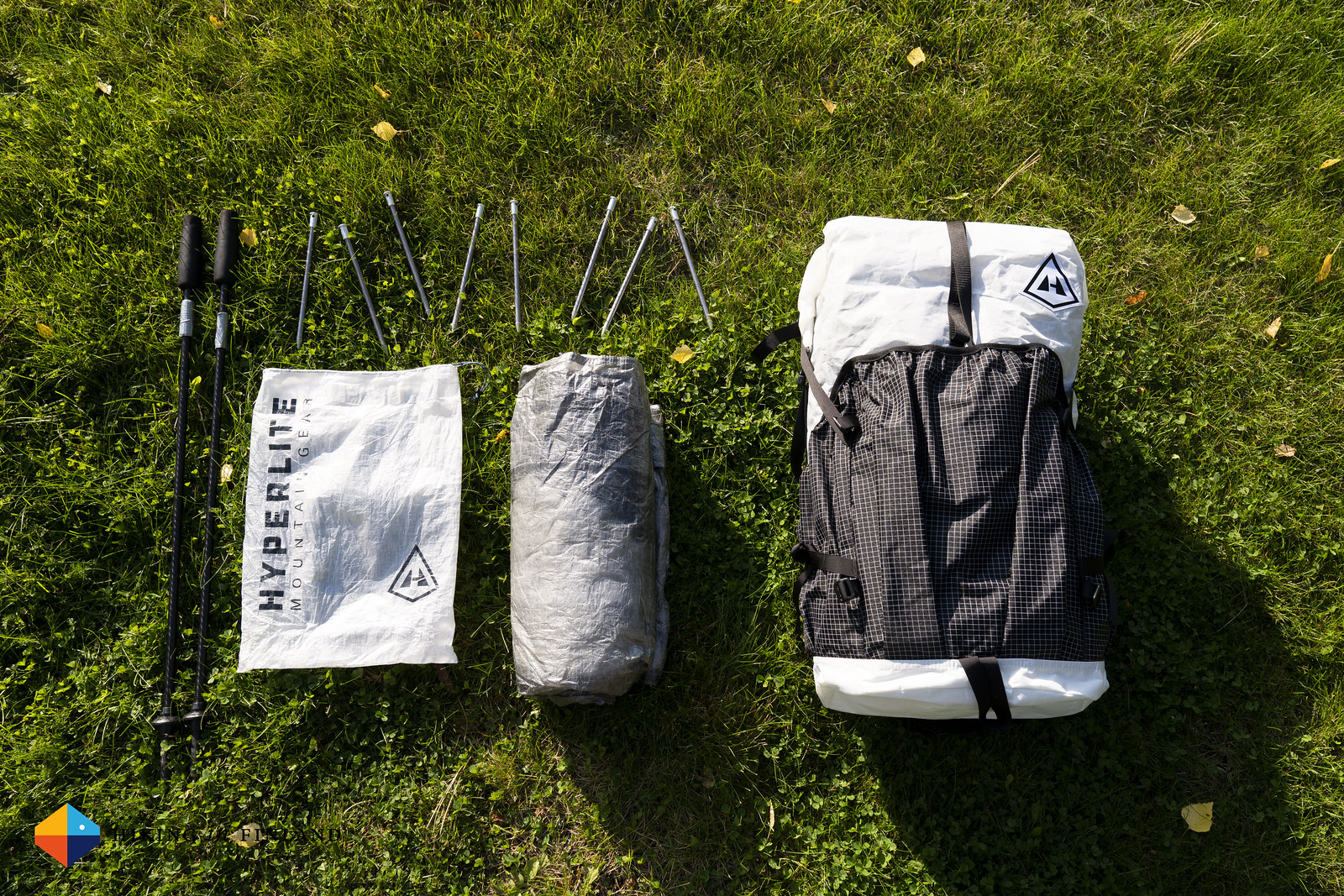
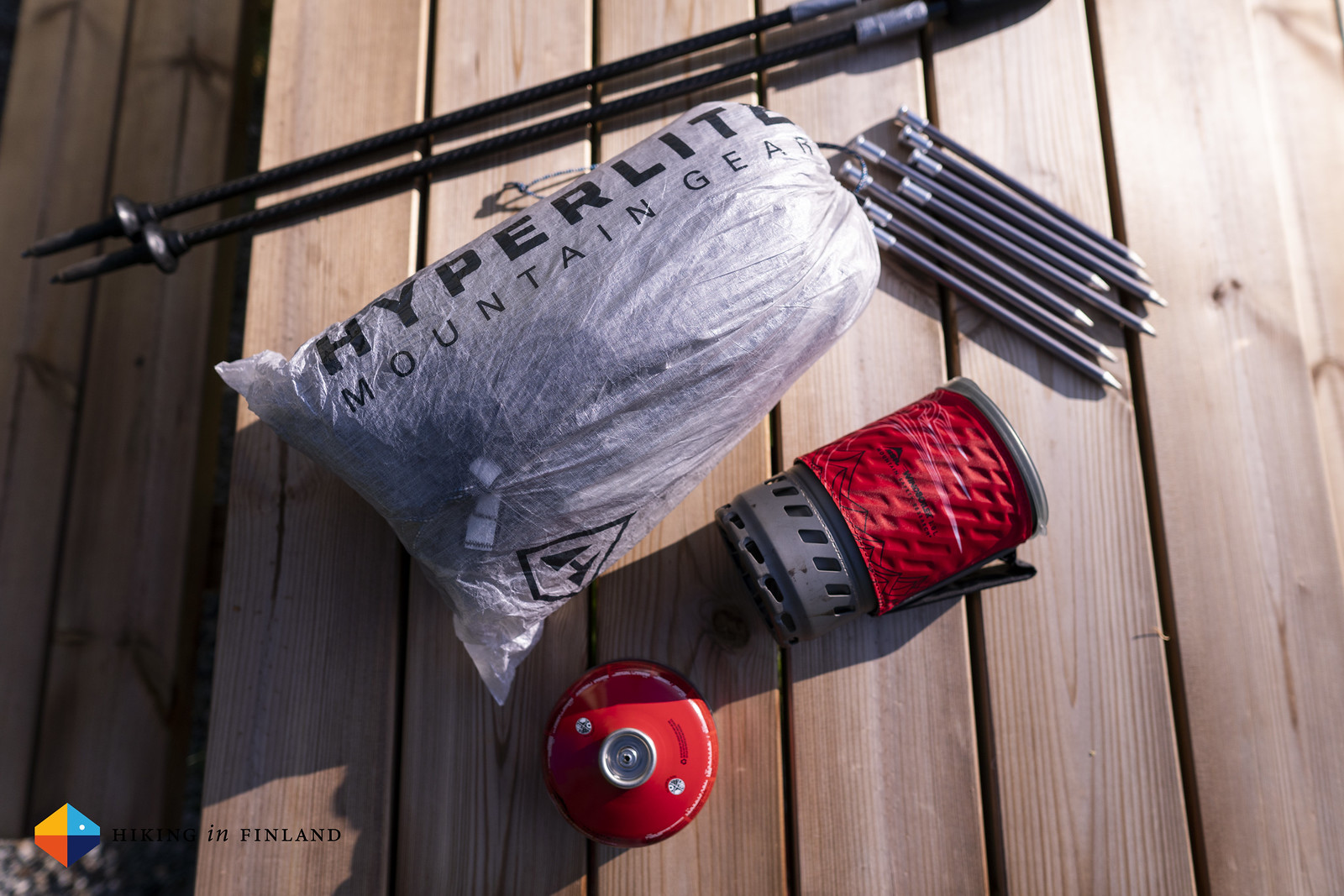
The weight of my Dirigo 2 was 802 g, that includes all guylines. The included Drawstring Stuff Sack is 13 g, while the stake set with 8 Easton Stakes is 114 g or ~14 g per stake. So everything together is 929 g for this shelter.

Hyperlite Mountain Gear Dirigo 2

In use

As I was just writing about weight, you’ll need to also think about the weight of your Poles, though these do not count directly to the weight of the shelter. I use Ruta Locura Yana Poles (together with the Black Diamond Ultra Distance Poles probably my favourite trekking poles) which are 106 g per Pole. As I also use these throughout the day and do not carry them they aren’t included in the weight of the shelter, but obviously are needed. And as you read above, I use the Hyperlite Mountain Gear Stake Kit, and those are heavy. You could use much lighter Titanium pegs which are 5 g or less, then your stake set of 8 would be 40 g – quite a saving. However, I trust the Hyperlite Mountain Gear Stakes more in soft, wet ground and high winds, so I rather carry these instead of having some pegs pulled out by the wind.

Hyperlite Mountain Gear Dirigo 2

Now at 802 g the Dirigo 2 is lightweight, but there are lighter alternatives – especially for two persons. The Ultamid 2 from Hyperlite Mountain Gear themselves is 534 g but does not include a bug netting (that would be 418 g extra if you take their own) or ground sheet. Personally I take a bivy with the Ultamid 2 as it adds to the flexibility of the shelter (I only have to pitch it when I know it will rain, and can sleep with just the bivy when the stars are out). Competitors like Big Agnes have the Scout 2 out, which in the Platinum Version weighs around 500 g – but also has no vestibule or dual entry. From the cottages both the StratoSpire Li from Tarptent and the ZPacks Duplex are of similar construction, weight and price.

Packed Hyperlite Mountain Gear Dirigo 2

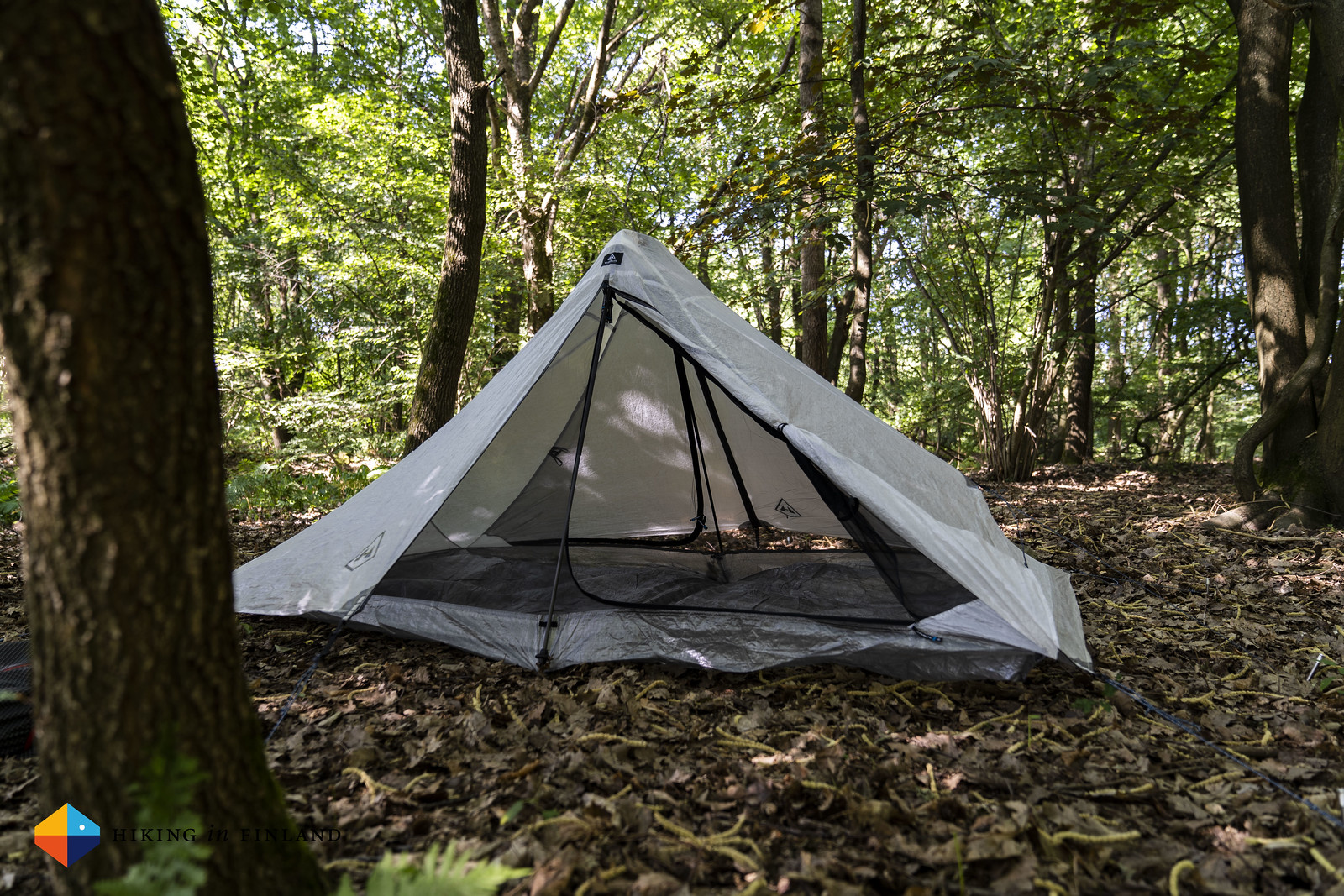
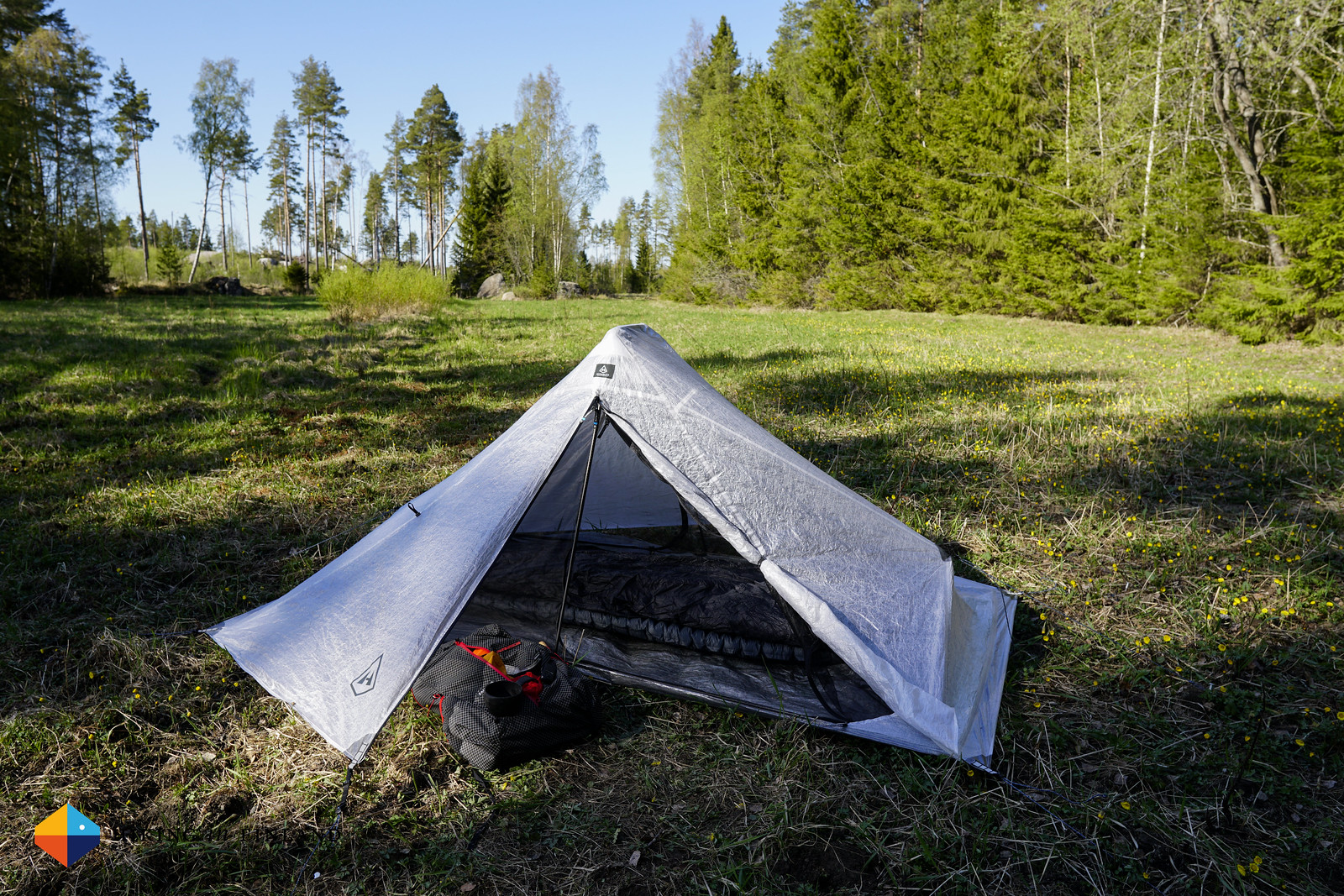
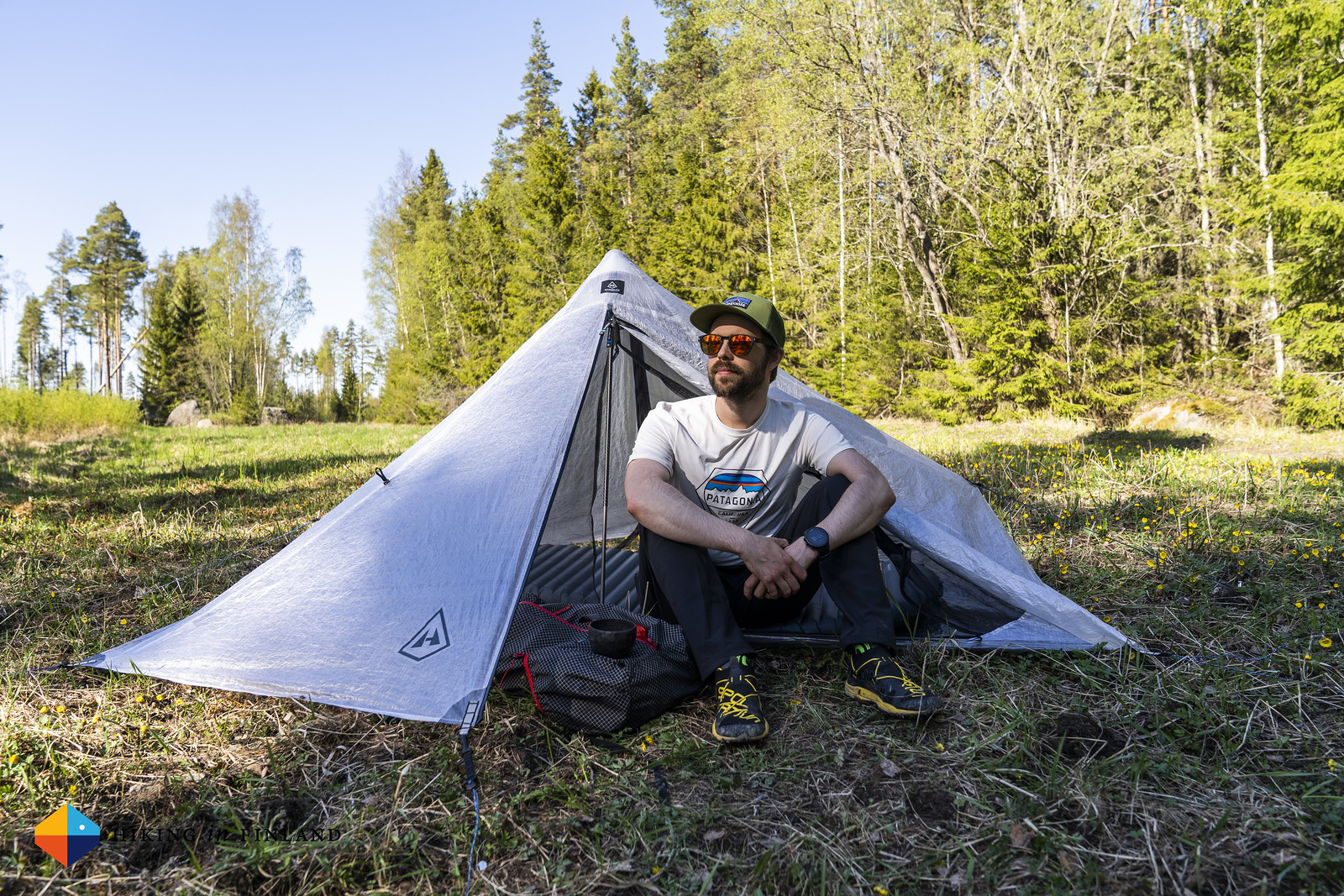
The Dirigo 2 has a good interior height, this is achieved by the two trekking poles and the short carbon strut at the peak which creates more inside space. The trekking poles are angled and go into a grommet at the bottom and into a small reinforced pocket at the peak, this makes for a solid frame in high winds when the doors are closed. If you open the doors and roll them up you can enjoy great views, though this weakens the tent in high winds quite a bit. However, in reality you only will roll up the doors when the weather is good, so it really is a non-issue. Also on the inside is a small mesh pocket, I have used this for my headlamp to illuminate the tent and that has worked well. I really like the high roof and comfortable sitting height.

Hammastunturi Wilderness

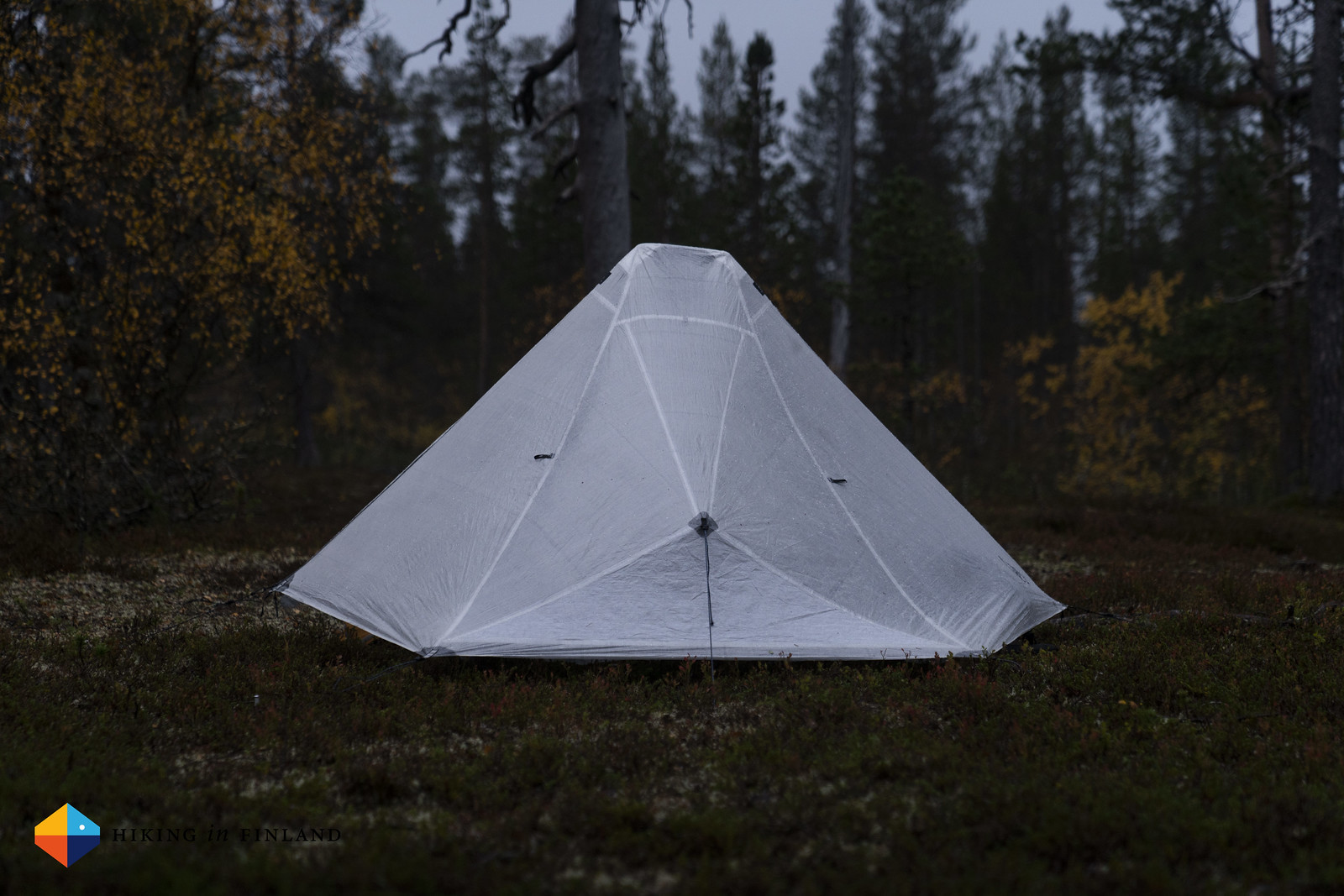
OK, for where is this tent made? It has a groundsheet (= GREAT for very wet environments) and No-See-Um mesh walls which keep the Bugs out (GREAT against mosquitos, ticks, deer flies and other critters and insects). However, in wet environments condensation is an issue and so I feel the Dirigo 2 is much better suited for trips in dry and bug-infested environments. If you mostly go backpacking in the spring and summer and encounter at your camp spots lots of bugs, this is a great choice. If you’re out year around, often in wet conditions, then this might not be the best option for you (then the Ultamid 2 should be your choice).

Hyperlite Mountain Gear Dirigo 2

Something I also really liked about the tent was how easy it is to pitch. Spread it out in a square, peg out the corners, enter the trekking poles and adjust their height, peg out the doors and then the side panels and Voilá! you’re done. After some practice you’re able to pitch this tent in two to three minutes, and thanks to it’s design the inside will mostly stay dry if you pitch in the rain. Putting the tent down is equally simple, I like to fold it up once from each long side to the middle and then once in the middle, this lets me squeeze out any trapped air easily and I can roll up the Dirigo 2 into a small package. Attention only has to be paid to the carbon fibre strut and that it stays where it’s supposed to be, as sometimes it slips out and needs to be put back into place when you’re setting up the tent. The Dirigo 2 can be set up higher or lower depending on how much airflow you wish or how much drafts you want to avoid. I had no problems with drafts even when the outer was pitched 10 cm or more high, by choosing not completely exposed sites.

Hammastunturi Wilderness

And then there’s the packed size. I was surprised by how large the tent is packed, and had to carry it usually in my front mesh pocket (which was the best choice after rainy nights). It packs, even when dry, fairly big, and I often found the included Drawstring bag too small for it – though as I usually just stuffed the rolled-up tent into the front pocket, this was not a problem.

Packed Hyperlite Mountain Gear Dirigo 2

Could be better

I do think the Dirigo 2 could do with more interior space to make it less cramped for two people. Right now it is a solid 1-Person tent, though I would not use it with another adult. I also wonder why the Breathable Cuben was only used in the lower parts of the design, and not also at the top or over the whole side panel (it’s probably a cost thing). This would likely help to minimize or even eliminate the condensation issue. Also, while not really an issue for me, I do think the Dirigo 2 doors would benefit from a buckle at the bottom of the zipper which takes the stress of the zipper, that would make the zippers survive longer and also allow you to open the zipper while keeping the structural integrity more solid I imagine.

Hyperlite Mountain Gear Dirigo 2

Side

Bottomline

Are you mostly out in the summer, like to camp above the treeline, do encounter lots of bugs, like to have a groundsheet and generally a fully enclosed shelter? Then the Hyperlite Mountain Gear Dirigo 2 is a good choice for you. It is excellently made, spacious for one, durable and sheds wind very well, while keeping the bugs and rain out. It is simple and easy to use, and does it’s job of protecting you from rain and bugs very well. All that does come at a price, as at $795 you almost pay $1 per gram of shelter. If you’re usually out with friends in wet and humid environments then you might be better off to use a modular setup with more space, something like the Ultamid 2 or one of the many other pyramid designs out there.

If you found this review useful, please buy the Dirigo 2 directly from Hyperlite Mountain Gear via my Affiliate Link. That way you support me at no additional costs to you!

More photos can be found in the Flickr Album!

Support me on Patreon and get some useful rewards (like hanging out on Discord with me, and Discount codes for kit from partners!) or buy me a coffee – I work Full-Time on Hiking in Finland to bring you inspiring trip reports, in-depth gear reviews and the latest news from the outdoors. You also could subscribe to the rarer-than-ever Newsletter and follow along on Instagram, Twitter, Facebook and Youtube for more outdoorsy updates!

Hyperlite Mountain Gear Dirigo 2

Hyperlite Mountain Gear Dirigo 2 Read More »

OSINT Map: A MindMap for Your Investigations

This is a guest post by Steve Hall (https://twitter.com/shall_1). Thanks for writing it Steve!


I recently attended SANS Denver (SEC487) because I wanted to round out my knowledge on some of the OSINT I had been doing. The class covered multiple tools to help accomplish the task of documenting your process, one of them being mind maps. I was familiar with them as that’s what I had been using prior to the class. During that week of training Micah had shared the early stages of “Your OSINT Graphical Analyzer” or YOGA. I thought this would be great to add to the mind map template. As the class progressed I started to add more and more to the template. I preferred to add it all to a single mind map because it seems the older I get the more I seem to forget, so…after modifying it a bit, sharing it with Micah, then some more modifications, here is the result.

This mind map is  a multi-tabbed map with each tab helping guide through an OSINT process/engagement.

tabs

The Goals and Scoping tab is basic information you will want to know before you begin the process of collecting any data. Its a helpful set of questions (lifted straight from the class!) that helps you define your scope. Once your scoping is complete you can click the begin assessment button (which will link you to the OSINT process tab) or just click the next tab labeled OSINT Process.

goalsscoping1

The OSINT process tab is Micah’s “Your OSINT Graphical Analyzer” in a mind map format. I wanted to have this flow in the same document I used to collect and document the information gathered. If you hover over the notes section it will give you the same examples/labels as Micah has on this site. I have also added hyperlink’s within the mind map to the sites he has listed in YOGA. There are additional links that will take you to third and fourth tab (OSINT Data Collection and Additional Resources).

osintprocess2

The Data Collection tab is for adding all your results. After the collection is complete you can export the data into a workable format for any report you may need to provide.

data-collection3

The Additional Resources tab is a collection of resources that you can use to collect additional data. It is in no way a comprehensive list but is a pretty good collection of resources. It has different web resources based on the piece of data you have, collections sites that have additional resources, tools that can help mine more data and flow charts from IntelTechniques.

addlresource

You can get the mind map at WebBreachers github repository. You will need a MindMap application in order to use it. I use XMind Pro but they have a free version as well. It works on Windows, Linux, and macOS and is pretty full featured.

Hoping this is useful to you. If you have suggestions for changes, let myself or Micah know, or submit a pull request in the github repository.

OSINT Map: A MindMap for Your Investigations Read More »

Security Information Overload: From Panic to Apathy & the Remedy

Security Information Overload: From Panic to Apathy & the Remedy

Security overload leads to apathy. How often do you hear a car alarm go off and roll your eyes hoping the owner would disable the blasted thing before the incoming headache comes a knocking? The primary objection I have to such systems is they work too well. Every week I hear an alarm being triggered […]

This is just the start of the post Security Information Overload: From Panic to Apathy & the Remedy. Continue reading and be sure to let us know what you think in the comments!


Security Information Overload: From Panic to Apathy & the Remedy, written by Thomas Xavier, was created exclusively for readers of the survival blog More Than Just Surviving.

Security Information Overload: From Panic to Apathy & the Remedy Read More »

10 Memorable Things to Do in Hokkaido in Winter

Hokkaido is the northernmost and least developed of Japan’s four main islands. It’s famous for hot springs, volcanoes, ski resorts and beautiful, national parks. With unspoiled nature you can look forward to a host of memorable, unique things to do in Hokkaido in winter.
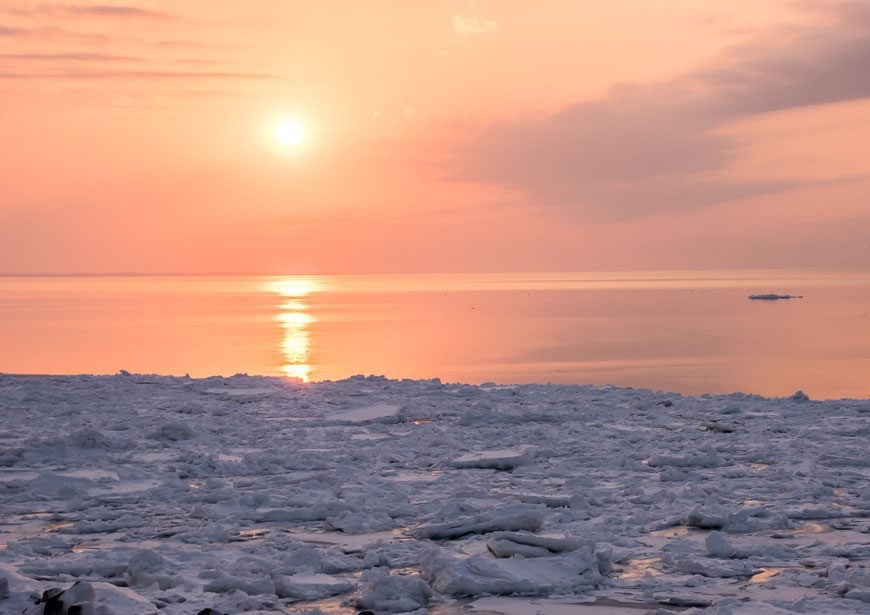
Drift ice off of the Shiretoko Peninsula

Drift ice off of the Shiretoko Peninsula

This post includes some affiliate links. If you make a qualifying purchase through one of these links, I may receive a small percentage of the sale at no extra cost to you. Thank you very much for your support.

These 10 fun and unique things to do in Hokkaido in winter are recommended based on my personal experiences.

Walk on the drift ice and dip in the Sea of Okhotsk

If you’re looking for an easy though thrilling experience, I highly recommend walking on the drift ice in the Sea of Okhotsk.

Drift ice forms off the coast of Russia every winter once the temperature drops. The ice drifts for some 1,000 kilometres to arrive on the eastern side of Hokkaido, sometime in late January, bringing with it plankton.

Plankton is nutrient-rich so it sets the stage for some interesting nature viewing opportunities – especially of the Yezo brown bear which thrives in Shiretoko National Park. If you’re lucky you might see a few of the 400 – 500 bears that live here between April and mid-fall. Don’t worry about them in winter.

The real thrill of the drift ice experience is a quick swim – though that word conjures up images of swimming strokes like the front crawl – when in reality you’re just floating in your dry suit. It’s breathtaking and initially terrifying but once you catch your breath, it’s an intoxicating experience and one I highly endorse.

Over a week of outdoor adventures, the drift ice walking was one of my favourite things to do in Hokkaido in winter. You only need a couple of hours and it’s easy to arrange a guided tour if you stay at one of the hotels in Shari.

Where to stay to experience drift ice: I highly recommend the Kitakobushi Shiretoko Hotel & Resort. Their rooms look out to the sea – as does the hot tub in the onsen.

Read: Drift Ice Walking in Hokkaido, Japan
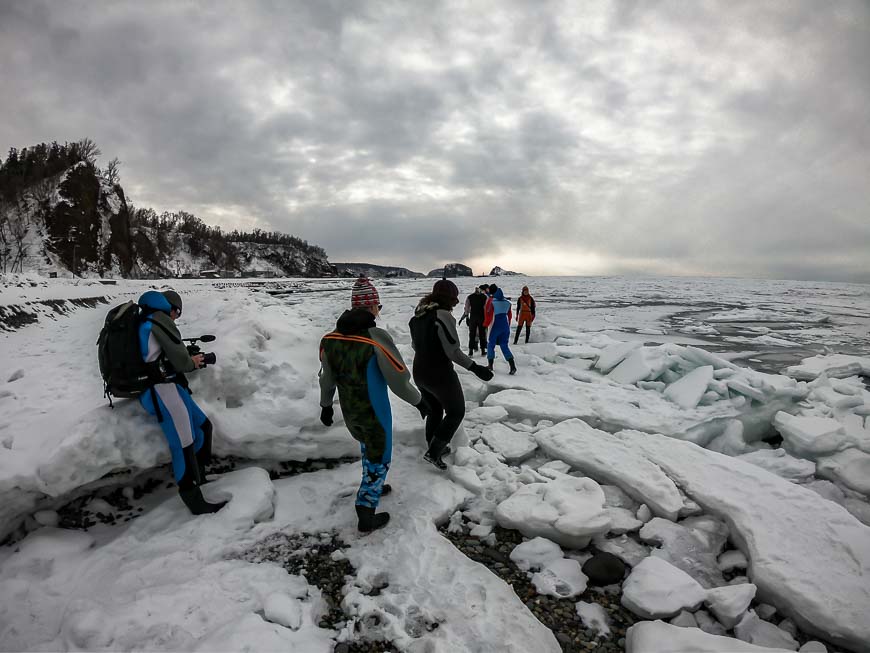
Drift ice walking in Hokkaido
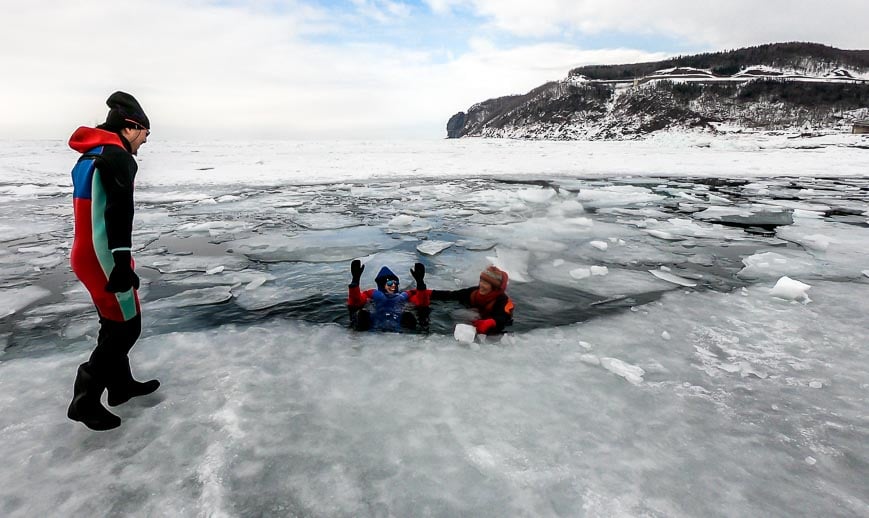
Drift ice walking in Hokkaido

Me testing out the frigid waters in the Sea of Okhotsk

Me testing out the frigid waters in the Sea of Okhotsk

Enjoy the onsen experience

Soaking naked in an onsen was one of the unexpected highlights of my time in Hokkaido. It’s not that I don’t love a good soak in warm water, but doing it naked in front of strangers is a whole other experience.

Sometimes I’d go early in the morning (it helped that I wasn’t on the time zone) so that there would only be a few other women present. At other times there would be dozens of women around and even kids. They start them young in Japan – and it would appear that they are way more comfortable with their bodies – wrinkles, warts, scars and all.

A good soak in an onsen is a thoroughly relaxing, in the moment experience that I couldn’t get enough of. Fortunately most of the hotels we stayed in had an onsite onsen. And just so you know, there are men’s and women’s sections – at least at the places I stayed in on Hokkaido.

Read: Getting Naked in Japan: The Onsen Experience
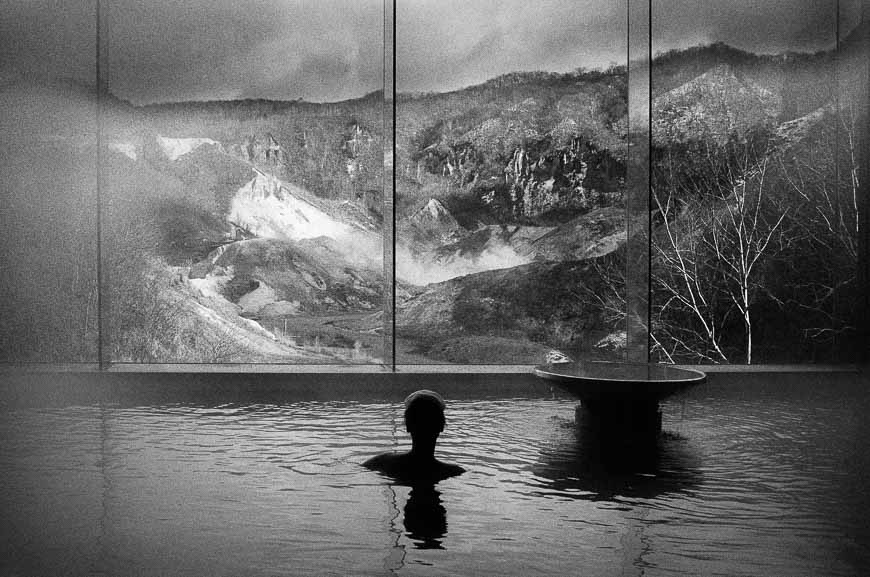
The Japanese onsen experience – Photo credit: @MarkEdwardHarrisPhoto on Instagram

The Japanese onsen experience – Photo credit: @MarkEdwardHarrisPhoto on Instagram

Visit the Akan International Crane Centre

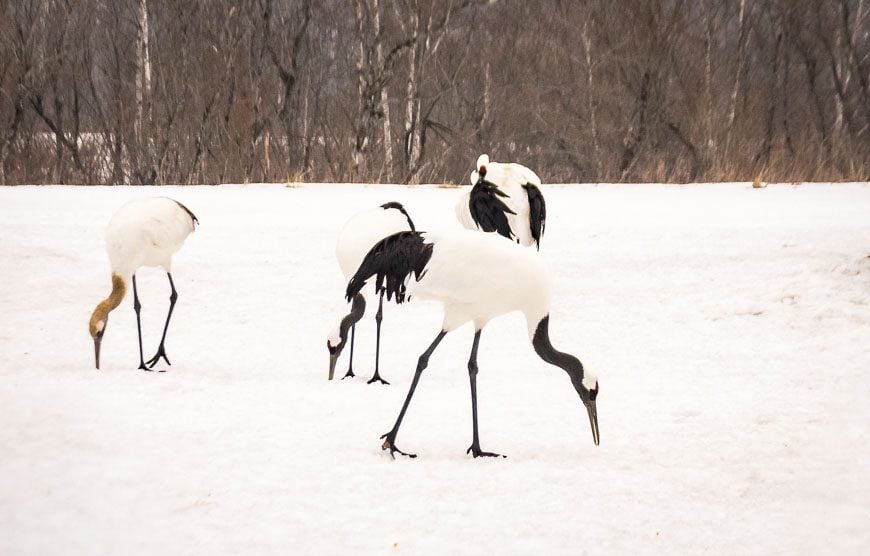
Three of the 15 species of cranes in the world are primarily found in Japan including the Tancho crane pictured below. At one point the cranes could be found all over the islands of Honshu and Hokkaido but hunting and loss of habitat decimated their numbers. The exception was a small, non-migratory flock in eastern Hokkaido.

The Tancho cranes – which came very close to extinction are now protected in Japan as a Special National Monument. At the Akan International Crane Centre, called the “birthplace of the artificial feeding program,” the wetlands provide a wintering area for large flocks of cranes. The centre is also a place for both crane research and public education. Today there, are approximately 1,500 cranes.

The public can visit between 9 AM and 5 PM daily. The crane centre is just a 20 minute drive from Lake Akan.
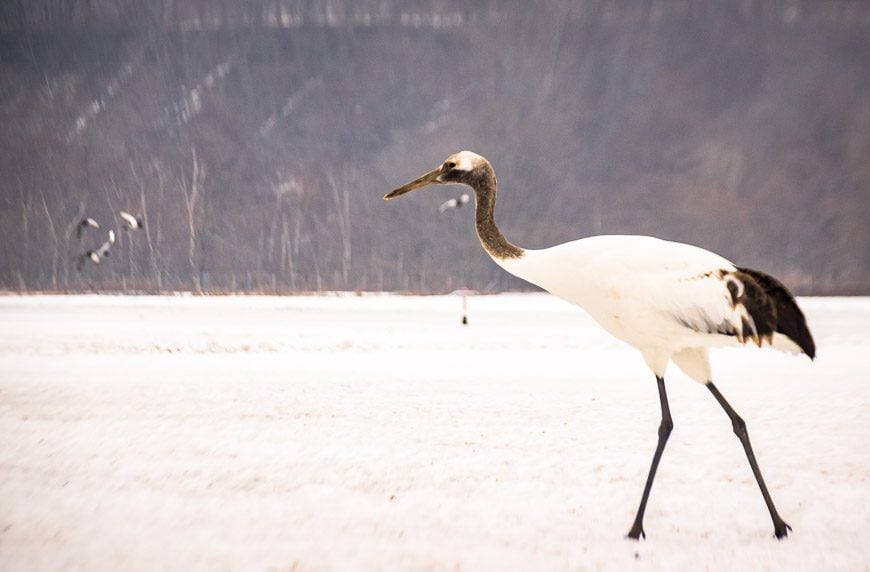
Seeing the beautiful Tancho crane is one of the cool things to do in Hokkaido in winter

The beautiful Tancho crane

Tancho cranes are endlessly interesting to photograph
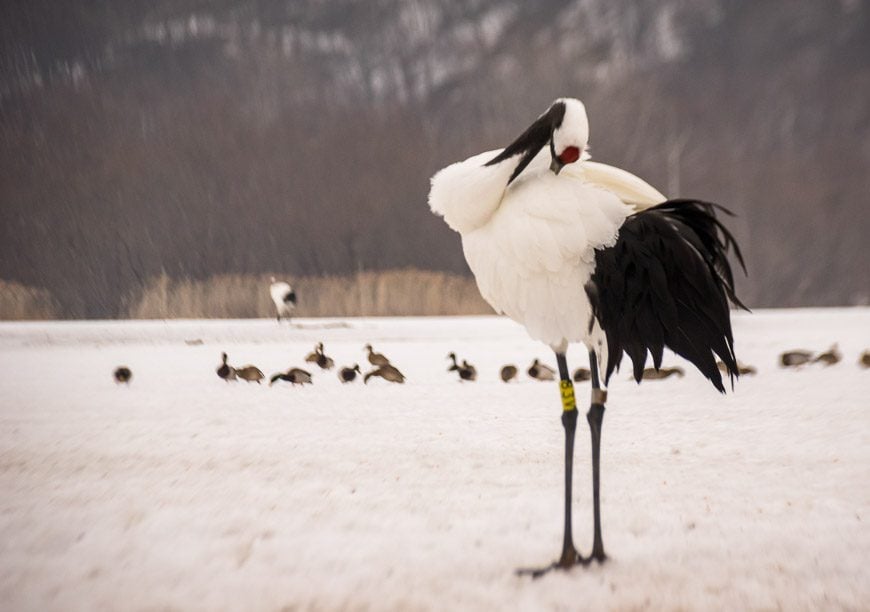
Tancho cranes are endlessly interesting to photograph

A male Tancho crane

A male Tancho crane

Fat tire bike through the Akan Forest 

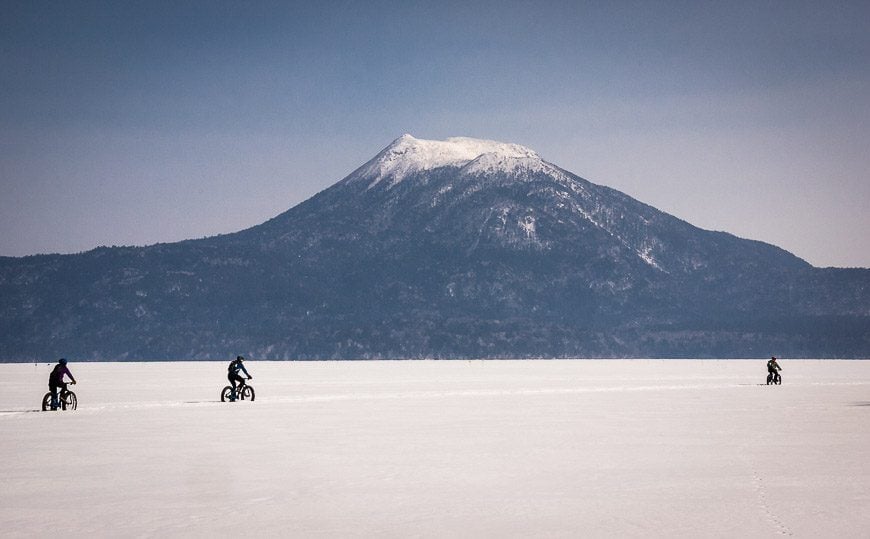
I’ve done my fair share of fat tire biking in Canada – but never on a lake in the shadow of a large mountain – nor in the quiet of a forest with unfamiliar trees. I signed up to do what was called a difficult 10 kilometre ride through the Akan Forest and onto Lake Akan.

The bike ride with an Ainu guide lived up to the difficulty level. Some of our gang spent more time getting back on their bike than riding it – but fortunately landings were soft with all the snow. Still it was loads of fun – and interesting too. We had an Ainu guide who shared his knowledge of the woods – and some of their customs. 

If you stay at Lake Akan Tsuruga WINGS, they can help you with organizing a bike guide.
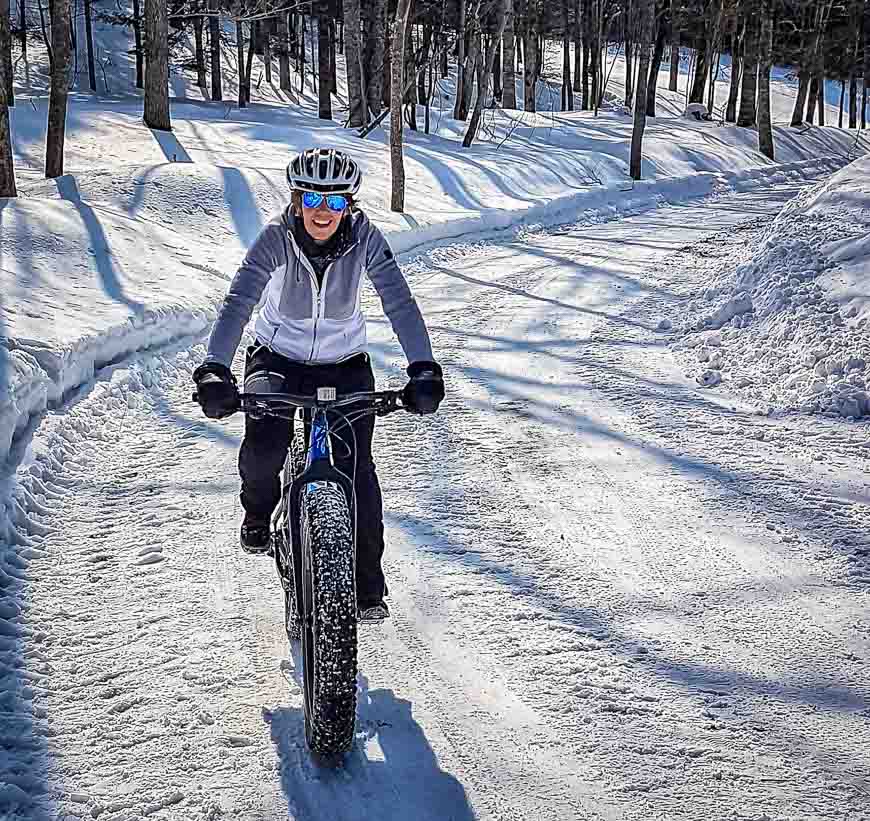
The fat biking started off easily
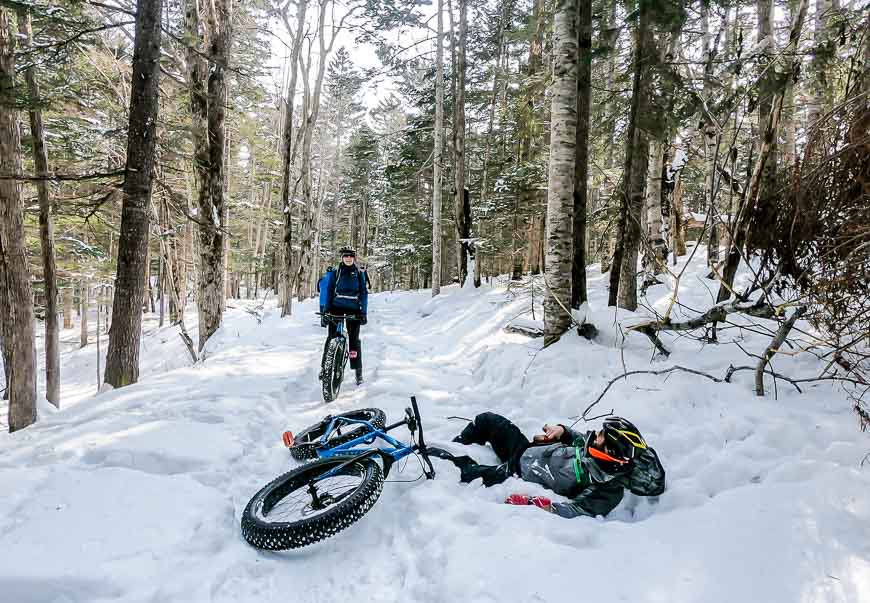
The fat biking started off easily

Falls were common but the landings soft
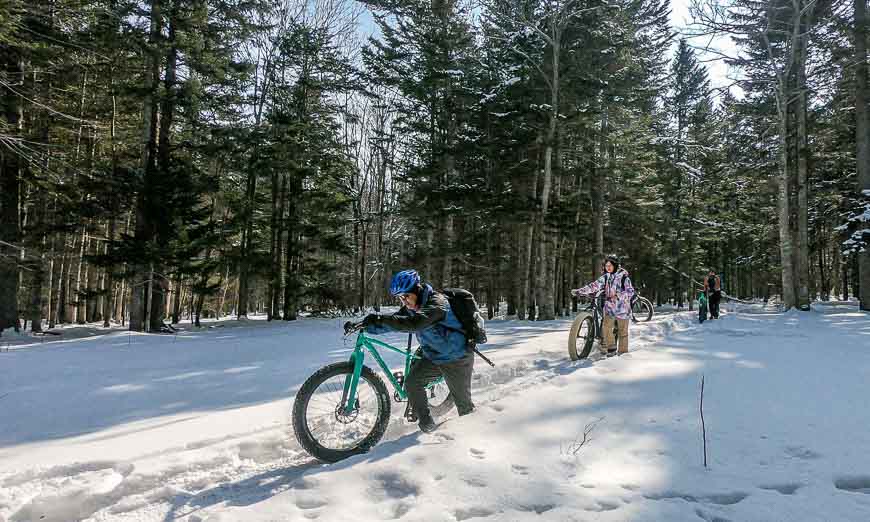
Falls were common but the landings soft

Snow so deep we gad to walk our fat tire bikes in places - but stil one of the great things to do in Hokkaido in winter

Walking fat tire bikes through the Akan Forest
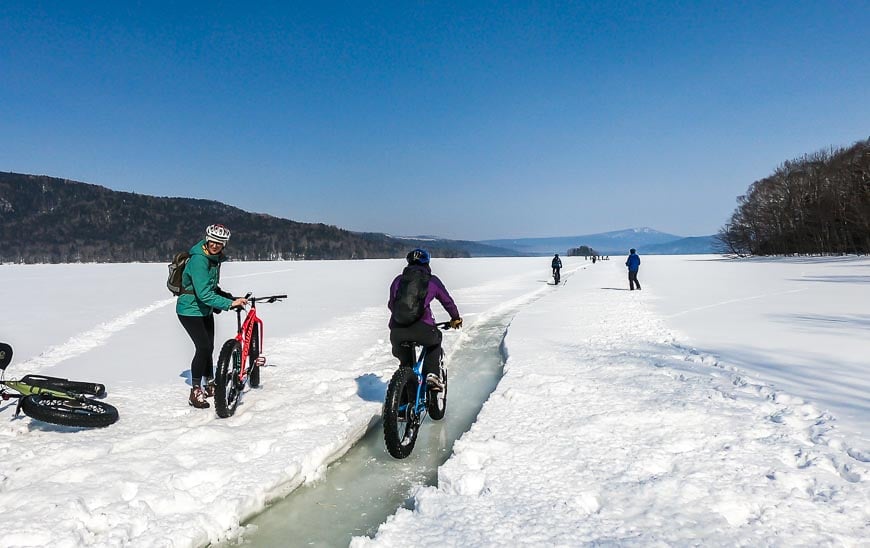
Biking on Lake Akan

Biking on an icy trail on Lake Akan

What a glorious place for a fat tire bike ride - one of the things to do in Hokkaido in winter

What a glorious place for a fat tire bike ride

Go skiing at one of the fabulous resorts near Sapporo – one of the bucketlist worthy things to do in Hokkaido in winter

If you used to love skiing but have got away from the sport, I think I can safely say that your love of it will be reignited if you go skiing in Hokkaido.

I had a day at Kiroro Ski Resort – and fell madly, deeply in love with skiing again. Perhaps it was the uncrowded hills or the beautiful snow conditions. Or maybe it was just the foreign beauty of the trees and vegetation. Or the unfailingly polite people. Or the group of women I skied with who were all at about the same level and a whole lot of fun to be around.

Here’s the thing. We all commented on how we loved our ski day and it had been a long time since we’d all had one that combined beauty and fun.

After my one day initiation into skiing in Japan, I wish I could have had a solid week of skiing across several more resorts including Niseko and Furano. Niseko receives on average 14 metres of snow every winter so I can only dream about what a few powder days would look like here. Furano, bordered by Daisetsu-zan National Park, receives on average 9 metres of snow per year and with the quality of its snow, it’s been the host site for 10 FIS Downhill World Cups. Sign me up!

Book at stay in Kiroro at the Sheraton Hokkaido Kiroro Resort – a few second’s walk from the ski hill or at The Kiroro, A Tribute Portfolio Hotel.

Read: The Fabulous Kiroro Ski Resort Experience, Hokkaido
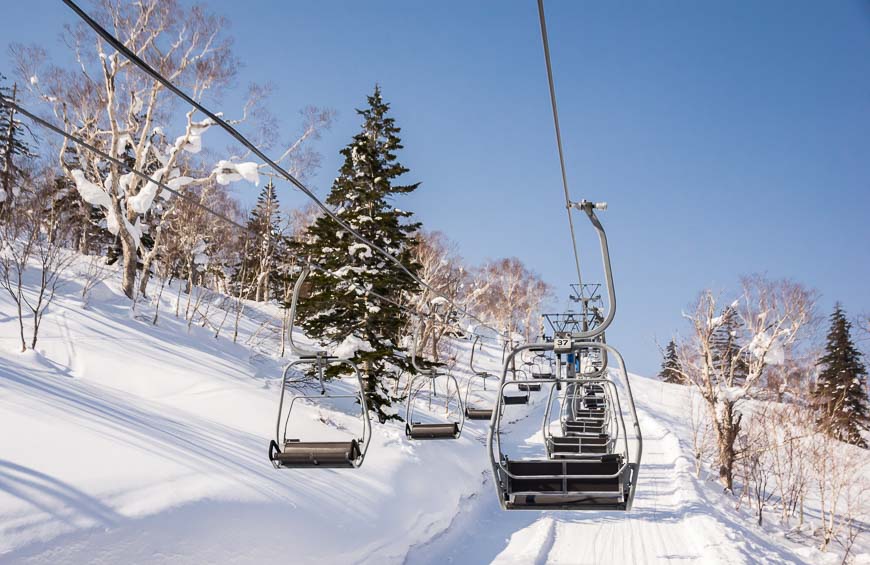
Beautiful trees at Kiroro Ski Resort
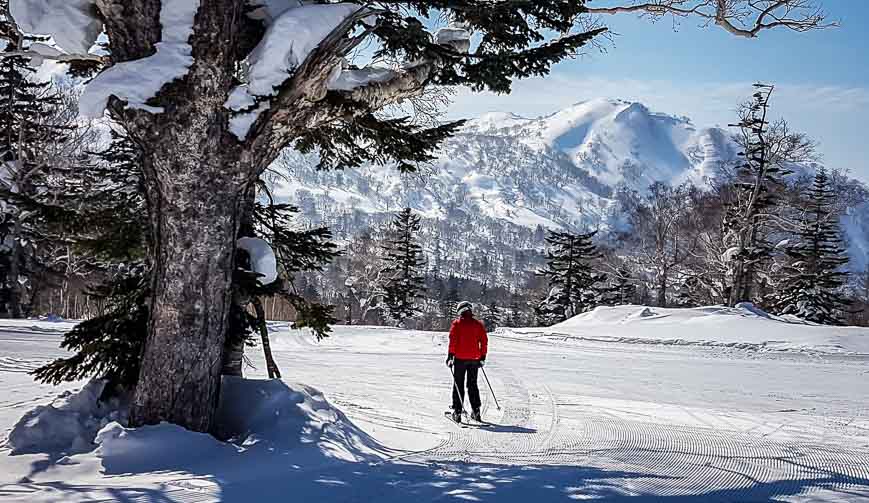
Beautiful trees at Kiroro Ski Resort

Skiing at Kiroro Ski Resort - an amazing and fun thing to do in Hokkaido in winter

Skiing at the truly fabulous, uncrowded Kiroro Ski Resort
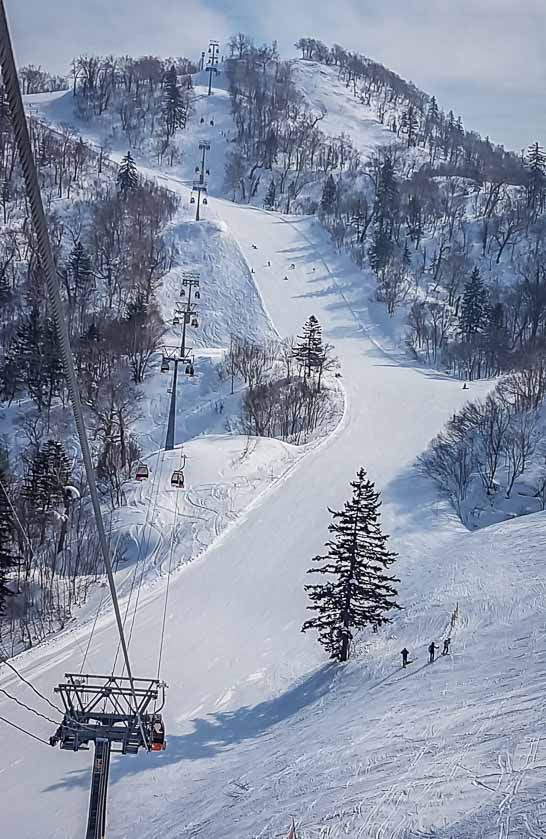
Long empty runs at Kiroro - makes it one of the things to do in Hokkaido in winter

Long empty runs at Kiroro

Go snowshoeing at Lake Mashu 

Lake Mashu, a caldera lake in Akan National Park, reportedly vies for the title of “clearest lake in the world.” It’s deep, with clear blue water though on a day in late February we didn’t appreciate that. Fog did engulf the far shore – something the lake is also famous for. 

Lake Mashu is not accessible to the public but there are a couple of viewing platforms. It’s pretty obvious that it’s a caldera lake from above. In summer there is a hiking trail that runs along the rim of the caldera to the summit of Mount Mashudake. In winter, it’s a stunning place for snowshoeing.

The terrain is rolling so I’d classify the snowshoeing as easy. You can do a loop that includes the trail high above the caldera, returning to the parking lot by a closed-off road. It’s a superb outing and definitely one of the top things to do in Hokkaido in winter.
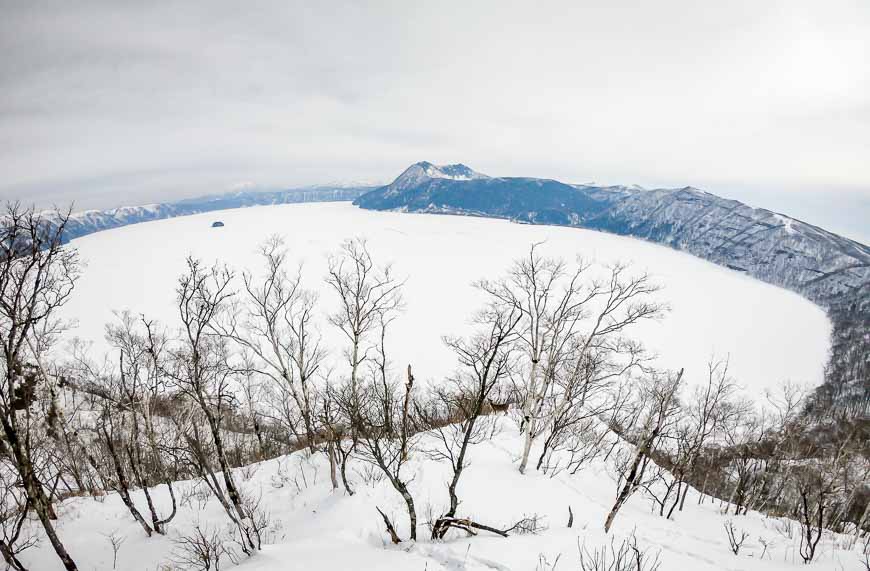
The caldera at Lake Mashu
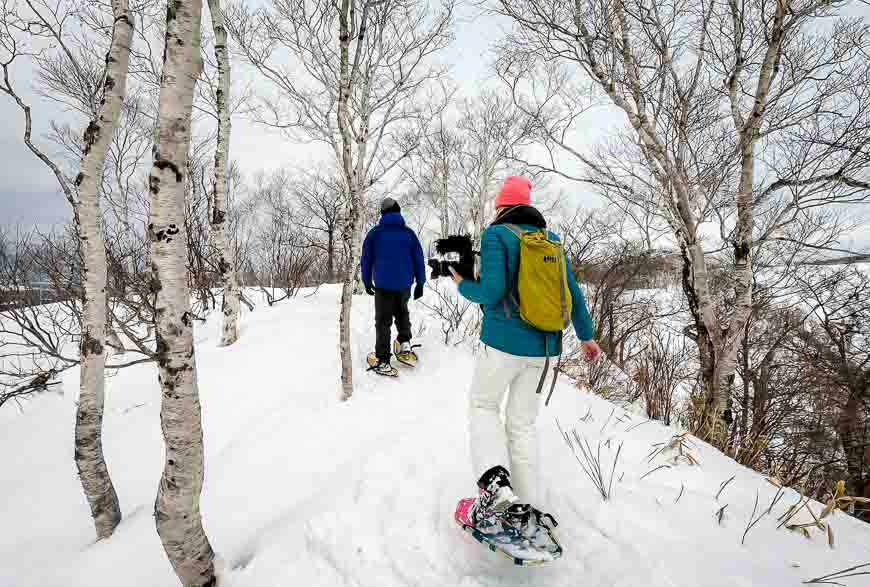
The caldera at Lake Mashu

Fabulous snowshoeing at Lake Mashu - one of the things to do in Hokkaido in winter
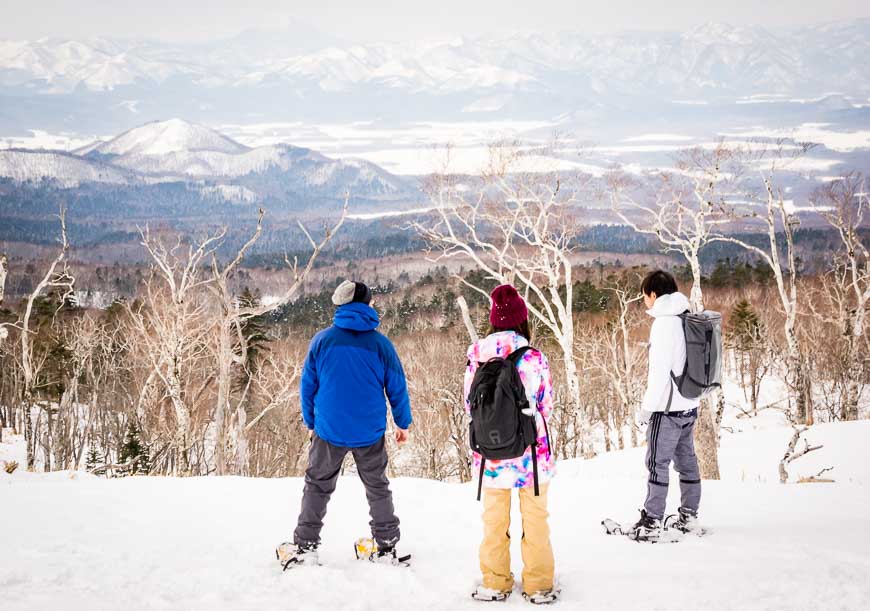
Fabulous snowshoeing at Lake Mashu

Scenic snowshoeing at Lake Mashu

Very scenic snowshoeing
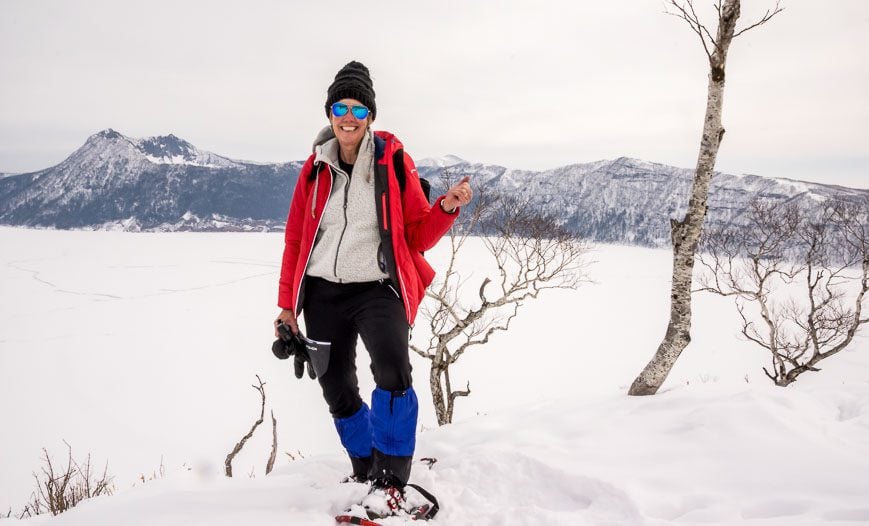
I’d be happy to spend the whole day snowshoeing with a backdrop like this

Catch an Ainu dance performance

The Ainu people are the indigenous people of Japan but weren’t officially recognized as such until 2008. If you are anywhere on Hokkaido where you have the chance to see the Ainu people sing and dance I highly recommend the experience.

My short video on a contemporary Ainu Dance might give you goosebumps. The music based on traditional Ainu folk songs is haunting and the dance, incredibly beautiful. It was a night to remember at Marukibune.
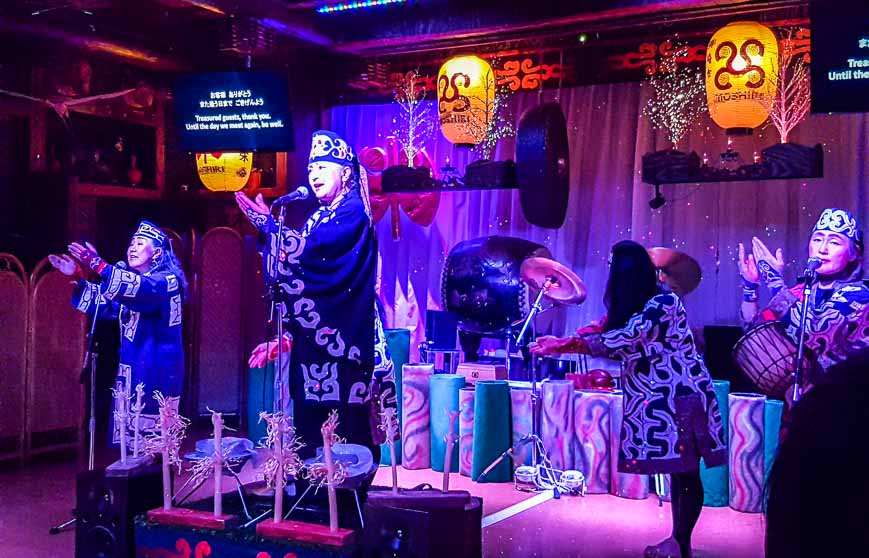
Modern Ainu dance performance

Modern Ainu dance performance

Haunting dance performance by the Ainu people is one of the things to do in Hokkaido in winter

Haunting dance performance

Hike to the sulfurous Mt. Iwo

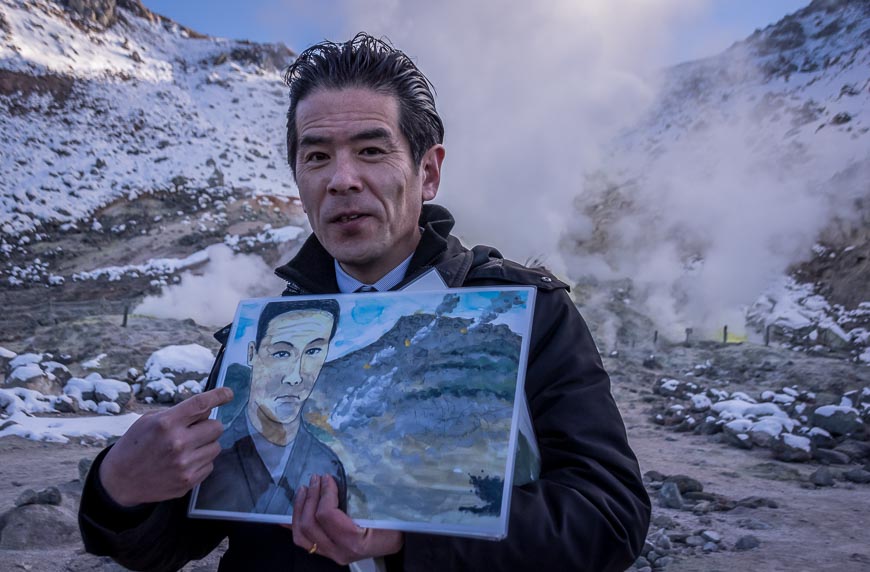
It’s a short hike from the parking lot along an easy trail to reach the sulfurous Mt. Iwo. The air smells as one would expect of rotting eggs. You only need 30-40 minutes to check out the steaming springs and take some photos. Reportedly you can have an onsen steamed egg in the cafe. We missed that. 

Our stay for the night was nearby at the friendly Kinkiyu Hotel – with its sulfur smelling onsen and traditional rooms. I highly recommend the hotel and its location as it’s but a short walk away from the theatre where the contemporary Ainu dance performance is held.

Book a room at the hotel here.
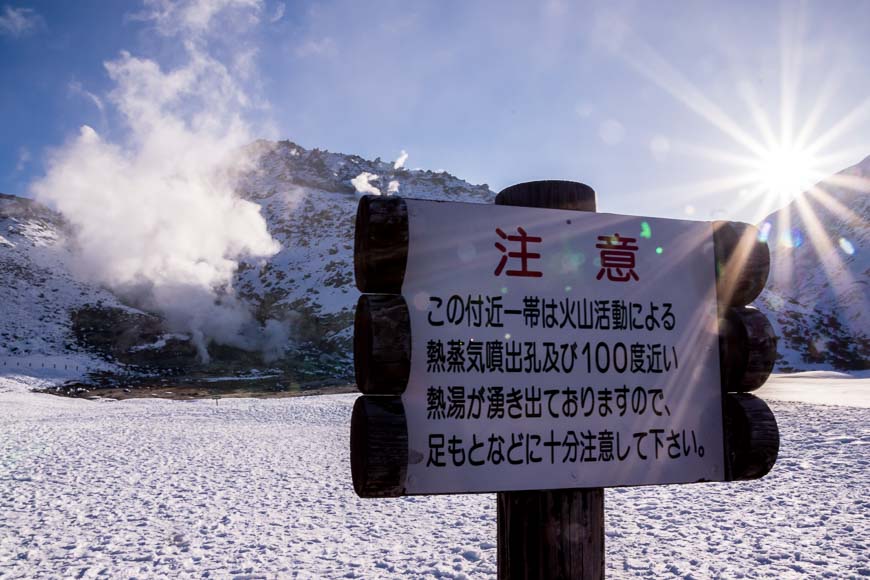
Lookout trail to Mt Ito

Mt Iwo Sulfur Mountain Lookout

A tour guide explaining about Mt Ito
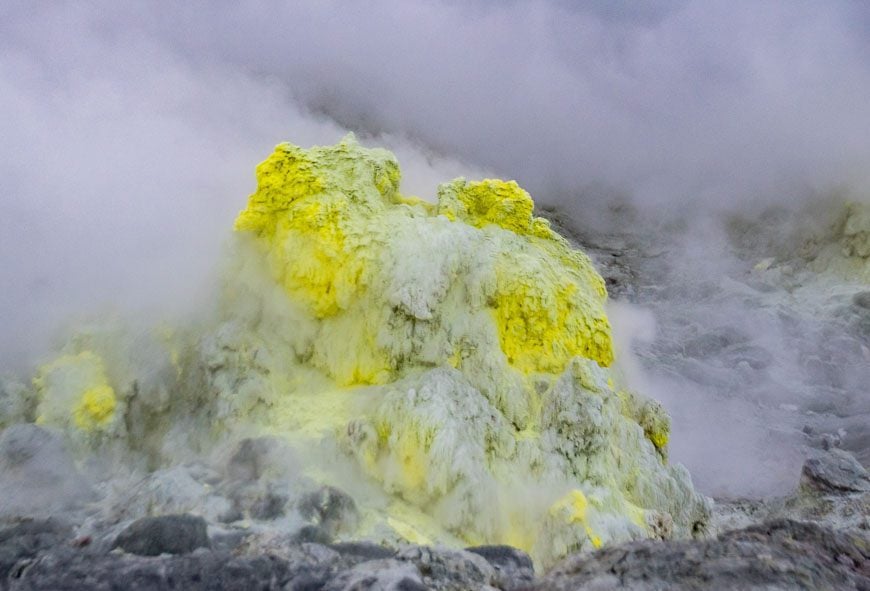
A tour guide explaining about Mt Ito

Mound of sulphur at Mt Ito - one of the things to do in Hokkaido in winter

Big mound of rotten egg smelling sulfur
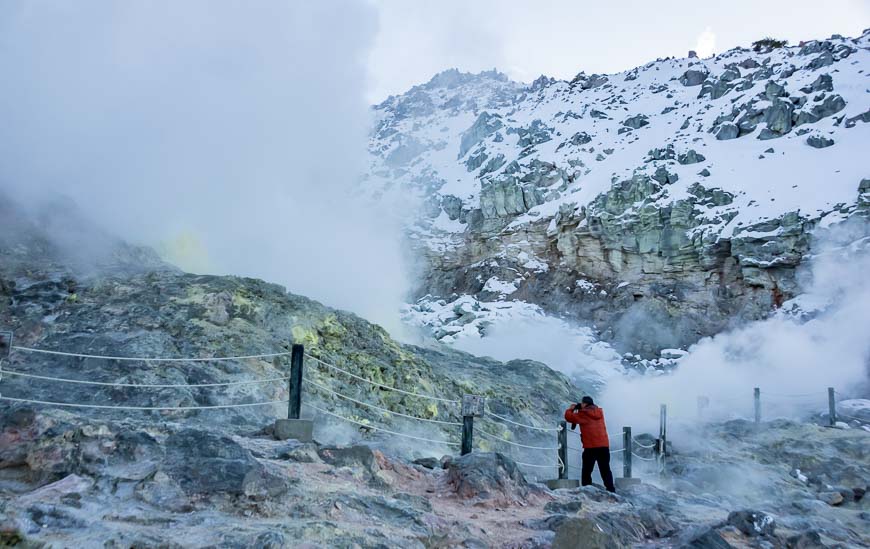
Sulfurous vents at volcanic Mt Ito

Mt Ito sulfurous vents smoking away

Snowshoe in Shiretoko National Park, a World Heritage Site 

Shiretoko National Park sits at the northeastern tip of the island of Hokkaido. The peninsula is remote with much of it accessible only by boat or on foot. Its home to mountains and rugged coastal cliffs along with forests filled with species of trees I’d never seen before like Erman’s birch, Mongolian oak and Sakhalin fir. 

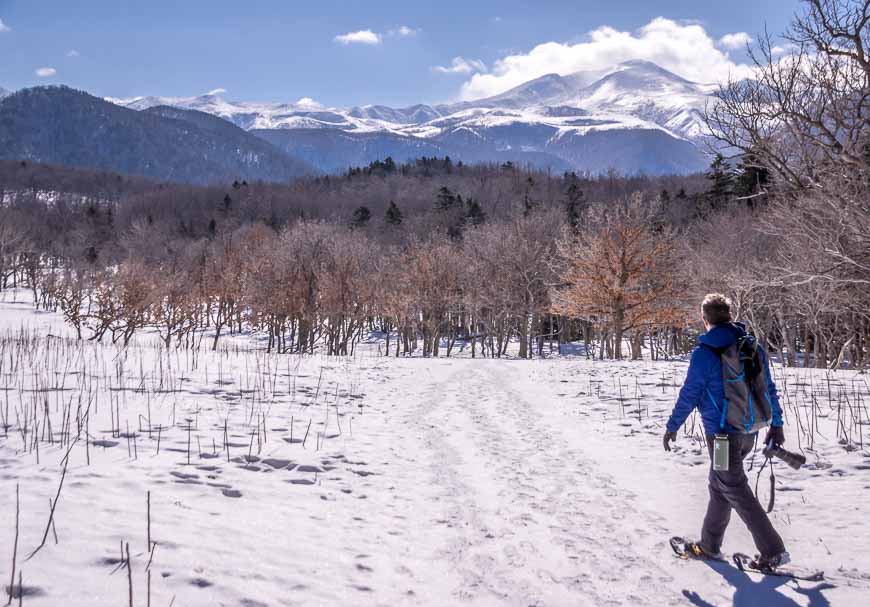
On our snowshoeing adventure we did the easy Furepe Waterfall Trail to the coast on a gorgeous sunny day. Again we were with a local Ainu guide who took pleasure in sharing his knowledge about the trees and the animals.

The snowshoe trail meandered through woods and fields to arrive at the edge of the Sea of Okhotsk. From there we wandered to the frozen waterfall, and back up through open fields with a mountainous backdrop. There aren’t enough adjectives out there to describe how wonderful the experience was. 

Fox seen snowshoeing in Shiretoko National Park
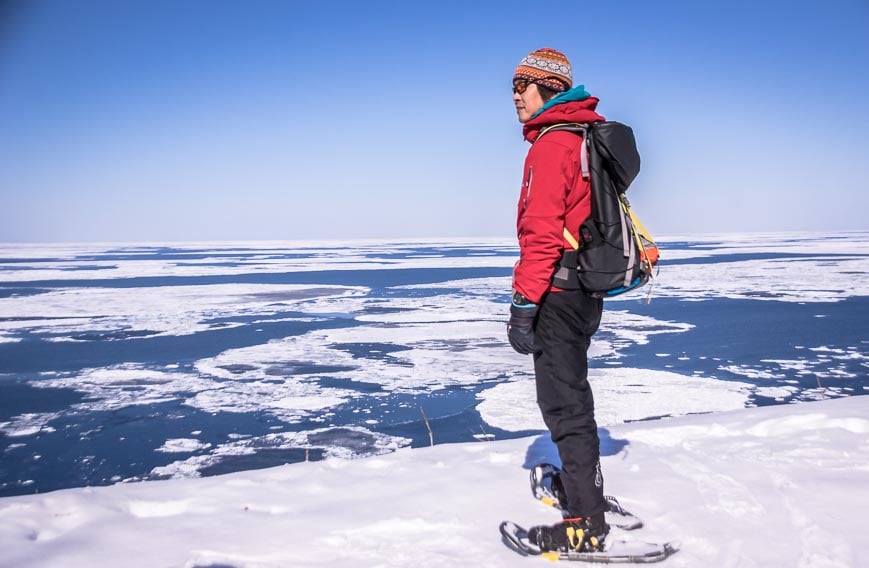
Fox seen snowshoeing in Shiretoko National Park

Snowshoeing to a get a view of the Sea of khotsk - one of the fabulous things to do in Hokkaido in winter

Snowshoeing to a get a view of the drift ice on the Sea of Okhotsk
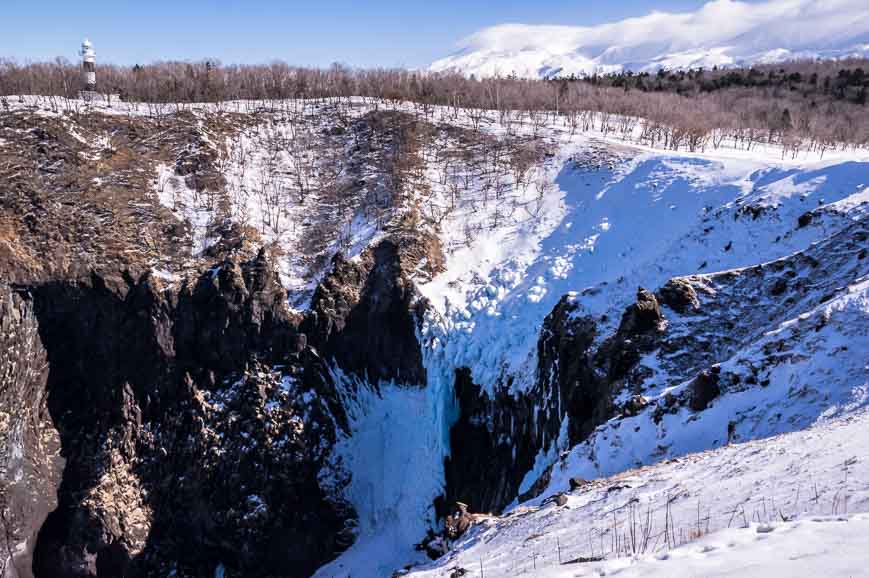
Furepe Waterfall

The frozen Furepe Waterfall

Shiretoko National Park has lots of mountains

What a pretty backdrop for snowshoeing

See the frost flowers + catch the sunrise over Lake Akan – one of the memorable things to do in Hokkaido in winter

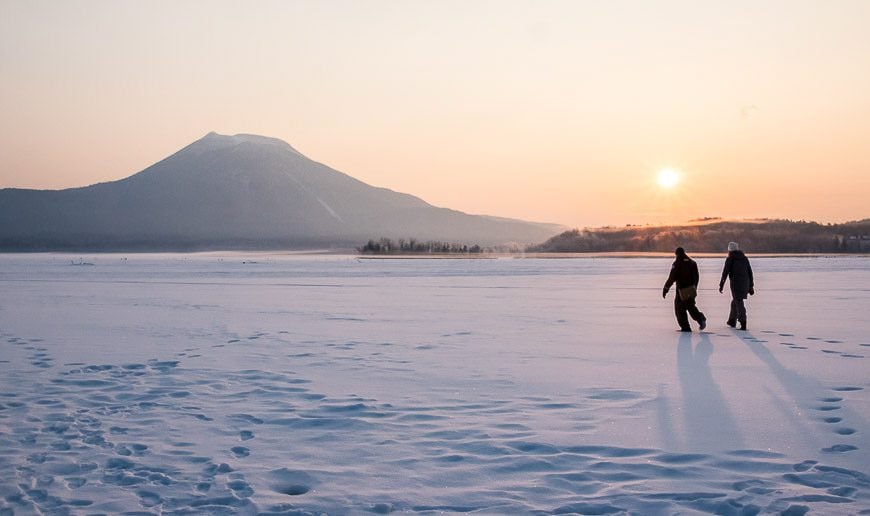
Before I visited Hokkaido I’d see beautiful images of “frost flowers.” They are distinctively shaped ice crystals that can cover swaths of the surface of Lake Akan. However you need Lady Luck on your side to see them for they are considered a rare natural phenomenon. 

Frost flowers form when the lake isn’t covered in snow – under windless conditions when the temperatures dips to -15°C. They can form individual petals or sparkling flowers – but they are ethereal and can melt with just a minor change in wind or temperature.

Our group got up early one morning to catch both the stunning sunrise over Lake Akan and the exquisite ice crystals. We were with local guides – which is a good idea as the ice is thin in places on the lake and you definitely want to know where it’s safe to go.
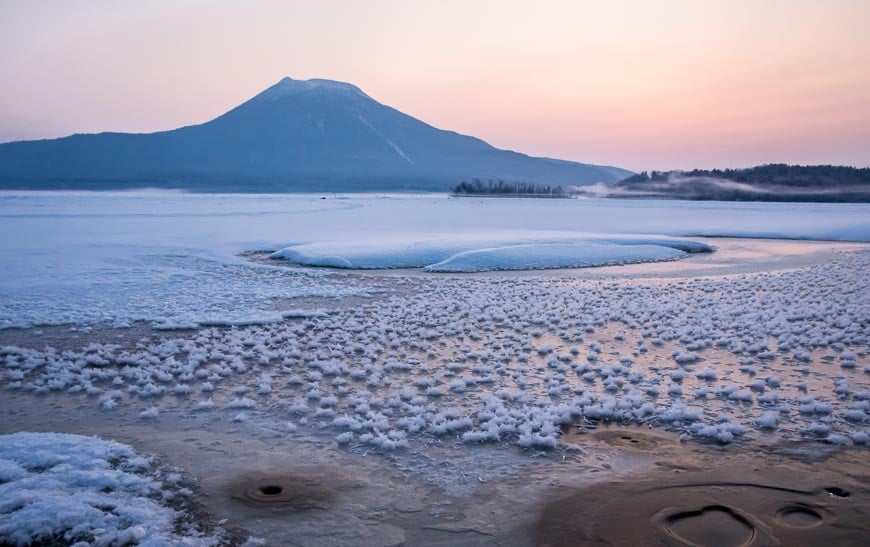
Lake Akan frost flowers
Lake Akan frost flowers

Walking out on Lake Akan at sunrise is one of the special things to do in Hokkaido in winter
Walking out on Lake Akan at sunrise

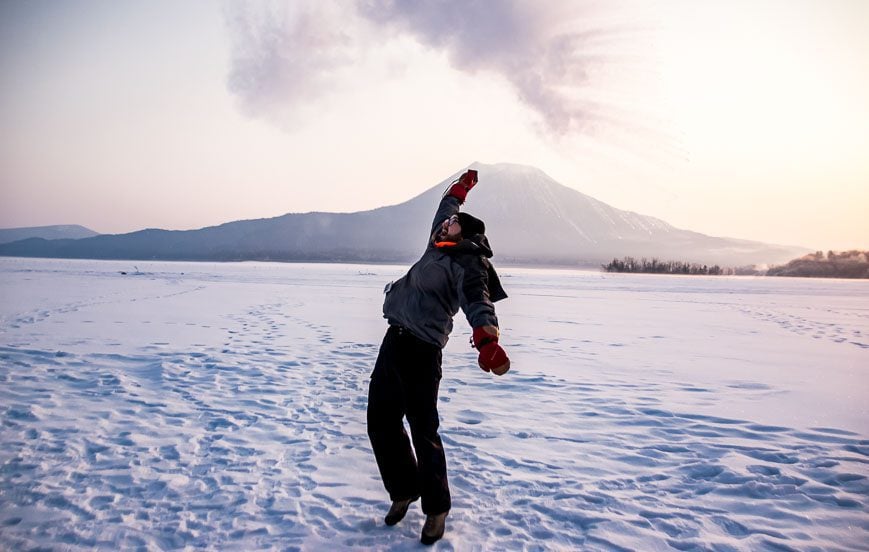
Cold enough that boiling water froze in mid-air

Cold enough that boiling water froze in mid-air at Lake Akan
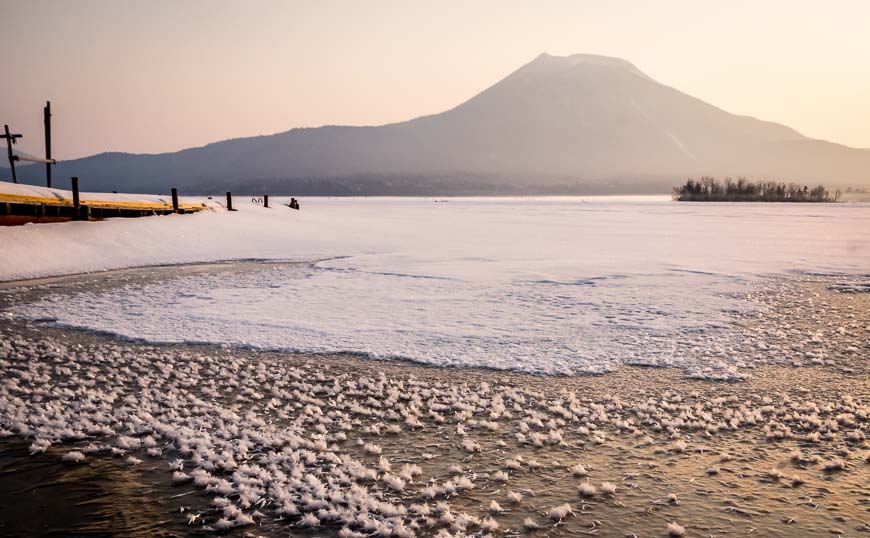
Seeing the rare frost flowers on Lake Akan is a treat and one of the great things to do in Hokkaido in winter

Frost flowers on Lake Akan at sunrise

Video on things to do in Hokkaido in winter. 

My trip to Hokkaido in winter far exceeded my expectations. It’s still an undiscovered part of Japan – that doesn’t see a lot of tourists but offers a wealth of unique experiences.

Want to do a trip to Hokkaido covering most of what I’ve suggested?

My friend Jake has put together a very reasonably priced 8 day, 6 night itinerary for February 2020 covering most of the highlights in Hokkaido I’ve listed above. You can see the full itinerary here and book directly with him if it’s of interest. 

A big thank you to the Adventure Travel Trade Association firstly choosing me as one of six media members to visit Japan – and secondly for hosting me on such a memorable trip.

Click on the photo to bookmark to your Pinterest boards.
10 fun & unique things to do in Hokkaido in winter

The post 10 Memorable Things to Do in Hokkaido in Winter appeared first on Hike Bike Travel.

10 Memorable Things to Do in Hokkaido in Winter Read More »

The Iceberg Lake Hike in Glacier National Park

On a busy trip to St. Mary and Glacier National Park in Montana, John and I squeezed in the Iceberg Lake hike in the Many Glacier area of the park. We did it in mid-September when the colours had started to change and after the summer crowds had left. The Iceberg Lake hike is 9.8 miles round trip and the elevation gain is a very manageable 1,275 feet or 389 metres.

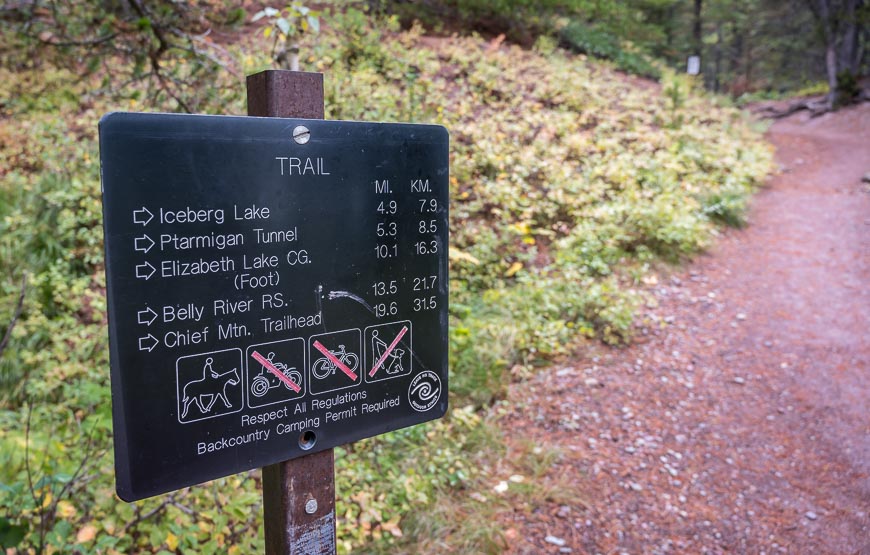
Excellent signage along the Iceberg Lake trail

Excellent signage along the Iceberg Lake trail

Finding the trailhead for the Iceberg Lake hike

From St. Mary, Montana drive 9 miles north to Babb. Turn west onto Route 3 and follow it for 12 miles. The winding, narrow road is in bad shape with lots of broken pavement – though in 2020 it’s supposed to be getting a complete face-lift.

Look for the trailhead for Iceberg Lake hike behind the Swiftcurrent Motor Inn. It’s very well signed.

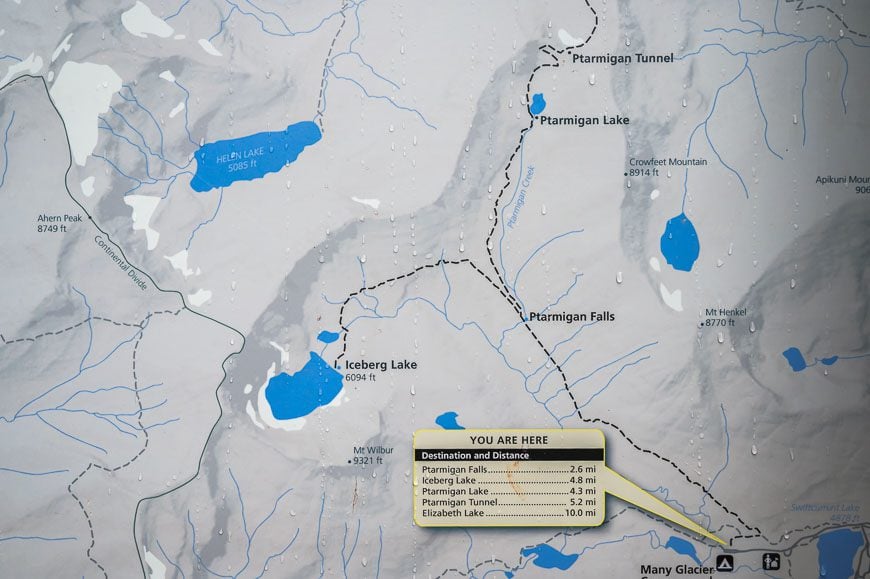
Map of the Iceberg Lake trail

Map of the Iceberg Lake trail

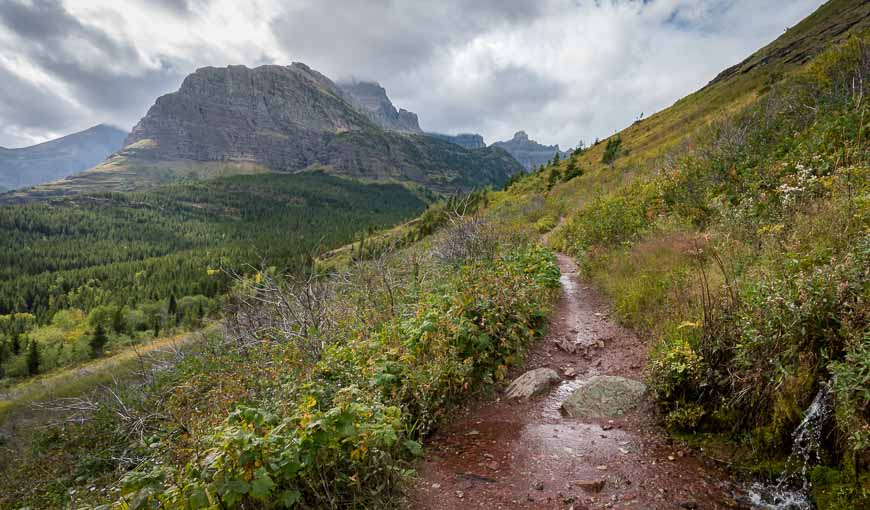
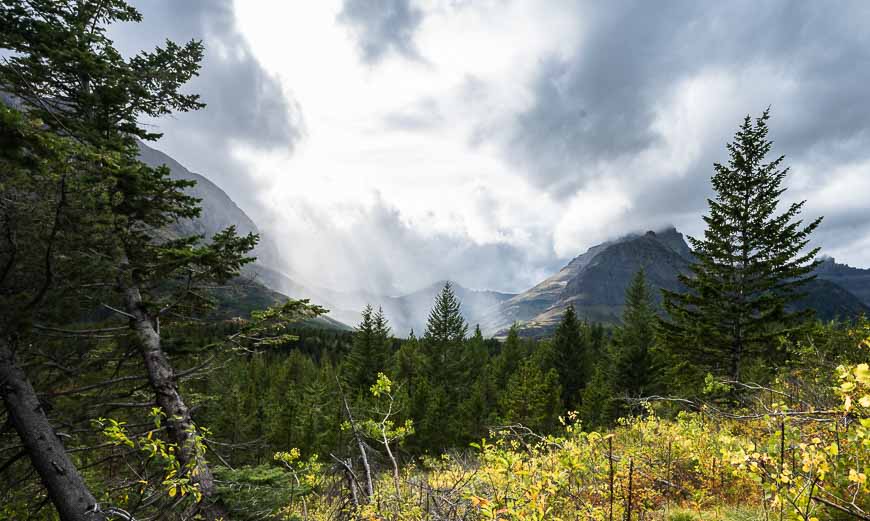
Great views on the Iceberg Lake trail out of the trees

Great views on the Iceberg Lake trail when you’re out of the trees

Route description of the Iceberg Lake hike

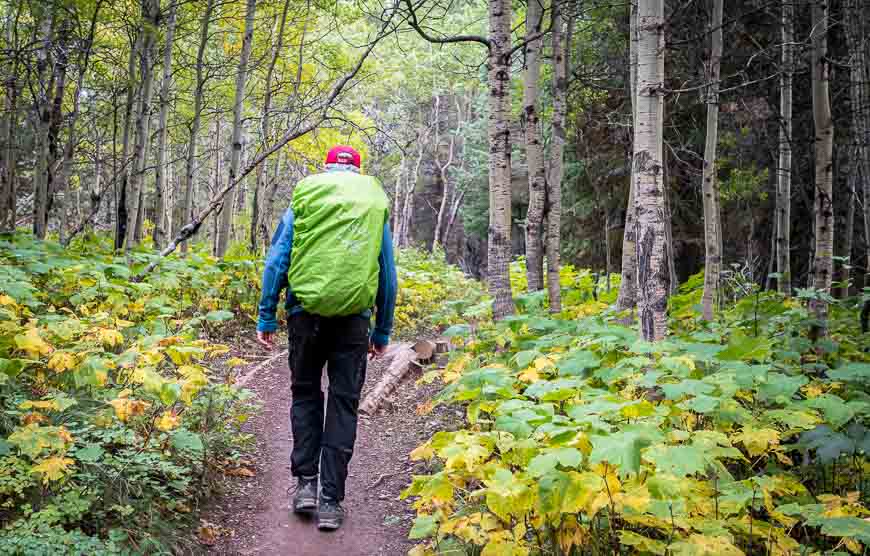
The first part of the hike is the steepest on the trail. Over just a quarter of a mile it climbs 200 feet. But for the rest of the hike it moderates and it’s not until you’re on the descent that you really notice how much you climbed. However, compared to most mountain hikes of this calibre, the elevation gain is modest.

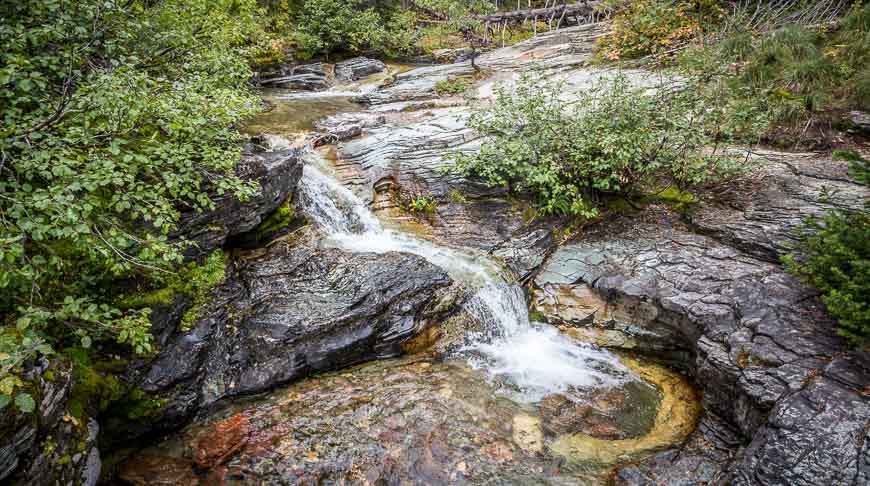
At the first fork on the trail, bear left. In no time you’re into open terrain with beautiful mountain views. Continue for a total of 2.6 miles to reach Ptarmigan Falls, crossing numerous streams along the way. The only real wooded sections of the hike are immediately at the beginning of the hike and in the middle section before the falls.

Ptarmigan Falls is a nice place for a break. Hang out on the rocks, have a snack or soak your feet in the water on a hot summer’s day.

Look for a trail junction at Ptarmigan Falls. Stay left and head west to continue to Iceberg Lake. It’s another 2.3 miles to reach the lake and the views are terrific. You don’t see Iceberg Lake itself until the last minute as it sits tucked behind a knoll and beneath the cliffs of Iceberg Peak and Mt. Wilbur. Here’s a detailed map.

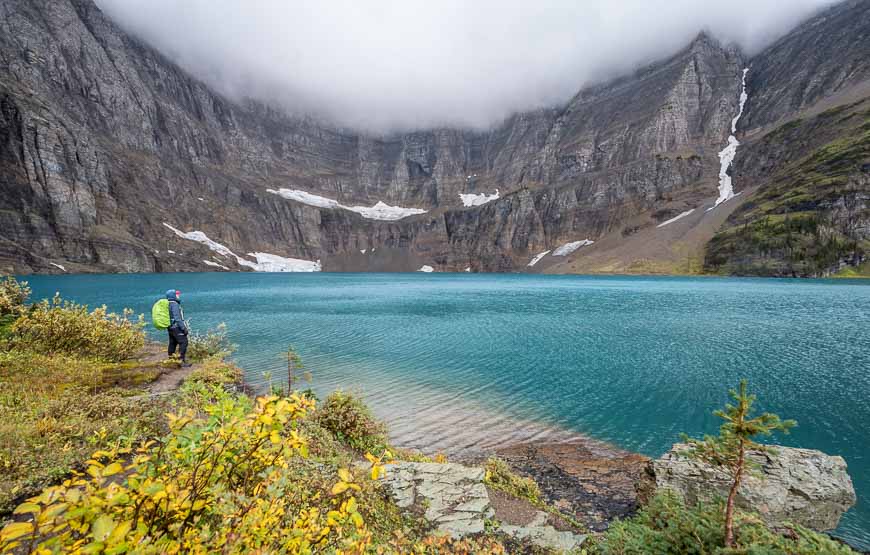
The trail ends at Iceberg Lake. In mid-September it didn’t have a single iceberg in it but if you visit earlier in the season, you can expect to see a lake with both icebergs and bergy bits.

The wind blew up on our arrival and the rain started so it got incredibly cold quickly – true hypothermia weather. We had a fast lunch huddled under some trees before starting our descent. On a nice day I could see hanging out by the lake for an hour or two. All told it took us about four hours round-trip to hike.

Don’t forget your 10 hiking essentials and bear spray. This is grizzly country you’re in – and so you do need to be very bear aware. We didn’t so much as see bear scat but you never know when a bear is going to pop onto the trail, especially in berry season.

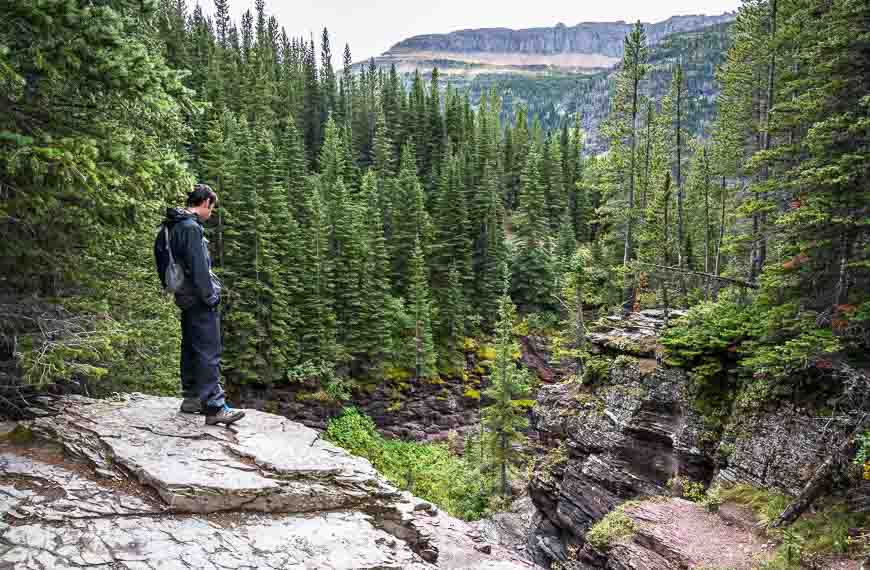
View over Ptarmigan Falls

View over Ptarmigan Falls

Ptarmigan Falls is a pretty area to have a break

Ptarmigan Falls is a pretty area to have a break

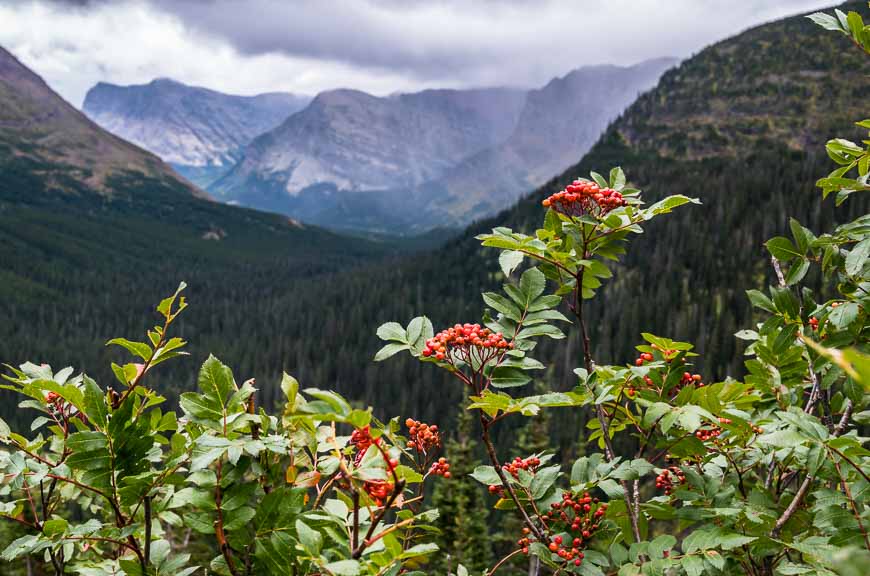
Looking down the valley towards the Many Glacier area

Looking down the valley towards the Many Glacier area

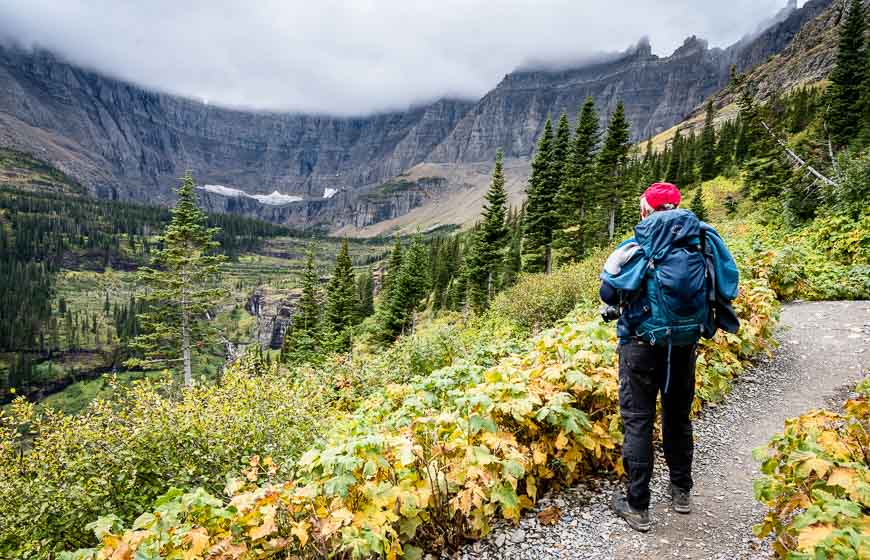
Iceberg Lake is at the base of the mountains ahead

Iceberg Lake trail with the lake hidden from view until the last minute of hiking

Spectacular Iceberg Lake even on a foggy day

Spectacular Iceberg Lake – even on a foggy day

Mixed, moody weather on the hike out

Mixed, moody weather on the hike out

Fall is a beautiful time to do the Iceberg Lake hike

Fall is a beautiful time to do the Iceberg Lake hike

Where to stay

This post includes some affiliate links. If you make a qualifying purchase through one of these links, I may receive a small percentage of the sale at no extra cost to you. Thank you for your support.

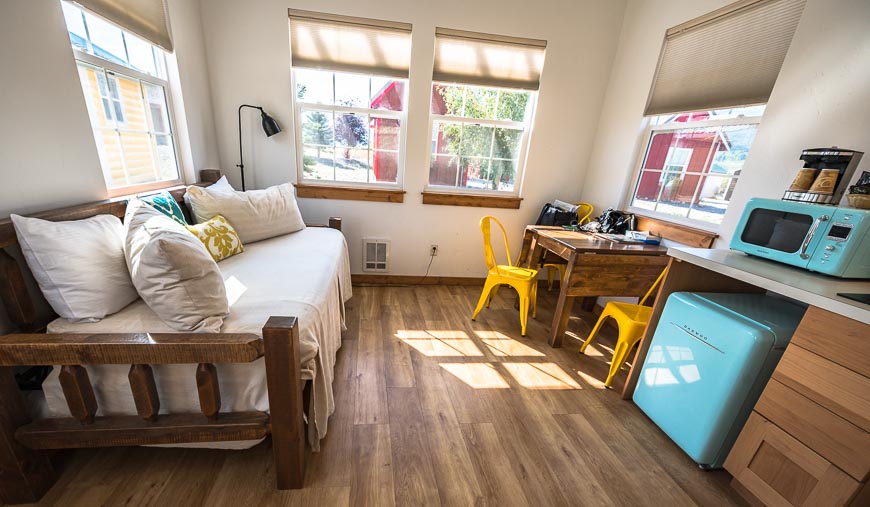
St. Mary is a 21 mile drive away via Babb and a great place to overnight with its location at the east entrance to the Going-to-the-Sun Road. I’d recommend a stay at the cute Tiny Homes in St. Mary Village.

The Tiny Home has everything you need

The Tiny Home has everything you need for a very comfortable stay

Further reading on things to do in and near Glacier National Park, Montana

For more information on Glacier National Park, visit their website.

Click on the photo to bookmark to your Pinterest boards.

The Iceberg Lake Hike

The post The Iceberg Lake Hike in Glacier National Park appeared first on Hike Bike Travel.

The Iceberg Lake Hike in Glacier National Park Read More »