Fire Safety

It’s time to speak up about Musculoskeletal Disorders

Many of my friends, family and work colleagues have had their lives affected by musculoskeletal disorders and after years of campaigning for change I am using my voice to help raise awareness of how easy it is to prevent MSDs and create the right conditions for people to live fulfilling lives at work and at home.

I want to help organisations understand the importance of putting people back at the heart of sustainability. Through-out my working life I have seen the impact which poor working conditions have on their workers.

I estimate that 90% of my network have suffered from back pain, upper limb disorders and repetitive strain injuries linked to what they do at work. How wasteful!

I’m fairly certain that the hazards and risks associated with MSDs are recognised across the world, and that there is a huge amount of information freely available like the European Agency for Safety and Health at Work (EUOSHA) conversation starters that can be used to reduce the risk.

So it can be difficult to start a conversation… a simple are you OK? Or how are you today? Sounds straightforward enough, but in my experience organisations don’t really understand the importance of sustainable working lives.

Tasks involving significant physical effort, repetitive movement and poor physical posture should be avoided. Where avoidance is not possible, risks must be assessed and control measures put in place that reduce the risk of MSDs. How easy does that sound? So if it’s that easy why are new workers across the world suffering?

The suffering is often not limited to muscle or joint pain. I have seen instances where both physical and mental wellbeing have been affected with a longstanding impact on individuals and their families. With an ageing and declining population in Europe and the wider world, there is a real need to ensure that work is ‘good’ for people and as a result, they have fulfilling lives.

Using your voice and having a conversation about MSDs brings company policy to life, an end to dusty folders, unopened reminder emails or unfinished on-line learning programmes.

There is also an opportunity to take what works in the office or factory home with you, the principles are the same wherever you are and getting manual handling right reduces the potential for a life changing injury.

I think it’s all about putting people back at the heart of sustainability, and recognising the value of human capital. It’s easy to explain that each of us has value, the skills, knowledge and experience we bring with us to work every day. Think about it, our wellbeing underpins organisational success… so having a conversation about MSDs can work for everyone.

That’s easy for me to say, but to make it easier for everyone there’s a range of EUOSHA/RoSPA free resources here to help…download them, use them, then share your experience with us…use your voice!

In closing, this year RoSPA’s annual October campaign (#OSHtober) will raise awareness of the dangers associated with moving and handling (specifically around MSDs) with a ‘back’ to basics overview covering best practice, legal compliance and improved health.

As part of this we’re giving away a free ‘Supporters pack’ which includes a wealth of free content. Not only that, when you sign-up to our ‘Supporters pack’ you’ll also be entered into our prize draw for either a free Manual Handling Trainers or Safer People Handling Trainers or Display Screen Equipment course worth up to £1000.* To enter this competition all you have to do is complete the online questionnaire here.

Dr Karen McDonnell, CFIOSH, Chartered FCIPD, MRSB, PIEMA, MSP
Head of RoSPA Scotland, RoSPA OHS Policy Adviser

*See website for terms and conditions.

It’s time to speak up about Musculoskeletal Disorders Read More »

10 Memorable Things to Do in Hokkaido in Winter

Hokkaido is the northernmost and least developed of Japan’s four main islands. It’s famous for hot springs, volcanoes, ski resorts and beautiful, national parks. With unspoiled nature you can look forward to a host of memorable, unique things to do in Hokkaido in winter.
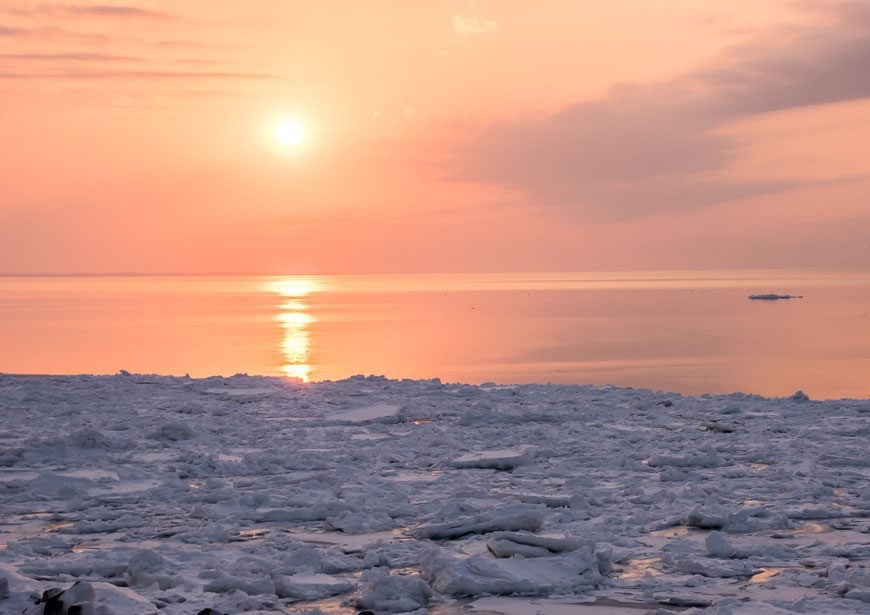
Drift ice off of the Shiretoko Peninsula

Drift ice off of the Shiretoko Peninsula

This post includes some affiliate links. If you make a qualifying purchase through one of these links, I may receive a small percentage of the sale at no extra cost to you. Thank you very much for your support.

These 10 fun and unique things to do in Hokkaido in winter are recommended based on my personal experiences.

Walk on the drift ice and dip in the Sea of Okhotsk

If you’re looking for an easy though thrilling experience, I highly recommend walking on the drift ice in the Sea of Okhotsk.

Drift ice forms off the coast of Russia every winter once the temperature drops. The ice drifts for some 1,000 kilometres to arrive on the eastern side of Hokkaido, sometime in late January, bringing with it plankton.

Plankton is nutrient-rich so it sets the stage for some interesting nature viewing opportunities – especially of the Yezo brown bear which thrives in Shiretoko National Park. If you’re lucky you might see a few of the 400 – 500 bears that live here between April and mid-fall. Don’t worry about them in winter.

The real thrill of the drift ice experience is a quick swim – though that word conjures up images of swimming strokes like the front crawl – when in reality you’re just floating in your dry suit. It’s breathtaking and initially terrifying but once you catch your breath, it’s an intoxicating experience and one I highly endorse.

Over a week of outdoor adventures, the drift ice walking was one of my favourite things to do in Hokkaido in winter. You only need a couple of hours and it’s easy to arrange a guided tour if you stay at one of the hotels in Shari.

Where to stay to experience drift ice: I highly recommend the Kitakobushi Shiretoko Hotel & Resort. Their rooms look out to the sea – as does the hot tub in the onsen.

Read: Drift Ice Walking in Hokkaido, Japan
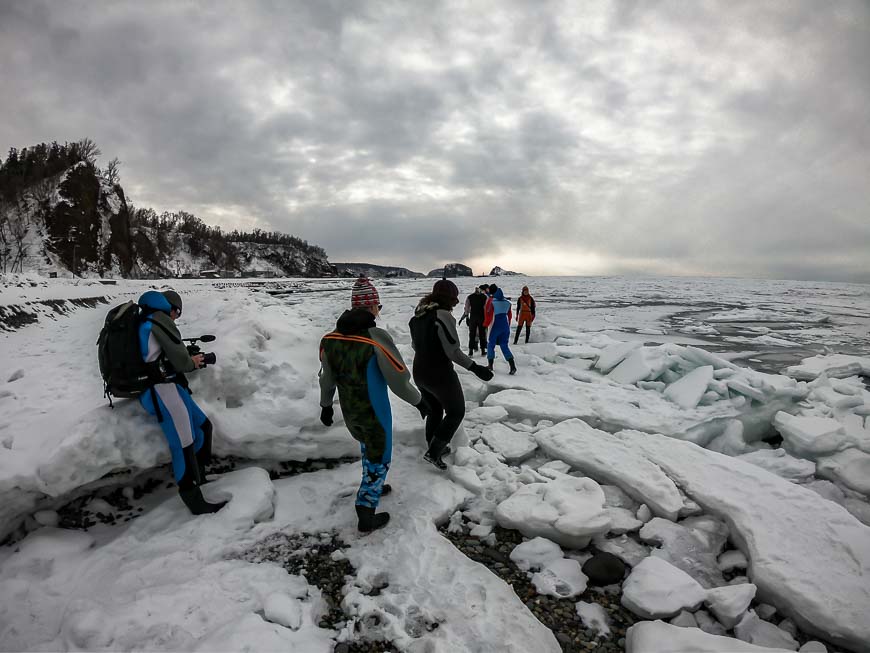
Drift ice walking in Hokkaido
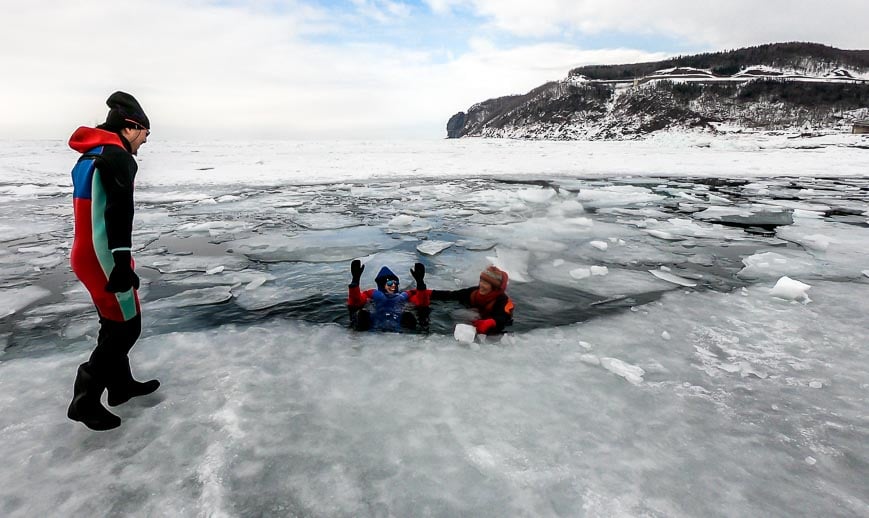
Drift ice walking in Hokkaido

Me testing out the frigid waters in the Sea of Okhotsk

Me testing out the frigid waters in the Sea of Okhotsk

Enjoy the onsen experience

Soaking naked in an onsen was one of the unexpected highlights of my time in Hokkaido. It’s not that I don’t love a good soak in warm water, but doing it naked in front of strangers is a whole other experience.

Sometimes I’d go early in the morning (it helped that I wasn’t on the time zone) so that there would only be a few other women present. At other times there would be dozens of women around and even kids. They start them young in Japan – and it would appear that they are way more comfortable with their bodies – wrinkles, warts, scars and all.

A good soak in an onsen is a thoroughly relaxing, in the moment experience that I couldn’t get enough of. Fortunately most of the hotels we stayed in had an onsite onsen. And just so you know, there are men’s and women’s sections – at least at the places I stayed in on Hokkaido.

Read: Getting Naked in Japan: The Onsen Experience
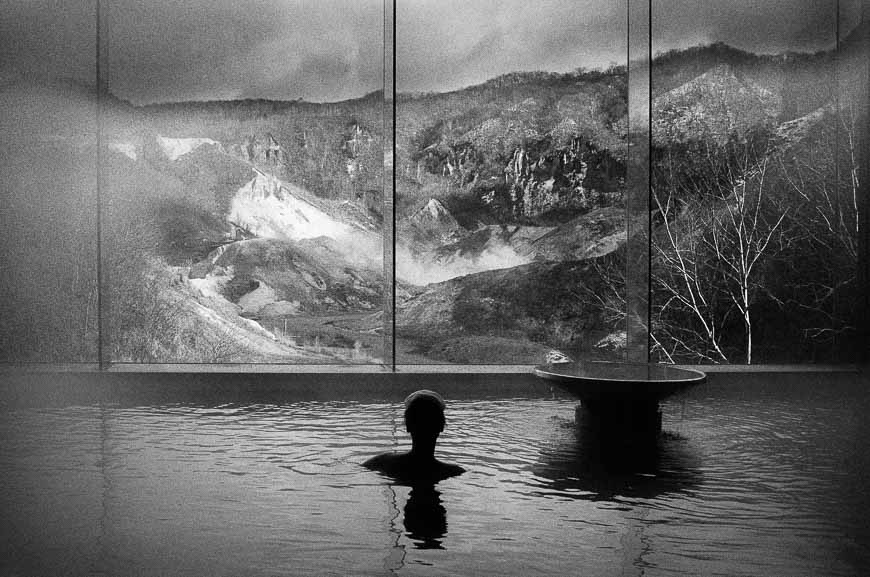
The Japanese onsen experience – Photo credit: @MarkEdwardHarrisPhoto on Instagram

The Japanese onsen experience – Photo credit: @MarkEdwardHarrisPhoto on Instagram

Visit the Akan International Crane Centre

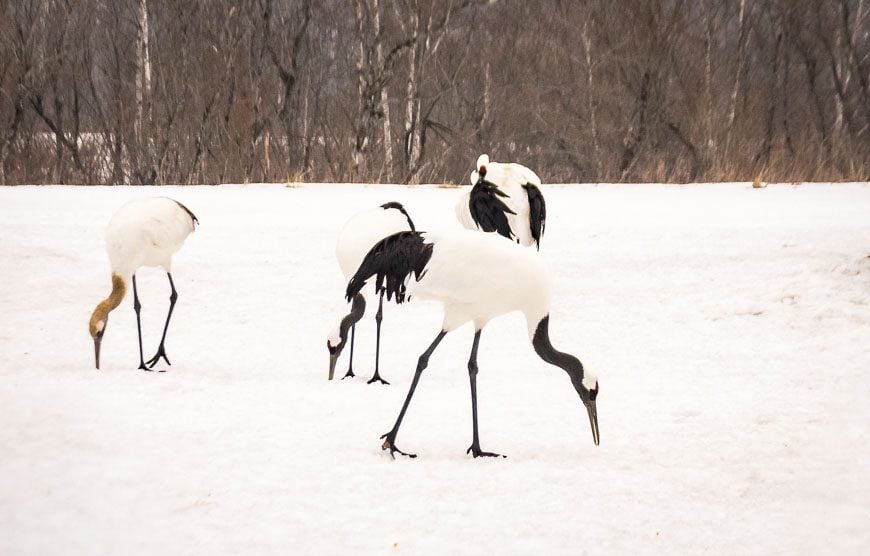
Three of the 15 species of cranes in the world are primarily found in Japan including the Tancho crane pictured below. At one point the cranes could be found all over the islands of Honshu and Hokkaido but hunting and loss of habitat decimated their numbers. The exception was a small, non-migratory flock in eastern Hokkaido.

The Tancho cranes – which came very close to extinction are now protected in Japan as a Special National Monument. At the Akan International Crane Centre, called the “birthplace of the artificial feeding program,” the wetlands provide a wintering area for large flocks of cranes. The centre is also a place for both crane research and public education. Today there, are approximately 1,500 cranes.

The public can visit between 9 AM and 5 PM daily. The crane centre is just a 20 minute drive from Lake Akan.
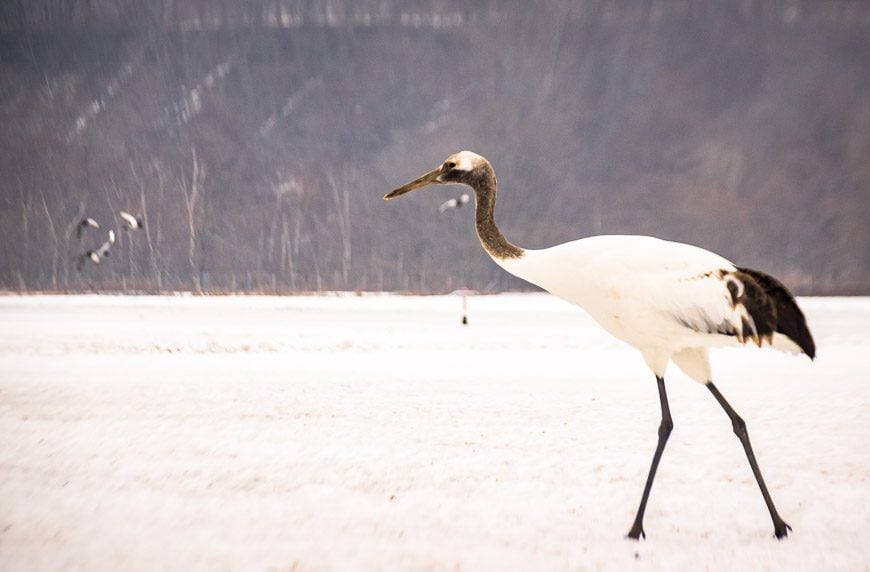
Seeing the beautiful Tancho crane is one of the cool things to do in Hokkaido in winter

The beautiful Tancho crane

Tancho cranes are endlessly interesting to photograph
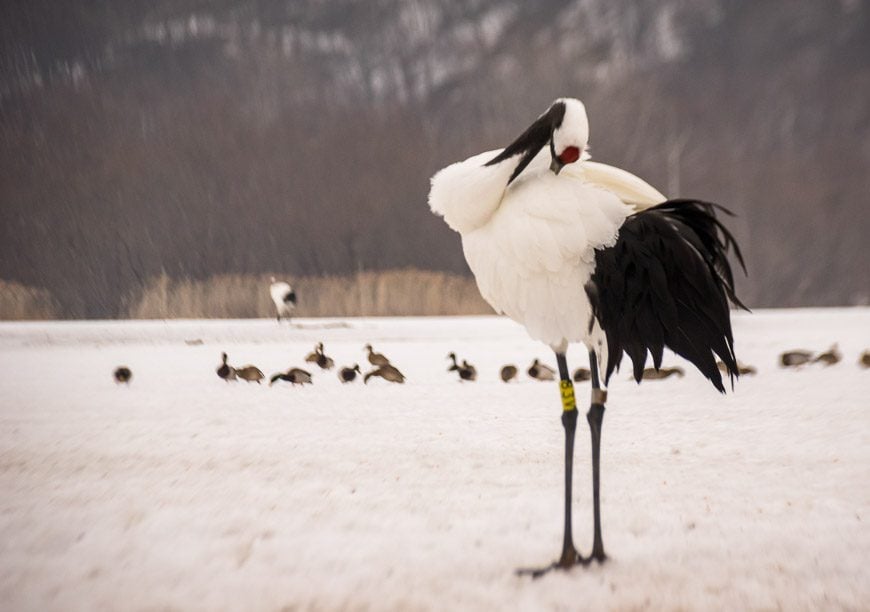
Tancho cranes are endlessly interesting to photograph

A male Tancho crane

A male Tancho crane

Fat tire bike through the Akan Forest 

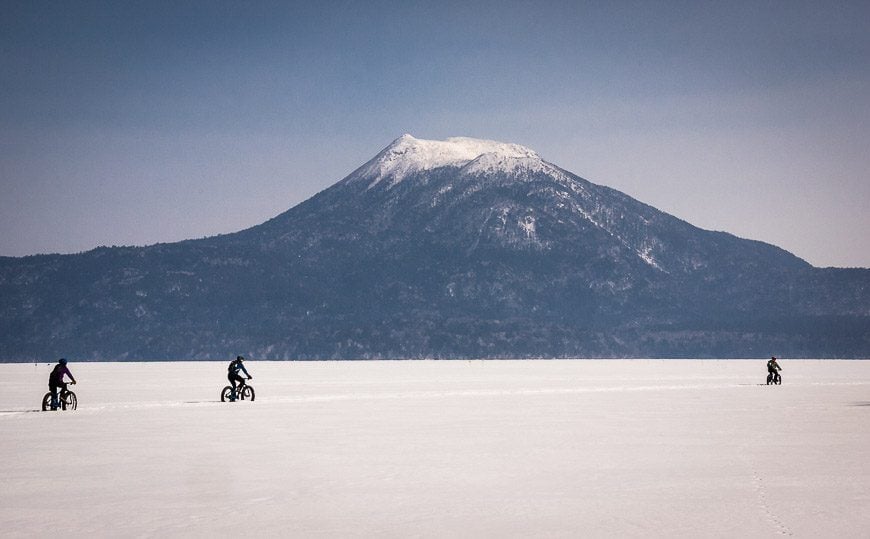
I’ve done my fair share of fat tire biking in Canada – but never on a lake in the shadow of a large mountain – nor in the quiet of a forest with unfamiliar trees. I signed up to do what was called a difficult 10 kilometre ride through the Akan Forest and onto Lake Akan.

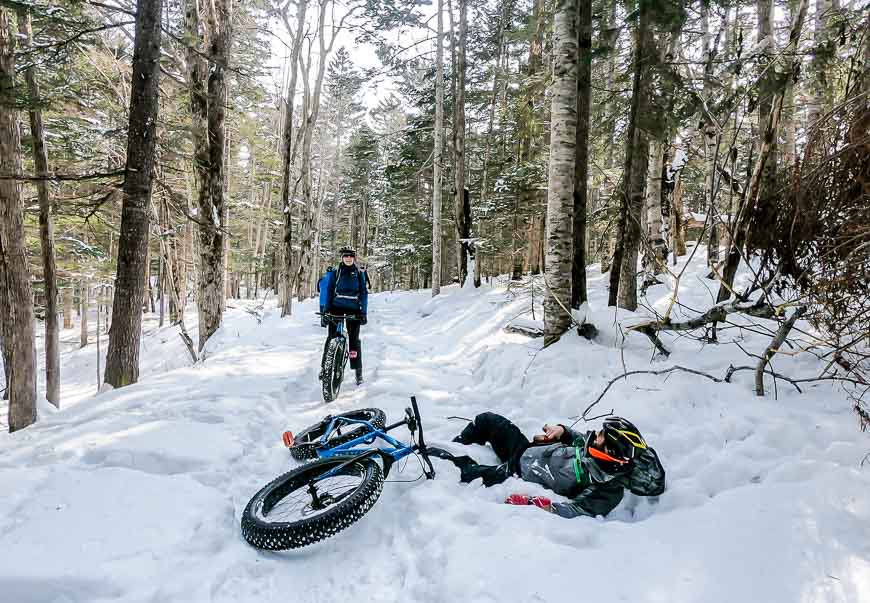
The bike ride with an Ainu guide lived up to the difficulty level. Some of our gang spent more time getting back on their bike than riding it – but fortunately landings were soft with all the snow. Still it was loads of fun – and interesting too. We had an Ainu guide who shared his knowledge of the woods – and some of their customs. 

If you stay at Lake Akan Tsuruga WINGS, they can help you with organizing a bike guide.
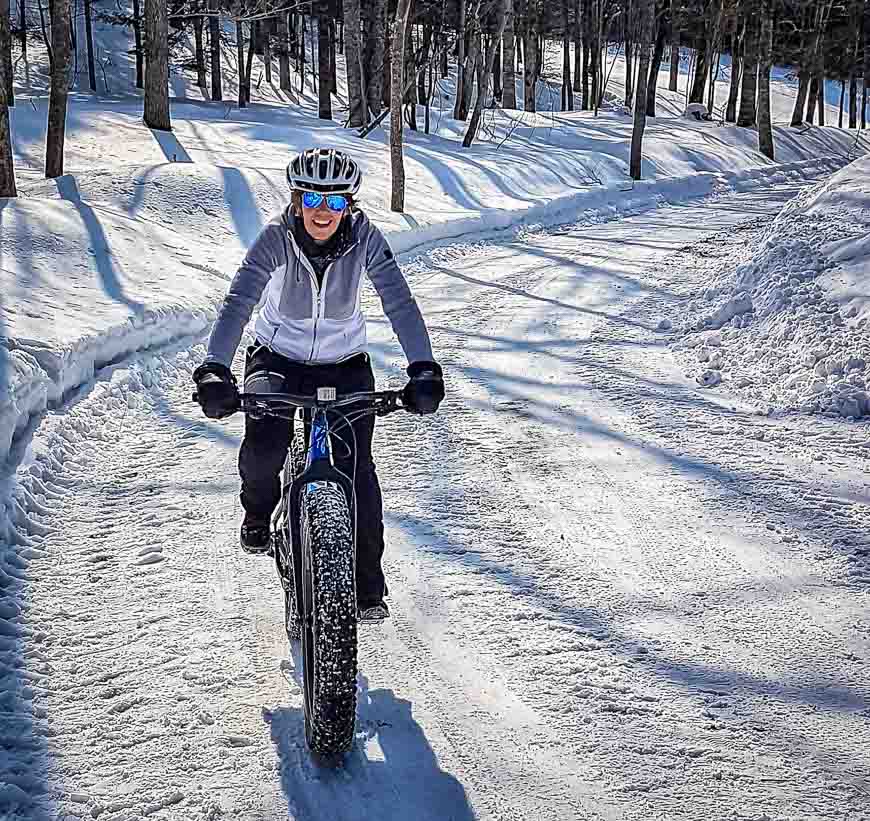
The fat biking started off easily
The fat biking started off easily

Falls were common but the landings soft
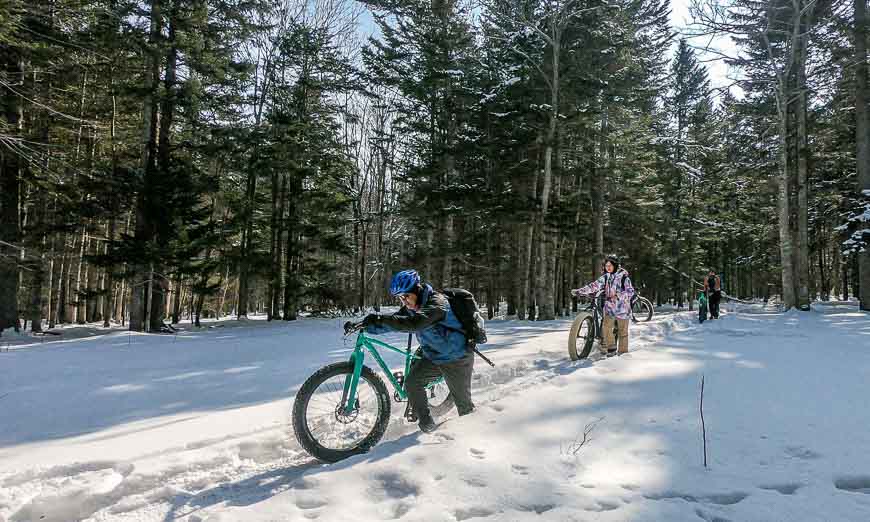
Falls were common but the landings soft

Snow so deep we gad to walk our fat tire bikes in places - but stil one of the great things to do in Hokkaido in winter

Walking fat tire bikes through the Akan Forest
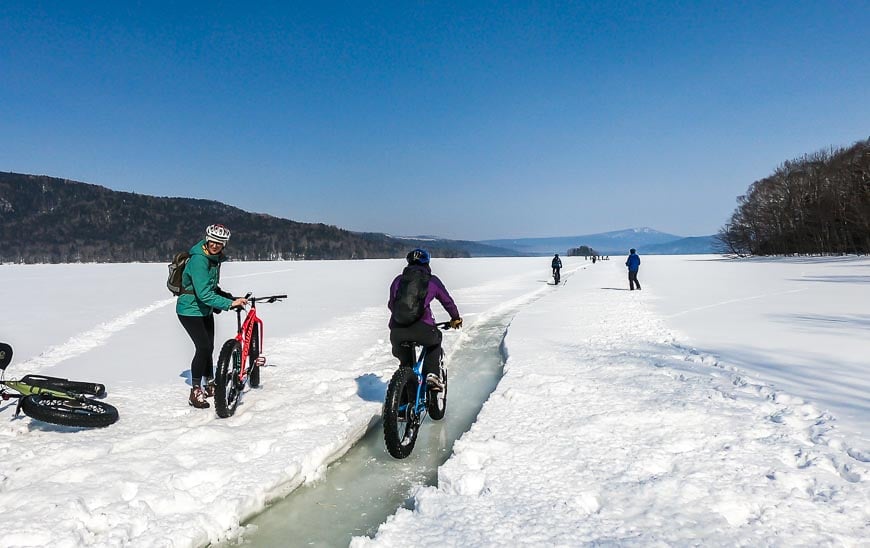
Biking on Lake Akan

Biking on an icy trail on Lake Akan

What a glorious place for a fat tire bike ride - one of the things to do in Hokkaido in winter

What a glorious place for a fat tire bike ride

Go skiing at one of the fabulous resorts near Sapporo – one of the bucketlist worthy things to do in Hokkaido in winter

If you used to love skiing but have got away from the sport, I think I can safely say that your love of it will be reignited if you go skiing in Hokkaido.

I had a day at Kiroro Ski Resort – and fell madly, deeply in love with skiing again. Perhaps it was the uncrowded hills or the beautiful snow conditions. Or maybe it was just the foreign beauty of the trees and vegetation. Or the unfailingly polite people. Or the group of women I skied with who were all at about the same level and a whole lot of fun to be around.

Here’s the thing. We all commented on how we loved our ski day and it had been a long time since we’d all had one that combined beauty and fun.

After my one day initiation into skiing in Japan, I wish I could have had a solid week of skiing across several more resorts including Niseko and Furano. Niseko receives on average 14 metres of snow every winter so I can only dream about what a few powder days would look like here. Furano, bordered by Daisetsu-zan National Park, receives on average 9 metres of snow per year and with the quality of its snow, it’s been the host site for 10 FIS Downhill World Cups. Sign me up!

Book at stay in Kiroro at the Sheraton Hokkaido Kiroro Resort – a few second’s walk from the ski hill or at The Kiroro, A Tribute Portfolio Hotel.

Read: The Fabulous Kiroro Ski Resort Experience, Hokkaido
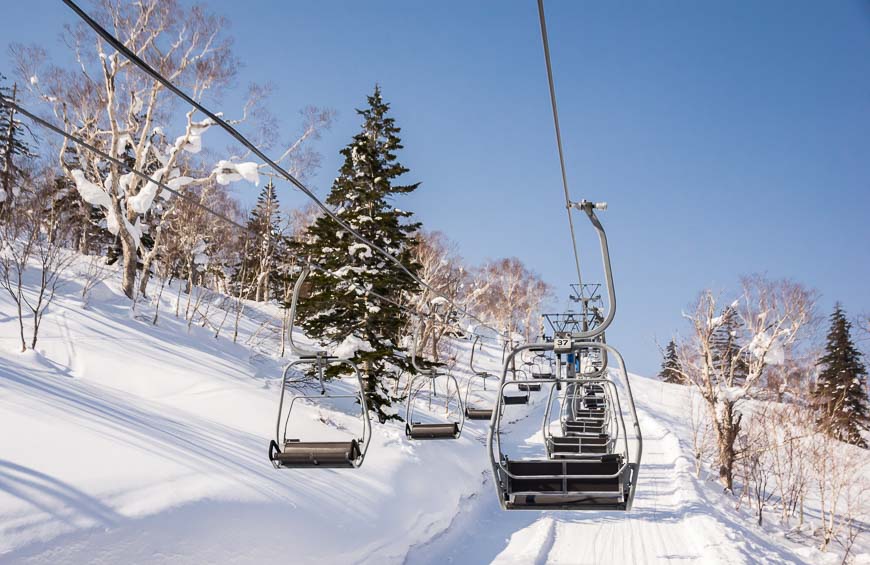
Beautiful trees at Kiroro Ski Resort
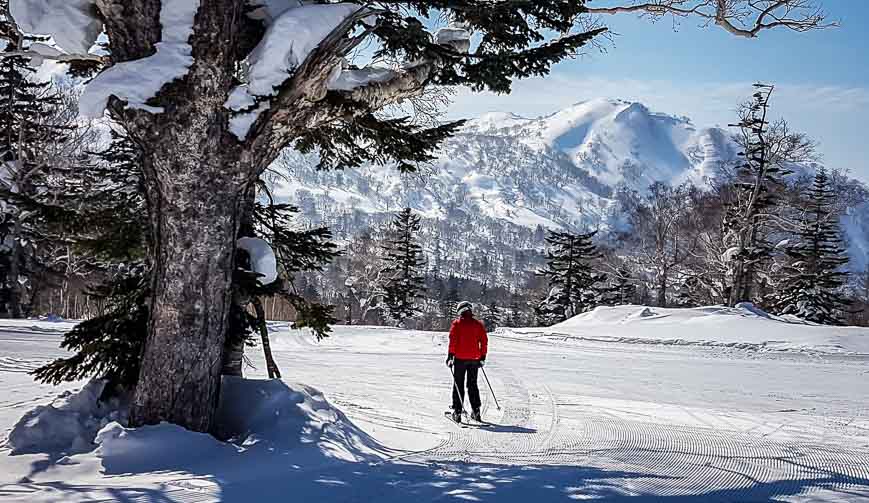
Beautiful trees at Kiroro Ski Resort

Skiing at Kiroro Ski Resort - an amazing and fun thing to do in Hokkaido in winter

Skiing at the truly fabulous, uncrowded Kiroro Ski Resort
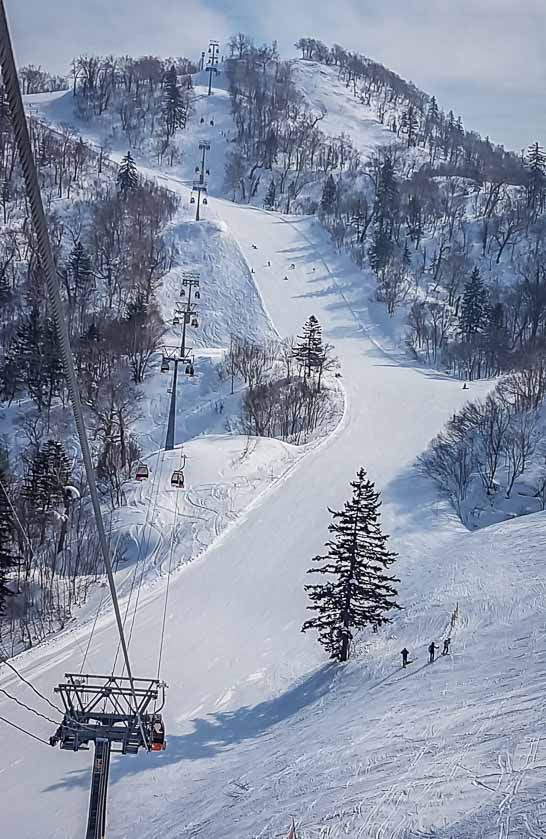
Long empty runs at Kiroro - makes it one of the things to do in Hokkaido in winter

Long empty runs at Kiroro

Go snowshoeing at Lake Mashu 

Lake Mashu, a caldera lake in Akan National Park, reportedly vies for the title of “clearest lake in the world.” It’s deep, with clear blue water though on a day in late February we didn’t appreciate that. Fog did engulf the far shore – something the lake is also famous for. 

Lake Mashu is not accessible to the public but there are a couple of viewing platforms. It’s pretty obvious that it’s a caldera lake from above. In summer there is a hiking trail that runs along the rim of the caldera to the summit of Mount Mashudake. In winter, it’s a stunning place for snowshoeing.

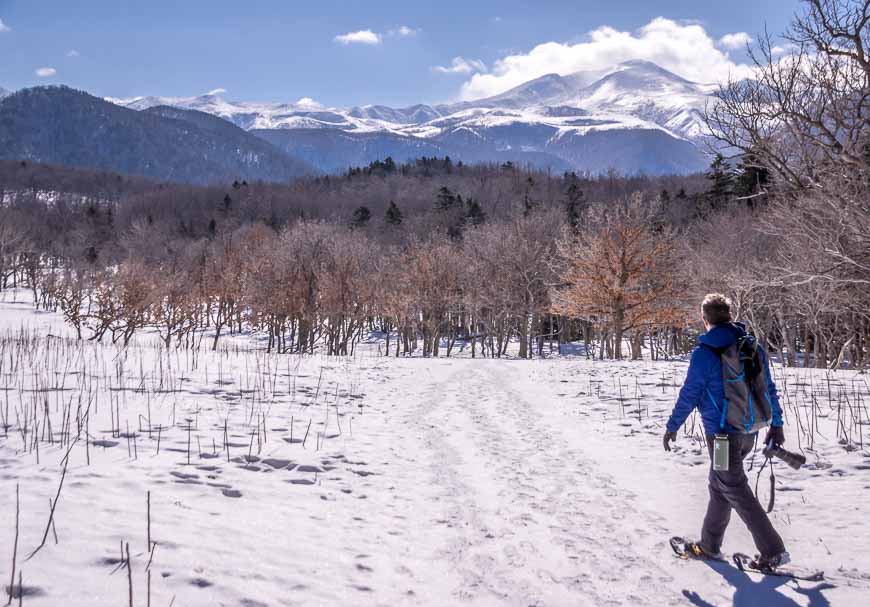
The terrain is rolling so I’d classify the snowshoeing as easy. You can do a loop that includes the trail high above the caldera, returning to the parking lot by a closed-off road. It’s a superb outing and definitely one of the top things to do in Hokkaido in winter.
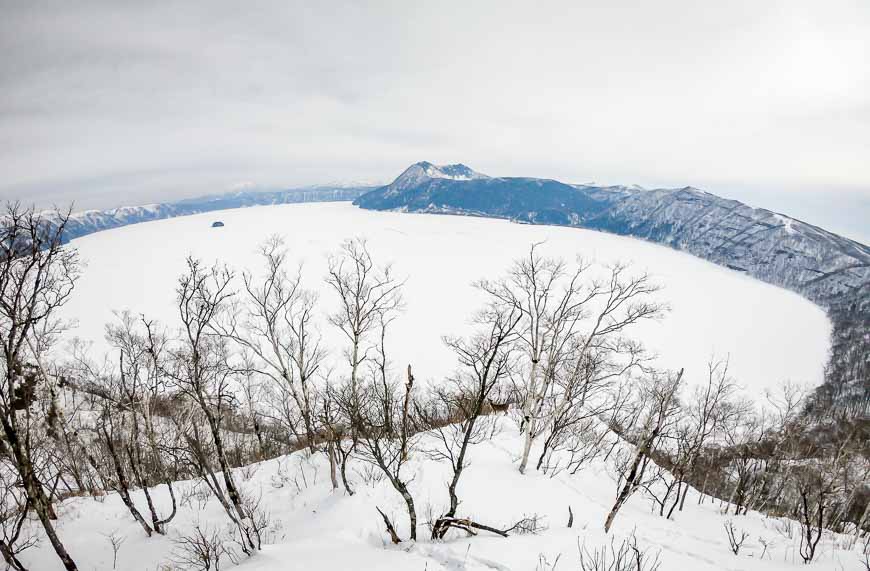
The caldera at Lake Mashu
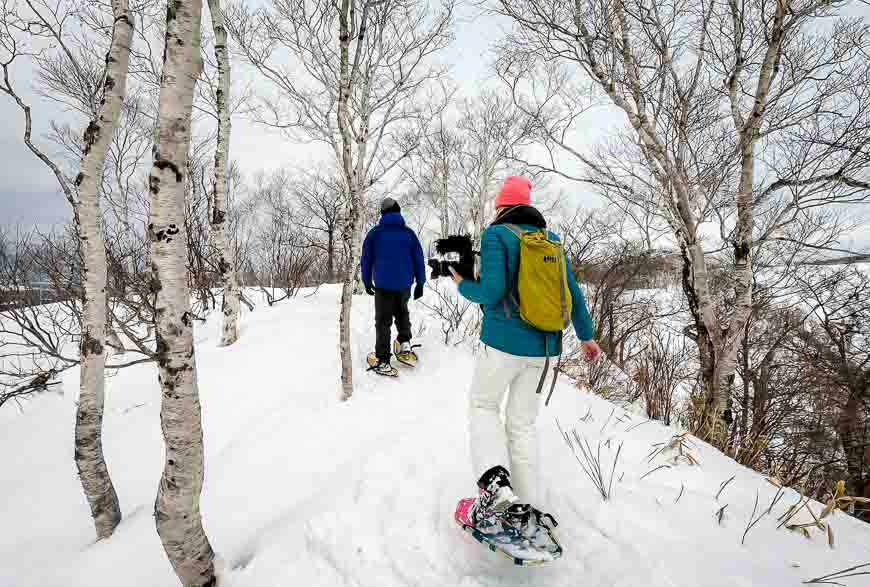
The caldera at Lake Mashu

Fabulous snowshoeing at Lake Mashu - one of the things to do in Hokkaido in winter
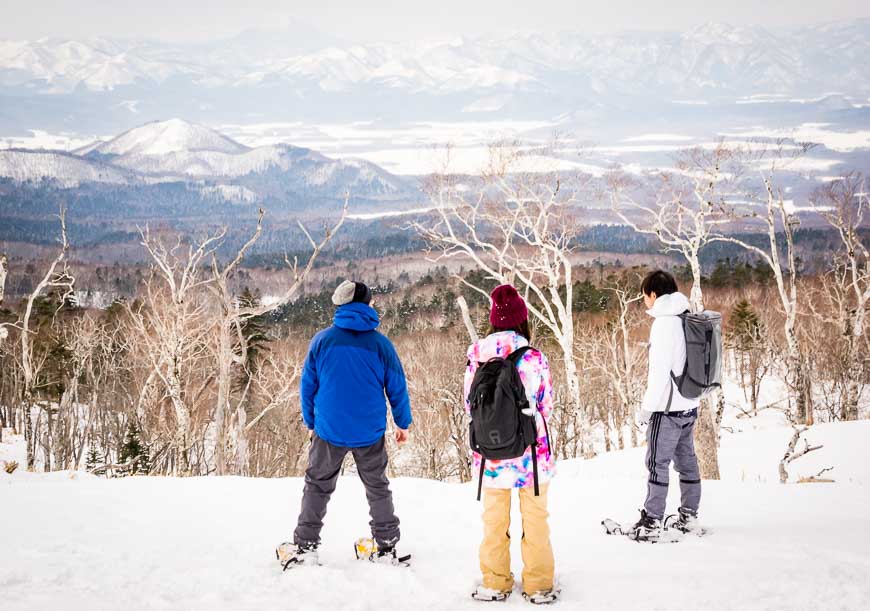
Fabulous snowshoeing at Lake Mashu

Scenic snowshoeing at Lake Mashu

Very scenic snowshoeing
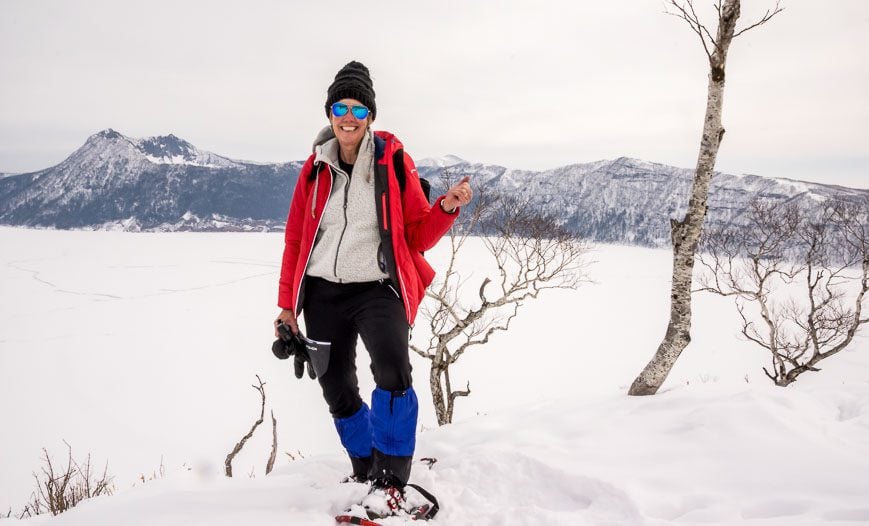
I’d be happy to spend the whole day snowshoeing with a backdrop like this

Catch an Ainu dance performance

The Ainu people are the indigenous people of Japan but weren’t officially recognized as such until 2008. If you are anywhere on Hokkaido where you have the chance to see the Ainu people sing and dance I highly recommend the experience.

My short video on a contemporary Ainu Dance might give you goosebumps. The music based on traditional Ainu folk songs is haunting and the dance, incredibly beautiful. It was a night to remember at Marukibune.
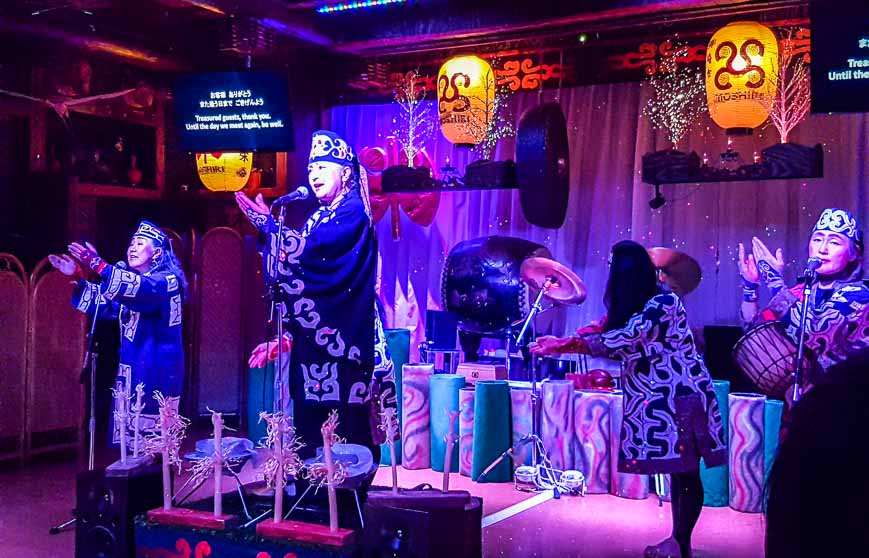
Modern Ainu dance performance

Modern Ainu dance performance

Haunting dance performance by the Ainu people is one of the things to do in Hokkaido in winter

Haunting dance performance

Hike to the sulfurous Mt. Iwo

It’s a short hike from the parking lot along an easy trail to reach the sulfurous Mt. Iwo. The air smells as one would expect of rotting eggs. You only need 30-40 minutes to check out the steaming springs and take some photos. Reportedly you can have an onsen steamed egg in the cafe. We missed that. 

Our stay for the night was nearby at the friendly Kinkiyu Hotel – with its sulfur smelling onsen and traditional rooms. I highly recommend the hotel and its location as it’s but a short walk away from the theatre where the contemporary Ainu dance performance is held.

Book a room at the hotel here.
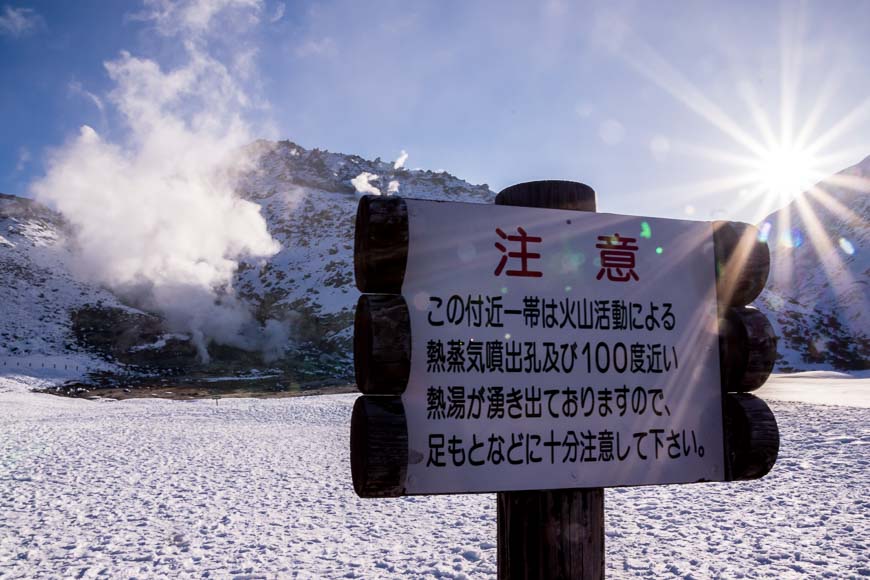
Lookout trail to Mt Ito

Mt Iwo Sulfur Mountain Lookout

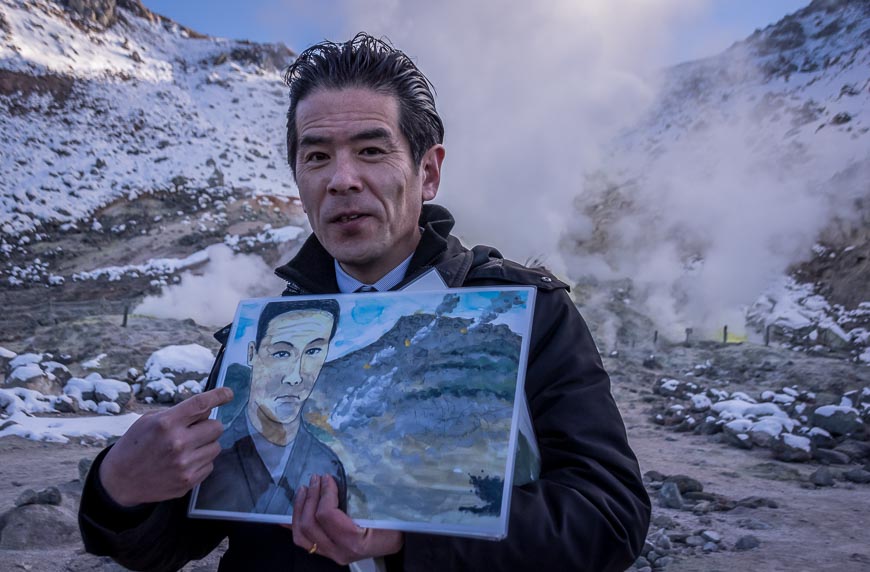
A tour guide explaining about Mt Ito
A tour guide explaining about Mt Ito

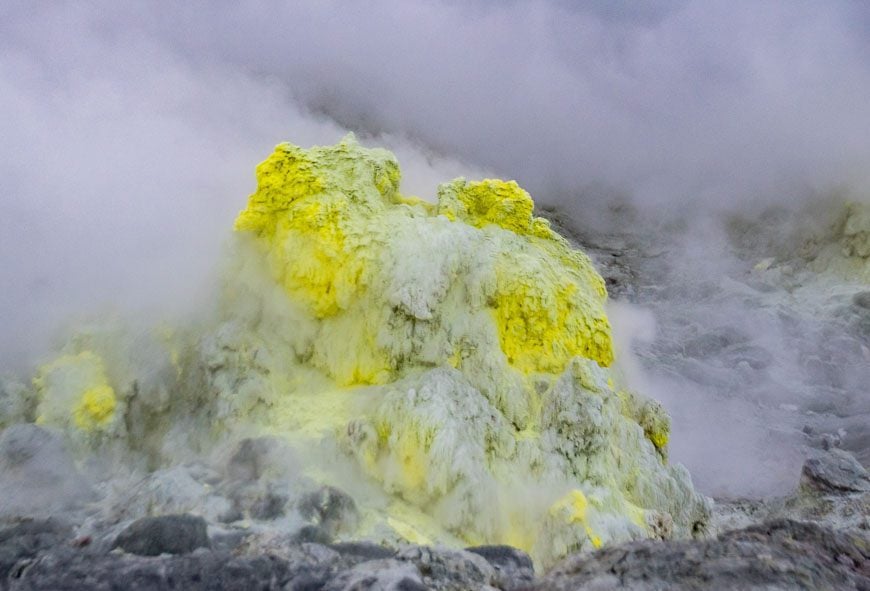
Mound of sulphur at Mt Ito - one of the things to do in Hokkaido in winter

Big mound of rotten egg smelling sulfur
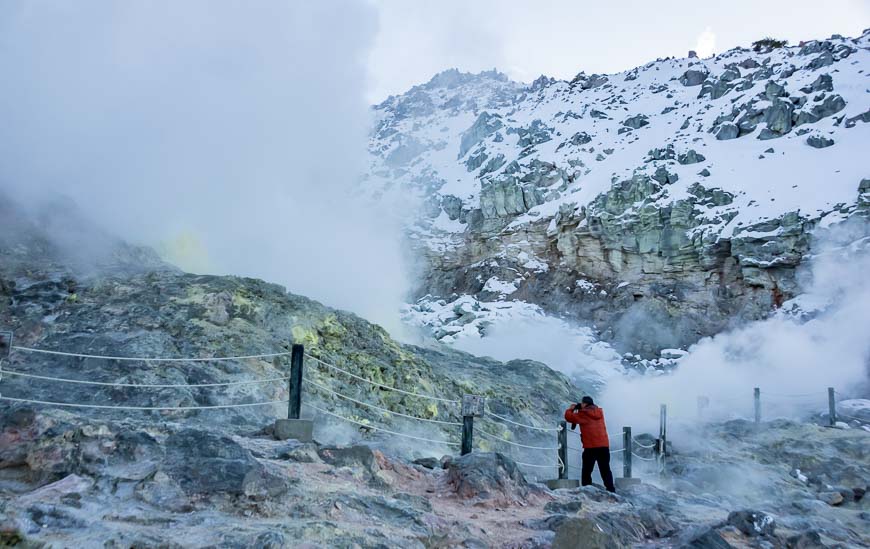
Sulfurous vents at volcanic Mt Ito

Mt Ito sulfurous vents smoking away

Snowshoe in Shiretoko National Park, a World Heritage Site 

Shiretoko National Park sits at the northeastern tip of the island of Hokkaido. The peninsula is remote with much of it accessible only by boat or on foot. Its home to mountains and rugged coastal cliffs along with forests filled with species of trees I’d never seen before like Erman’s birch, Mongolian oak and Sakhalin fir. 

On our snowshoeing adventure we did the easy Furepe Waterfall Trail to the coast on a gorgeous sunny day. Again we were with a local Ainu guide who took pleasure in sharing his knowledge about the trees and the animals.

The snowshoe trail meandered through woods and fields to arrive at the edge of the Sea of Okhotsk. From there we wandered to the frozen waterfall, and back up through open fields with a mountainous backdrop. There aren’t enough adjectives out there to describe how wonderful the experience was. 

Fox seen snowshoeing in Shiretoko National Park
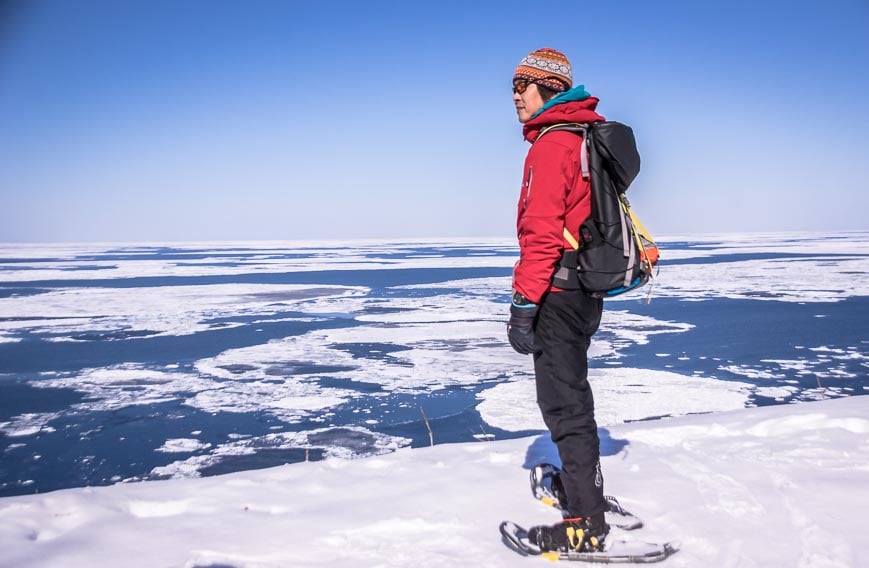
Fox seen snowshoeing in Shiretoko National Park

Snowshoeing to a get a view of the Sea of khotsk - one of the fabulous things to do in Hokkaido in winter

Snowshoeing to a get a view of the drift ice on the Sea of Okhotsk
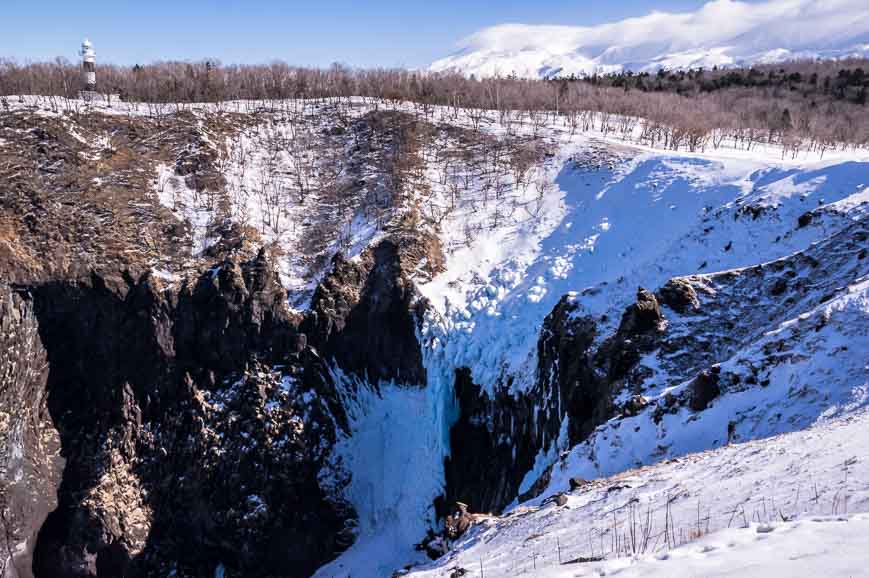
Furepe Waterfall

The frozen Furepe Waterfall

Shiretoko National Park has lots of mountains

What a pretty backdrop for snowshoeing

See the frost flowers + catch the sunrise over Lake Akan – one of the memorable things to do in Hokkaido in winter

Before I visited Hokkaido I’d see beautiful images of “frost flowers.” They are distinctively shaped ice crystals that can cover swaths of the surface of Lake Akan. However you need Lady Luck on your side to see them for they are considered a rare natural phenomenon. 

Frost flowers form when the lake isn’t covered in snow – under windless conditions when the temperatures dips to -15°C. They can form individual petals or sparkling flowers – but they are ethereal and can melt with just a minor change in wind or temperature.

Our group got up early one morning to catch both the stunning sunrise over Lake Akan and the exquisite ice crystals. We were with local guides – which is a good idea as the ice is thin in places on the lake and you definitely want to know where it’s safe to go.
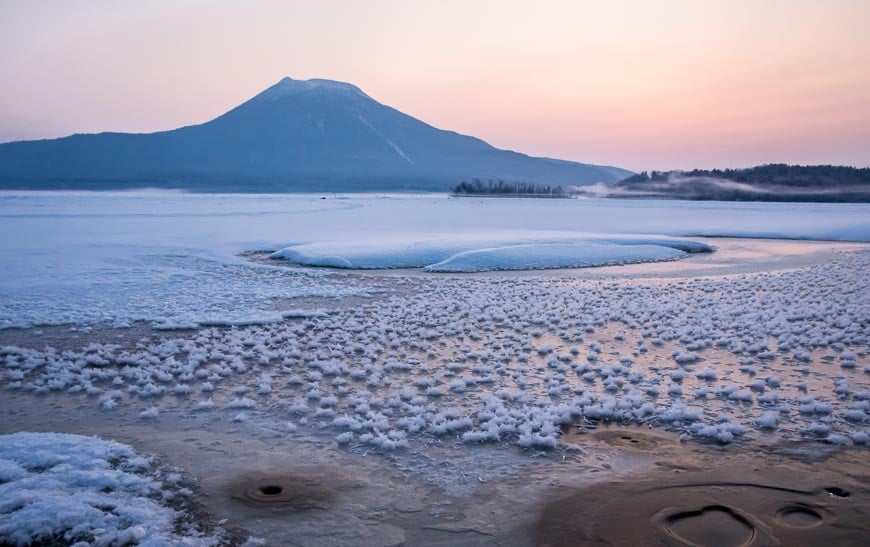
Lake Akan frost flowers
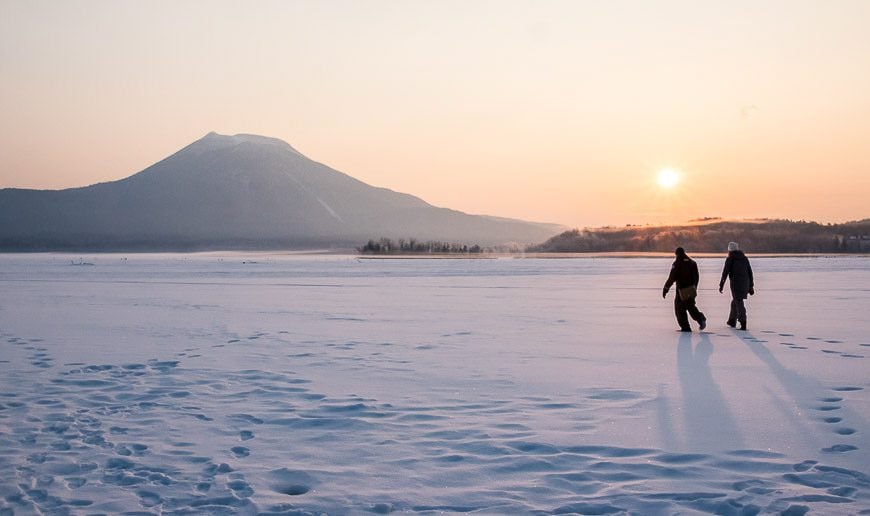
Lake Akan frost flowers

Walking out on Lake Akan at sunrise is one of the special things to do in Hokkaido in winter
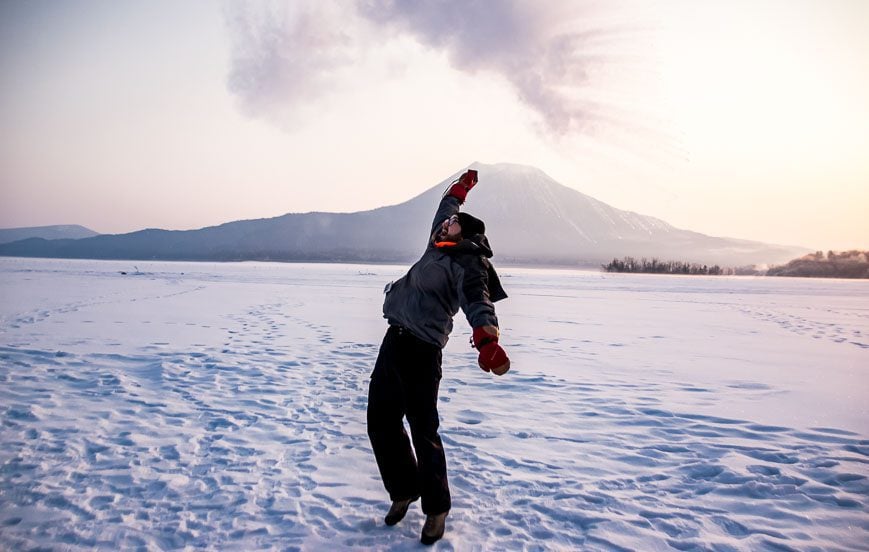
Walking out on Lake Akan at sunrise

Cold enough that boiling water froze in mid-air

Cold enough that boiling water froze in mid-air at Lake Akan
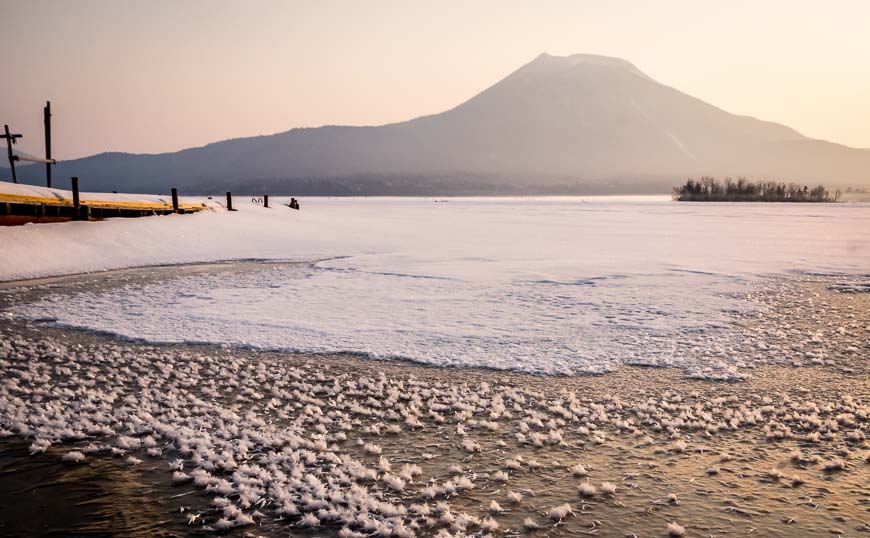
Seeing the rare frost flowers on Lake Akan is a treat and one of the great things to do in Hokkaido in winter

Frost flowers on Lake Akan at sunrise

Video on things to do in Hokkaido in winter. 

My trip to Hokkaido in winter far exceeded my expectations. It’s still an undiscovered part of Japan – that doesn’t see a lot of tourists but offers a wealth of unique experiences.

Want to do a trip to Hokkaido covering most of what I’ve suggested?

My friend Jake has put together a very reasonably priced 8 day, 6 night itinerary for February 2020 covering most of the highlights in Hokkaido I’ve listed above. You can see the full itinerary here and book directly with him if it’s of interest. 

A big thank you to the Adventure Travel Trade Association firstly choosing me as one of six media members to visit Japan – and secondly for hosting me on such a memorable trip.

Click on the photo to bookmark to your Pinterest boards.
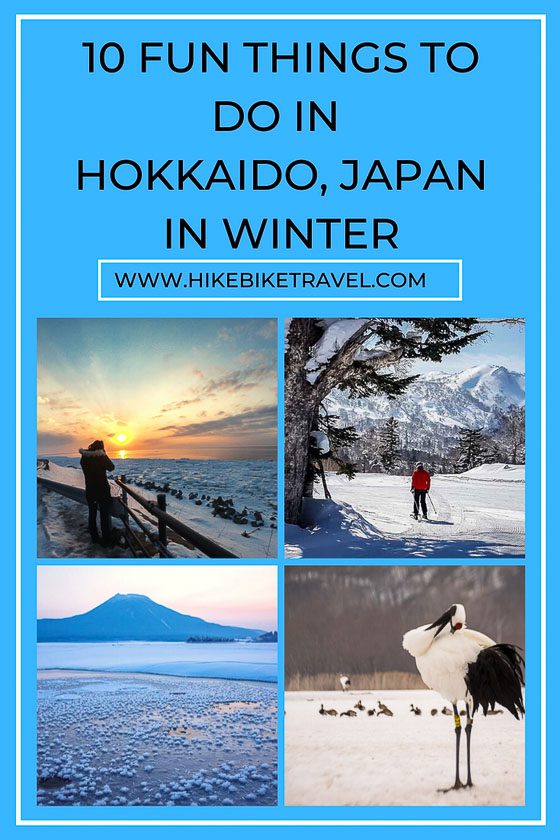
10 fun & unique things to do in Hokkaido in winter

The post 10 Memorable Things to Do in Hokkaido in Winter appeared first on Hike Bike Travel.

10 Memorable Things to Do in Hokkaido in Winter Read More »

What I Did To Prep This Week – Week 76: December 22nd 2019 – December 28th 2019

Hello Pack. I hope you all had a very Merry Christmas. I love Christmas and spend months preparing for it, but come 2 p.m. on Christmas day I have my tree down and the mess cleaned up and am glad it is all over. My Bobby loved the DIY manual pottery kick wheel that I commissioned some tribe members to make him for Christmas – a definite prepper holiday gift. I was not sure if he would want…

Source

What I Did To Prep This Week – Week 76: December 22nd 2019 – December 28th 2019 Read More »

Russian Avangard Hypersonic Glide Vehicle Flies at Mach 27, and Can Make ‘Sharp Maneuvers’ around Opponent’s Defenses, according to Claims

By David Crane david (at) defensereview (dot) com Photo(s) Credit: Russian Ministry of Defence December 30, 2019 Well, this one’s gonna’ be a tough one to deal with, assuming it works as advertised, of course. DefenseReview’s been writing about Russian and Chinese hypersonic missile tech for quite some time now (see “Related Articles” below), but …

Russian Avangard Hypersonic Glide Vehicle Flies at Mach 27, and Can Make ‘Sharp Maneuvers’ around Opponent’s Defenses, according to Claims Read More »

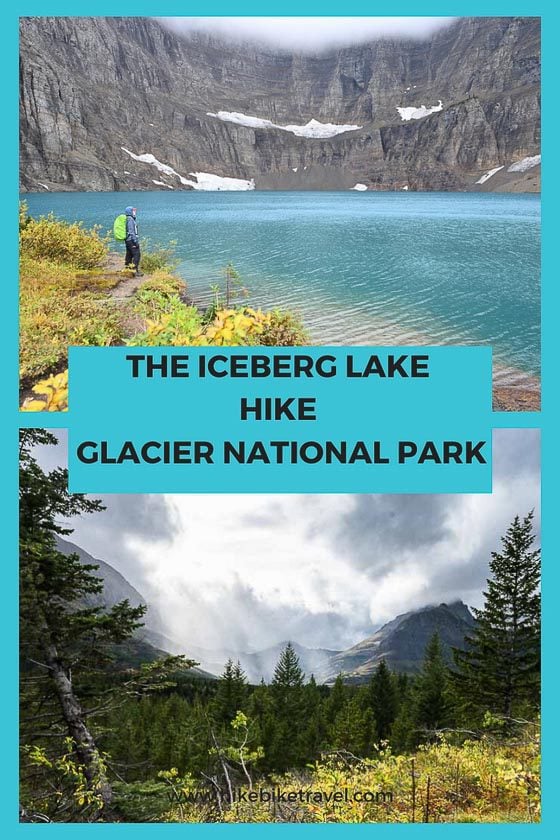
The Iceberg Lake Hike in Glacier National Park

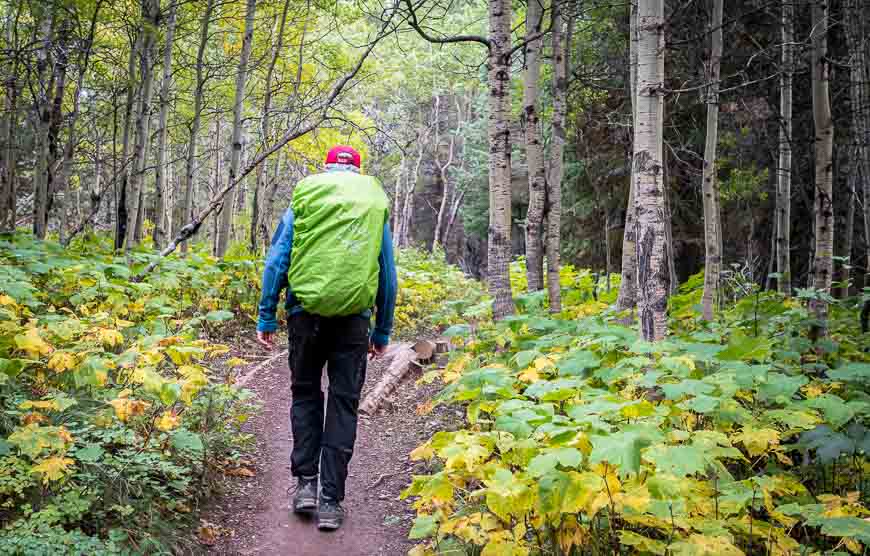
On a busy trip to St. Mary and Glacier National Park in Montana, John and I squeezed in the Iceberg Lake hike in the Many Glacier area of the park. We did it in mid-September when the colours had started to change and after the summer crowds had left. The Iceberg Lake hike is 9.8 miles round trip and the elevation gain is a very manageable 1,275 feet or 389 metres.

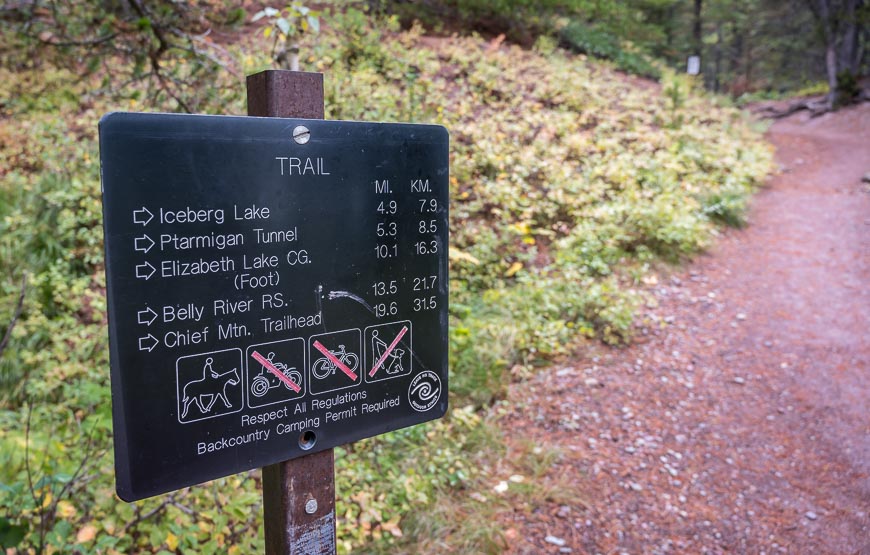
Excellent signage along the Iceberg Lake trail

Excellent signage along the Iceberg Lake trail

Finding the trailhead for the Iceberg Lake hike

From St. Mary, Montana drive 9 miles north to Babb. Turn west onto Route 3 and follow it for 12 miles. The winding, narrow road is in bad shape with lots of broken pavement – though in 2020 it’s supposed to be getting a complete face-lift.

Look for the trailhead for Iceberg Lake hike behind the Swiftcurrent Motor Inn. It’s very well signed.

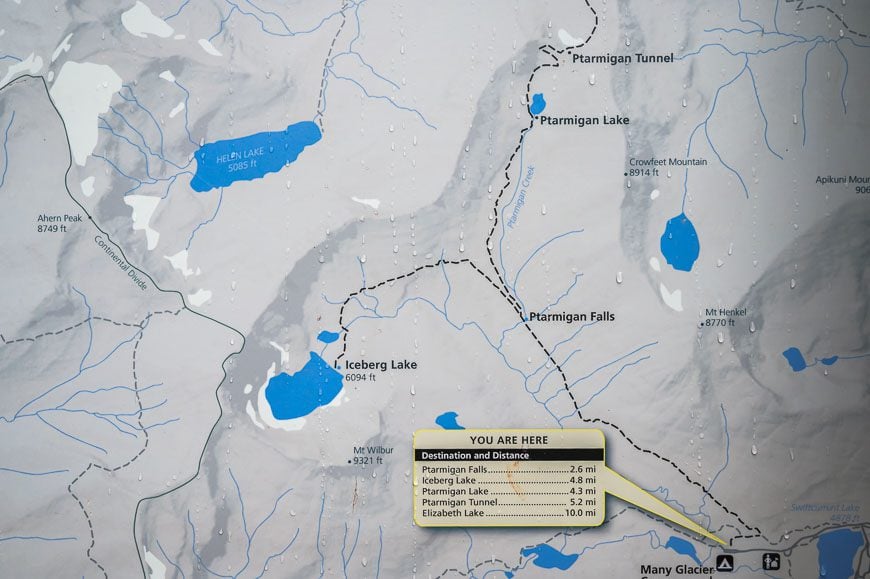
Map of the Iceberg Lake trail

Map of the Iceberg Lake trail

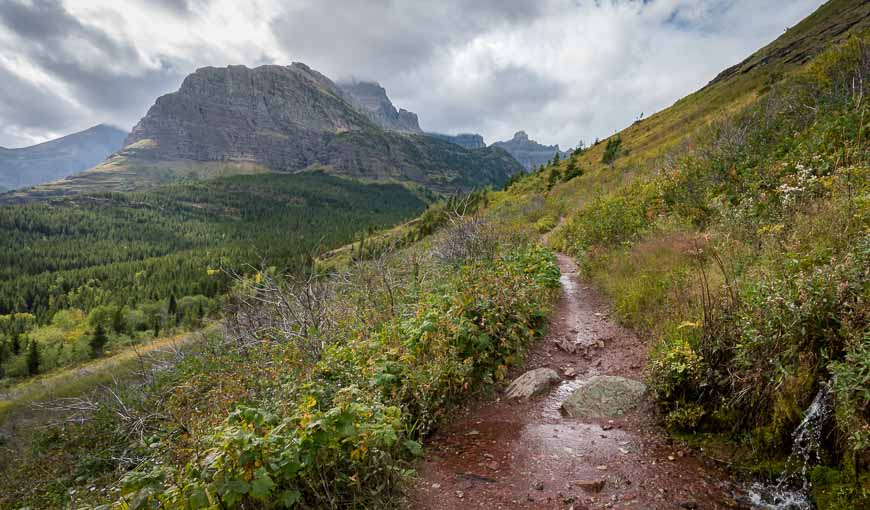
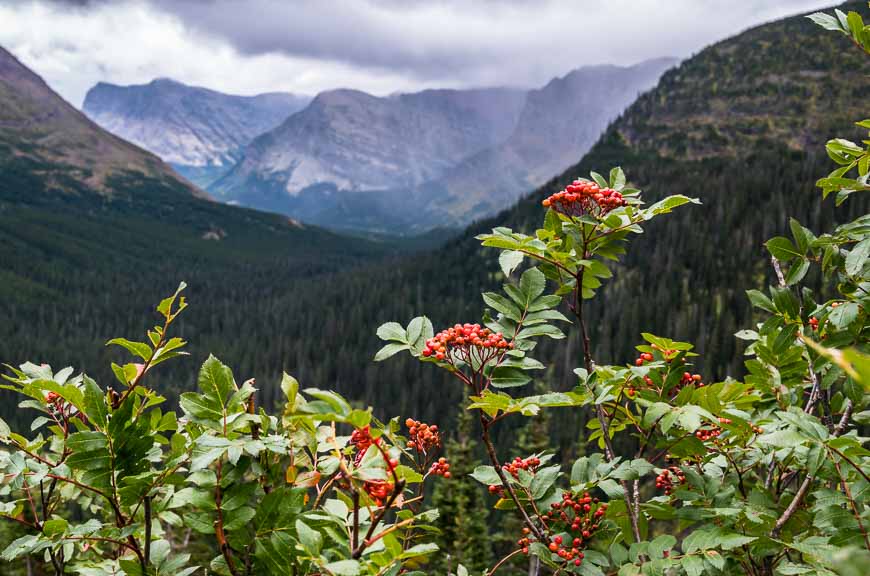
Great views on the Iceberg Lake trail out of the trees

Great views on the Iceberg Lake trail when you’re out of the trees

Route description of the Iceberg Lake hike

The first part of the hike is the steepest on the trail. Over just a quarter of a mile it climbs 200 feet. But for the rest of the hike it moderates and it’s not until you’re on the descent that you really notice how much you climbed. However, compared to most mountain hikes of this calibre, the elevation gain is modest.

At the first fork on the trail, bear left. In no time you’re into open terrain with beautiful mountain views. Continue for a total of 2.6 miles to reach Ptarmigan Falls, crossing numerous streams along the way. The only real wooded sections of the hike are immediately at the beginning of the hike and in the middle section before the falls.

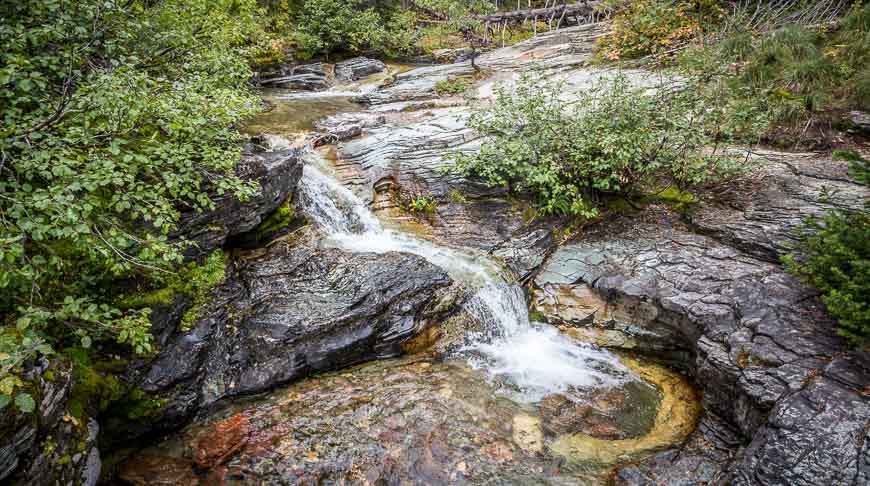
Ptarmigan Falls is a nice place for a break. Hang out on the rocks, have a snack or soak your feet in the water on a hot summer’s day.

Look for a trail junction at Ptarmigan Falls. Stay left and head west to continue to Iceberg Lake. It’s another 2.3 miles to reach the lake and the views are terrific. You don’t see Iceberg Lake itself until the last minute as it sits tucked behind a knoll and beneath the cliffs of Iceberg Peak and Mt. Wilbur. Here’s a detailed map.

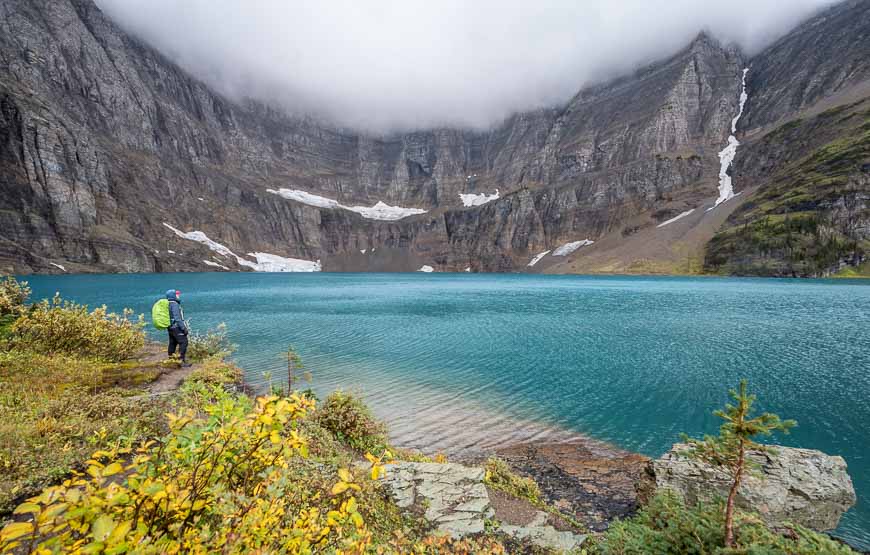
The trail ends at Iceberg Lake. In mid-September it didn’t have a single iceberg in it but if you visit earlier in the season, you can expect to see a lake with both icebergs and bergy bits.

The wind blew up on our arrival and the rain started so it got incredibly cold quickly – true hypothermia weather. We had a fast lunch huddled under some trees before starting our descent. On a nice day I could see hanging out by the lake for an hour or two. All told it took us about four hours round-trip to hike.

Don’t forget your 10 hiking essentials and bear spray. This is grizzly country you’re in – and so you do need to be very bear aware. We didn’t so much as see bear scat but you never know when a bear is going to pop onto the trail, especially in berry season.

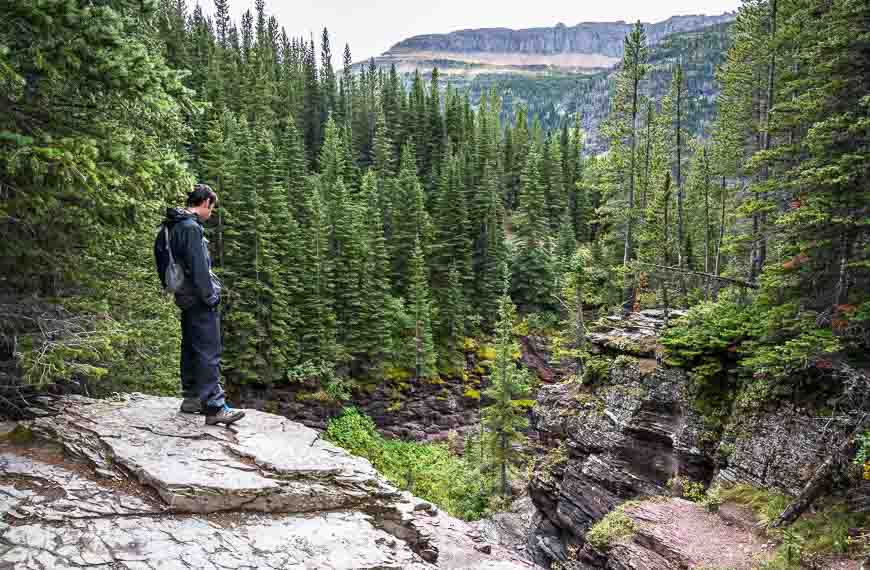
View over Ptarmigan Falls

View over Ptarmigan Falls

Ptarmigan Falls is a pretty area to have a break

Ptarmigan Falls is a pretty area to have a break

Looking down the valley towards the Many Glacier area

Looking down the valley towards the Many Glacier area

Iceberg Lake is at the base of the mountains ahead

Iceberg Lake trail with the lake hidden from view until the last minute of hiking

Spectacular Iceberg Lake even on a foggy day

Spectacular Iceberg Lake – even on a foggy day

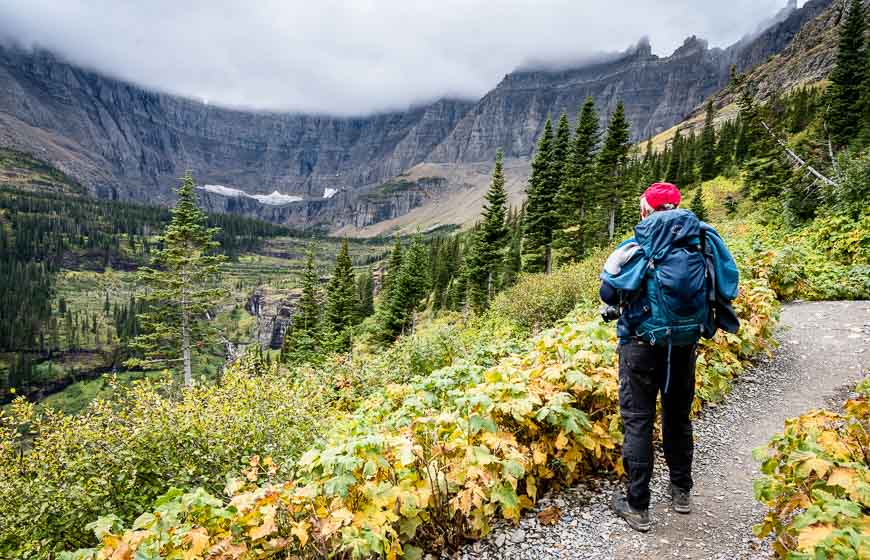
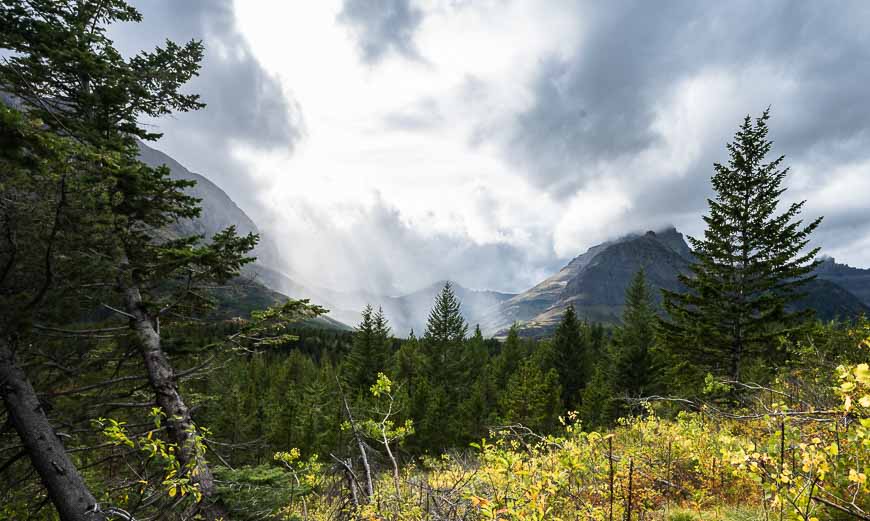
Mixed, moody weather on the hike out

Mixed, moody weather on the hike out

Fall is a beautiful time to do the Iceberg Lake hike

Fall is a beautiful time to do the Iceberg Lake hike

Where to stay

This post includes some affiliate links. If you make a qualifying purchase through one of these links, I may receive a small percentage of the sale at no extra cost to you. Thank you for your support.

St. Mary is a 21 mile drive away via Babb and a great place to overnight with its location at the east entrance to the Going-to-the-Sun Road. I’d recommend a stay at the cute Tiny Homes in St. Mary Village.

The Tiny Home has everything you need

The Tiny Home has everything you need for a very comfortable stay

Further reading on things to do in and near Glacier National Park, Montana

For more information on Glacier National Park, visit their website.

Click on the photo to bookmark to your Pinterest boards.

The Iceberg Lake Hike

The post The Iceberg Lake Hike in Glacier National Park appeared first on Hike Bike Travel.
The Iceberg Lake Hike in Glacier National Park Read More »

Security Information Overload: From Panic to Apathy & the Remedy

Security Information Overload: From Panic to Apathy & the Remedy

Security overload leads to apathy. How often do you hear a car alarm go off and roll your eyes hoping the owner would disable the blasted thing before the incoming headache comes a knocking? The primary objection I have to such systems is they work too well. Every week I hear an alarm being triggered […]

This is just the start of the post Security Information Overload: From Panic to Apathy & the Remedy. Continue reading and be sure to let us know what you think in the comments!


Security Information Overload: From Panic to Apathy & the Remedy, written by Thomas Xavier, was created exclusively for readers of the survival blog More Than Just Surviving.

Security Information Overload: From Panic to Apathy & the Remedy Read More »

Meet the Winners: Clarion Response Ltd

CLARIONIn our latest post in the ‘Meet the Winners’ series, we spoke to Ian Hutchinson, Health, Safety & Compliance Officer at Clarion Response who achieved a RoSPA Gold Medal Fleet Award in 2019. Read on to find out why year after year, Clarion continue to enter our prestigious awards….

What motivates you/your organisation to enter the RoSPA Fleet Safety Awards?

The RoSPA Fleet Safety Awards allows organisations to work towards a high standard for Clarion Response Logo (002)managing fleet safety. We use entering the Awards as an opportunity to not just review what we have done over the previous year, but also what initiatives we can introduce for the next year.

What benefits does winning a RoSPA Fleet Safety Award have for you/your organisation?

Our Awards are recognition that we are working to a high standard for managing fleet safety.

Which innovative approaches, risk assessment practices and/or control measures to manage occupational road risk are you particularly proud of from your most recent RoSPA Awards submission?

We regularly review risk assessments and guidance related to fleet safety, this follows a consultation with staff through the appropriate methods. By adopting this approach we are able to get buy-in from all staff.

Are you able to share any outcomes that have come from your organisation’s approach to the management of occupational road risk?

Since winning the award, we have provided new vans to a section of the business, which have been more practical for them when carrying out their daily jobs. The vans will also be provided to the remainder of the business on a phased approach. Vehicle accident rates have also been reduced.

How have the RoSPA Awards inspired you/your organisation to continually improve the management of occupational road risk?

Fleet quoteClarion Response have received the gold award for eight consecutive years so we are highly motivated to continue to improve and put in initiatives to ensure this achievement is maintained.

What advice would you give to a new entrant into the RoSPA Fleet Safety Awards about drafting their submission?

Firstly understand what is required, read through the guidance fully. Then look at the evidence that you have and decide what section each piece is best suited to. Ensure that the evidence you are submitting is mentioned in the submission and also where you have discussed something try to link a piece of evidence to that bit of information.

Does your organisation have employees who drive for work? Don’t miss the chance to show your commitment and achievements in safety. Click here to find out more about RoSPA Fleet Safety Awards, and how you can get involved. With free mentoring to help entrants maximise their entry, and a host of Awards Excellence Events and free to enter awards, there couldn’t be a better time to join the RoSPA Awards Community.

Meet the Winners: Clarion Response Ltd Read More »

Even neuroscience needs sociology

Summer in Australia means a lot of time traveling in a car, often to the extent of completing an abridged audiobook and/or several podcasts.  One episode of BBC’s The World This Week caught my ear, not because it is titled “Australia Burning” but for the opinion piece by Martin Bashir (17 minute mark). Bashir discusses mid-life crises, risk aversion and neuroplasticity. I look at the relevance to occupational health and safety.

Bashir spoke about the importance of challenging oneself, especially at “an age of comfort” (my term) an achievement. This may not seem related to OHS, the raison d’être of this blog, but the age of comfort can be defined as an age of safety or risk aversion, or as Bashir says “a mechanism for self-protection”, and this period in our lives may bleed into the way we see the world, the type of OHS advice we may provide our clients and, perhaps, the way that our OHS legislation is constructed.

This content is for Monthly, Annual (Corporate) and Annual members only. Visit the site and log in/register to read.

Even neuroscience needs sociology Read More »

Shop Lifting Suspect Shot and Killed By Officer At Chesterfield Outlet Mall!

A shoplifter was killed after reversing into a pursuing officer. The officer open fired in defense. We have had an officer involved shooting at the Chesterfield Outlet Mall on North outer 40 rd. Please avoid the area. All media please respond to the far west end of the parking lot — Chesterfield Police (@ChesterfieldPD) December […]

The post Shop Lifting Suspect Shot and Killed By Officer At Chesterfield Outlet Mall! appeared first on Tactical Sh*t.

Shop Lifting Suspect Shot and Killed By Officer At Chesterfield Outlet Mall! Read More »

Falke Silk Wool T-Shirt for Women Review

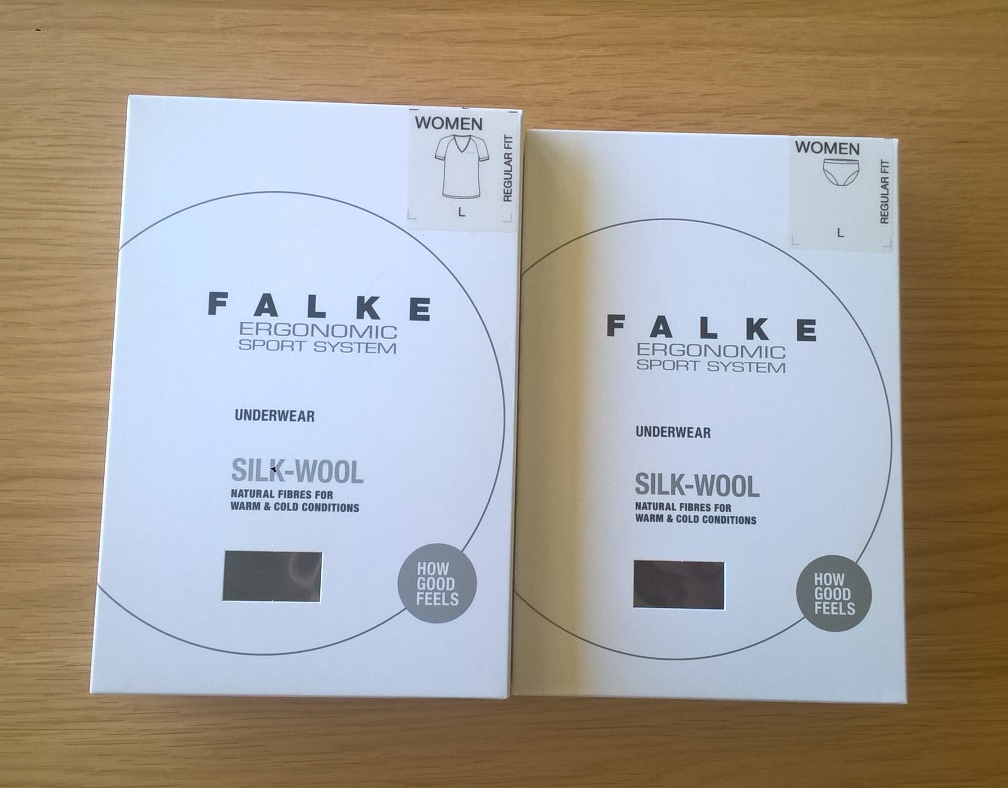
Falke Silk-Wool T-shirt and Underwear

Falke Silk-Wool T-shirt and Underwear

In summer 2019 I received the Falke Silk-Wool underwear and t-shirt from the iconic German brand upon request. As I had been previously impressed by the durability of the Klattermusen Eir t-shirt, I was really keen to test other base layers made out of Merino wool and silk, which is a much less utilized material for activewear although it has many interesting qualities when worn next to the skin. Luckily, Falke agreed to send both me and my boyfriend items from the brand’s functional sports underwear segment (my boyfriend reviewed the Cool t-shirt here) and we have been using them ever since. Here is what I learned about the Falke Silk-Wool t-shirt:

  • Hiking
  • Mountainering
  • Backpacking
  • Travelling
  • Everyday use

Material

The Falke Silk-Wool t-shirt is made of a luxuriously soft mix of 70% Merino wool and 30% silk. These natural fibers help to maintain the body’s ideal temperature in both warm and cold weather as silk has a cooling effect while Merino wool keeps you comfortably warm. As mentioned in the review of the Falke Silk-Wool underwear, the feel of the blend is quite different than that of the Klattermusen Eir t-shirt although the shirts have the same wool to silk ratio (70-30). The Silk-Wool fabric is softer, lighter and more porous. When first wearing the Falke t-shirt I noticed right away how incredibly light it was.

I got curious and weighed it to be 85 g (size L), and then weighed the Klattermusen shirt which turned out to weigh 105 g (size M). As the two shirts are made of approximately the same amount of fabric (±5%), I could infer that the fabric of the Falke shirt has to be quite a lot lighter than Klattermusen’s 140 g/m2 density. Upon inquiry, Falke informed me that the Silk-Wool fabric only weighs an astonishingly meagre 105 grams per square meter! It is thus 25% lighter than the silk and wool blend used for the Klattermusen t-shirt. In comparison, the densities of the fabrics made by the big Merino brands Icebreaker and SmartWool are quite a lot heavier. SmartWool’s lightest blend for t-shirts is 150 g/m2 (87% Merino, 13% nylon) – just like Icebreaker’s most used blend for its Anatomica, Body Fitzone, Siren and Tabi shirts (83% Merino, 17% Nylon/Lycra). If we are talking 100% Merino, Icebreaker’s Everyday line utilizes a fabric with a density of 175 g/m2 while the material of the Formal Friday t-shirt reviewed earlier this year weighs 156 g/m2.

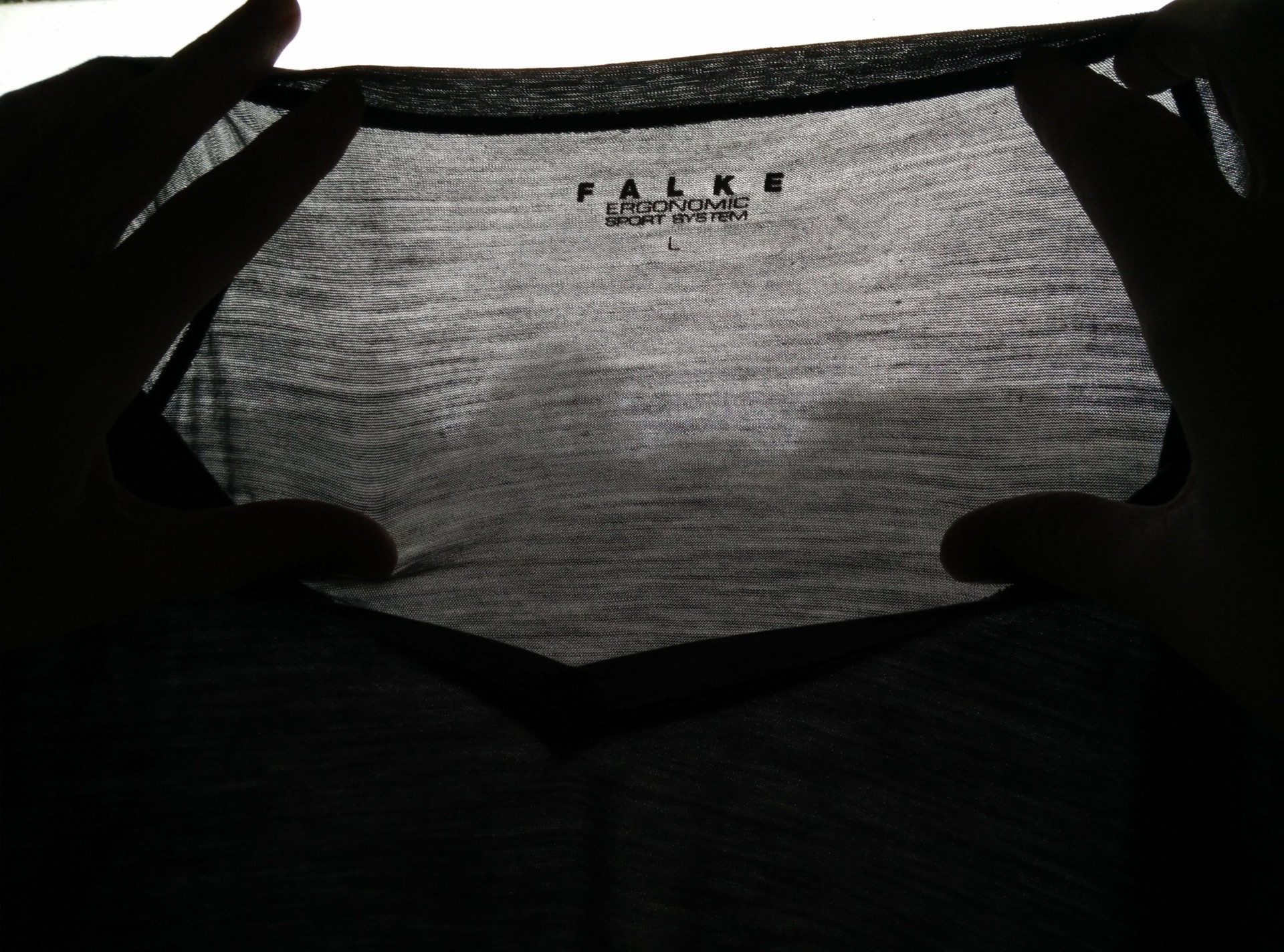
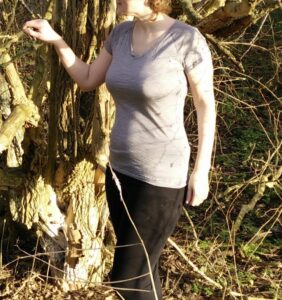
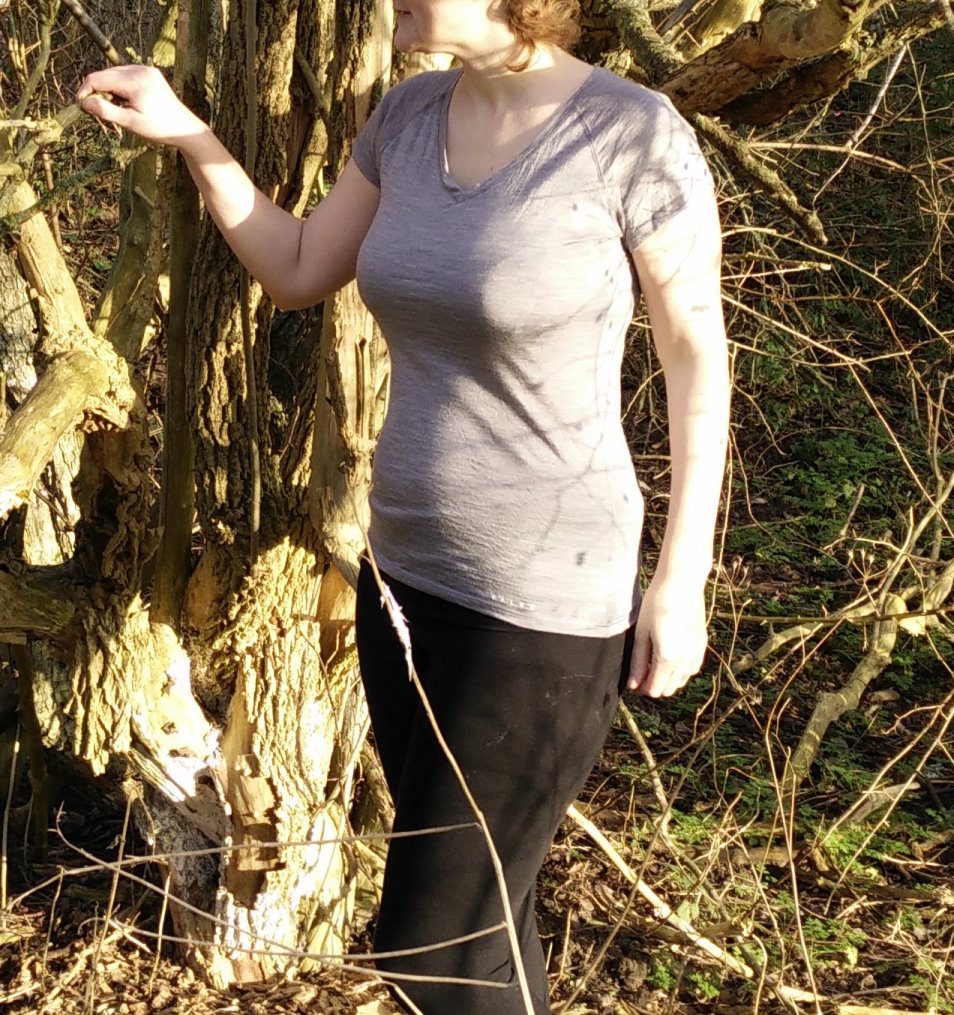
The Falke Silk-Wool is thus an incredibly light natural fabric. But as with the Falke underwear, also the t-shirt suffers from piling – already after very few washes (following the instructions).  Piling is when fibers tend to come loose from the fabric surface and form balled particles of fiber. Some people (like my significant other) don’t mind piling, but I can’t stand it. To mitigate the problem, I will thus have to wash the t-shirt extremely gently by hand, and occasionally use my electric pill shaver – with caution as the fabric is so incredibly thin and light. But the feel of the fabric is so luxuriously soft that it seems like a price worth paying. I should mention, though, that the porosity of the material means that the t-shirt is slightly see-through, but not terribly so. It should, however, be even less of a problem if you purchase it in one of the other colors available – near-black anthracite grey or dark blue.

In terms of sustainability, the Merino wool used is mulesing-free, while the silk is more sustainably produced than conventional silk as Falke reports that “it is made out of silk cocoons that were already used for other purposes. Normally, the cocoons are thrown away after the first working process, but we are using the silk rests to spin new yarn”. Falke produces most of its garments in Germany, and the rest on other production sites in Europe so also the labor force has proper working conditions.

Comfort, fit, sizing and functionality

As I was almost 7 months pregnant when I received the Falke Silk-Wool t-shirt, I asked for size L – which also fits me after having given birth. It is only slightly larger than the size M of the Klattermusen Eir t-shirt, so I would say that Falke’s sizing might be a bit on the narrow side. On the other hand, it is relatively long in the torso which is part of the explanation why it fitted me so well late in the pregnancy. Falke also offers other base layer tops in the Silk-Wool line; a long-sleeved Henley shirt and a camisole with elegant double shoulder straps. I was very happy with the t-shirt, though, as I often got inexplicably hot from the waist up towards the end of my pregnancy. The temperature-regulating properties of the fabric were thus nothing short of lifesaving since my shoulders and the baby bump was kept warm while my curiously boiling chest, arms and décolleté could cool down a bit.

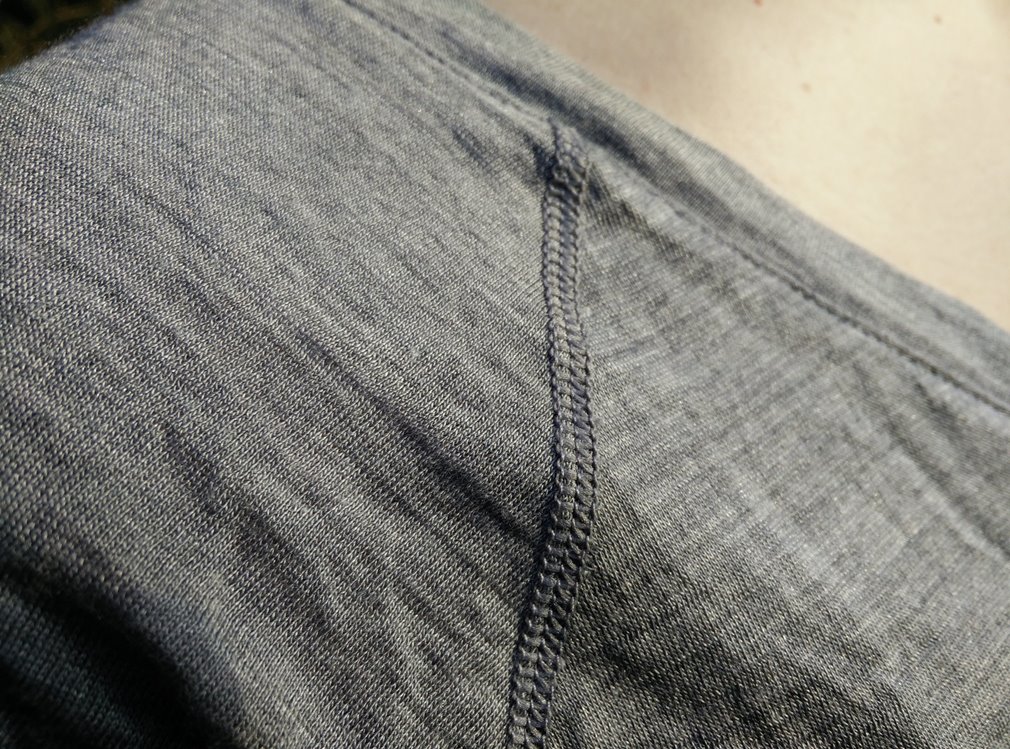
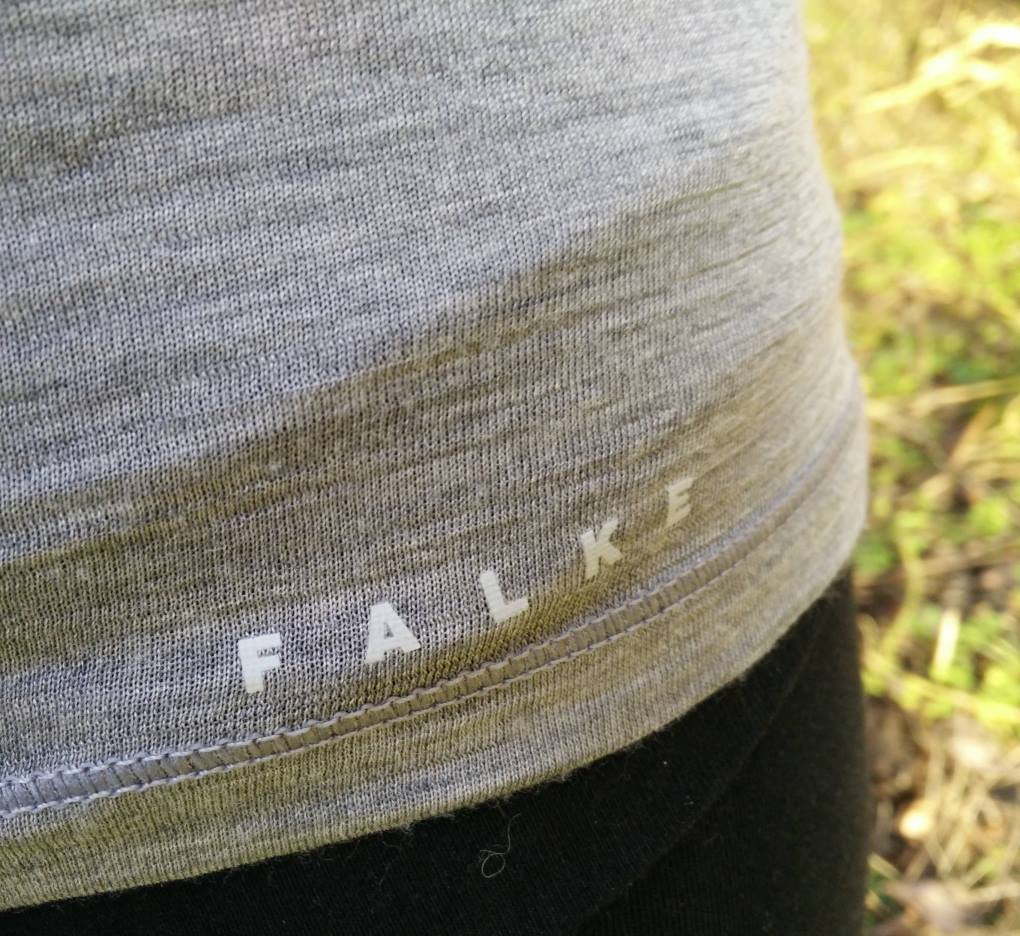
I actually ended up basically living in the Falke Silk-Wool t-shirt and the long-sleeved Isobaa base layer in the last months of the pregnancy because they were among the very few cool and comfortable tops to fit me without making me feel like a Beluga whale. Thus, the anti-microbial properties of both shirts were greatly appreciated as I would wear them day in and day out. The odor-reducing performance was especially put to the test in the Dolomites when I wore the Falke Silk-Wool t-shirt on consecutive hikes where it got soaked with sweat. Other functional details of the t-shirt are the smooth flatlock seams, raglan sleeves and the printed logos. The washing instructions are printed on a small white tag as well as in multiple languages on longer black tags which should be cut off with a scissor. Otherwise, the latter may chafe your skin.

Falke Silk-Wool T-shirt Front

Falke Silk-Wool T-shirt Front

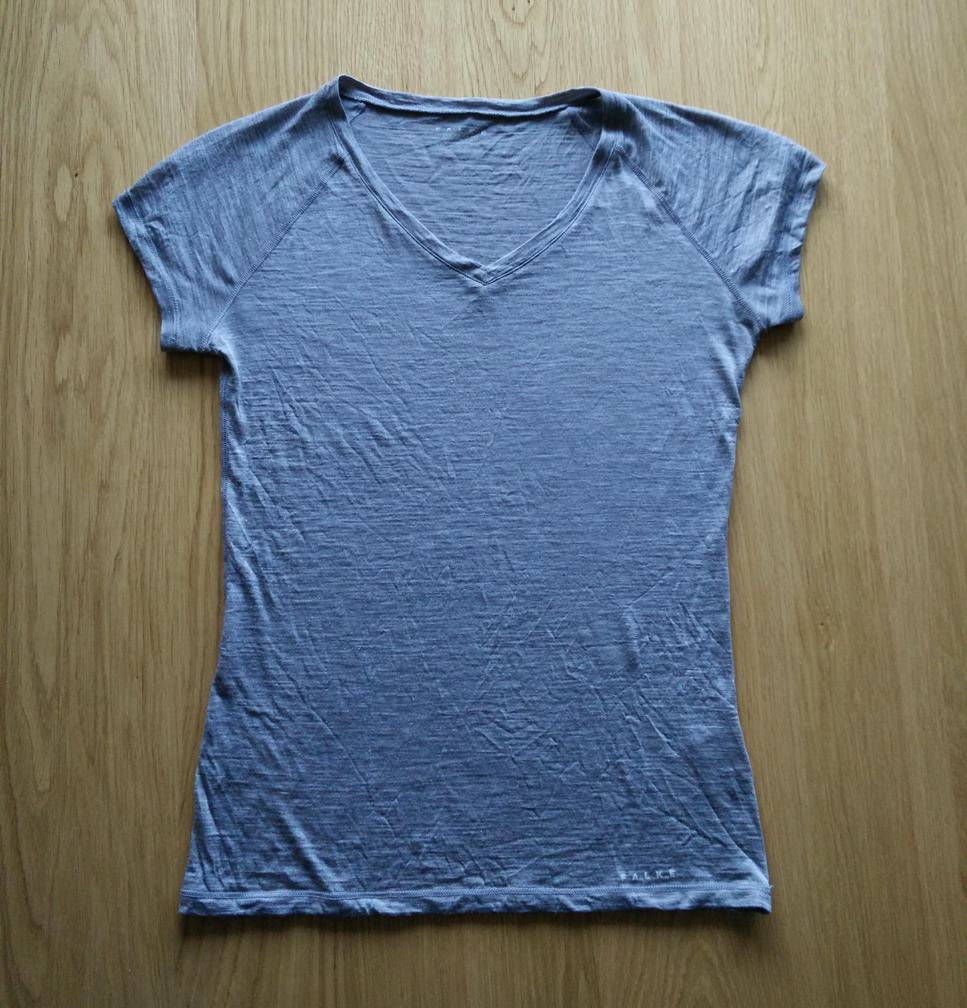
Falke Silk-Wool T-shirt laid out flat

Falke Silk-Wool T-shirt laid out flat

Falke Silk-Wool T-shirt: Fabric

Falke Silk-Wool T-shirt: Fabric

Falke Silk-Wool T-shirt: Off-set shoulder seams

Falke Silk-Wool T-shirt: Off-set shoulder seams

Falke Silk T-shirt: Logo at the hip

Falke Silk T-shirt: Logo at the hip

Falke Silk T-shirt: Wool washing instructions

Falke Silk T-shirt: Wool washing instructions

Falke Silk-Wool T-shirt and Underwear

Falke Silk-Wool T-shirt and Underwear

Washing and drying

The washing instructions tell you to wash the Falke shirt on an extra gentle wool cycle at the cold setting (30 C⁰ or less), but to mitigate the issue of piling I would definitely recommend washing it gently by hand in cool water. Piling will also be increased heavily by tumble-drying, which the instructions thus warn against. Drying should, however, not be a problem as the Silk-Wool fabric is so thin and delicate, but it will of course take longer to dry after handwashing than machine-washing since you shouldn’t wring the garment forcefully of water. Whether washing by hand or machine, you should use a wool detergent, and steer clear of bleach and fabric softeners which may interfere with the naturally anti-microbial properties of the Silk-Wool fabric.

Verdict

Piling aside, I really love the Falke t-shirt. Not only is it functional due to the soft, antimicrobial and temperature-regulating fabric, but it is also cut so elegantly that I don’t hesitate to wear it for everyday life in addition to hiking and other outdoor activities. Due to the hassle of handwashing it, I will wear it a bit less frequently the next months, while my baby still regurgitates in all directions, but I will for sure throw it on for every hike due to its exceptional performance.

If you have any questions about this product, drop me a line in the comments below.

Rating

Design
Quality
Comfort
Functionality

About Rating

Pros:

  • Casual yet elegant design
  • Softness, breathability and antimicrobial characteristics of Merino wool and silk
  • Versatile use due to temperature-regulating properties of fabric
  • Sustainable production

Cons:

  • Piling


Details

Tested by: Laura P.

Review date: 2020-01-02

Product: Falke Silk Wool T-Shirt

Final rating: 5 out of 5

{
“@context”: “http://schema.org”,
“@type”: “Product”,
“brand”: {
“@type”: “Organization”,
“name”: “Falke”
},
“image”: “https://besthiking.net/wp-content/uploads/2020/01/6.-Falke-Silk-Wool-Logo-at-hip.jpg”,
“name”: “Falke Silk Wool T-Shirt”,
“review”: {
“@context”: “http://schema.org”,
“@type”: “Review”,
“author”: {
“@type”: “Person”,
“name”: “Laura P.”
},
“creator”: {
“@type”: “Person”,
“name”: “Laura P.”
},
“publisher”: {
“@type”: “Organization”,
“name”: “Best Hiking”
},
“reviewRating”: {
“@type”: “Rating”,
“ratingValue”: “5”,
“bestRating”: 5,
“worstRating”: 0
},
“datePublished”: “2020-01-02”,
“name”: “Falke Silk Wool T-Shirt for Women Review”,
“headline”: “Falke Silk Wool T-Shirt for Women Review”,
“itemReviewed”: {
“@type”: “Thing”,
“name”: “Falke Silk Wool T-Shirt”
}
}
}

How helpful was this post?

Click a star to rate it!

No votes so far! Be the first to rate this article.

Post Author

Post Author

Laura P.

I loved to climb trees when I was a child – as an adult I use these skills for climbing and scrambling up mountain sides! I always wear a Merino baselayer, sunscreen and my hair tousled.

You may also like…

The post Falke Silk Wool T-Shirt for Women Review appeared first on Best Hiking.

Falke Silk Wool T-Shirt for Women Review Read More »