Home Safety

What To Do if Someone Is Following You

You are walking down the street at night. You hear footsteps behind you. They are drawing closer, growing louder, and the tempo of the steps is increasing.

What do you do?

First, Don’t be Paranoid.

Are you actually being followed?

Situational Awareness

Develop Situational Awareness to notice if you are being watched or followed.

Start by being aware of your environment, and accurately assessing other’s intentions. Be aware of your surroundings has become a cliché. What does that mean exactly? Cat step down the street, hugging corners, scanning your surroundings?

You need to relocate if that is the level of danger in your neighborhood. [sarcasm]. SA (Situational awareness) is about accurate threat assessment, and not walking around like a paranoid tacti-douche.

Practicing good SA will reduce your level of anxiety and help you to feel safer. SA is a skill that will take time to develop. You need the base knowledge, then practice it until it becomes a deeply ingrained, automatic behavior.

Why Would Someone Follow You?

What motive would someone have for following you?

  • Criminal victimizations, such as mugging or rape? Don’t ever look like a good victim. Yes, victims have a degree of responsibility to prevent their own victimization. If you withdraw a wad of cash from an ATM then walk down the street counting it, oblivious to your surroundings, you are exposing yourself to unnecessary risk.
  • Do you have a stalker?
  • Are you involved with criminal activity, selling or buying drugs? It is inevitable that you will have people after you.
  • Did you have to terminate an employee and they are disgruntled and angry?
  • Have you been an asshole lately? Where you involved in a road rage incident? Have you insulted, threatened, challenged, provoked or disrespected someone, and they are looking for payback?
  • It also doesn’t take much to offend some people. That middle finger is something that will provoke some people to homicide. There are unstable individuals you may have crossed paths with who feel enraged over you would consider minor.

Aussie Road Rage (Note: Very graphic language for Americans, everyday conversation for Aussies or Brits):

Deductive Reasoning

Practice Deductive Reasoning to determine if you are being watched or followed.

You are driving on the highway at night. You get off at an exit to get a coffee and top off the tank.

You notice the lights on the vehicle behind you getting off the exit and pulling into the parking lot. You get back on the highway, and that same car has pulled in behind you again.

Are you being followed?

Use deductive reasoning to minimize anxiety and accurately identify threats. Seeing threats that don’t exist is paranoia. I recall some situations where people reacted as though I were following them and I had some malicious intent. (I really wasn’t following them and had no bad intent).

Situation 1) I had just finished a several mile run, and was walking fast, cooling down. I was wearing Under-Armor running gear, and was covered in sweat, breathing hard. A 50’ish man wearing a martial arts jacket was ahead of me

As I drew closer, he started casting furtive glances at me. This continued until I drew abreast of him and passed him. I was wearing running gear, sweating, and breathing hard.

While I am not going to be on the cover of GQ or Esquire anytime soon, I keep a very neat appearance. I don’t look like a dirtbag or a slob, e.g. a mugger. It was obvious, or so I thought that I had been running rather than out looking for a victim.

Situation 2) I was out walking during a lunch break from work, going to the bank and post office on errands. I was dressed in business casual attire- Khakis and a button-down shirt.

A scruffy, skinny man in his late 20s was ahead of me. He kept turning and looking at me as I drew closer. He hooked his hand onto his wallet and paused, turning to watch me as I passed him.

I was dressed in business casual. It was daytime on a busy city street. Not the best place for a mugging. Muggers are not typically well-dressed either.

Situation 3) I was in my car driving down a city street. A woman was running. She looked nice so I glanced at her as I drove by. She turned and gave me a look of fear/anxiety.

The road curved around and I came to a stoplight. She ran past my car and looked at me so I looked back. The look on her face was closer to horror now than anxiety. You are running in yoga pants and have a good body, expect to get noticed.

A look is not sexual harassment. No, I did not yell Hey baby or any other adolescent idiocy, nor was I staring at her and slobbering. I also was not going to change direction so we didn’t see each other again or shield my eyes as I passed.

The examples above are individuals who have very likely been traumatized at some point in their lives, and they are hyperaware. But they will see threats almost everywhere, because their view of the world has been changed by a trauma.

This results in false positives or seeing something which is not there. This can become a very tiresome way to live your life, leading to mental exhaustion and isolation, as going out in public becomes too much effort.

In an Urban Environment

You suspect someone is following you. There are some methods you can use to determine you are actually being followed, and then measures you can take to lose your follower or stop them from following.

On foot

  • Change direction abruptly to determine if you are being followed.
  • Do not make an obvious fear display like the people I described in the section above. A fear display will encourage aggression. That being said, run if you have to.
  • Be advised that if you confront them, you may be deemed an aggressor or at least a participant instead of a victim. This will depend on the jurisdiction you are in and to what degree liberals have gutted self-defense laws.
  • Get into a crowded well-lit place with many witnesses.
  • Get somewhere with cameras. Look directly into the camera.
  • Draw attention. Yell loudly that you are being followed and point the follower out to the crowd. Embarrass the shit out of them, expose them for the creepy weirdo they are, and get multiple witnesses.
  • Call 911 and ask bystanders to call 911. Select specific persons and make eye contact. Directly state call 911, there is someone after me. This detail is important. If you just yell somebody call 911, the Bystander effect can occur, and most people will wait for someone else to call 911. It is about distribution of responsibility and hesitation. Make specific people responsible. For more about this, see the sad story of Kitty Genovese.

In a Vehicle

  • On a city street, drive in a circle by making four consecutive right turns. On a highway, get off the next exit, then back on the highway. Someone following you vs. coincidentally driving in the same direction will become apparent.
  • Having determined you are being followed, DO NOT go to your home a friend’s home, or your workplace. You do not want to lead them to any of these places.
  • Do not let yourself get boxed in. Do not go into a cul-de-sac/dead end or parking lot, or anywhere else where you will not have an escape route.
  • Know where you are going. Become intimately familiar with the area you work, attend school or live in. This can give you a major advantage over someone from outside the area.
  • Do Not Escalate. If you are being followed closely by an angry individual, don’t do things that will de-stabilize the situation further. This included brake-checking, throwing things at the other car, and displaying your middle finger. Once again, you are also becoming a participant, and putting yourself in a compromised legal position.
  • DO NOT get out of the vehicle and confront them. You may not know their intentions, how far they are willing to take things, of if they are armed. Depending on the jurisdiction, if you get out of your vehicle to confront them or engage, you could put yourself in a very weak legal position by becoming a participant instead of a victim.

1) Identify them. Phone camera/dash cam/backup cam on and start documenting. Note as much information as possible. Note the make, model, and color of the car, and a description of the driver and any passengers, any identifying marks on the vehicle, and of course the license plate number.

3) Lose them. but don’t put yourself and others in danger with reckless maneuvers or excessive speed.

  • Make an abrupt (but safe) turn without using directionals.
  • Get up to an optimum safe speed to pull away from them and gain some distance.
  • Run red lights (treat the red light like a stop sign, don’t just blow through an intersection). A cop sees you and pulls you over? Perfect. You need a cop right now. Your pursuer will have to relinquish the pursuit, or really escalate things in front of a police officer.

2) Get assistance

  • On a city street, draw attention. Lay on your horn and flash your lights. Stalkers/weirdos tend to dislike attention.
  • Lead your pursuer through intersections with traffic cams to get them recorded.
  • On a city street, tell a driver in the lane next to you are being followed and to call 911.
  • Drive to a police station or call 911.

Stalkers

You have an ex-lover calling you twenty times an hour, all day long. She shows up at your home, knocking on the door and kicking the door, demanding to be let in. You ignore her until she leaves, but she calls, emails and texts you all night, and is in the parking lot of your workplace the next morning.

You are in a bad situation and need to do something.

Stalkers can be thought of as long-term followers. They be an ex-lover, someone you had only very casual contact with, or a complete stranger.

Stalkers obsess and fixate on specific person, engaging in ongoing surveillance, harassment, and pursuit. Their goal may be to establish or re-establish a relationship.

They are very disturbed individuals who have lost all perspective. They may intend their target physical harm, and they can do major psychological harm.

  1. Tell them one time only you do not want to have any contact with them. DO NOT argue, explain, debate, or bargain with them.
  2. Document that you told them this.
  3. Save all emails, phone messages hard copy letter or notes, or texts that you receive from them.
  4. If they follow you or park near your home or work, video or photo them.
  5. Do not ever respond to them, no matter how much they persist.
  6. Go to the police with your stack of evidence and press charges.
  7. Obtain a restraining order. Don’t forget a restraining order is just a piece of paper. It will offer only limited protection, and only from people who follow rules.

Practice Prevention

Never make anything easy for the bad guys.

1) Do not stick to a routine. Be unpredictable. Take different routes to and from work , school, or errands, depart and arrive at different times, and use different conveniences stores. Laundromats, and markets. Confound anyone who may be watching you.

2) If you are leading a criminal lifestyle, and/or using drugs, people coming after you is inevitable. This does not include law enforcement. Start asking if the juice is worth the squeeze and if it time to get out of the life.

3) This goes along with point number one. Be very careful who you let into your life. Damaged, toxic individuals can lead you into all kinds of drama, or outright danger.

They draw other damaged people, may be involved with crime or associate with other criminals, and don’t know how to take no for an answer if you try to set limits with them or exclude them from your life. It is better to avoid them than invite them in and try to rescind the invitation later.

Be highly selective about who you associate with and avoid damaged people. Damaged individuals are those who are prone to violence, are emotionally immature, have poor impulse control, a low tolerance for frustration, poor coping, and active addiction.

Ask yourself why you would want these people in your life. Are you going to fix them? Do you believe you can’t do any better? If you have a pattern or history of attracting losers, or abusive individuals, get to a good therapist and find out why you do this and how to change it.

4) Try to avoid fringe areas or going out alone after dark. Predators look for victims. The best place to find victims are fringe areas with no cameras or witnesses, e.g., a highway rest stop bathroom, or mall bathroom. Predators also like the dark. Avoid these areas as much as possible.

5) Practice good on-line security. Don’t post your travel plans on social media. Your laptop or device is a window into the world.

You have to be careful who you let in if you want to be safe. See some of my thoughts on this topic here.

6) Keep yourself and your vehicle ready for emergencies. Don’t go below half a tank of gas, and keep your vehicle well maintained. You do not want to find yourself in a situation where someone is following you in a vehicle and your car craps out.

Stay fit and be able to run and escape if you need to. If you have been subsisting on pizza, ice cream, beer and two packs of ciggs, you are not going to be in condition to retreat to safety if you must.

If you are jacked and know how to move your body, you will also have more of a command and deterrence presence. You won’t look like a happy target.

Conclusion

The methods I have outlined here are far from infallible. The greater emphasis must be on prevention, not what to do if you are in a situation where someone is already following you.
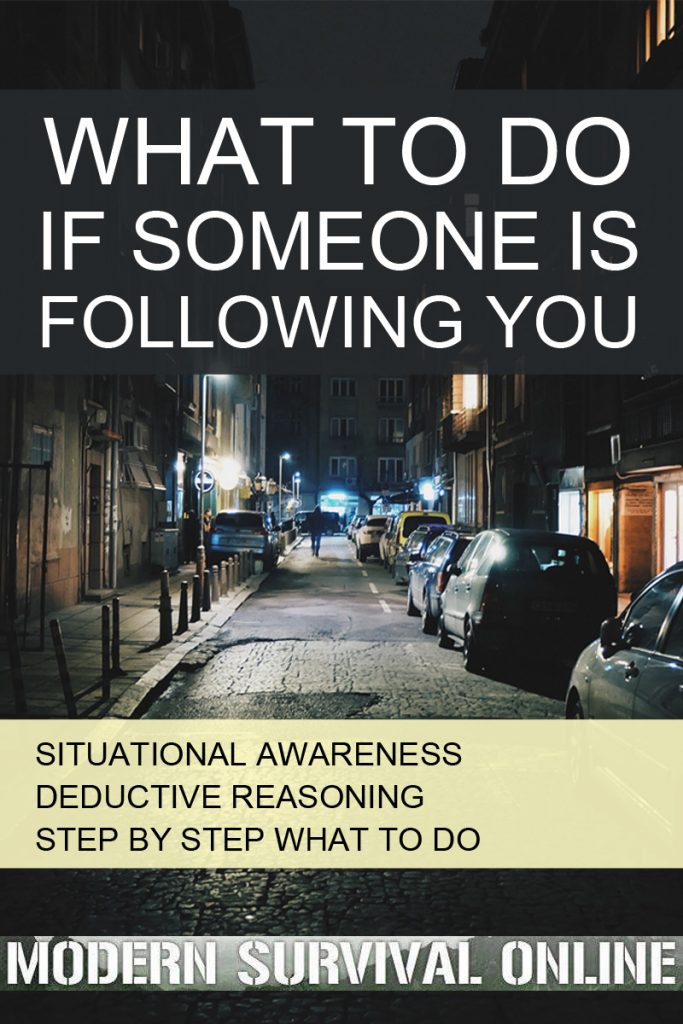
being followed Pinterest image

What To Do if Someone Is Following You Read More »

Security Information Overload: From Panic to Apathy & the Remedy

Security Information Overload: From Panic to Apathy & the Remedy

Security overload leads to apathy. How often do you hear a car alarm go off and roll your eyes hoping the owner would disable the blasted thing before the incoming headache comes a knocking? The primary objection I have to such systems is they work too well. Every week I hear an alarm being triggered […]

This is just the start of the post Security Information Overload: From Panic to Apathy & the Remedy. Continue reading and be sure to let us know what you think in the comments!


Security Information Overload: From Panic to Apathy & the Remedy, written by Thomas Xavier, was created exclusively for readers of the survival blog More Than Just Surviving.

Security Information Overload: From Panic to Apathy & the Remedy Read More »

How to Improve Your Archery Skills

Archery: we all want to look gracious while doing it, but we seem to miss our targets whenever we try to shoot. Moreover, while we do manage to shoot, our “technique” still has us flailing around after we release the arrow.

With that in mind, how can you improve your arrow shooting skills? How can you become a better archer and actually hit your targets, for a change? Well, it might take a lot of time and practice – but overall, you might see improvement if you follow the right steps. 

  • Correct Your Stance

Many self-taught archers do not know that the correct stance plays a very important role in the way you shoot with the bow. Unfortunately, not many of these archers actually KNOW what that stance is – so, they simply try to wing it.

You should be facing your target at approximately 45 degrees, with your feet in a parallel position and spread about 18-24 inches apart. Your toes should be facing towards your target, pointing at it – and not at a 90-degree angle as most beginners do.

Keep an open stance as you point at the target. Your bow forearm should be in line with the arrow. The bowstring should also be kept away from your arm and chest – because even if it slightly brushes against your skin, it will veer the arrow to the side. 

  • Make Sure the Bow Is Tuned

In a way, a bow is just like a musical instrument; if it’s not tuned, it won’t work properly. You have to create balance and stability in the tension – so, if it seems as if the bow is lacking in strength, you might have to tune it. It will greatly improve your accuracy when you are shooting an arrow. 

There are many guides out there that will teach you exactly how to tune your bow. However, if you are a beginner and are not completely confident in your tuning skills, you might want to take it to a pro shop. Watch how they do it a couple of times – and before you know it, you’ll learn how to do it yourself.

Particularly if you are a beginner, you should go for bows that have newer, better mechanisms – to make things run more smoothly. You may get a bow with an older system simply because it is cheaper – but there is a high chance that this one will be more difficult to tune. You need to get something that you could easily tune. This way, you won’t end up dropping your archery practice simply because you cannot tune your bow. 

  • Make Sure Your Grip Is Correct

You need to hold your bow with a relaxed hand, but with a closed grip. If your grip is a white-knuckle tight one, then there is a high chance you will compromise the accuracy of your shot. Your entire bow will be tensed, which is why you might end up missing your shot. The bow will only have to lightly touch your thumb to the middle finger or the forefinger in front of your grip.

If you simply cannot master the loose grip, then you might want to try the open bow hand with the addition of a wrist sling. The sling will help tie the bow to your hand – and this way, it cannot fall while you are attempting to shoot. The more you shoot, the more your grip will improve – and eventually, you should be able to do it without the sling. 

  • Your Movement Has to Remain Subtle

Every movement that you make, as small as it may be, may affect the outcome of your shooting. The way you move has is essential, so you will have to control each and every inch of your body. The way in which you breathe, grip, stand – as well as the amount of force that is applied with your hands – are all factors that will have a great impact on the way you shoot.

This is why you need to learn how to be relaxed while you are shooting with the bow. You cannot expect accuracy if you are all stressed out and nervous. Those feelings need to be pushed away if you want to become any better at archery.

One good pointer is to never practice when you are beaten down by stress. Archery doesn’t really mix well with anxiety and stress. Your diet might greatly influence this, so you might want to watch what you eat – or drink – as well. You might not be happy to hear this, but consuming energy drinks, such as coffee, can elevate your stress levels –therefore, this won’t really be very convenient for your practice.

  • Practice Makes Perfect

No one becomes a skilled archer right off the bat; this is achieved only through repetition and consistency. This does not only apply to archery – but to every sport and activity as well. 

It’s like learning to ride a bike: before you learn how to ride in a straight line, you will probably fall a few times in the beginning. But through those fails, you will learn the proper way of riding the bike – and before you know it, you’ll be riding without training wheels and doing miles.

The same thing goes with archery: the more you shoot, the better you will become. It’s the kind of hobby that you will have to commit to if you want to get better. Even if you get the hang of shooting, you should never stop practicing – because practice leads to perfection. 

Final Thoughts

Archery is a skill that might take years and a lot of practice to master. This is why you need to follow the right steps to ensure that your stance, the way you draw and even the way you breathe are correct. As an archer, you need to ensure that accuracy is your top priority.

How to Improve Your Archery Skills Read More »

Extreme frugality: An occasional series.

During the last recession, people went to surprising lengths to make ends meet. Hypermiling. Navy showers. Dumpster-diving for food (aka “freeganism”).

Some practiced extreme frugality to keep from sinking further into the red; others did it to survive. (Some still do.)

Hailed at the time as examples of savvy consumerism, these sorts of activities don’t get a whole lot of press today. Some would say that’s a good thing, i.e., fewer people are living on the edge.

I’m not so sure.

While I’m glad the recession is technically* over, I remain sad that we seem to have learned nothing from the tough times of previous decades. There’s more things than ever to buy, especially as regards electronics – and quite a few us want these things at all costs.

In fact, a new survey from CreditCards.com suggest that 61 percent of people with credit card balances are willing to add more debt for the holidays.

Don’t get me wrong. I’m really glad I no longer have to wash all my clothes by hand, or live on the most basic of foodstuffs. But I think we could all do with a little bit more strategic frugality.

Some people think “frugal” means “impoverished,” and certainly it’s true that some people live frugally because they have no choice. It’s a way of life that can be terrifying. (Anyone else here ever raided the baby’s piggy bank** for bus fare to get to work on payday?)

In those days, and again during my lengthy divorce and return to college, I was frugal because I had to be. But even when times got better, I was still frugal – because I happen to think it’s a great way to live. To me, it means a life in which every decision is intentional. Every step I take (or don’t take) means something.


Frugality is the reason I’m out of debt and saving for retirement after some tough times. It’s also why I want to start a new occasional series of articles on the subject of extreme frugality.


Defining “extreme frugality”


No doubt some of the articles I plan to write will be considered tame by the super-penny-pinchers. For example, I know of one frugal blogger who doesn’t buy toilet paper: Her household uses “family cloths,” which are washed and re-used. #nopenopenope

I’ve read about people getting live-in nanny jobs to avoid paying rent, making their own cooking fat (free chicken skins from the butcher FTW!), never spending a dime on entertainment outside the home, growing a beard to save on razors, taking the same super-basic lunch to work every. single. day.

Then there’s the folks who think you’re extreme if you mash your own potatoes.*** Thus finding the balance between “no thanks, that’s just ridiculous” and “you call that frugal?!?” will be interesting.

But that’s okay. I don’t mind (much) being second-guessed. That’s why I have a comments section. And speaking of asking for feedback…


Got any topics to suggest?


I’ve already come up with a handful of extreme frugality topics. Since it’s already November (!), an obvious one is “celebrating the holidays without breaking the bank.” The piece will contain tactics that are actionable but that won’t embarrass you.

“Staying warm/keeping utility bills manageable” is another natural idea for this time of year. Also on the list: furnishing/decorating a home, staying healthy, finding affordable entertainment and, of course, stretching grocery dollars.

Who’s got ideas to share? Please leave them in the comments. I can’t promise I’ll do them all, but I’d like to hear what’s on your mind.

Finally: The point of this exercise isn’t to make people feel judged. You won’t get kicked out of the movement if you don’t use homemade dish soap to wash out your Ziploc bags for re-use. No one will force you to make your own soup stock or tsk-tsk if you decide that cable TV or subscription boxes really are right for you.

No, it’s all about my longtime frugal mantra: I save where I can so I can spend where I want. Small changes can help with some pretty big goals – stuff like debt pay-down, homeownership, retirement planning**** or a child’s education.

Who’s in?

*I say “technically” because I believe that for some people it never really ended. Some are still lip-deep and sinking; others merely treading water.

**Yes, I paid it back. Every time.

***While I’ll admit that there are some pretty tasty instant varieties out there, I’m simply not willing to pay so much more for a so-called “value added” product.

****You have until Nov. 14 to enter to win a copy of “The Only Retirement Course You’ll Ever Need.”

The post Extreme frugality: An occasional series. appeared first on Surviving and Thriving.

Extreme frugality: An occasional series. Read More »

Europe Diagonal: Belgium GR 129 Part 1

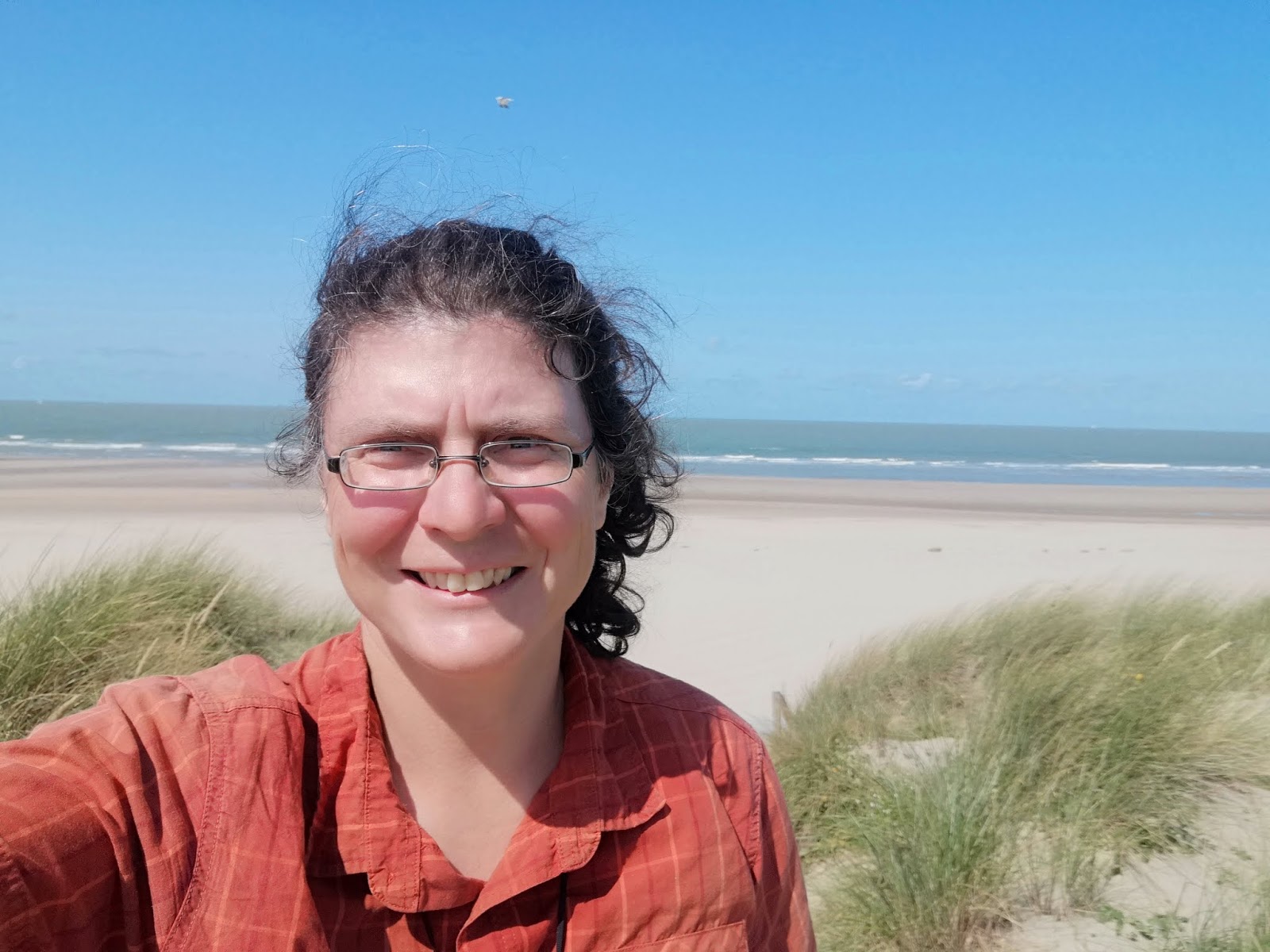
At the beach near Brugges

When I had started to plan this trip and was searching for a route through the BeNeLux countries, I stumbled upon the GR 129 through Belgium which is so aptly called “Belgique en diagonal”. With this title I could not resist and chose this trail which starts in Brugges. Travelling to Brugges from Germany turned out to be much longer than expected because a train broke down in Cologne, could not be “revived” and I had to wait for the next totally overbooked train two hours later. I was utterly exhausted when I finally arrived in Brugges at night. After half a day of sightseeing in this pittoresque tourist town I started my hike right at the coast in wonderful weather. The beach was fantastic but the 20 km walk back to Brugge showed me what was to come in the next days: endless road walk in very flat countryside!

Wild camping turned out to be a big problem because there was hardly any forest or trees to hide in! I had to plan very well in advance to find a suitable spot every evening. The trail itself wasn’t too exciting either: More than 50% I was walking on concrete roads or bike paths! Flanders is definitely more bike than hike country. To my big surprise I even met another female hiker who was even wild camping like me. Still there were some highlights on this stretch: an old water castle and the pittoresque town of Oudenarde. From Ath where there was a big festival taking place I took the train to Brussels for my first rest day in Belgium – and to meet a hiker friend!

I had known Fatma only virtually but felt very welcome immediately in her flat in Brussels. She and her partner really pampered me with fantastic food and very interesting talks! I visited the Royal Palace and an art museum and we we sat together in the evening drinking a glass of wine together I could not think of anything that would have made that day more perfect! This was definitely the best rest day on this trip! After breakfast together I boarded the train again that brought me back to Ath and hiking – and the heat. Now in August it was almost unbearably hot and because there is so little forest there is also hardly any shade! These days really dragged on and on and I was very happy to be able to make phone calls and talk to my friends while hiking!

But there were also some highlights: Blackberries were ripe and I had always somehting to snack. And because I was walking along endless fields I could also skip lunch and eat corn cobs. And I passed the Mons which had just recently been Cultural capitol of Europe and was therefore full of interesting museums. There were so many that it was difficult to choose! I visited the War Museum because Mons played an important role in both world wars and the Silex Museum several kilometres away but along the GR 129. Here back in the stone ages flint stone had been mined and the museum  is in fact a huge tent where archaelogists are still excavating the old mine shafts. When I had a break in the shade there I found a lot of stone chips that could well have been created by our human ancestors.

Unfortunately this lovely day ended with a bad surprise: My “camping forest” turned out to be the garden of a castle and was completely fenced in! I ended up camping in a meadow right next to a cell phone tower. At least it was nice to have 4G reception in the evening …
The trail does hardly get any use here! Some paths are completely overgrown with blackberry bushes and nettles and I have to wear long pants despite the heat. Along the roads there are “mowers” to cut the grass and bushes and when one of these guys saw me coming out of the fiels he was so surprises that he mowed one of the guardrails off …

Europe Diagonal: Belgium GR 129 Part 1 Read More »

Survival Gear Review: The Solo Stoves, Part One: Solo Stove Lite

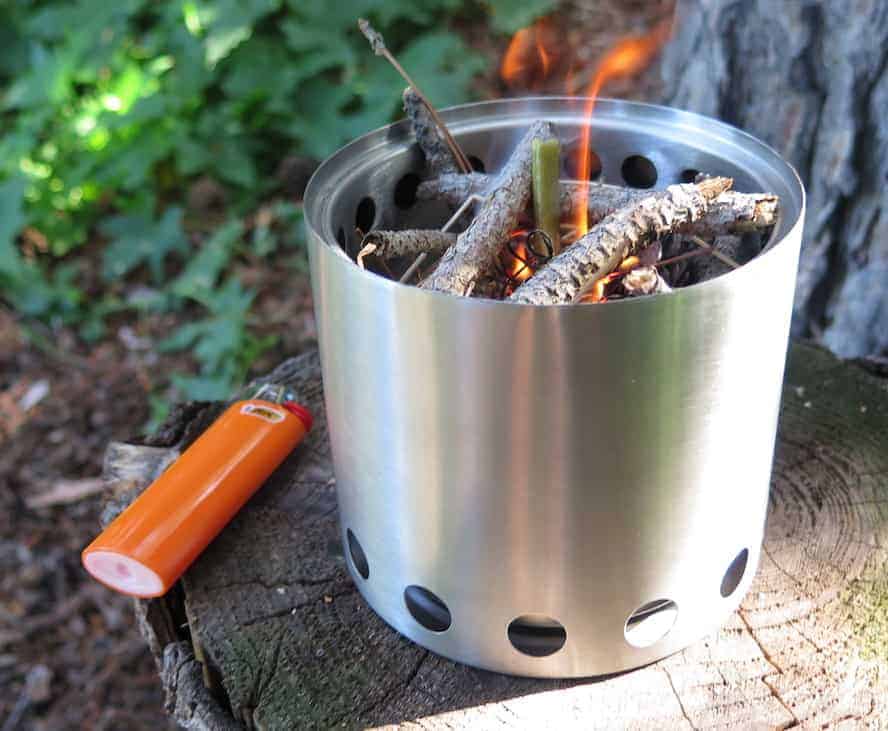
The Solo Stove design is a stainless steel can-shaped wood-burning container of numerous sizes from easy carry for backpacking, to a monster that needs two people to lift it. For this review, we will take a look at the Solo Stove Lite, the smallest of the Solo Stove offerings. Part 2 will address a larger Solo Stove stove, and a campfire-sized Solo Stove.

By Doc Montana, contributing author to Survival Cache and SHTFblog

The Solo Stove Lite is a beautifully engineered and executed stainless steel wood stove not much bigger than a can of beans. But what does raise eyebrows is the price; about $70. And even more surprising than the price is that those who use it absolutely love it! So much so that the price drifts into the ether becoming a non-issue after only a few uses.

The Solo Stove is a dynamic option for those comfortable with placing their cooking needs in the hands of wood. And I am one who does. The Solo Stove is a trifecta of physics, engineering, and materials. On the physics side, the flow of oxygen to the Solo Stove’s main fire chamber follows a dual route “from the bottom to the top,” to quote the Talking Heads. As air enters the base of the Solo Stove through external holes lining the lower parameter, it carries ambient oxygen to the lower vent, and also to upper openings in the main chamber. The oxygen level in air is far above the O2-starved fires inside the stove. So much so that it appears as if flames are flowing out of the upper parameter holes into the main flow of flame. It truly is both inspiring and mesmerizing. You’ve got to see it to believe it.

Also Read: Survival Gear Review: MSR Whisperlite Stove

Air begins its journey under the main fire due to a wire grate that delineates the base of the burn chamber from a sub-chamber that doubles as an ash trap. As the combustion gasses ascent to the upper levels of the stove, they are heated before pouring into the chamber through the holes lining the upper reaches of the inside of the inner wall. The hot air offer an abundance of oxygen causing a gassification effect that takes the tradition campfire wood heating to amazing levels.
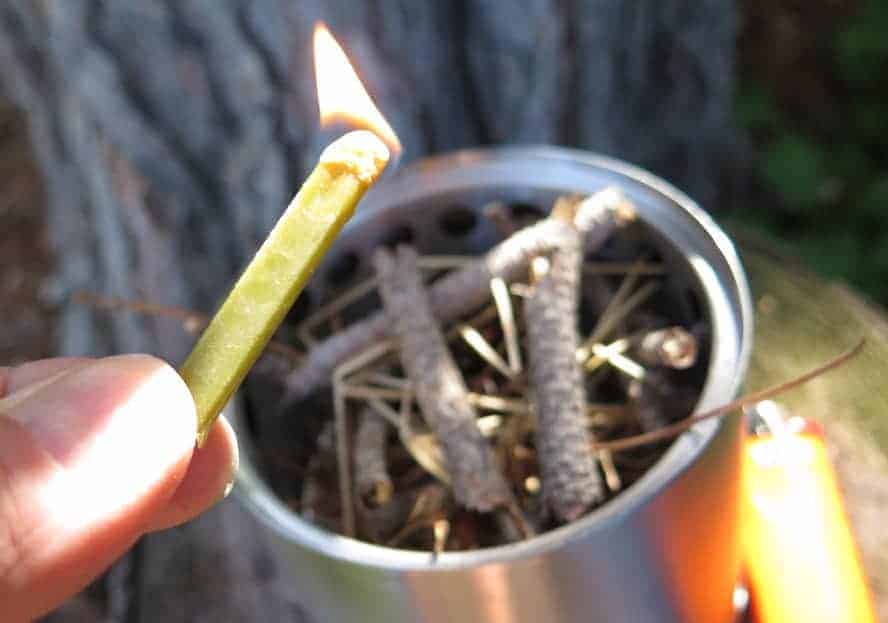
An additional benefit from the dual airflow system is that there is extremely little smoke from the stove when burning efficiently. Like none. Of course there is plenty of smoke on both ends of the time you use the stove, but a large part in the middle burn time when cooking and campfireing are done has no noticeable smoke. There is still plenty of woodfire smell, however. One time from a bit of a distance, I thought my stove was pouring out the smoke only to realize as I neared that it was spraying steam like a train whistle out of a snug fit pot lid. And no smoke.
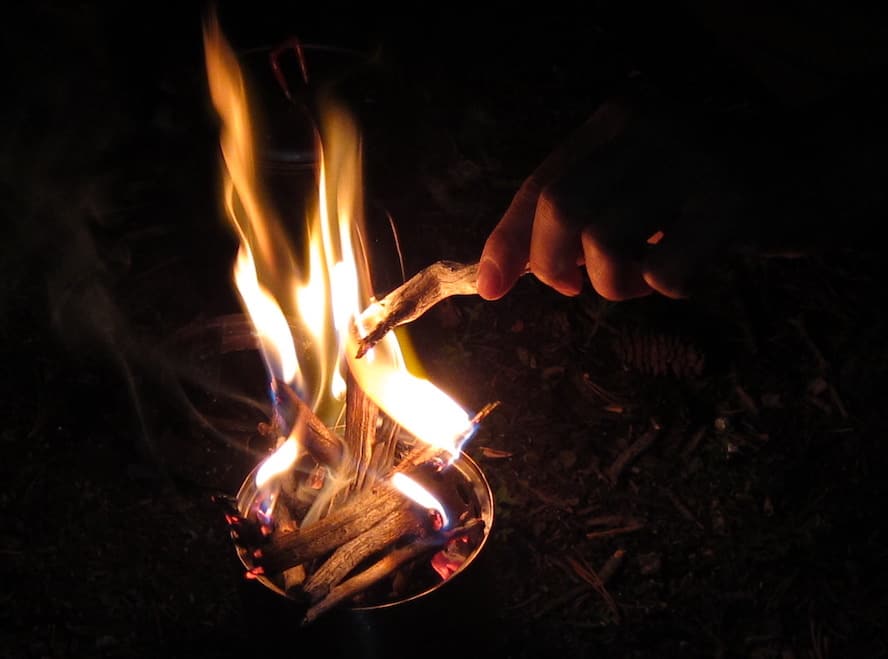
When burning wood, you don’t have to be diligent about the stove’s operation. You can add some wood and walk away. If it burns down, you add more. If your water boils, then good and it will just boil longer. But the Solo Stove completely removes the worry about conserving fuel. And once you get into the Solo Stove mindset, you see fuel everywhere and in abundance.

The Solo Stove Lite is a wood stove on the smaller side that punches well above its weight class. The Solo Stove is made of 320 stainless steel which just means that its made of the most common stainless steel. But stainless steel nonetheless. The welds between the two “cans” are impeccable, and a thing of beauty. A mesh grate of nichrome wires criss-crosses the inside bottom providing a limited but ample supply of air to keep the coals humming along while allowing gravity to remove the spent wood. Sometimes a minor shake of the burning stove tidies up the fire by cleaning out the carbon from the fire.

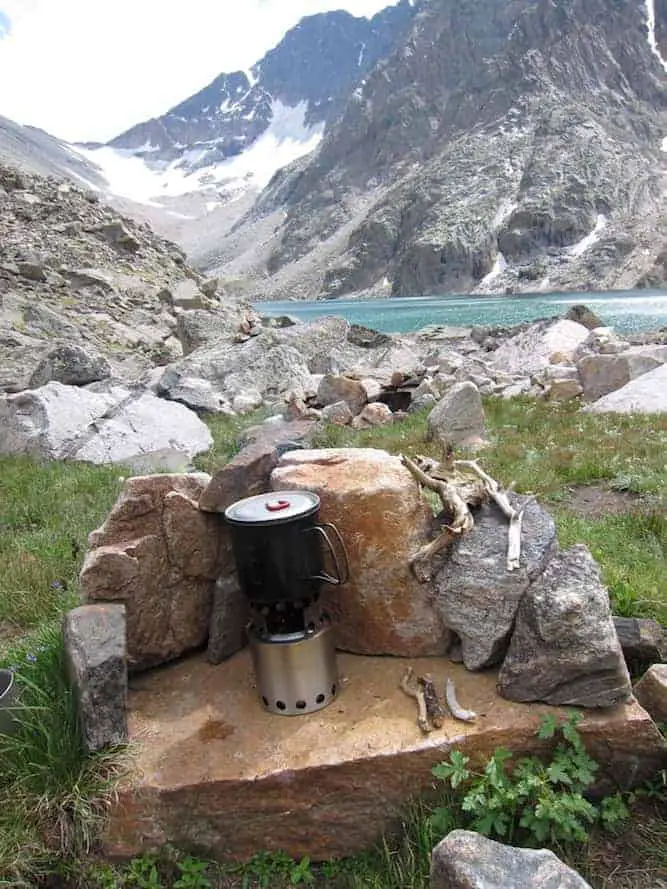
There are two pieces to the Solo Stove, a main dual container consisting of the two layers of steel, the ash basin, and plenty of holes above and below main chamber. The other piece is a ring of steel with a lip that can either dip into the main can for storage or fly above it as a pot support and doorway for adding more fuel to the combustion chamber.
Related: Survival Gear Review: Vargo Wood Stove

The riser is essential for cooking over the stove. Without it, a pot or pan would sit flush on the Solo Stove blocking the flow of hot gasses. But there is no need for the riser if just using the Solo Stove as a campfire pit. The riser can easily be added or subtracted from the system with a fire blazing. In fact, it is much easier to get the stove started without the riser.

I’m not sure if it’s right or not, but I’ve extinguished my Solo Stove Lite simply by dumping water on it. The water does run out the bottom holes carrying with it plenty of smaller pieces of wood and charcoal. The stove, when dry then clanks like a baby rattle until you dig out all the pieces of detritus rolling around in between the stainless walls.
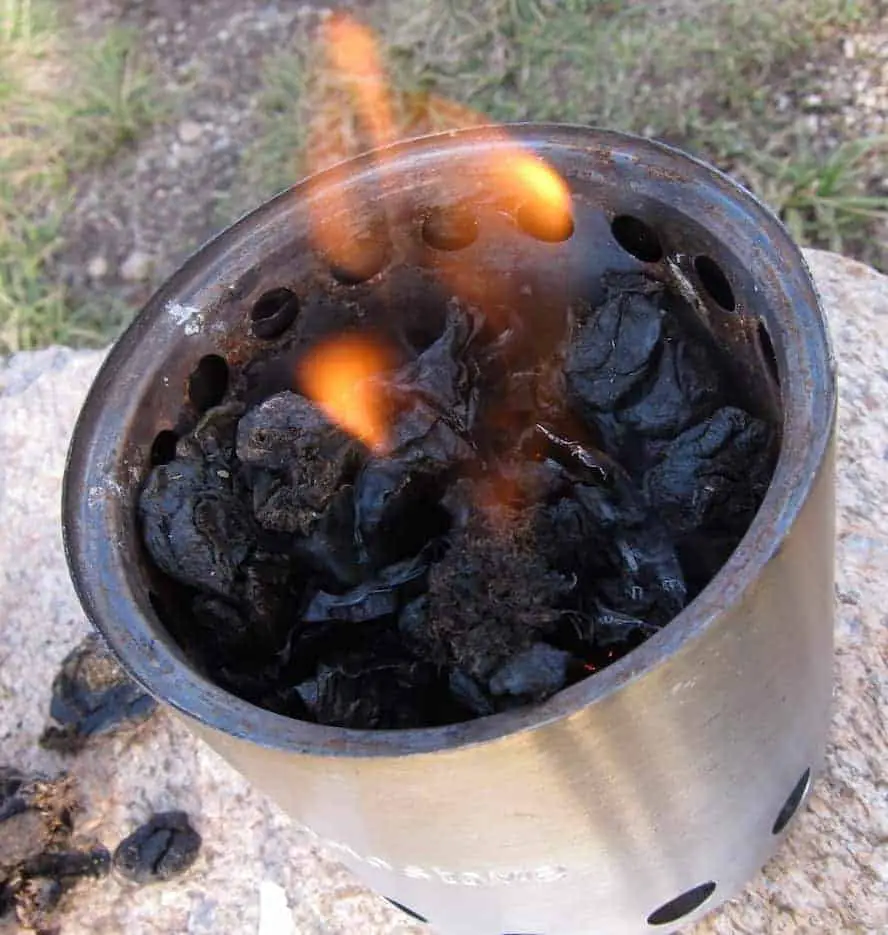
Being a wood stove, the Solo Stove Lite will get dirty. And depending on how loose you are with the wood input, your pot might just have a black bottom, or the entire pot will become jet black and sticky with creosote. I’m happy to report that the Solo Stove made it through the normal cycle in my dishwasher. I can see the potential for rust however as stainless means less stains, not rustless. But it was nothing more that what I noticed after using the Solo Stove Lite for a few rainy days on a backpacking trip.

In use, I had a boiling quart of water in 10 minutes plus or minus. Usually plus. I used a commercial fire tinder to fire up the stove quickly, but you can use traditional tinder and firesticks to launch this rocket. Some of the benefits include no real concerns for fuel. The only time I ran into a fuel shortage was when I was over 11,000 feet in the Beartooth Mountains of Montana and there was literally no dry cellulose around large enough to burn. I did try to burn mountain goat dung in the Solo Stove Lite, but just couldn’t keep the flame long enough to boil water. Yak dung maybe? Just fresh out of yaks around here.
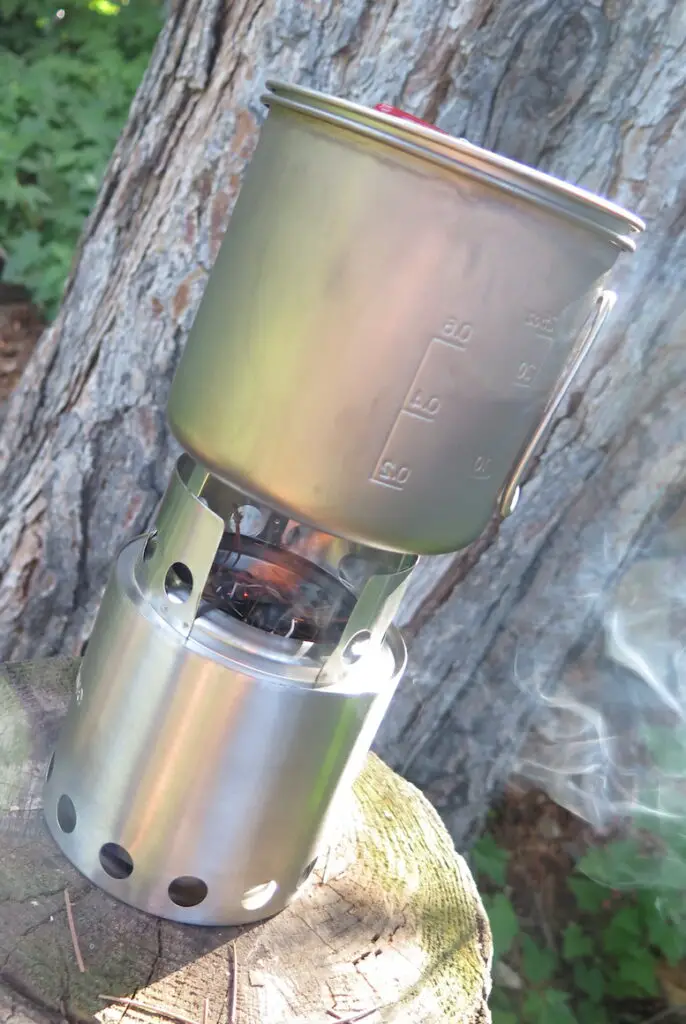
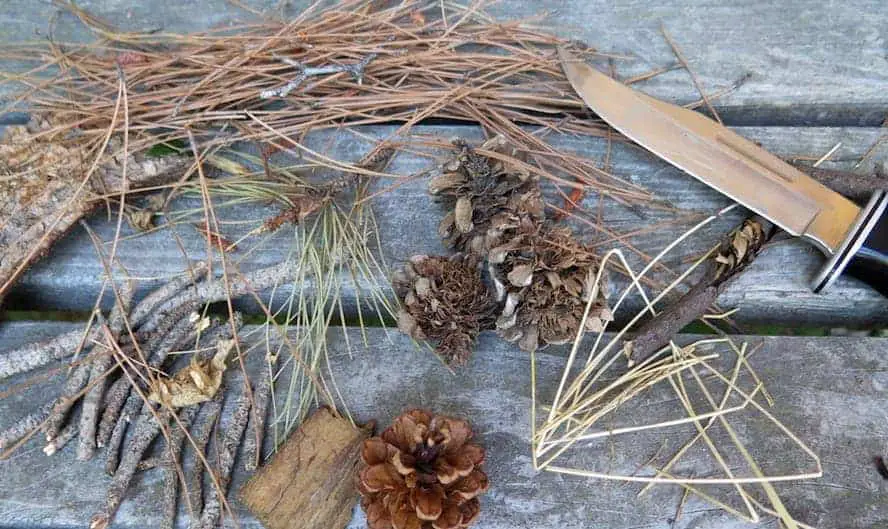
Even at 10k feet I located plenty of material primarily in two locations. The first was in natural microstream channels where the rain piled up small sticks at congested areas between rocks and narrow water pathways. The second was where small animals had made a home using locally sourced building materials. And in one case, where I knew I was headed to a high spot, I just grabbed a few inch-to-inch-and-a-half thick branches, stripped and resized them, and slid them into my compression straps on by backpack. When arriving at camp, I just processed the branches into Solo Stove-sized fuel. I got about two quarts of boiling water out of each three-foot branch.

Listen: Survival Cache Podcast: Only Choose One Piece of Gear

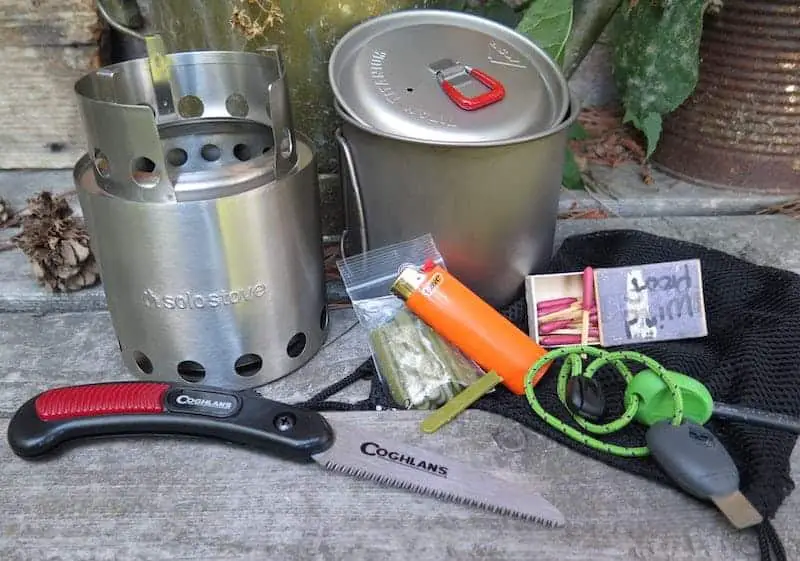
I have a 900 milliliter titanium pot and small fire making kit I carry with my Solo Stove Lite. The pot is made by Snow Peak and I use an MSR titanium lid from another cooking kit to cover the pot. My fire kit includes a Bic lighter or two, some matches, a firesteel, some commercial tinder/firestarter, and a tiny saw that I considered a joke until now. The Solo Stove Lite fits neatly inside the pot, and the whole kit fits into a mesh stuff sack with is important to reduce the sharing of black carbon with the rest of your gear.

I am so enamored with my Solo Stove Lite, that it has moved into my primary campstove position. And I have a dozen or so other stove choices. During a bug out, any liquid or compressed gas stove has a short life. However, should you want to run a liquid fuel in your Solo Stove Lite, there is an optional alcohol can with adjustable lid available for burning fluids. So if you can get over the price, the Solo Stove Lite is an exceptionally useful, efficient, and potentially life saving tool for fun and survival. I have absolutely no hesitation in recommending the Solo Stove Lite.

Please Visit Amazon Affiliate Sponsors of SurvivalCache.com

The post Survival Gear Review: The Solo Stoves, Part One: Solo Stove Lite appeared first on Survival Cache.

Survival Gear Review: The Solo Stoves, Part One: Solo Stove Lite Read More »